

 Vista previa
 Compartir
 Compartir
 Ver detalles
 Guía
Guía

 Descargar
 Ver artículos similares
 Radiografía
 Presentación de diapositivas
 Estadísticas
The Angels' Kitchen
 Oil On Canvas
- WallArt
- Surrealism
 2005
2005 59.0 x 47.0 cm
 Leer más
La obra de arte que se muestra en esta página está protegida por las leyes de propiedad intelectual, lo que significa que no podemos crear ni vender legalmente una reproducción idéntica. Esta protección se hace cumplir en virtud de acuerdos internacionales como el Convenio de Berna y por las leyes nacionales, incluidas aquellas establecidas por el Ley de derechos de autor de los EE. UU. - Título 17.
Como una alternativa respetuosa y legal, ofrecemos obras de arte personalizadas y pintadas a mano inspiradas en la original. Nuestros expertos y profesionales del arte estudian cuidadosamente el estilo, el sentimiento y la esencia artística de la obra original para crear una pieza nueva y única que evoque la misma sensación, siendo al mismo tiempo una creación original por derecho propio.
Este método cumple plenamente con las normativas de derechos de autor, ya que no implica la copia ni la duplicación de la obra protegida. En su lugar, se trata de una reinterpretación creativa: una nueva pintura influenciada por la original, pero que no es idéntica a ella.
Reproducción al óleo hecha a mano
Óleo sobre lienzo pintado a mano en el tamaño y marco de su elección, realizado por encargo por nuestros artistas. ( Cambiar a formato impreso Ver versión en imagen digital)




P118B €10

P118H €10

P118W €10

P438Z €10

P508JH €12

P508YH €12

P805H €10

P805Z €10

P919BZ €10

P919G €10

P919XJ €10

P959ZH €10

P968JZ €12

W106C €8

W218G €10

W218JH €8

W218Y €10

W307PJ €10

W316G €10

W316PJ €8

W316Y €10

W398PJ €8

W4111J €10

W500HY €15

W500JH €15

W692G €12

W849H €8

W940BG €15

W953PJ €8




Elija entre nuestros tamaños predefinidos que respetan las proporciones originales de la obra.

Puede ingresar sus propias dimensiones para adaptarse a un marco o espacio específico. Si el tamaño seleccionado no coincide con las proporciones de la imagen original, recortaremos la obra o extenderemos la pintura con elementos adicionales pintados a mano. Se le enviará una maqueta digital para su aprobación antes de comenzar la producción.
Tenga en cuenta que la vista previa en pantalla no refleja el recorte o la extensión reales. Solo la maqueta mostrará con precisión la composición final.
Si bien existen tamaños personalizados, recomendamos seleccionar una dimensión de la lista predefinida para preservar las proporciones originales.
Tras realizar el pedido, el equipo de OriginalUniqueArt.com enviará un correo electrónico al cliente para solicitar instrucciones y proporcionarle una vista previa del boceto.
Envío a todo el mundo () en 3-4 semanas en lugar de las 5 semanas estándar. (11 octubre). Sin comprometer la calidad.

Envío exprés gratuito a todo el mundo

Lienzo de lino de alta calidad

Seguro de envío completo

Garantía de reembolso de impuestos aduaneros

Garantía de fidelidad cromática exacta

Política de devolución de 100 días (solo por defectos)

Garantía de devolución del 100% del dinero

Oferta por volumen
 La opción de vidrio solo está disponible en tamaños inferiores a 110 cm.

The Angels' Kitchen
Técnica de reproducción
Tamaño de la reproducción
-


Precio total
€ 259
The Angels' Kitchen: A Surrealist Reverie by Jacek Yerka
Jacek Yerka’s “The Angels’ Kitchen,” painted in 2005, is more than just a depiction of a domestic scene; it’s an immersive journey into a meticulously crafted surrealist dream. Measuring 59 x 47 cm, this artwork immediately captivates with its juxtaposition of the familiar – a kitchen brimming with everyday objects – and the extraordinary – a fully-fledged angel engaged in culinary activities amidst an orchard bursting with life.
- A Flemish Masterpiece: Yerka’s dedication to the classic Flemish technique, honed through years of study and unwavering commitment, is strikingly evident. The painting's rich detail, meticulous rendering of textures, and masterful use of light evoke the spirit of masters like Jan van Eyck and Pieter Bruegel, while simultaneously forging a distinctly modern vision.
- A Dreamscape in Detail: The composition itself is layered with symbolic richness. A cat calmly observes from the sink, an apple tree dominates the center – laden with fruit – and bottles are scattered across surfaces, adding to the whimsical atmosphere. This isn’t simply a kitchen; it's a carefully constructed world where the mundane and the divine intertwine.
Yerka’s artistic lineage is profoundly influential, drawing inspiration from figures like Hieronymus Bosch and Hugo van der Goes. This influence manifests in the painting’s slightly unsettling yet undeniably beautiful depiction of fantastical elements – a blend of recognizable objects and imaginative additions that invites contemplation on themes of creation, nourishment, and perhaps even spiritual grace.
Decoding the Symbolism
“The Angels’ Kitchen” is replete with symbolic meaning. The angel itself represents purity and divine intervention, yet it's presented in an utterly ordinary setting – preparing food. This deliberate contrast elevates the painting beyond a simple still life; it prompts us to consider the intersection of the sacred and the secular. The kitchen, traditionally associated with nourishment and earthly pursuits, becomes imbued with spiritual significance within Yerka’s vision.
- The Apple Tree: Symbolizing abundance, fertility, and knowledge – a recurring motif in Western art – the apple tree is central to the painting's narrative.
- The Cat: Often associated with mystery and intuition, the cat’s presence adds an element of quiet observation and perhaps even guardianship.
The overall effect is one of serene contemplation, inviting viewers to lose themselves in Yerka’s meticulously rendered world. The diffused lighting and soft edges contribute to a sense of dreamlike tranquility, further enhancing the painting's emotional impact.
Technique and Materials
Yerka employs a predominantly watercolor or gouache technique on paper, evidenced by the painting’s subtle blending, soft edges, and delicate textures. This approach lends the artwork a luminous quality, capturing light with remarkable sensitivity. The artist’s attention to detail is breathtaking, from the individual strands of grass in the foreground to the polished surfaces of the kitchen implements.
- Traditional Supplies: The use of traditional painting supplies – likely watercolor or gouache – reinforces the connection to the Flemish masters and contributes to the artwork’s timeless appeal.
- Layered Approach: Yerka's masterful layering creates depth and complexity, drawing the viewer into the scene and inviting repeated observation.
A Legacy of Surrealist Vision
"The Angels’ Kitchen" stands as a testament to Jacek Yerka’s artistic vision – a bold exploration of surrealism that seamlessly blends reality with fantasy. Exhibited across continents, including Poland, Germany, Monaco, France, and the United States, Yerka's work has garnered significant recognition within the art world. This piece is not merely a beautiful image; it’s an invitation to embrace the unexpected, question conventional perceptions, and discover beauty in the most unlikely of places.
Preguntas y respuestas
¿A qué edad creó Jacek Yerka "The Angels' Kitchen"?
Cuando se creó "The Angels' Kitchen" en 2005, Jacek Yerka —nacido/a en 1952— tenía 53 años.
¿Los colores de "The Angels' Kitchen" de Jacek Yerka son intensos o tenues?
El color de "The Angels' Kitchen" presenta una saturación de Subtle Color y una intensidad de Balanced.
¿Qué armonía cromática presenta "The Angels' Kitchen" de Jacek Yerka?
Los colores de "The Angels' Kitchen" de Jacek Yerka muestran una armonía Softly Mixed Palette. La armonía describe cómo se relacionan los colores entre sí.
¿En qué año se creó "The Angels' Kitchen" de Jacek Yerka?
La creación de "The Angels' Kitchen" de Jacek Yerka data de 2005.
¿A qué artista se le atribuye "The Angels' Kitchen"?
El artista detrás de "The Angels' Kitchen" es Jacek Yerka. La obra está catalogada bajo el nombre de Jacek Yerka.
¿Para qué uso se sugiere "The Angels' Kitchen" de Jacek Yerka?
El uso recomendado de una impresión de "The Angels' Kitchen" es Statement.
¿Cuándo se creó "The Angels' Kitchen" y a qué movimiento pertenece?
"The Angels' Kitchen" fue realizada en 2005, dentro del movimiento Surrealism.
Biografía del artista
Jacek Yerka: Una Visión Surrealista Visionaria
Primeros Años y Comienzos Artísticos
Nacido en 1952 en Toruń, Polonia, Jacek Yerka emergió de una familia profundamente artística. Ambos sus padres eran graduados de la Academia de Bellas Artes local, sumergiéndolo en un mundo de pinturas, tintas y pinceles desde temprana edad. Este entorno formativo moldeó profundamente su trayectoria profesional futura. Como niño, Yerka prefería las actividades creativas solitarias – dibujar y esculpir – a jugar al aire libre, lo que provocó desafíos sociales en la escuela primaria que él describió como una “realidad gris, a veces aterradora”. Sin embargo, su talento para el dibujo le valió respeto en la escuela secundaria.
Trayectoria Artística y Desarrollo
Inicialmente considerando carreras en astronomía o medicina, Yerka finalmente eligió seguir las artes visuales y el diseño gráfico. Durante sus estudios en la Universidad Nicolaus Copernicus de Toruń, se resistió a la presión para adoptar estilos contemporáneos, adhiriéndose firmemente a la técnica flamenca clásica que define su obra. Esta dedicación al detalle meticuloso y los métodos tradicionales se convirtió en un sello distintivo de su identidad artística.
Influencias e Inspiraciones
Yerka’s visión artística está profundamente arraigada en las obras de maestros del pasado. Cita a Hieronymus Bosch, Pieter Bruegel, Cagliostro, Jan van Eyck, y Hugo van der Goes como influencias clave. Estos artistas le inculcaron una fascinación por el detalle intrincado, las imágenes simbólicas y las narrativas fantásticas. Más allá de la historia del arte, Yerka se inspira en conceptos científicos y sus propios recuerdos de la infancia.
Características Clave de su Obra
- Surrealismo: Las pinturas de Yerka están firmemente arraigadas en la tradición surrealista, fusionando la realidad con imágenes oníricas.
- Técnica Flamenca: Emplea un estilo de pintura meticuloso y detallado que recuerda a los maestros flamencos.
- Detalle Intricado: Sus obras se caracterizan por un nivel asombroso de detalle, invitando a los espectadores a explorar narrativas ocultas dentro de cada composición.
- Mundos Fantásticos: Yerka crea paisajes imaginativos poblados con criaturas extrañas y arquitectura extraordinaria.
- Temas Científicos y Mitológicos: A menudo fusiona conceptos científicos con la expresión artística y las referencias mitológicas.
Obras Notables y Logros
Yerka’s portafolio incluye numerosas obras aclamadas, como “La Cocina de los Ángeles” y “Teoría de Wegener.” Su arte ha sido exhibido internacionalmente en Polonia, Alemania, Mónaco, Francia y Estados Unidos. También colaboró con el productor de Hollywood Renee Daalder en diseños para la película de ciencia ficción “Strawberry Fields,” ampliando aún más su alcance.
Significado Histórico y Legado
Jacek Yerka’s visión artística única le ha ganado un lugar significativo en el arte contemporáneo. Su capacidad para fusionar a la perfección lo surrealista, lo científico y lo mitológico crea obras cautivadoras que resuenan con audiencias de todo el mundo. Continúa inspirando a artistas y cautivando a los espectadores con sus pinturas meticulosamente elaboradas e imaginativas.
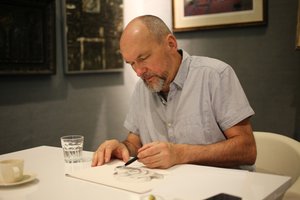
Jacek Yerka
1952 - , Polonia
Datos clave
- Artistic Movement Or Style: Surrealista
- Artists Or Movements Influenced By This Artist: ['Flandes']
- Artists Who Influenced This Artist:
- Hieronymus Bosch
- Pieter Bruegel
- Jan van Eyck
- Date Of Birth: 1952
- Full Name: Jacek Yerka
- Nationality: Polaco
- Notable Artworks:
- Los Ángeles de la Cocina
- Teoría Wegener
- Place Of Birth: Toruń, Polonia
Artículos relacionados
Divine Beauty: A Curated Guide to the Celestial Majesty of Angelic Figures in Art History
Explore the profound beauty of angelic figures in art history. From Renaissance masterpieces to celestial symbolism, our expert guide offers a sophisticated journey through the divine imagery of the Old Masters for discerning collectors and art enthusiasts.

Celestial Messengers: Angels in Painting – A Historical & Artistic Exploration
Explore the captivating history of angels in painting! Discover symbolism, iconic Renaissance & Byzantine masterpieces, and renowned artists. Expert insights for art lovers & collectors at OriginalUniqueArt.

Jacek Yerka: Surreal Visions & Nostalgia in Contemporary Polish Painting
Explore the captivating surreal worlds of Jacek Yerka, a leading Polish painter renowned for his meticulous Flemish technique & dreamlike landscapes. Discover his unique style and learn about collecting this exceptional artist's work.
Los 10 Maestros del Surrealismo: Obras que Revolucionaron el Arte y la Decoración
Descubre los 10 lienzos surrealistas más influyentes de artistas como Dalí y Magritte. Explora la historia, el simbolismo y las técnicas del movimiento surrealista. Encuentra reproducciones de arte de museo en OriginalUniqueArt.com.

Celestial Messengers: A Comprehensive Exploration of Angelic Representation in Art History
Explore the captivating history of angels in art! Discover symbolism, iconic Renaissance masterpieces & renowned artists. Expert insights for art lovers & collectors at OriginalUniqueArt.