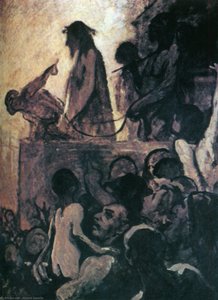
Vista previa
 Compartir
 Compartir
 Ver detalles

 Descargar
 Ver similares
 Radiografía
 Presentación de diapositivas
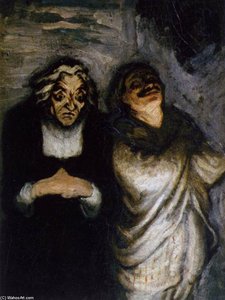
Guizot or the Bore
 Acrylic On Canvas
- WallArt
- Contemporary Realism
 1832
1832 22.0 x 14.0 cm
 Museo de Orsay
 Leer más
Giclée / Impresión de arte
Impresiones giclée o en lienzo de calidad de museo con producción rápida y opciones de acabado flexibles. ( Encargar reproducción pintada a mano Comprar descarga)




P118B $10

P118H $10

P118W $10

P438Z $10

P508JH $12

P508YH $12

P805H $10

P805Z $10

P919BZ $10

P919G $10

P919XJ $10

P959ZH $10

P968JZ $12

W106C $8

W218G $10

W218JH $8

W218Y $10

W307PJ $10

W316G $10

W316PJ $8

W316Y $10

W398PJ $8

W4111J $10

W500HY $15

W500JH $15

W692G $12

W849H $8

W940BG $15

W953PJ $8




Elija entre nuestros tamaños predefinidos que respetan las proporciones originales de la obra.

Puede introducir sus propias dimensiones para adaptarse a un marco o espacio específico. Si el tamaño seleccionado no coincide con las proporciones de la imagen original, recortaremos la obra de arte o extenderemos la imagen con un borde con efecto espejo o de color sólido. Se enviará una maqueta digital para su aprobación antes de que comience la producción.
Tenga en cuenta que la vista previa en pantalla no refleja el recorte o la extensión real. Solo la maqueta mostrará con precisión la composición final.
Aunque existen tamaños personalizados, recomendamos seleccionar una dimensión de la lista predefinida para preservar las proporciones originales.
Envío a todo el mundo () en 2 semanas en lugar de las 4/5 semanas estándar. (22 agosto)

Envío exprés gratuito a todo el mundo

Lienzo de lino de alta calidad

Seguro de envío completo

Garantía de reembolso de aranceles aduaneros

Garantía de fidelidad cromática exacta

Política de devolución de 60 días (solo por defectos)

Garantía de devolución del 100% del dinero

Oferta por volumen
 La opción de vidrio solo está disponible en tamaños inferiores a 110 cm.

Guizot or the Bore
Giclée / Impresión de arte
Tamaño de la reproducción
-


Precio total
$ 80
Descripción de la pieza
A Stark Portrait of Disillusionment: Honoré Daumier’s “Guizot or the Bore”
Honoré Daumier's "Guizot or the Bore," painted in 1832, isn’t merely a caricature; it’s a meticulously crafted indictment of political complacency and the stifling atmosphere of post-revolutionary France. The image, rendered in stark black and white lithograph, immediately confronts the viewer with a figure that is both recognizable and profoundly unsettling – François Pierre-Guillaume Guizot, a prominent liberal politician whose name became synonymous with tediousness and intellectual stagnation. Daumier doesn’t offer a flattering likeness; instead, he presents a man seemingly carved from granite, his face an impenetrable mask of boredom and self-importance. The details are remarkably precise: the meticulously rendered mustache, the rigid posture, the almost glacial stare directed squarely at the viewer – each element contributes to a portrait of profound detachment. It’s a deliberate choice, reflecting Daumier's lifelong commitment to exposing the hypocrisy and moral failings he observed within French society.The Context of Critique: Political Satire in 19th-Century France
To fully appreciate “Guizot or the Bore,” one must understand the tumultuous political landscape of 1832. Following the July Revolution, France was grappling with the aftermath of Napoleon’s empire and attempting to establish a stable constitutional monarchy under Louis Philippe. Daumier, a staunch republican democrat, used his art as a weapon against what he perceived as the corruption and inertia of the established order. His satirical cartoons, published in newspapers like *Le Charivari*, were wildly popular, offering sharp critiques of politicians, the aristocracy, and the bourgeoisie. Guizot himself was a key figure in this era, advocating for moderate reforms within the existing system – precisely the kind of cautious approach that Daumier so vehemently opposed. The painting isn’t simply a personal jab; it's a broader commentary on the dangers of prioritizing stability over genuine progress and reform.Technique and Symbolism: A Masterclass in Lithography
Daumier’s mastery of lithography is evident throughout “Guizot or the Bore.” The medium itself – stone printing – lends a certain coldness and precision to the image, mirroring the character's impassive demeanor. The stark contrasts between light and shadow are expertly manipulated, creating a dramatic effect that draws attention to Guizot’s face and emphasizing his rigid features. Notice how Daumier utilizes hatching and cross-hatching to build up texture and volume, particularly in the man’s clothing and hair. The background is deliberately devoid of detail, further isolating Guizot and reinforcing the sense of detachment. The very act of creating a lithograph – a process that involved transferring an image from a prepared stone onto paper – speaks to Daumier's commitment to directness and clarity in his artistic expression.Beyond the Portrait: A Reflection on Modernity
“Guizot or the Bore” transcends its immediate subject matter, offering a poignant meditation on the challenges of navigating modernity. The figure’s blank stare suggests an inability to engage with the world around him, a refusal to acknowledge the social and political realities that demand action. Daumier isn't simply criticizing Guizot; he’s critiquing a broader cultural malaise – a tendency towards intellectualism divorced from empathy and social responsibility. The painting resonates powerfully even today, reminding us of the importance of critical thinking, civic engagement, and resisting the allure of complacency. It serves as a timeless warning against allowing self-importance to overshadow genuine concern for the well-being of society. Reproductions of this powerful image continue to provoke thought and discussion, solidifying Daumier’s legacy as one of the most insightful and enduring satirists in art history.Biografía del artista
Una Vida de Arte y Activismo
Honoré-Victorin Daumier, un grabador, caricaturista, pintor y escultor francés, dejó una huella imborrable en la escena artística del siglo XIX. Nacido en Marsella el 26 de febrero de 1808 y fallecido en París el 10 de febrero de 1879, la vida de Daumier fue un testimonio de su inquebrantable dedicación a capturar la esencia de la sociedad francesa.Primeros Años e Influencias
La primera infancia de Daumier se vio marcada por las aspiraciones poéticas de su padre, lo que llevó a la familia a mudarse a París en 1814. Esta exposición a la vibrante escena artística de la ciudad influyó en su inclinación hacia el arte. Comenzó su aprendizaje con Alexandre Lenoir y luego ingresó a la Académie Suisse.Trayectoria Artística
La prolífica carrera de Daumier abarcó múltiples medios, incluyendo la litografía, la pintura y la escultura. Su trabajo temprano se caracterizó por contribuciones anónimas a editoriales, emulando el estilo de Charlet y mostrando un ferviente entusiasmo por la leyenda napoleónica. Tras la revolución de 1830, su arte se volvió más abiertamente político.- Le Charivari, un periódico cómico lanzado por Charles Philipon, proporcionó una plataforma para el trabajo satírico de Daumier, apuntando a la burguesía y la incompetencia del gobierno.
- Sus caricaturas de figuras políticas y sátiras sobre el comportamiento social le valieron tanto elogios como controversias, incluyendo un encarcelamiento de seis meses en 1832.
Obras Destacadas y Legado
- Rue Transnonain, 15 de abril de 1834: Una conmovedora litografía que representa la masacre en la rue Transnoin, parte de los disturbios de abril de 1834 en París.
- Les Gens de Justice: Una satíra mordaz sobre la profesión legal, que muestra la maestría de Daumier en la caricatura.
- Explore las litografías y pinturas de Daumier en OriginalUniqueArt.
- Descubra más sobre los movimientos artísticos franceses, incluyendo el realismo, en Wikipedia.
Conclusión
La vida de Daumier fue un testimonio de su inquebrantable dedicación a capturar la esencia de la sociedad francesa. A través de su arte, continúa inspirando y provocando, ofreciendo una ventana única al siglo XIX francés.- El Musée d'Orsay en París exhibe algunas de las esculturas de arcilla sin cocer restauradas de Daumier.
- Aprenda más sobre la vida y obra de Daumier en OriginalUniqueArt.

Honoré Daumier
1808 - 1879 , Francia
Datos clave
- Artistas Que Influyeron:
- Alexandre Lenoir
- Charlet
- Fecha De Fallecimiento: 10 de febrero de 1879
- Fecha De Nacimiento: 26 de febrero de 1808
- Influenciado A Artistas: ['Generaciones de artistas']
- Lugar De Nacimiento: Marsella, Francia
- Movimiento Artístico: Realismo, caricatura
- Nacionalidad: Francesa
- Nombre Completo: Honoré Victorin Daumier
- Obras Notables:
- Rue Transnonain, 15 de abril de 1834
- Les Gens de Justice
- Nous voulons Barabbas (Ecce Homo)
Artículos relacionados
Honoré Daumier: Social Commentary & Artistic Innovation in 19th-Century France
Explore the life & work of Honoré Daumier, a master of 19th-century French realism and satire. Discover his powerful lithographs, paintings, and sculptures critiquing society – and his lasting influence on modern art.
The Sharpest Wit: A Historical Exploration of Satire in Visual Culture
Explore the history of satire in art! From ancient masters like Aristophanes to Goya & Grosz, discover how artists use wit and critique to reflect—and challenge—society. Expert insights at OriginalUniqueArt.
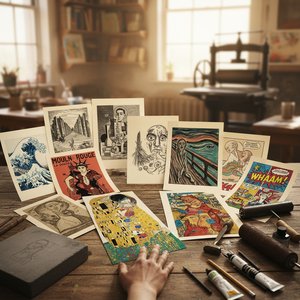
Las 10 Litografías Legendarias que Revolucionaron el Arte | OriginalUniqueArt
Descubre las 10 litografías legendarias de Toulouse-Lautrec, Munch y Goya que revolucionaron el arte. Explora su historia, técnica y significado en OriginalUniqueArt.com. Reproducciones de museo para tu hogar.
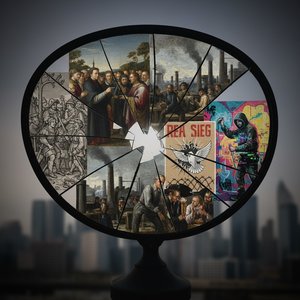
Reflecting Society's Shadows: Social Commentary in Art Through the Ages
Explore the powerful history of social commentary in art! Discover key artists like Hogarth & Daumier, movements from Realism to American Social Realism, and how art reflects—and challenges—society. Expert insights at OriginalUniqueArt.
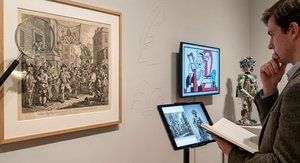
The Sharpest Wit: A Critical Exploration of Satire in Art History – From Hogarth to Contemporary Critique
Explore the history of satire in art! From Hogarth's London to contemporary critique, discover how artists use wit & visual power to reflect and challenge society. Expert insights at OriginalUniqueArt.