Vista previa
 Compartir
 Compartir
 Ver detalles
 Guía
Guía

 Descargar
 Ver artículos similares
 Radiografía
 Presentación de diapositivas
 Estadísticas
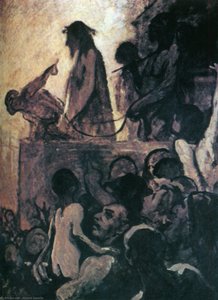
Ecce Homo


 Leer más
Reproducción al óleo hecha a mano
Óleo sobre lienzo pintado a mano en el tamaño y marco de su elección, realizado por encargo por nuestros artistas. ( Cambiar a formato impreso Ver versión en imagen digital)




P118B $10

P118H $10

P118W $10

P438Z $10

P508JH $12

P508YH $12

P805H $10

P805Z $10

P919BZ $10

P919G $10

P919XJ $10

P959ZH $10

P968JZ $12

W106C $8

W218G $10

W218JH $8

W218Y $10

W307PJ $10

W316G $10

W316PJ $8

W316Y $10

W398PJ $8

W4111J $10

W500HY $15

W500JH $15

W692G $12

W849H $8

W940BG $15

W953PJ $8




Elija entre nuestros tamaños predefinidos que respetan las proporciones originales de la obra.

Puede ingresar sus propias dimensiones para adaptarse a un marco o espacio específico. Si el tamaño seleccionado no coincide con las proporciones de la imagen original, recortaremos la obra o extenderemos la pintura con elementos adicionales pintados a mano. Se le enviará una maqueta digital para su aprobación antes de comenzar la producción.
Tenga en cuenta que la vista previa en pantalla no refleja el recorte o la extensión reales. Solo la maqueta mostrará con precisión la composición final.
Si bien existen tamaños personalizados, recomendamos seleccionar una dimensión de la lista predefinida para preservar las proporciones originales.
Tras realizar el pedido, el equipo de OriginalUniqueArt.com enviará un correo electrónico al cliente para solicitar instrucciones y proporcionarle una vista previa del boceto.
Envío a todo el mundo () en 3-4 semanas en lugar de las 5 semanas estándar. (26 septiembre). Sin comprometer la calidad.

Envío exprés gratuito a todo el mundo

Lienzo de lino de alta calidad

Seguro de envío completo

Garantía de reembolso de impuestos aduaneros

Garantía de fidelidad cromática exacta

Política de devolución de 100 días (solo por defectos)

Garantía de devolución del 100% del dinero

Oferta por volumen
 La opción de vidrio solo está disponible en tamaños inferiores a 110 cm.

Ecce Homo
Técnica de reproducción
Tamaño de la reproducción
-


Precio total
$ 300
A Vision of Raw Humanity: Daumier’s Ecce Homo
In the mid-19th century, as the world began to shift under the weight of industrialization and political upheaval, Honoré Daumier captured a moment of profound spiritual and social tension. His 1850 masterpiece, Ecce Homo, is far more than a mere biblical illustration; it is a visceral encounter with the essence of human suffering. The painting captures the harrowing instant when Pontius Pilate presents a battered Jesus Christ to a judgmental crowd, uttering the fateful words, "Behold the Man." Through his unflinching lens, Daumier strips away the gilded, idealized layers often found in religious iconography, replacing them with a stark, heavy realism that forces the viewer to confront the uncomfortable truth of injustice and the weight of collective condemnation.
The composition is a masterclass in psychological depth and dramatic tension. Daumier utilizes a technique deeply rooted in the tradition of chiaroscuro, a method he refined by studying the dramatic light and shadow of masters like Rubens. This interplay of light and dark does not merely illuminate the scene; it sculpts the very emotions of the figures. A luminous, almost ethereal glow surrounds the central figure of Christ, yet this light does not offer comfort—instead, it serves to highlight his isolation against a backdrop of grim, shadowed faces. The crowd is not a monolithic entity but a collection of individual gazes: some are filled with mockery, others with a haunting, silent observation, creating a sense that the viewer is standing right there in the dust and heat of the Roman trial.
The Artistry of Realism and Emotional Resonance
Technically, Ecce Homo showcases Daumier’s extraordinary command over oil on canvas. His brushwork avoids the superficial prettiness of the era, opting instead for a textured, robust application that mirrors the grit of the subject matter. The palette is dominated by earthy, somber tones—deep browns, muted ochres, and heavy shadows—which ground the divine event in a tangible, earthly reality. This commitment to Realism allows the painting to transcend its historical period; it becomes a universal symbol of compassion amidst cruelty. For the collector or the lover of fine art, this piece offers a profound sense of gravity, making it an anchor for any sophisticated interior.
For those looking to integrate such a powerful work into a curated space, Ecce Homo serves as a magnificent focal point. Its ability to command attention through tonal complexity and emotional weight makes it ideal for galleries or study rooms where art is intended to provoke thought and conversation. A high-quality reproduction of this work preserves the subtle gradations of Daumier’s shadows and the raw, expressive lines of his draftsmanship, allowing the haunting beauty of this 19th-century triumph to breathe within a modern setting. It is an invitation to look closer, to feel the weight of history, and to find beauty in the most honest depictions of the human condition.
Biografía del artista
Una Vida de Arte y Activismo
Honoré-Victorin Daumier, un grabador, caricaturista, pintor y escultor francés, dejó una huella imborrable en la escena artística del siglo XIX. Nacido en Marsella el 26 de febrero de 1808 y fallecido en París el 10 de febrero de 1879, la vida de Daumier fue un testimonio de su inquebrantable dedicación a capturar la esencia de la sociedad francesa.Primeros Años e Influencias
La primera infancia de Daumier se vio marcada por las aspiraciones poéticas de su padre, lo que llevó a la familia a mudarse a París en 1814. Esta exposición a la vibrante escena artística de la ciudad influyó en su inclinación hacia el arte. Comenzó su aprendizaje con Alexandre Lenoir y luego ingresó a la Académie Suisse.Trayectoria Artística
La prolífica carrera de Daumier abarcó múltiples medios, incluyendo la litografía, la pintura y la escultura. Su trabajo temprano se caracterizó por contribuciones anónimas a editoriales, emulando el estilo de Charlet y mostrando un ferviente entusiasmo por la leyenda napoleónica. Tras la revolución de 1830, su arte se volvió más abiertamente político.- Le Charivari, un periódico cómico lanzado por Charles Philipon, proporcionó una plataforma para el trabajo satírico de Daumier, apuntando a la burguesía y la incompetencia del gobierno.
- Sus caricaturas de figuras políticas y sátiras sobre el comportamiento social le valieron tanto elogios como controversias, incluyendo un encarcelamiento de seis meses en 1832.
Obras Destacadas y Legado
- Rue Transnonain, 15 de abril de 1834: Una conmovedora litografía que representa la masacre en la rue Transnoin, parte de los disturbios de abril de 1834 en París.
- Les Gens de Justice: Una satíra mordaz sobre la profesión legal, que muestra la maestría de Daumier en la caricatura.
- Explore las litografías y pinturas de Daumier en OriginalUniqueArt.
- Descubra más sobre los movimientos artísticos franceses, incluyendo el realismo, en Wikipedia.
Conclusión
La vida de Daumier fue un testimonio de su inquebrantable dedicación a capturar la esencia de la sociedad francesa. A través de su arte, continúa inspirando y provocando, ofreciendo una ventana única al siglo XIX francés.- El Musée d'Orsay en París exhibe algunas de las esculturas de arcilla sin cocer restauradas de Daumier.
- Aprenda más sobre la vida y obra de Daumier en OriginalUniqueArt.

Honoré Daumier
1808 - 1879 , Francia
Datos clave
- Artistas Que Influyeron:
- Alexandre Lenoir
- Charlet
- Fecha De Fallecimiento: 10 de febrero de 1879
- Fecha De Nacimiento: 26 de febrero de 1808
- Influenciado A Artistas: ['Generaciones de artistas']
- Lugar De Nacimiento: Marsella, Francia
- Movimiento Artístico: Realismo, caricatura
- Nacionalidad: Francesa
- Nombre Completo: Honoré Victorin Daumier
- Obras Notables:
- Rue Transnonain, 15 de abril de 1834
- Les Gens de Justice
- Nous voulons Barabbas (Ecce Homo)
Artículos relacionados

¿El Arte que Habita Contigo: El Poder Emocional de un Fresco Interior Personalizado?
Descubre el poder emocional de un fresco interior personalizado. Expertos en arte te guían para crear una obra única que refleje tu estilo y valore tu hogar. : calidad, confianza y diseño excepcional.

Legado en las Paredes: Frescos Familiares que Trascienden el Tiempo
Descubre el arte del fresco muralístico para inmortalizar tu historia familiar. Expertos en frescos personalizados y técnicas ancestrales. Crea un legado visual único con .

The Enduring Legacy of Fresco: Technique, History & Artistic Expression Across Cultures
Explore the rich history & enduring legacy of fresco painting! Discover ancient techniques, Giotto's masterpieces, and modern applications. Expert insights for art lovers & professionals.
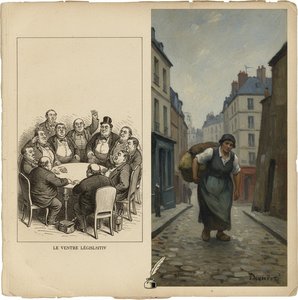
Honoré Daumier: Social Commentary & Artistic Innovation in 19th-Century France
Explore the life & work of Honoré Daumier, a master of 19th-century French realism and satire. Discover his powerful lithographs, paintings, and sculptures critiquing society – and his lasting influence on modern art.
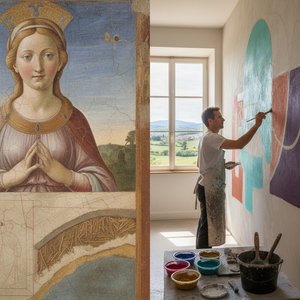
The Enduring Legacy of Fresco Painting: Techniques, History & Contemporary Relevance
Explore the rich history & enduring artistry of fresco painting – from Giotto to Michelangelo! Discover techniques, conservation efforts, & modern applications. Learn how OriginalUniqueArt brings this timeless art form to your home.