- Inicio

- Reproducción al óleo
- heri dono
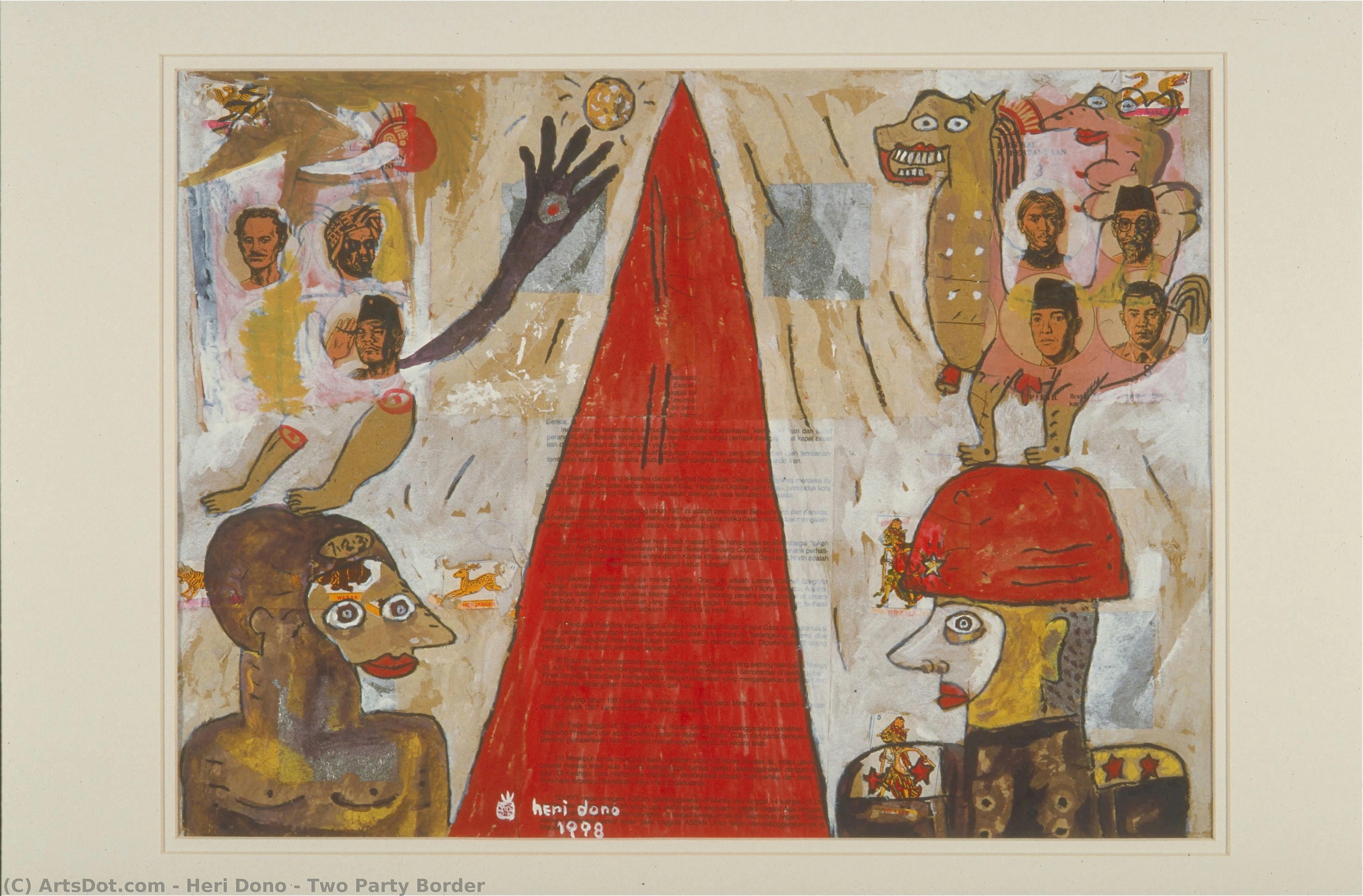
- Two Party Border
 Preview
 Comprar impresión Comprar imagen en alta resolución
 Enviar
 Compartir
 Detalles
 Añadir a favoritos

 Descargar
 Similares
 Radiografía
 Presentación de diapositivas
Two Party Border
 1998
1998 788.0 x 665.0 cm
 Museo Nacional de Singapur
 Ver más
Reproducción al óleo hecha a mano
Óleo sobre lienzo pintado a mano en el tamaño y marco de su elección, realizado por encargo por nuestros artistas.




































Elija entre nuestros tamaños predefinidos que respetan las proporciones originales de la obra.

Puede ingresar sus propias dimensiones para adaptarse a un marco o espacio específico. Si el tamaño seleccionado no coincide con las proporciones de la imagen original, recortaremos la obra o extenderemos la pintura con elementos adicionales pintados a mano. Se le enviará una maqueta digital para su aprobación antes de comenzar la producción.
Tenga en cuenta que la vista previa en pantalla no refleja el recorte o la extensión reales. Solo la maqueta mostrará con precisión la composición final.
Si bien existen tamaños personalizados, recomendamos seleccionar una dimensión de la lista predefinida para preservar las proporciones originales.
Tras realizar el pedido, el equipo de OriginalUniqueArt.com enviará un correo electrónico al cliente para solicitar instrucciones y proporcionarle una vista previa del boceto.
Entrega mundial () en 3-4 semanas en lugar de las 5 semanas estándar. (26 julio). Sin compromisos con la calidad.

Envío exprés gratuito a todo el mundo

Lienzo de lino de alta calidad

Seguro de envío total

Garantía de reembolso de impuestos aduaneros

Garantía de fidelidad de color

Política de devolución de 60 días (solo por defectos)

Garantía de devolución del 100% del dinero

Descuento por pedido múltiple
 La opción de vidrio solo está disponible en tamaños inferiores a 110 cm.

Two Party Border
Técnica de reproducción
Tamaño de la reproducción
-


Precio total final
-
Descripción de la obra
Biografía del artista
Heri Dono: Bridging Tradition and Innovation in Indonesian Art
Heri Dono (born June 12, 1960) stands as a pivotal figure in contemporary Indonesian art, recognized for his distinctive approach that seamlessly blends the rich heritage of Javanese folklore—particularly wayang kulit shadow puppetry—with influences from Western artistic movements and global cultural dialogues. His journey began amidst the vibrant intellectual landscape of Yogyakarta’s Indonesian Art Institute (ISI), where he honed his skills and established a foundational understanding of both traditional aesthetics and experimental techniques.
- Early Influences: Dono's formative years were marked by exposure to the artistic legacy of Indonesia’s masters, notably Sukarno’s collection at the Presidential Palace in Bogor. This early encounter instilled within him a profound appreciation for visual art and fueled his ambition to emulate the celebrated painters whose canvases adorned the palace walls.
- Formal Education: He pursued undergraduate studies in Painting at ISI Yogyakarta from 1980 to 1987, immersing himself in rigorous artistic training and developing a mastery of painting techniques that would underpin his subsequent creative endeavors.
- Exploration Beyond Painting: Recognizing the limitations of solely focusing on painting, Dono ventured into sculpture and installation art, experimenting with diverse materials—from reclaimed wood to found objects—to convey complex narratives and engage audiences in immersive experiences.
His artistic vision is characterized by a deliberate juxtaposition of seemingly disparate elements: traditional Indonesian motifs like wayang kulit figures and tau tau sculptures alongside references to Western pop culture, animation, and comics. This fusion reflects Dono’s belief that art should transcend cultural boundaries and challenge conventional perspectives on artistic expression.
- Wayang Kulit Inspiration: The profound influence of wayang kulit performances—characterized by storytelling, music, visual spectacle, and symbolic representation—is evident throughout his oeuvre. He seeks to capture the essence of these traditions while simultaneously incorporating multimedia elements to amplify their impact on viewers.
- Social Commentary: Dono’s artworks frequently grapple with pressing social issues, addressing themes of identity, displacement, and cultural preservation. His artistic practice serves as a conduit for critical reflection and encourages dialogue about societal concerns.
Throughout his prolific career spanning decades, Dono has garnered international acclaim, participating in numerous exhibitions and biennales across continents—from Asia Pacific Triennial to Venice Biennale—and securing prestigious awards recognizing his contributions to the art world. Notably, he was awarded the Dutch Prince Claus Award for Culture and Development in 1998, acknowledging his commitment to fostering intercultural understanding and promoting artistic innovation.
- Notable Exhibitions: Dono’s work has graced venues worldwide including Asia Pacific Triennial (1993 & 2000), Gwangju Biennale (1995 & 2006), Sydney Biennale (1996), Shanghai Biennale (2000), Venice Biennale (2003 & 2015), Sharjah Biennial (2005 & 2023), Guangzhou Triennale (2011), Kochi-Muziris Biennale (2018), Bangkok Art Biennale (2018), and Gangwon Kids Triennale (2020).
- Awards Recognition: He received UNESCO Prize in 2000, Indonesian Art Award by the Government of Republic of Indonesia (2014)
Heri Dono’s enduring legacy resides not only in his artistic output but also in his role as a champion of intercultural dialogue and a visionary artist who dared to reimagine art's capacity for social transformation. His distinctive style—characterized by bold colors, dynamic compositions, and evocative imagery—continues to inspire artists globally and solidify his position as one of Indonesia’s most influential contemporary voices.

heri dono
1960 - , Indonesia
Datos clave
- Artistic Movement Or Style: Contemporary Installation Art
- Artists Or Movements Influenced By This Artist: ['Animism']
- Artists Who Influenced This Artist:
- Walt Disney
- Hanna-Barbera
- Date Of Birth: June 12, 1960
- Full Name: Heri Dono
- Nationality: Indonesian
- Notable Artworks:
- In the Fridge and Fire (Di dalam Kulkas dan..., 2009)
- A Small Dog With His Guardian (Seekor Anjing , 2015)
- Place Of Birth: Jakarta, Indonesia

