

 Ver en contexto
 Enviar
 Compartir
 Detalles
 Guía
Guía

 Descargar
 Similares
 Radiografía
 Presentación de diapositivas
 Estadísticas
Crémieu
 Oil On Canvas
- WallArt
- Romanticism
 1847
1847 38.0 x 46.0 cm
 Fitzwilliam College
 Ver más
Giclée / Impresión de arte
Impresiones giclée o en lienzo de calidad de museo con producción rápida y opciones de acabado flexibles. ( Comprar pintura hecha a mano Cambiar a imagen digital)




P118B €10

P118H €10

P118W €10

P438Z €10

P508JH €12

P508YH €12

P805H €10

P805Z €10

P919BZ €10

P919G €10

P919XJ €10

P959ZH €10

P968JZ €12

W106C €8

W218G €10

W218JH €8

W218Y €10

W307PJ €10

W316G €10

W316PJ €8

W316Y €10

W398PJ €8

W4111J €10

W500HY €15

W500JH €15

W692G €12

W849H €8

W940BG €15

W953PJ €8




Elija entre nuestros tamaños predefinidos que respetan las proporciones originales de la obra.

Introduzca el ancho y el alto que necesite para adaptarse a su marco o pared. Una impresión solo puede recortarse, nunca hacerse más grande que la imagen original, por lo que un tamaño con una forma distinta perderá parte de la obra. Le enviaremos una maqueta digital para su aprobación antes de realizar cualquier impresión. La imagen que se muestra en esta página no refleja el recorte real; solo la maqueta lo hace.
Envío a todo el mundo () en 2 semanas en lugar de las 4/5 semanas estándar. (25 octubre)

Envío exprés gratuito a todo el mundo

Lienzo de lino de alta calidad

Seguro de envío total

Garantía de reembolso de aranceles aduaneros

Garantía de fidelidad cromática exacta

Política de devolución de 100 días (solo por defectos)

Garantía de devolución del 100% del dinero

Descuento por cantidad
 La opción de vidrio solo está disponible en tamaños inferiores a 110 cm.

Crémieu
Giclée / Impresión de arte
Dimensiones de la reproducción
-


Precio total final
€ 70
A Dramatic Vista of the French Countryside
Henri-Joseph Harpignies’ “Crémieu” (1847) is more than just a landscape painting; it's an immersive experience, a carefully constructed tableau that invites contemplation on the relationship between humanity and the vastness of nature. The scene unfolds within the foothills of the French Alps, depicting a rugged, almost primordial terrain dominated by towering cliffs and a winding path that draws the eye relentlessly into the distance. The painting immediately establishes a sense of solitude and grandeur – an emotional resonance deeply rooted in the Romantic tradition, yet subtly informed by Harpignies’ meticulous observation of light and texture.

The composition is masterfully executed, utilizing a strong diagonal line created by the path to guide the viewer’s gaze and establish a dynamic flow through the scene. The foreground, rendered in earthy browns and ochres, features a dirt road and scattered rocks, gradually transitioning into the imposing cliffs that form the central focus of the painting. These cliffs aren't merely geological formations; they possess an almost sculptural quality, their weathered surfaces hinting at centuries of exposure to the elements. In the distance, a subtle atmospheric perspective – a softening of colors and details as depth increases – suggests the immense scale of the landscape and evokes a feeling of both awe and vulnerability.
The Barbizon School and Luminism
Harpignies’ work firmly places him within the context of the Barbizon School, a movement that championed direct observation of nature and a rejection of academic artifice. Unlike earlier landscape painters who relied heavily on idealized representations, the Barbizon artists sought to capture the essence of the French countryside as they experienced it – with its rough textures, subtle shifts in light, and inherent imperfections. “Crémieu” exemplifies this approach, eschewing smooth brushstrokes and carefully blended colors in favor of visible marks that convey a sense of immediacy and spontaneity. Furthermore, the painting’s emphasis on atmospheric effects aligns closely with Luminism, a style characterized by its soft, diffused lighting and focus on capturing the subtle nuances of light and shadow.
Born in Valenciennes in 1819, Harpignies initially pursued a business career before dedicating himself to art. His early training under Jean Achard instilled in him a solid foundation in draughtsmanship, while his subsequent journey to Italy exposed him to the principles of the Barbizon School and fostered a deep appreciation for the Italian landscape tradition. The painting’s muted palette – dominated by browns, greens, and grays – contributes significantly to its evocative atmosphere, creating a sense of quiet contemplation and timelessness.
Symbolism and Emotional Resonance
Beyond its technical merits, “Crémieu” carries a subtle symbolic weight. The solitary path winding through the landscape can be interpreted as a metaphor for the human journey – a quest for meaning and purpose amidst the vast uncertainties of life. The towering cliffs represent both strength and vulnerability, reminding us of our own smallness in the face of nature’s power. The painting's overall mood is one of serene solitude, inviting viewers to pause and reflect on their place within the natural world.
Interestingly, the village of Crémieu itself, depicted in the painting, holds a rich history. Situated near Lyon, it served as an important trading center throughout the Middle Ages, benefiting from its strategic location along trade routes. The presence of a medieval castle and monastic settlements further adds to the painting’s historical context.
A Masterpiece for Collectors
“Crémieu” is a testament to Harpignies' skill as a landscape painter and his ability to capture the beauty and drama of the French countryside. Reproductions of this captivating artwork are available through OriginalUniqueArt, offering an opportunity to bring its evocative atmosphere into your home or office. Its timeless appeal and rich symbolism make it a valuable addition to any art collection.
Preguntas y respuestas
¿Qué emoción transmite "Crémieu" de Henri-Joseph Harpignies?
"Crémieu" de Henri-Joseph Harpignies transmite un tono emocional Nostalgic.
¿Qué tamaño se recomienda para "Crémieu" en un Living Room?
Para un/a Living Room, el tamaño de impresión recomendado para "Crémieu" de Henri-Joseph Harpignies es Medium.
¿Cómo puedo conseguir una lámina de "Crémieu" de Henri-Joseph Harpignies?
Para obtener una impresión de "Crémieu" de Henri-Joseph Harpignies, simplemente pídala en su página de Impresión de arte de bellas artes: una impresión de bellas artes sobre lienzo de algodón o papel de lienzo de archivo.
Biografía del artista
Henri-Joseph Harpignies: Una Vida en Paisaje
Primeros Años y Formación
Nacido el 28 de junio de 1819, en Valenciennes, Francia, Henri-Joseph Harpignies inicialmente se enfrentó a las expectativas parentales para seguir una carrera empresarial. Sin embargo, su pasión por el arte era demasiado fuerte para ignorarla. De origen belga, los planes iniciales de su familia fueron puestos de lado mientras se dedicaba a convertirse en artista. A los veintiocho años, comenzó formalmente su formación artística en París, ingresando al taller de Jean Achard. Este período fundamental se centró en desarrollar sólidas habilidades de dibujo – un elemento crucial que permanecería central en la obra de Harpignies.
La Escuela de Barbizon y la Influencia Italiana
Después de dos años bajo la tutela de Achard, Harpignies emprendió un viaje decisivo a Italia en 1848. Esta experiencia moldeó profundamente su visión artística. Al regresar en 1850, se hizo amigo de los principales exponentes de la Escuela de Barbizon, incluyendo Jean-Baptiste-Camille Corot. La énfasis de los pintores de Barbizon en la observación directa de la naturaleza y su representación realista de la vida rural resonó profundamente con Harpignies. En 1860, consolidó aún más su conexión artística con Corot a través de un viaje colaborativo de regreso a Italia.
Desarrollo Artístico y Estilo
El estilo de Harpignies se caracteriza por sus representaciones serenas e idílicas del paisaje francés. Maestralmente capturó los sutiles matices de la luz y la atmósfera, creando paisajes que evocan una sensación de tranquilidad y armonía. Su técnica involucraba la observación cuidadosa combinada con un entendimiento refinado de la composición. Si bien estuvo influenciado por el realismo de la Escuela de Barbizon, Harpignies desarrolló su propia voz distintiva, a menudo incorporando una sensibilidad poética en su obra.
Obras Notables
- Soir sur les bords de la Loire (Tarde a orillas del Loira) – 1861: Un ejemplo fundamental de sus paisajes atmosféricos, que muestra la belleza del Valle del Loira.
- Les corbeaux (Los cuervos) – 1865: Demuestra su habilidad para capturar el ambiente y los detalles dentro de un entorno natural.
- Le soir (La tarde) – 1866: Una representación cautivadora de la tranquila belleza del crepúsculo.
- La loire (El Loira) – 1882: Otra impresionante representación del río Loira, que destaca su maestría en la luz y el agua.
- Vue de Saint-Privé (Vista de Saint-Privé) – 1883: Una escena pintoresca que muestra un encantador pueblo francés.
Legado e Influencia
El legado artístico de Harpignies se extiende más allá de sus propios cuadros. Fue un maestro dedicado, transmitiendo su conocimiento y habilidades a numerosos estudiantes, incluyendo Émile Appay (1876-1935) y James Wilson Morrice (1865-1924). Su influencia se puede ver en el desarrollo de la pintura de paisajes francesa a lo largo del final del siglo XIX y principios del XX. Ayudó a consolidar el impacto de la Escuela de Barbizon en las generaciones posteriores de artistas.
Significado Histórico
Henri-Joseph Harpignies ocupa un lugar importante en la historia de la pintura de paisajes francesa. Su obra refleja una profunda apreciación por la naturaleza y un compromiso para capturar su belleza con honestidad y sensibilidad. Murió en 1916, dejando atrás un rico legado artístico que continúa inspirando y cautivando a audiencias hoy en día. Sus pinturas se conservan en importantes colecciones de museos, incluyendo el Musée des Beaux-Arts Valence, asegurando su reconocimiento perdurable como maestro del arte paisajístico.
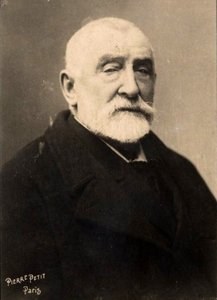
Henri-Joseph Harpignies
1819 - 1916 , Francia
Datos clave
- Artistic Movement Or Style: Escuela de Barbizon
- Artists Or Movements Influenced By This Artist: ['Escuela Impresionista']
- Artists Who Influenced This Artist:
- Jean Achard
- Jean Baptiste Camille Corot
- Date Of Birth: 28 junio 1819
- Date Of Death: 28 agosto 1916
- Full Name: Henri-Joseph Harpignies
- Nationality: Francés
- Notable Artworks:
- Soir sur les bords de la Loire
- Les Corbeaux
- Le Saut-du-Loup
- Place Of Birth: Valenciennes, Francia
Artículos relacionados

Paisajes Románticos: 10 Obras Maestras que Definieron un Movimiento Artístico
Descubre los 10 paisajes románticos más influyentes de artistas como Caspar David Friedrich y Turner. Explora la belleza, el simbolismo y las técnicas del movimiento romántico. Reproducciones de arte exclusivas en OriginalUniqueArt.com.

Evoking Nature's Sublime: A Comprehensive Exploration of 19th-Century Landscape Painting
Explore the captivating world of 19th-century landscape painting! Discover renowned artists like Friedrich & Monet, key movements, and find the perfect artwork to bring nature's serenity into your home. Expert insights at OriginalUniqueArt.
Paul Huet: Capturing the Essence of French Romanticism Through Light and Landscape
Explore the captivating world of Paul Huet (1803-1869), a master of French Romantic landscape painting. Discover his influence on Barbizon & Impressionism, and browse high-quality reproductions at OriginalUniqueArt.
Evoking Emotion & Transcendence: Romantic Landscape Painting (18th-19th Century)
Explore the emotional depth of Romantic landscape painting (18th-19th century). Discover key artists like Friedrich & Cole, and the concepts of the sublime. Expert insights for art lovers & collectors.
Henri-Joseph Harpignies: Capturing the Poetic Essence of the French Landscape
Explore the serene landscapes of Henri-Joseph Harpignies, a master of the Barbizon School. Discover his atmospheric paintings, recurring themes & enduring legacy in 19th-century French art. Learn more at OriginalUniqueArt.


