

 Vista previa
 Compartir
 Compartir
 Ver detalles
 Guía
Guía

 Descargar
 Ver artículos similares
 Radiografía
 Presentación de diapositivas
 Estadísticas
Mercurius
 Oil On Canvas
- WallArt
- Northern Mannerism
 1611
1611 214.0 x 120.0 cm
 Museo Frans Hals
 Leer más
Reproducción al óleo hecha a mano
Óleo sobre lienzo pintado a mano en el tamaño y marco de su elección, realizado por encargo por nuestros artistas. ( Cambiar a formato impreso Ver versión en imagen digital)




P118B €10

P118H €10

P118W €10

P438Z €10

P508JH €12

P508YH €12

P805H €10

P805Z €10

P919BZ €10

P919G €10

P919XJ €10

P959ZH €10

P968JZ €12

W106C €8

W218G €10

W218JH €8

W218Y €10

W307PJ €10

W316G €10

W316PJ €8

W316Y €10

W398PJ €8

W4111J €10

W500HY €15

W500JH €15

W692G €12

W849H €8

W940BG €15

W953PJ €8




Elija entre nuestros tamaños predefinidos que respetan las proporciones originales de la obra.

Escriba el ancho y el alto que necesite para adaptarse a su marco o a su pared. Al ser una obra pintada a mano, para un tamaño con una forma distinta, el artista puede pintar un poco más alrededor de la imagen o recortar un poco; usted elige. Le enviaremos una maqueta digital para su aprobación antes de comenzar la pintura. La imagen que se muestra en esta página no refleja el resultado real; solo la maqueta lo hace.
Tras realizar el pedido, el equipo de OriginalUniqueArt.com enviará un correo electrónico al cliente para solicitar instrucciones y proporcionarle una vista previa del boceto.
Envío a todo el mundo () en 3-4 semanas en lugar de las 5 semanas estándar. (22 octubre). Sin comprometer la calidad.

Envío exprés gratuito a todo el mundo

Lienzo de lino de alta calidad

Seguro de envío completo

Garantía de reembolso de impuestos aduaneros

Garantía de fidelidad cromática exacta

Política de devolución de 100 días (solo por defectos)

Garantía de devolución del 100% del dinero

Oferta por volumen
 La opción de vidrio solo está disponible en tamaños inferiores a 110 cm.

Mercurius
Técnica de reproducción
Tamaño de la reproducción
-


Precio total
€ 263
The Enigmatic Trio: Mercurius by Hendrik Goltzius
For centuries, the painting “Mercurius” – alongside its companions, Minerva and Hercules – existed as an inseparable trio, a testament to the humanist ideals of knowledge, skill, and virtue. Created in 1611 by the masterful Dutch printmaker Hendrick Goltzius, this work transcends mere portraiture; it’s a carefully constructed allegory, a visual embodiment of intellectual pursuits and their practical application. The painting, now residing at the Frans Hals Museum in Haarlem, offers a captivating glimpse into the artistic and philosophical landscape of early Baroque Netherlands.
Goltzius, born in Braunschweig (modern-day Germany) around 1558, was a pivotal figure in the transition from Mannerism to Baroque art. His training under Dirck Volckertszoon Coornhert instilled in him a profound understanding of engraving technique, but it was his own innovative approach – particularly his “swelling line” – that truly set him apart. This subtle manipulation of the burin allowed him to create lines of varying thickness and density, imbuing his prints with an unprecedented sense of depth and tonal complexity. "Mercurius," therefore, is a prime example of Goltzius’s technical brilliance, showcasing his mastery of line and shadow.
A Mythological Trinity: Symbolism and Interpretation
The painting's subject matter – the figures of Mercury, Minerva, and Hercules – draws directly from classical mythology. Mercury, the swift-footed messenger god, is depicted holding a paintbrush, instantly establishing his association with the arts. His caduceus, entwined with a snake, subtly references both commerce (the serpent’s tail) and healing—a potent symbol of knowledge and its transformative power. Minerva, the goddess of wisdom and strategic warfare, stands as a pillar of intellect and authority, her helmet and shield representing reason and defense against ignorance. Finally, Hercules, the hero renowned for his strength and virtue, embodies practical skill and the triumph over adversity – a direct reflection of the humanist ideal that linked theoretical knowledge with tangible achievement.
The arrangement of these figures is deliberate and symbolic. Minerva’s upright posture and commanding presence suggest leadership and guidance, while Hercules' youthful vigor represents the application of learned principles to real-world challenges. The inclusion of the young Johan Colterman Junior, likely modeled for Hercules, underscores the painting’s connection to the educational aspirations of its commissioning family – a lineage dedicated to both intellectual pursuits and civic responsibility.
A Window into Haarlem's Artistic World
“Mercurius” was created during a period of remarkable artistic flourishing in Haarlem, a vibrant center for printmaking and painting. The Colterman family’s patronage played a crucial role in fostering this environment, attracting artists like Goltzius and contributing to the city's reputation as a hub of innovation. The painting itself reflects the prevailing humanist values of the era – an emphasis on classical learning, civic engagement, and the pursuit of virtue through both intellectual understanding and practical action.
Interestingly, the painting’s history is intertwined with its physical dimensions. Slightly smaller than the earlier Minerva and Mercury works, it suggests a deliberate shift in scale or perhaps a variation in the model's proportions. The original frame also differed slightly from later iterations, adding another layer of intrigue to this already compelling artwork.
A Legacy of Skill and Symbolism
“Mercurius” by Hendrick Goltzius is more than just a beautiful painting; it’s a profound meditation on the relationship between knowledge, skill, and virtue. Through his masterful technique and carefully considered symbolism, Goltzius created an enduring image that continues to resonate with viewers today. Its presence at the Frans Hals Museum serves as a reminder of Haarlem's rich artistic heritage and the lasting impact of this remarkable trio of figures – Mercury, Minerva, and Hercules.
Preguntas y respuestas
¿Es "Mercurius" más bien clara o más bien oscura en su conjunto?
"Mercurius" de Hendrik Goltzius presenta un nivel de brillo de shadow, con una luminancia de Soft Shadow.
¿Qué edad tenía Hendrik Goltzius cuando creó "Mercurius" en 1611?
Cuando se creó "Mercurius" en 1611, Hendrik Goltzius —nacido/a en 1558— tenía 53 años.
¿Está "Mercurius" libre de derechos de autor?
La información sobre los derechos de autor de "Mercurius" de Hendrik Goltzius: la obra es en el dominio público: sus derechos de autor han expirado. Esto determina si las reproducciones de la imagen pueden realizarse libremente.
Biografía del artista
Hendrik Goltzius (1558–1617): Maestro neerlandés de manierismo nórdico y el Barroco en grabado
Hendrick Goltzius, nacido cerca de Viersen en Alemania, pertenecía a una larga línea de artistas: su abuelo paterno y otro padre eran pintores en Venlo, y su padre, Jan Goltz II (1534–después de 1609), era pintor de vidrio en Duisburg. El teórico artístico Karel van Mander, quien es la principal fuente de información sobre Goltzius y su obra, señala que Goltzius fue aprendiz del grabador Dirck Volckertszoon Coornhert y se trasladó con su maestro desde Xanten a Haarlem poco después de 1576. Goltzius se casó con la hija de Jacob Matham en 1583, estableciendo una familia que continuaría hasta el siglo XVII. Su ambición por alcanzar el éxito artístico lo impulsó a explorar nuevas vías y estilos, dejando un legado significativo en la historia del arte holandés.Vida temprana y formación
Hendrick Goltzius nació alrededor de enero o febrero de 1558 en Bracht (hoy parte de Brüggen), cerca de la frontera entre Alemania y los Países Bajos. Su familia se trasladó a Duisburg cuando él tenía tres años, donde su padre trabajaba como pintor de vidrio. Desde joven mostró interés por el arte, estudiando pintura sobre vidrio bajo la guía de su padre antes de dedicarse al grabado. Esta formación temprana fue fundamental para desarrollar su habilidad técnica y sensibilidad artística, cualidades que caracterizarían toda su vida profesional.El desarrollo del talento artístico
La deformación congénita de su mano derecha, resultado de un incendio cuando era bebé, resultó ser una ventaja física excepcional para realizar el grabado con precisión y fuerza. Esta característica distintiva le permitió dominar un movimiento rápido y potente de línea, convirtiendo sus grabados en obras maestras reconocidas por toda Europa. Coornhert fue quien introdujo a Goltzius en el mundo del grabado profesional, enseñándole las técnicas esenciales para esta disciplina artística y proporcionándole una formación sólida que marcaría el inicio de su carrera como artista independiente.El grabado: Técnica innovadora y estilo manierista
Goltzius fue pionero en la utilización de la llamada "línea hinchada", una técnica revolucionaria que consistía en manipular el burín para hacer líneas más gruesas o más delgadas, creando efectos tonales desde lejos. Esta innovación técnica, junto con su dominio absoluto del grabado, le permitió crear obras maestras que reflejaban la sensibilidad estética del manierismo nórdico y anticipaban las tendencias del barroco europeo. Su estilo se caracterizó por una expresividad dramática y una atención meticulosa al detalle, buscando transmitir emociones intensas y capturar la belleza de los objetos representados con una precisión sorprendente. Entre sus obras más destacadas destacan *El Juicio Final*, *La Virgen María con el Niño Jesús*, *El Nacimiento de Cristo* y numerosas escenas religiosas y mitológicas que muestran su profundo conocimiento del arte clásico y renacentista.Influencias y legado
Goltzius recibió una fuerte influencia artística de artistas como Jacob Matham y Bartholomäus Spranger, cuyo estilo manierista aportó elementos clave a su obra. Además, fue reconocido por otros maestros de la época como Rembrandt Harmenszoon van Rijn y Johannes Vermeer, quienes admiraban su habilidad técnica y sensibilidad estética. Goltzius dejó un legado duradero en la historia del arte holandés, estableciendo nuevos estándares de excelencia artística y convirtiéndose en uno de los artistas más importantes de su tiempo. Sus grabados siguen siendo estudiados y apreciados por expertos y amantes del arte en todo el mundo, testimonio de la fuerza creativa y la innovación técnica que caracterizaron su obra maestra.
Hendrik Goltzius
1558 - 1617 , Alemania
Datos clave
- Artistic Movement Or Style: Northern Mannerism & Baroque engraving
- Artists Who Influenced This Artist:
- Dirck Volckertszoon Coornhert
- Bartholomeus Spranger
- Date Of Birth: January/February 1558
- Full Name: Hendrick Goltzius
- Nationality: Dutch
- Notable Artworks:
- The Adoration of the Shepherds
- Arcadian Landscape
- Head of a Siren
- Hercules Killing Cacus
- Demogorgon and the Deities
- Apollo Belvedere
- The Last Supper
- Place Of Birth: Bracht, Germany
Artículos relacionados

Drama Barroca: Llevando la Grandeza y la Emoción a los Interiores Contemporáneos
Descubre cómo el drama y la grandeza del arte barroco pueden transformar tus interiores. Guía experta, inspiración y reproducciones de alta calidad en .
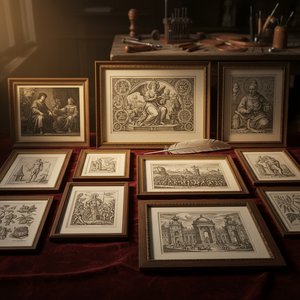
Los 10 Grabados Legendarios que Transformaron la Historia del Arte | OriginalUniqueArt
Descubre los 10 grabados legendarios de Dürer, Rembrandt y Goya que revolucionaron el arte. Explora la historia, técnicas y belleza atemporal de estas obras maestras. Reproducciones de alta calidad en OriginalUniqueArt.com para decorar tu hogar con arte clásico.

Drama and Distortion: A Definitive Guide to the Mastery of Mannerism and Baroque Art
Explore the dramatic evolution from Mannerist distortion to Baroque grandeur. Discover how light, shadow, and emotion redefined art history through a masterclass in technical mastery and religious fervor.

Hendrick Goltzius: Master Engraver & the Flourishing of Dutch Mannerism
Explore the life & art of Hendrick Goltzius, a master engraver of Dutch Mannerism. Discover his innovative techniques, iconic engravings like 'Jahel', and lasting influence on Baroque art. Learn about collecting Goltzius today.

Engraving: A Historical Survey of Technique, Artistic Expression & Enduring Legacy
Explore the rich history of engraving with OriginalUniqueArt. Discover techniques, iconic artists like Dürer & Callot, collecting tips, and expert guidance for preserving your art investment. Learn about intaglio printing & more!


