
 Ver en contexto
 Enviar
 Compartir
 Detalles
 Guía
Guía

 Descargar
 Similares
 Radiografía
 Presentación de diapositivas
 Preguntas y respuestas
 Estadísticas
Christus before Pilate (detail)


 Ver más
Giclée / Impresión de arte
Impresiones giclée o en lienzo de calidad de museo con producción rápida y opciones de acabado flexibles. ( Comprar pintura hecha a mano Cambiar a imagen digital)




P118B €10

P118H €10

P118W €10

P438Z €10

P508JH €12

P508YH €12

P805H €10

P805Z €10

P919BZ €10

P919G €10

P919XJ €10

P959ZH €10

P968JZ €12

W106C €8

W218G €10

W218JH €8

W218Y €10

W307PJ €10

W316G €10

W316PJ €8

W316Y €10

W398PJ €8

W4111J €10

W500HY €15

W500JH €15

W692G €12

W849H €8

W940BG €15

W953PJ €8




Elija entre nuestros tamaños predefinidos que respetan las proporciones originales de la obra.

Introduzca el ancho y el alto que necesite para adaptarse a su marco o pared. Una impresión solo puede recortarse, nunca hacerse más grande que la imagen original, por lo que un tamaño con una forma distinta perderá parte de la obra. Le enviaremos una maqueta digital para su aprobación antes de realizar cualquier impresión. La imagen que se muestra en esta página no refleja el recorte real; solo la maqueta lo hace.
Envío a todo el mundo () en 2 semanas en lugar de las 4/5 semanas estándar. (5 noviembre)

Envío exprés gratuito a todo el mundo

Lienzo de lino de alta calidad

Seguro de envío total

Garantía de reembolso de aranceles aduaneros

Garantía de fidelidad cromática exacta

Política de devolución de 100 días (solo por defectos)

Garantía de devolución del 100% del dinero

Descuento por cantidad
 La opción de vidrio solo está disponible en tamaños inferiores a 110 cm.

Christus before Pilate (detail)
Giclée / Impresión de arte
Dimensiones de la reproducción
-


Precio total final
€ 72
A Divine Encounter in the Northern Renaissance
In the quiet intensity of Hans Multscher’s 1437 masterpiece, Christus before Pilate (detail), we are invited to witness one of the most profound confrontations in human history. This exquisite detail from the Wurzach Altar does not merely depict a biblical event; it captures the very breath held between two worlds: the eternal and the temporal. As Jesus Christ stands before the Roman governor, the canvas vibrates with the tension of a trial that would alter the course of civilization. Multscher, a pioneer of German realism, moves beyond the flat, symbolic gestures of the Gothic era to present a scene where every furrowed brow and heavy fold of fabric tells a story of spiritual weight and earthly consequence.
The artistry of this piece lies in its breathtaking commitment to Northern Renaissance Realism. Utilizing the delicate medium of oil paint on fir wood, Multscher achieved a level of textural nuance that was revolutionary for his time. One can almost feel the heavy, tactile quality of the garments worn by the gathered crowd—the rougher textures of commoners contrasted against the more refined attire of those in positions of authority. This meticulous attention to detail serves a higher purpose than mere decoration; it grounds the divine narrative in a palpable, physical reality, making the miraculous feel disturbingly present and human.
Symbolism and the Language of Light
Every element within this composition is imbued with deep theological significance, designed to guide the viewer toward spiritual contemplation. The central figure of Christ is marked by a subtle yet unmistakable halo, a luminous emblem of his divine nature that pierces through the surrounding earthly chaos. Around him, the faces of the onlookers form a mosaic of human emotion—fear, doubt, skepticism, and apprehension. These expressions serve as a mirror for the viewer's own soul, reflecting the universal struggle to recognize truth amidst the noise of worldly judgment.
The interplay of light and shadow, or chiaroscuro, plays a vital role in directing the narrative flow. Light falls upon Christ with a clarity that suggests an inner radiance, while the deeper shadows enveloping the periphery represent the uncertainty and moral ambiguity of Pilate’s court. For the collector or the interior designer, this painting offers more than just visual beauty; it provides a focal point of profound intellectual and emotional depth. It is a piece that commands attention, inviting long periods of study and reflection, making it an ideal centerpiece for spaces dedicated to thought, heritage, and the appreciation of fine classical art.
A Legacy of Faith and Humanism
To look upon this work is to step into the cultural heart of 15th-century Ulm. Created during a period of intense religious fervor and the burgeoning movement of Northern Humanism, Multscher’s work embodies the era's desire to find the sacred within the natural world. His travels through France and the Netherlands clearly left an indelible mark on his technique, allowing him to bring a sophisticated, international realism to the German landscape. This painting is not just a relic of the past; it is a living testament to the moment when art began to look more closely at the human condition.
Whether displayed in a private gallery or as a sophisticated element of a curated interior, a high-quality reproduction of this detail allows the timeless drama of Multscher’s vision to inhabit modern spaces. It brings with it an atmosphere of historical gravity and artistic excellence, offering anyone who appreciates the masters a window into a period where every brushstroke was an act of devotion.
Preguntas y respuestas
¿Cómo se construye la composición cromática de "Christus before Pilate (detail)" de Hans Multscher?
La composición cromática de "Christus before Pilate (detail)" de Hans Multscher combina un contraste Statement con una armonía Softly Mixed Palette.
¿Qué atmósfera transmite "Christus before Pilate (detail)"?
"Christus before Pilate (detail)" transmite una atmósfera Dramatic.
¿Qué representa "Christus before Pilate (detail)"?
"Christus before Pilate (detail)" de Hans Multscher representa: religious art, medieval painting, christian iconography, pilate trial, crucifixion scene, renaissance style, german sculpture.
Biografía del artista
Introducción a Hans Multscher
Hans Multscher, un renombrado pintor y escultor alemán, nació en Reichenhofen (hoy Leutkirch im Allgäu) alrededor de 1400. Es conocido por su excepcional trabajo en el campo del arte, particularmente en las regiones de Francia del Norte y los Países Bajos.Vida Temprana y Formación
Multscher se familiarizó con nuevos estilos artísticos provenientes de Francia del Norte y los Países Bajos, lo que tuvo un impacto significativo en su obra. En 1427, se convirtió en ciudadano libre de la ciudad de Ulm, donde contrajo matrimonio con Adelheid Kitzin. Dirigió su propio negocio como pintor y escultor, junto con su hermano Heinrich Multscher.Obras Notables
Entre sus obras más destacadas se encuentra Santa María Magdalena, que actualmente se encuentra en el Liebieghaus en Frankfurt am Main. Otra obra famosa es el Hombre de Dolores, una copia del cual se puede encontrar en la catedral de Ulm. Además, su grupo de emperadores se puede ver en la ventana oriental del ayuntamiento de Ulm.Estilo Artístico y Legado
El estilo de Multscher se caracteriza por un naturalismo sólido, reminiscente de Sluter, lo que sugiere que recibió formación en Francia. Su obra representa una transición entre el arte gótico tardío y los primeros elementos del Renacimiento. Su habilidad para representar figuras humanas con realismo y detalle, combinada con su enfoque en temas religiosos, le valió reconocimiento como uno de los artistas más importantes de su época. Multscher contribuyó significativamente al desarrollo del arte alemán, influyendo en generaciones posteriores de artistas. Su legado perdura a través de sus esculturas y pinturas que se conservan en museos y colecciones alrededor del mundo, ofreciendo una valiosa visión de la vida artística y cultural del siglo XV.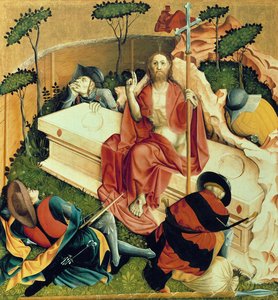
Hans Multscher
1400 - 1467 , Alemania
Datos clave
- Artistas Que Influyeron: ['Sluter']
- Fecha De Muerte: 1467
- Fecha De Nacimiento: c. 1400
- Lugar De Nacimiento: Reichenbach im Baumes, Alemania
- Movimiento Artístico: Gótico tardío/Renacimiento
- Nacionalidad: Alemán
- Nombre Completo: Hans Multscher
- Obras Notables:
- Santa María Magdalena
- Hombre de dolores
- Grupo de emperadores
Artículos relacionados

El Óleo sobre Lienzo: Historia, Técnica y la Persistencia de un Medio Artístico Atemporal
Descubre la historia y técnica del óleo sobre lienzo. Explora reproducciones fieles hechas a mano, personalización artística y consejos de expertos con OriginalUniqueArt. ¡Colecciona arte con confianza!

The Enduring Power of Painting: A Historical & Contemporary Exploration of Form and Emotion
Explore the rich history & enduring techniques of oil painting with OriginalUniqueArt. Discover masterpieces, learn about art collecting, and find authentic handmade reproductions crafted by skilled artists.
The Northern Awakening: Artistic Innovation & Cultural Transformation in the German Renaissance
Explore the artistic innovation of the German Renaissance! Discover Dürer, the Danube School & Reformation art. Learn about techniques, materials & lasting influence. Find museum-quality reproductions at OriginalUniqueArt.
The Northern Renaissance: A Masterclass in Hyper-Realism, Oil Innovation, and Symbolic Depth
Explore the profound mastery of Northern Renaissance art. Discover the technical brilliance of Flemish oil painting, the intricate symbolism of Bosch and Bruegel, and the revolutionary realism that redefined European art history through an expert historical lens.

The Enduring Legacy of Oil on Canvas: Technique, History & Aesthetic Impact
Explore the rich history & techniques of oil painting – from Renaissance masters to Impressionism. Discover pigments, layering methods, and why this timeless medium endures. Expert insights for artists & art enthusiasts.


