
 Vista previa
 Compartir
 Compartir
 Ver detalles

 Descargar
 Ver similares
 Radiografía
 Presentación de diapositivas
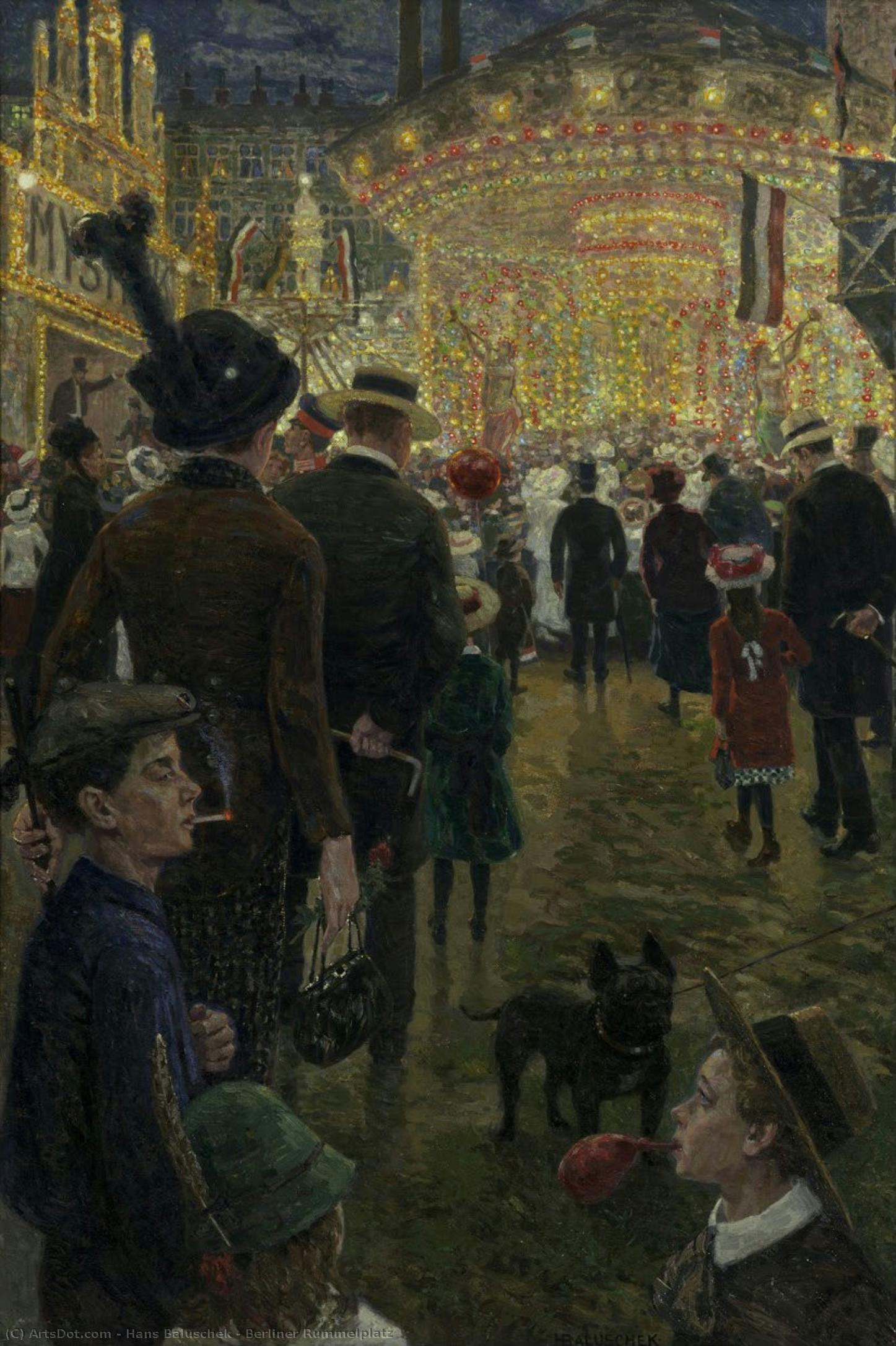
Berliner Rummelplatz
 1914
1914 150.0 x 100.0 cm
 Leer más
Giclée / Impresión de arte
Impresiones giclée o en lienzo de calidad de museo con producción rápida y opciones de acabado flexibles. ( Cambiar a pintura hecha a mano Cambiar a imagen)




































Elija entre nuestros tamaños predefinidos que respetan las proporciones originales de la obra.

Puede introducir sus propias dimensiones para adaptarse a un marco o espacio específico. Si el tamaño seleccionado no coincide con las proporciones de la imagen original, recortaremos la obra de arte o extenderemos la imagen con un borde con efecto espejo o de color sólido. Se enviará una maqueta digital para su aprobación antes de que comience la producción.
Tenga en cuenta que la vista previa en pantalla no refleja el recorte o la extensión real. Solo la maqueta mostrará con precisión la composición final.
Aunque existen tamaños personalizados, recomendamos seleccionar una dimensión de la lista predefinida para preservar las proporciones originales.
Envío a todo el mundo () en 2 semanas en lugar de las 4/5 semanas estándar. (11 agosto)

Envío exprés gratuito a todo el mundo

Lienzo de lino de alta calidad

Seguro de envío completo

Garantía de reembolso de aranceles aduaneros

Garantía de fidelidad cromática exacta

Política de devolución de 60 días (solo por defectos)

Garantía de devolución del 100% del dinero

Oferta por volumen
 La opción de vidrio solo está disponible en tamaños inferiores a 110 cm.

Berliner Rummelplatz
Giclée / Impresión de arte
Tamaño de la reproducción
-


Precio total
$ 80
Descripción de la pieza
Biografía del artista
Hans Baluschek: A Pioneer of German Critical Realism
Hans Baluschek (9 May 1870 – 28 September 1935) was a German painter, graphic artist and writer whose work stands as a cornerstone of German Critical Realism. He captured the essence of Berlin’s working class with unflinching honesty and empathy, establishing himself as one of the most prominent figures within the influential Berlin Secession movement. Baluschek's legacy extends beyond his artistic output; he was an active participant in socialist politics and championed the role of art in social reform.Early Life and Influences
Born in Breslau (Wrocław), Poland, to Franz Baluschek, a surveyor and railroad engineer, Hans Baluschek’s formative years were profoundly shaped by his father's profession—a fascination with railways that would permeate his artistic vision. The family moved repeatedly during his childhood, adapting to the rapid industrial expansion of Berlin amidst economic hardship. Witnessing the realities of working-class life firsthand, influenced by writers like Zola and artists such as Vasily Vereshchagin, instilled in Baluschek a commitment to portraying social issues with uncompromising realism. These experiences fueled his artistic exploration and cemented his belief in art’s capacity to illuminate societal injustices.Academic Training and Artistic Development
Baluschek pursued his education at the Askanische Gymnasium, Berlin, honing his skills in the humanities alongside preparing for a career in art. He enrolled at the Academy of Fine Arts in Berlin in 1890, where he studied under Wilhelm Trübschenne and Max Liebermann—a relationship that would prove crucial to his artistic development. Liebermann’s influence championed naturalism and psychological insight, shaping Baluschek's stylistic approach. His early paintings focused on landscapes and portraits, demonstrating a meticulous attention to detail and capturing the nuances of human emotion. He diligently studied anatomy and perspective, mastering techniques vital for conveying realism and emotional depth.The Berlin Secession and Critical Realism
In 1900 Baluschek joined the Berlin Secession—a group of artists who challenged the conservative artistic conventions of Imperial Germany. Alongside Käthe Kollwitz and Liebermann, the Secession advocated for a more socially conscious art form, rejecting academic formalism in favor of expressive realism. This commitment to Critical Realism guided Baluschek’s oeuvre throughout his career, resulting in powerful depictions of urban life, industrial landscapes, and portraits of ordinary people—often confronting social inequalities with unflinching honesty. Notable works included “Berliner Leben” (1901) and “Eisenbahn in industrieller, winterlicher Großstadt,” which powerfully conveyed the impact of industrialization on human experience. The Secession’s rejection of idealized beauty demanded artists confront uncomfortable truths about society, a stance Baluschek embraced wholeheartedly.Notable Achievements and Legacy
Baluschek’s most enduring contribution to art history is arguably his illustration of Peterchens Mondfahrt (Little Peter's Journey to the Moon), published in 1906 by Gerhard Hauptmann—a beloved children’s book that cemented his reputation as a storyteller and solidified his place within German cultural heritage. His meticulous attention to detail, combined with an empathetic portrayal of characters and narratives, established him as a master of visual storytelling. Despite facing persecution during the Nazi era, Baluschek continued to champion artistic freedom and social justice until his death in 1935. He remains a significant figure in German art history—a testament to the power of observation, empathy, and unwavering commitment to portraying the human condition with uncompromising honesty. His work continues to inspire artists today who strive for authenticity and social responsibility.
Hans Baluschek
1870 - 1935 , Polonia
Datos clave
- Artistic Movement Or Style: Realismo crítico
- Artists Who Influenced This Artist:
- Vasily Vereshchagin
- Gerhart Hauptmann
- Date Of Birth: Mayo 9, 1870
- Date Of Death: Septiembre 28, 1935
- Full Name: Hans Baluschek
- Nationality: Alemana
- Notable Artworks:
- Peterchens Mondfahrt
- Vida berlinesa
- Place Of Birth: Breslau (Wrocław)

