Vista previa
 Compartir
 Compartir
 Ver detalles
 Guía
Guía

 Descargar
 Ver artículos similares
 Radiografía
 Presentación de diapositivas
 Estadísticas
The crucifixion


 Leer más
Giclée / Impresión de arte
Impresiones giclée o en lienzo de calidad de museo con producción rápida y opciones de acabado flexibles. ( Encargar reproducción pintada a mano Ver versión en imagen digital)




P118B €10

P118H €10

P118W €10

P438Z €10

P508JH €12

P508YH €12

P805H €10

P805Z €10

P919BZ €10

P919G €10

P919XJ €10

P959ZH €10

P968JZ €12

W106C €8

W218G €10

W218JH €8

W218Y €10

W307PJ €10

W316G €10

W316PJ €8

W316Y €10

W398PJ €8

W4111J €10

W500HY €15

W500JH €15

W692G €12

W849H €8

W940BG €15

W953PJ €8




Elija entre nuestros tamaños predefinidos que respetan las proporciones originales de la obra.

Introduzca el ancho y el alto que necesite para adaptarse a su marco o pared. Una impresión solo puede recortarse, nunca hacerse más grande que la imagen original, por lo que un tamaño con una forma distinta perderá parte de la obra. Le enviaremos una maqueta digital para su aprobación antes de realizar cualquier impresión. La imagen que se muestra en esta página no refleja el recorte real; solo la maqueta lo hace.
Envío a todo el mundo () en 2 semanas en lugar de las 4/5 semanas estándar. (25 octubre)

Envío exprés gratuito a todo el mundo

Lienzo de lino de alta calidad

Seguro de envío completo

Garantía de reembolso de impuestos aduaneros

Garantía de fidelidad cromática exacta

Política de devolución de 100 días (solo por defectos)

Garantía de devolución del 100% del dinero

Oferta por volumen
 La opción de vidrio solo está disponible en tamaños inferiores a 110 cm.

The crucifixion
Giclée / Impresión de arte
Tamaño de la reproducción
-


Precio total
€ 70
A Vision of Divine Agony: Hans Baldung’s Masterpiece
In the profound stillness of the Northern Renaissance, few works command the viewer's attention with such visceral intensity as The Crucifixion by Hans Baldung. Created in 1512, this oil on basswood painting serves as a haunting window into a period where religious devotion met an unprecedented level of emotional realism. The scene is anchored by the central figure of Christ, whose pale, limp form hangs suspended against a backdrop that feels both vast and claustrophobic. As the eye wanders from the central cross to the surrounding figures—mourners, saints, and even the symbolic presence of a horse in the periphery—one is struck by the artist's ability to weave a complex tapestry of human grief and divine sacrifice. It is not merely a depiction of an event, but an immersive experience of spiritual weight.
The technical mastery of Baldung shines through his sophisticated use of chiaroscuro, where deep, ominous shadows clash with sudden, brilliant highlights to sculpt the anatomy of the crucified figures. This dramatic interplay of light and dark does more than create depth; it directs the soul's gaze toward the suffering of Christ, emphasizing the twisted limbs and the physical toll of the martyrdom. The color palette, though grounded in the somber tones characteristic of the era, possesses a vividness that prevents the scene from descending into mere gloom. Instead, the rich pigments breathe life into the landscape, where distant mountains loom like silent witnesses to the unfolding tragedy, adding a layer of cosmic scale to the intimate human sorrow depicted in the foreground.
Symbolism and the Northern Renaissance Spirit
To understand this work is to understand the unique intellectual climate of the German Renaissance. As a contemporary and student of the legendary Albrecht Dürer, Hans Baldung brought a distinctively expressive and often enigmatic energy to his subjects. In The Crucifixion, every element serves a symbolic purpose. The presence of figures kneeling in prayer alongside those lost in frantic mourning represents the spectrum of human response to the divine. The dark, turbulent atmosphere reflects the theological gravity of the moment—a world in transition, caught between the old certainties and the burgeoning tensions of the Reformation era.
For the discerning collector or interior designer, this painting offers more than just historical significance; it provides a profound focal point for any space dedicated to contemplation or classical elegance. A high-quality reproduction of this masterpiece allows the dramatic tension and the masterful brushwork of Baldung to inhabit a modern setting, bringing a sense of timelessness and intellectual depth to a room. Whether placed in a gallery-style study or as a centerpiece in a grand hall, the painting’s ability to evoke empathy and awe remains undiminished by the centuries, making it an enduring choice for those who appreciate art that speaks to the very core of the human condition.
Preguntas y respuestas
¿Tiene "The crucifixion" una vista previa en realidad aumentada?
La página de Vista previa AR de "The crucifixion" de Hans Baldung utiliza realidad aumentada para mostrar la obra en su propio espacio, mediante un dispositivo compatible.
¿Dónde puedo encontrar una guía de "The crucifixion"?
La página Guía de "The crucifixion" de Hans Baldung ofrece una ficha informativa imprimible de dos hojas: la obra con su tabla de identidad, una línea de tiempo por décadas que la sitúa en la vida del artista, otras obras del mismo autor, la paleta de colores medida y citas listas para copiar en cuatro estilos diferentes.
¿Con qué sentimiento se asocia "The crucifixion"?
El tono emocional registrado para "The crucifixion" de Hans Baldung es Somber. Este resume el sentimiento que expresa la obra.
Biografía del artista
Primeros años y formación
Hans Baldung, pintor e impresor alemán, nació alrededor de 1484 en Schwäbisch Gmünd (anteriormente Gmünd) en Alemania. Fue el primer hombre de su familia en no asistir a la universidad, optando por una carrera artística. Comenzó su formación alrededor de 1500 en la Alta Renania con un artista de Estrasburgo.Aprendizaje con Albrecht Dürer
En 1503, Hans Baldung se convirtió en aprendiz del renombrado artista alemán Albrecht Dürer. Este período tuvo un profundo impacto en su desarrollo artístico. Rápidamente adoptó la influencia y el estilo de Dürer, y ambos se convirtieron en amigos cercanos. Durante la segunda estancia de Dürer en Venecia, Baldung gestionó su taller.Estilo Artístico y Temas
Hans Baldung desarrolló un estilo distintivo caracterizado por el color, la expresión y la imaginación. Sus talentos eran variados, y produjo una gran variedad de obras que incluyen:- Retratos
- Xilografías (grabados en madera)
- Retablos
- Dibujos
- Tapices
- Alegorías
- Motivos mitológicos
Obras Destacadas y Legado
Algunas de las pinturas más características de Hans Baldung son pequeñas en escala, presentando alegorías a menudo eróticas y obras mitológicas desconcertantes. Su trabajo en el retablo del altar mayor en Münster, Alemania, muestra su apoyo al movimiento de la Reforma.- ver las obras de arte de hans baldung en OriginalUniqueArt
- leer más sobre hans baldung grien en wikipedia
Museos y Colecciones
La Gemäldegalerie Alte Meister en Alemania, un museo de renombre mundial, alberga una impresionante colección de pinturas europeas del siglo XV al XVIII. Aunque no se centra específicamente en la obra de Hans Baldung, proporciona un contexto para comprender el período artístico en el que vivió. leer más sobre Gemäldegalerie Alte Meister en OriginalUniqueArtConclusión
Hans Baldung Grien o Grün, con su mezcla única de color, expresión e imaginación, sigue siendo una figura significativa en la historia del arte alemán. Su exploración de temas como la brujería y lo sobrenatural añade una capa fascinante a su obra.
Hans Baldung
1485 - 1545 , Germany
Datos clave
- Artistas Que Influyeron: ['Albrecht Dürer']
- Fecha De Fallecimiento: 1545
- Fecha De Nacimiento: 1485 (aprox.)
- Lugar De Nacimiento: Schwäbisch Gmünd, Alemania
- Movimiento Artístico: Renacimiento alemán
- Nacionalidad: Alemán
- Nombre Completo: Hans Baldung Grien
- Obras Notables:
- San Juan Bautista en Patmos
- Muerte y la Doncella
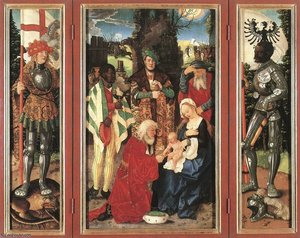
- Retablo de los Tres Reyes
Artículos relacionados
Sacred Narratives on Canvas: Exploring Religious Painting Through History
Explore the rich history of religious painting with OriginalUniqueArt.com! Discover iconic artworks, symbolism & techniques from antiquity to the Renaissance. Enhance your art appreciation today.
The Northern Awakening: Artistic Innovation & Cultural Transformation in the German Renaissance
Explore the artistic innovation of the German Renaissance! Discover Dürer, the Danube School & Reformation art. Learn about techniques, materials & lasting influence. Find museum-quality reproductions at OriginalUniqueArt.
Hans Baldung Grien: A Renaissance Master of Allegory, Innovation & the Grotesque
Explore the captivating world of Hans Baldung Grien, a Renaissance master renowned for his allegorical paintings, striking woodcuts & unique depictions of mythology and the grotesque. Discover his life, works & legacy with OriginalUniqueArt.

El Renacimiento Septentrional: Florecimiento del Realismo y la Innovación Artística
Descubre el Renacimiento Septentrional y la maestría de los Primitivos Flamencos. Explora sus técnicas innovadoras, simbolismo oculto y obras icónicas con OriginalUniqueArt.
Renacimiento Nórdico: 10 Obras Maestras que Transformaron el Arte |
Descubre 10 obras maestras del Renacimiento Nórdico: Jan van Eyck, Durero y más. Explora la historia, el simbolismo y las técnicas de estos icónicos pintores. Encuentra reproducciones de arte exclusivas en .