Ver en contexto
 Enviar
 Compartir
 Detalles

 Descargar
 Similares
 Radiografía
 Presentación de diapositivas
Mort de Moïse


 Ver más
Reproducción al óleo hecha a mano
Óleo sobre lienzo pintado a mano en el tamaño y marco de su elección, realizado por encargo por nuestros artistas. ( Comprar impresión Comprar imagen)




P118B $10

P118H $10

P118W $10

P438Z $10

P508JH $12

P508YH $12

P805H $10

P805Z $10

P919BZ $10

P919G $10

P919XJ $10

P959ZH $10

P968JZ $12

W106C $8

W218G $10

W218JH $8

W218Y $10

W307PJ $10

W316G $10

W316PJ $8

W316Y $10

W398PJ $8

W4111J $10

W500HY $15

W500JH $15

W692G $12

W849H $8

W940BG $15

W953PJ $8




Elija entre nuestros tamaños predefinidos que respetan las proporciones originales de la obra.

Puede ingresar sus propias dimensiones para adaptarse a un marco o espacio específico. Si el tamaño seleccionado no coincide con las proporciones de la imagen original, recortaremos la obra o extenderemos la pintura con elementos adicionales pintados a mano. Se le enviará una maqueta digital para su aprobación antes de comenzar la producción.
Tenga en cuenta que la vista previa en pantalla no refleja el recorte o la extensión reales. Solo la maqueta mostrará con precisión la composición final.
Si bien existen tamaños personalizados, recomendamos seleccionar una dimensión de la lista predefinida para preservar las proporciones originales.
Tras realizar el pedido, el equipo de OriginalUniqueArt.com enviará un correo electrónico al cliente para solicitar instrucciones y proporcionarle una vista previa del boceto.
Envío a todo el mundo () en 3-4 semanas en lugar de las 5 semanas estándar. (29 agosto). Sin comprometer la calidad.

Envío exprés gratuito a todo el mundo

Lienzo de lino de alta calidad

Seguro de envío total

Garantía de reembolso de impuestos aduaneros

Garantía de fidelidad cromática exacta

Política de devolución de 60 días (solo por defectos)

Garantía de devolución del 100% del dinero

Descuento por cantidad
 La opción de vidrio solo está disponible en tamaños inferiores a 110 cm.

Mort de Moïse
Técnica de reproducción
Dimensiones de la reproducción
-


Precio total final
$ 300
A Vision of Divine Sorrow: The Ethereal World of Gustave Moreau
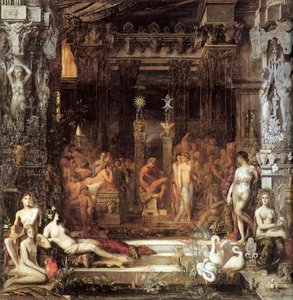
To gaze upon Gustave Moreau’s "Mort de Moïse" is to step beyond the veil of the tangible world and enter a realm where the boundaries between reality and dream dissolve into a haze of gold and shadow. Painted around 1895, this monumental canvas stands as a cornerstone of the Symbolist movement, capturing a moment that transcends mere biblical illustration to become a profound psychological experience. Rather than simply recounting the death of a prophet, Moreau invites the viewer into a state of spiritual contemplation, presenting a scene fraught with palpable grief and divine majesty. The artwork immediately arrests the senses with its arresting palette, dominated by deep, melancholic blues and luminous golds—colors meticulously chosen to evoke a simultaneous sense of earthly sorrow and celestial glory.
The subject matter centers on the pivotal moment of Moses’s ascension, a transition that represents both redemption and transcendence within the Jewish tradition. Yet, in Moreau's hands, this is not a triumphant parade; it is an intimate encounter with the divine characterized by a heavy, spiritual weight. As Moses stands atop a rugged rocky outcrop, his arms outstretched toward the heavens, the composition captures a desperate yearning for divine grace. The background, featuring a sky where sunlight pierently breaks through swirling clouds, suggests a portal to another dimension, where the figures of angels and divine beings mingle with the human element in a dynamic, almost hallucinatory dance of light and form.
Mastery of Technique and Symbolist Depth
Moreau’s technical prowess is central to the painting's otherworldly luminescence. Drawing from his extensive studies in Italy, he employed a painstaking process of layering glazes and pigments to achieve a texture that feels almost jewel-like. This meticulous technique lends the canvas an internal glow, as if the light is not merely reflecting off the surface but emanating from within the figures themselves. His style rejects the Naturalist obsession with observable reality, opting instead for an imaginative representation rooted in myth and the subconscious. Every brushstroke serves the purpose of creating a sense of polyvalence—a richness of meaning where a single image can hold multiple spiritual truths.
The symbolism embedded within the composition is as profound as its visual beauty. The outstretched arms of Moses serve as a powerful emblem of supplication, while the interplay between the dark, rocky earth and the radiant sky mirrors the tension between human mortality and eternal life. Influenced by Nietzschean philosophy and the concept of Dionysian ecstasy, Moreau utilizes these symbolic elements to champion emotion and irrationality as the true pathways to spiritual truth. For the discerning collector or interior designer, this piece offers more than just aesthetic beauty; it provides a window into the late 19th-century intellectual ferment, making it a profound focal point for any space dedicated to thought, history, and the sublime.
Whether displayed as a grand statement in a formal gallery or as a soulful centerpiece in a curated living space, a high-quality reproduction of "Mort de Moïse" brings with it an atmosphere of mystery and timelessness. It is an invitation to linger, to wonder, and to lose oneself in the opulent, shadowed corridors of the human psyche, much like the master himself intended.
Biografía del artista
**vida temprana y educación**
gustave moreau, un artista francés, nació el 6 de abril de 1826 en París. Recibió una formación académica tradicional en pintura en la école des beaux-arts, mostrando una aptitud para el dibujo desde temprana edad.**el movimiento simbolista**
La obra de Moreau, caracterizada por temas alegóricos y mitológicos, lo posicionó como un destacado pintor simbolista, especialmente durante los años 1890. Su arte (y el simbolismo en general) cayó en desfavor pero ha sido reevaluado desde la década de 1960, con Moreau ahora considerado entre los pintores simbolistas más importantes.**obras notables y exposiciones**
* salomé en la prisión (pintura de 'gustave moreau') es un ejemplo notable de su obra, mostrando su dominio del simbolismo. * autorretrato (pintura de 'gustave moreau') es otra poderosa representación del artista en sí mismo.**museo gustavo moreau**
El museo nacional gustavo-moreau (museo gustavo moreau paris, francia) en París está dedicado a la obra de Moreau, que alberga más de 1200 pinturas, acuarelas y dibujos. El museo es un testimonio de su legado artístico.**legado e influencia**
La influencia de Moreau en el movimiento simbolista es innegable. Enseñó en la école des beaux-arts, influyendo en artistas notables como hénri matisse y giorges rouault. Su naturaleza reclusiva no disminuyó su impacto en el mundo del arte.- descubra más sobre la vida y obra de gustavo moreau en OriginalUniqueArt.com
- explore el museo nacional gustavo-moreau y su impresionante colección de obras de arte en museo gustavo moreau paris, francia
- aprenda más sobre el movimiento simbolista y su importancia en la historia del arte en el movimiento simbolista de arte

Gustave Moreau
1826 - 1898 , Francia
Datos clave
- Artistas Influenciados:
- Henri Matisse
- Georges Rouault
- Artistas Que Influyeron:
- Eugène Delacroix
- Miguel Ángel
- Leonardo da Vinci
- Fecha De Muerte: 1898
- Fecha De Nacimiento: 6 de abril de 1826
- Lugar De Nacimiento: París, Francia
- Movimiento Artístico: Simbolismo
- Nacionalidad: Francés
- Nombre Completo: Gustave Moreau
- Obras Notables:
- Salomé en la prisión
- Autorretrato
- Júpiter y Semele
- Orfeo
- La Aparición
Artículos relacionados

Las 10 Obras Maestras del Azul Pizarra: Arte, Historia y Decoración
Descubre las 10 pinturas más famosas dominadas por el azul pizarra. Explora la historia, técnica y belleza de Monet, Van Gogh y otros maestros. Encuentra reproducciones de arte exclusivas para decorar tu hogar en .

Serene Blue Backgrounds: Discover Soulful Art to Transform Your Space with Timeless Elegance
Transform your home with soulful blue art. From serene Monet impressions to modern textured sculptures, discover curated masterpieces designed to inspire calm. Explore expert art consultations and bespoke hand-painted reproductions to create your personal sanctuary.

The Allure of Azure: Exploring the Symbolic & Aesthetic Depths of Blue in Art History
Explore the rich history of blue in art! Discover its symbolism, from ancient pigments to modern masterpieces by Kandinsky & Seurat. Uncover the psychological impact and cultural meanings behind this captivating hue.

The Enduring Legacy of Oil on Canvas: Technique, History & Aesthetic Impact
Explore the rich history & techniques of oil painting – from Renaissance masters to Impressionism. Discover pigments, layering methods, and why this timeless medium endures. Expert insights for artists & art enthusiasts.

Liquid Vibes: Bold Water Landscapes & Deep Blue Textures to Level Up Your Space
Elevate your space with bold water landscapes and deep blue textures. Discover trending abstract art, from sculptural textiles to premium oil reproductions, designed to bring high-impact, liquid vibes to modern urban interiors.