Ver en contexto
 Enviar
 Compartir
 Detalles

 Descargar
 Similares
 Radiografía
 Presentación de diapositivas
 Estadísticas
La Ejecución de Messalina


 Ver más
Giclée / Impresión de arte
Impresiones giclée o en lienzo de calidad de museo con producción rápida y opciones de acabado flexibles. ( Comprar pintura hecha a mano Cambiar a imagen digital)




































Elija entre nuestros tamaños predefinidos que respetan las proporciones originales de la obra.

Puede introducir sus propias dimensiones para adaptarse a un marco o espacio específico. Si el tamaño seleccionado no coincide con las proporciones de la imagen original, recortaremos la obra de arte o extenderemos la imagen con un borde con efecto espejo o de color sólido. Se enviará una maqueta digital para su aprobación antes de que comience la producción.
Tenga en cuenta que la vista previa en pantalla no refleja el recorte o la extensión real. Solo la maqueta mostrará con precisión la composición final.
Aunque existen tamaños personalizados, recomendamos seleccionar una dimensión de la lista predefinida para preservar las proporciones originales.
Envío a todo el mundo () en 2 semanas en lugar de las 4/5 semanas estándar. (12 septiembre)

Envío exprés gratuito a todo el mundo

Lienzo de lino de alta calidad

Seguro de envío total

Garantía de reembolso de impuestos aduaneros

Garantía de fidelidad cromática exacta

Política de devolución de 100 días (solo por defectos)

Garantía de devolución del 100% del dinero

Descuento por cantidad
 La opción de vidrio solo está disponible en tamaños inferiores a 110 cm.

La Ejecución de Messalina
Giclée / Impresión de arte
Dimensiones de la reproducción
-


Precio total final
$ 80
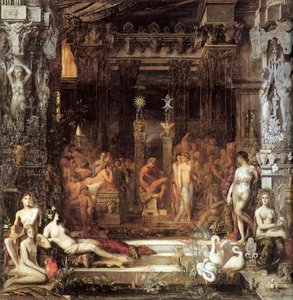
A Descent into Mythic Reverie: Exploring Gustave Moreau’s “Messalina”
Gustave Moreau's "Messalina," completed in 1874, stands as a cornerstone of Symbolist painting—a testament to an artist who deliberately rejected the observational realism championed by his contemporaries and instead sought to distill profound spiritual truths from the depths of imagination. Housed within the Musée Gustave Moreau in Paris, this watercolor offers more than just visual beauty; it invites contemplation on themes of morality, desire, and the inescapable influence of mythology upon human experience. ### The Visual Narrative: Composition and Symbolism’s Dance Moreau meticulously crafted a scene steeped in dramatic tension and layered symbolism. Two nude women dominate the composition, positioned intimately within a richly ornamented room—a deliberate choice mirroring classical depictions of Venus and Adonis. One woman cradles the other, creating an image of vulnerability and dependence that speaks to broader anxieties about female sexuality and societal expectations during the Victorian era. Scattered throughout the space are figures representing various allegorical elements: a standing man embodies authority and judgment, while three others contribute to the unsettling atmosphere—perhaps symbolizing hidden desires or unresolved conflicts. Crucially, two birds – one perched atop a chandelier and another nestled amongst foliage – serve as potent symbols of transcendence and divine grace, subtly elevating the scene beyond mere earthly concerns. Moreau’s masterful use of watercolor lends an ethereal quality to the artwork, blurring boundaries between reality and dream—a characteristic hallmark of Symbolist aesthetics. ### Technique and Artistic Vision: Watercolor's Delicate Embrace Moreau’s technique exemplifies the meticulous precision demanded by Symbolist painting. He employed a glazing method—applying thin layers of translucent pigment over previously painted surfaces—to build up color gradually, achieving luminous effects that capture the subtle nuances of light and shadow. The artist’s painstaking attention to detail is evident in every brushstroke, from the intricate drapery folds to the delicate rendering of textures—particularly noticeable in the opulent furnishings of the room. This deliberate process underscores Moreau's belief that art should strive for an idealized representation of inner experience rather than a slavish imitation of external appearances. The watercolor medium itself was chosen not merely for its aesthetic qualities but also for its ability to convey mood and emotion with unparalleled subtlety. ### Historical Context: Symbolism’s Rebellion Against Impressionism “Messalina” emerged during a period of significant artistic ferment—the burgeoning Symbolist movement challenged the dominant Impressionist preoccupation with capturing fleeting sensory impressions. Artists like Moreau rejected the scientific objectivity favored by Impressionists, arguing instead for the primacy of emotion and intuition as sources of artistic inspiration. Influenced by thinkers such as Nietzsche and Wagner, Symbolism sought to explore the subconscious mind and grapple with existential questions—themes that resonated deeply within the intellectual climate of late 19th-century France. Moreau’s work aligns perfectly with this broader cultural shift, reflecting a desire to reconnect with spiritual traditions and confront the anxieties of modernity. ### Emotional Resonance: A Portrait of Inner Turmoil Ultimately, “Messalina” transcends its formal elements—composition, technique, and historical context—to convey a profound emotional resonance. The painting evokes feelings of unease, contemplation, and perhaps even melancholy—a reflection of Moreau’s own preoccupation with themes of morality and the complexities of human relationships. Its haunting beauty lies in its ability to provoke introspection and invite viewers to confront uncomfortable truths about desire, judgment, and the enduring power of mythic narratives. It remains a captivating masterpiece that continues to inspire admiration for its artistic innovation and its capacity to communicate timeless psychological insights.Biografía del artista
**vida temprana y educación**
gustave moreau, un artista francés, nació el 6 de abril de 1826 en París. Recibió una formación académica tradicional en pintura en la école des beaux-arts, mostrando una aptitud para el dibujo desde temprana edad.**el movimiento simbolista**
La obra de Moreau, caracterizada por temas alegóricos y mitológicos, lo posicionó como un destacado pintor simbolista, especialmente durante los años 1890. Su arte (y el simbolismo en general) cayó en desfavor pero ha sido reevaluado desde la década de 1960, con Moreau ahora considerado entre los pintores simbolistas más importantes.**obras notables y exposiciones**
* salomé en la prisión (pintura de 'gustave moreau') es un ejemplo notable de su obra, mostrando su dominio del simbolismo. * autorretrato (pintura de 'gustave moreau') es otra poderosa representación del artista en sí mismo.**museo gustavo moreau**
El museo nacional gustavo-moreau (museo gustavo moreau paris, francia) en París está dedicado a la obra de Moreau, que alberga más de 1200 pinturas, acuarelas y dibujos. El museo es un testimonio de su legado artístico.**legado e influencia**
La influencia de Moreau en el movimiento simbolista es innegable. Enseñó en la école des beaux-arts, influyendo en artistas notables como hénri matisse y giorges rouault. Su naturaleza reclusiva no disminuyó su impacto en el mundo del arte.- descubra más sobre la vida y obra de gustavo moreau en OriginalUniqueArt.com
- explore el museo nacional gustavo-moreau y su impresionante colección de obras de arte en museo gustavo moreau paris, francia
- aprenda más sobre el movimiento simbolista y su importancia en la historia del arte en el movimiento simbolista de arte

Gustave Moreau
1826 - 1898 , Francia
Datos clave
- Artistas Influenciados:
- Henri Matisse
- Georges Rouault
- Artistas Que Influyeron:
- Eugène Delacroix
- Miguel Ángel
- Leonardo da Vinci
- Fecha De Muerte: 1898
- Fecha De Nacimiento: 6 de abril de 1826
- Lugar De Nacimiento: París, Francia
- Movimiento Artístico: Simbolismo
- Nacionalidad: Francés
- Nombre Completo: Gustave Moreau
- Obras Notables:
- Salomé en la prisión
- Autorretrato
- Júpiter y Semele
- Orfeo
- La Aparición
Artículos relacionados

Visiones Efímeras: Historia y Resonancia Emocional de la Pintura Acuarela
Descubre la fascinante historia de la acuarela, desde sus orígenes hasta su expresión contemporánea. Explora técnicas, artistas clave como Paul Klee y encuentra reproducciones de alta calidad en OriginalUniqueArt.
Gustav Klimt: Las 25 Obras Maestras que Definen un Ícono del Arte Moderno | OriginalUniqueArt
Descubre las 25 obras maestras de Gustav Klimt, ícono del simbolismo y Art Nouveau. Explora 'El Beso', 'Judith' y más. Reproducciones de arte en OriginalUniqueArt.com para decorar tu hogar con elegancia. ¡Inspírate!

Acuarelas Legendarias: 10 Obras Maestras que Transformaron el Arte | OriginalUniqueArt
Descubre 10 acuarelas legendarias de Turner, Monet y Sargent que revolucionaron el arte. Explora la historia, técnica y belleza de estas obras maestras impresionistas y románticas. Reproducciones de museo en OriginalUniqueArt.com.

Ephemeral Visions: Exploring the Artistic Legacy & Contemporary Practice of Watercolor Painting
Explore the captivating world of watercolor painting! Discover its rich history, essential techniques, influential artists & collecting tips. A comprehensive guide for art enthusiasts from OriginalUniqueArt.
Gustave Moreau: Symbolism's Enigmatic Visionary & Precursors of Modern Fantasy Art
Explore the captivating world of Gustave Moreau, the leading Symbolist painter. Discover his iconic masterpieces, influences, and lasting legacy. Expert analysis for collectors & art enthusiasts.