

 Vista previa
 Compartir
 Compartir
 Ver detalles
 Guía
Guía

 Descargar
 Ver artículos similares
 Radiografía
 Presentación de diapositivas
 Estadísticas
Susanna and the Elders
 Acrylic On Canvas
- WallArt
- Baroque Painting
 133.0 x 181.0 cm
 Palazzo della Pilotta
 Leer más
Reproducción al óleo hecha a mano
Óleo sobre lienzo pintado a mano en el tamaño y marco de su elección, realizado por encargo por nuestros artistas. ( Cambiar a formato impreso Ver versión en imagen digital)




P118B €10

P118H €10

P118W €10

P438Z €10

P508JH €12

P508YH €12

P805H €10

P805Z €10

P919BZ €10

P919G €10

P919XJ €10

P959ZH €10

P968JZ €12

W106C €8

W218G €10

W218JH €8

W218Y €10

W307PJ €10

W316G €10

W316PJ €8

W316Y €10

W398PJ €8

W4111J €10

W500HY €15

W500JH €15

W692G €12

W849H €8

W940BG €15

W953PJ €8




Elija entre nuestros tamaños predefinidos que respetan las proporciones originales de la obra.

Puede ingresar sus propias dimensiones para adaptarse a un marco o espacio específico. Si el tamaño seleccionado no coincide con las proporciones de la imagen original, recortaremos la obra o extenderemos la pintura con elementos adicionales pintados a mano. Se le enviará una maqueta digital para su aprobación antes de comenzar la producción.
Tenga en cuenta que la vista previa en pantalla no refleja el recorte o la extensión reales. Solo la maqueta mostrará con precisión la composición final.
Si bien existen tamaños personalizados, recomendamos seleccionar una dimensión de la lista predefinida para preservar las proporciones originales.
Tras realizar el pedido, el equipo de OriginalUniqueArt.com enviará un correo electrónico al cliente para solicitar instrucciones y proporcionarle una vista previa del boceto.
Envío a todo el mundo () en 3-4 semanas en lugar de las 5 semanas estándar. (8 octubre). Sin comprometer la calidad.

Envío exprés gratuito a todo el mundo

Lienzo de lino de alta calidad

Seguro de envío completo

Garantía de reembolso de impuestos aduaneros

Garantía de fidelidad cromática exacta

Política de devolución de 100 días (solo por defectos)

Garantía de devolución del 100% del dinero

Oferta por volumen
 La opción de vidrio solo está disponible en tamaños inferiores a 110 cm.

Susanna and the Elders
Técnica de reproducción
Tamaño de la reproducción
-


Precio total
€ 258
The Dramatic Narrative of Susanna and the Elders
Guercino’s “Susanna and the Elders,” painted around 1650, isn't merely a biblical scene; it’s a visceral exploration of virtue under duress, a masterful demonstration of Baroque drama, and a testament to the artist’s profound understanding of human psychology. The painting depicts a pivotal moment from the Book of Daniel – Susanna, a young woman renowned for her innocence and beauty, is falsely accused by two lecherous elders who have been captivated by her modest bathing habits. The composition immediately plunges the viewer into a world of heightened emotion: Susanna, rendered in a luminous white gown, sits poised on a simple stone ledge, her gaze directed heavenward with an expression of serene dignity and quiet apprehension. The stark contrast between her purity and the shadowed figures looming above her creates an immediate tension, hinting at the impending threat to her reputation and life.
- The Story’s Roots: The narrative itself is a potent allegory – Susanna represents chastity and virtue, while the elders embody lust and deceit. The story's enduring appeal lies in its exploration of moral temptation and the vulnerability of innocence against manipulative forces.
- Baroque Drama: Guercino was a master of dramatic lighting and composition, techniques central to the Baroque style. Notice how he uses chiaroscuro – the sharp contrast between light and dark – to sculpt Susanna’s form and emphasize her isolation within the scene. The deep shadows enveloping the elders heighten their sinister presence, while the soft glow illuminating Susanna underscores her virtue.
A Study in Technique: Guercino's Distinctive Style
Guercino’s artistic approach is immediately recognizable – a blend of meticulous detail and expressive dynamism. He was known for his incredibly detailed drawings, which informed his painting style, resulting in figures with remarkably realistic musculature and drapery. Observe the intricate folds of Susanna's gown, rendered with painstaking precision, as well as the subtle textures of the stone ledge beneath her. The artist’s use of color is equally noteworthy; he employs a palette dominated by muted earth tones – ochres, browns, and grays – punctuated by flashes of white for Susanna’s dress and the vibrant reds of the elders' robes. This restrained palette amplifies the emotional impact of the scene, creating a sense of solemnity and gravity.
Key Characteristics:- Detailed Draftsmanship: Guercino was renowned for his preparatory drawings, which demonstrate an extraordinary command of line and form.
- Chiaroscuro Mastery: His skillful manipulation of light and shadow creates a dramatic and emotionally charged atmosphere.
- Expressive Figures: The figures are not merely representations but embodiments of their emotions – Susanna’s serenity, the elders' lustful intent.
Symbolism and Interpretation
Beyond the straightforward narrative, “Susanna and the Elders” is rich in symbolic meaning. The setting itself—a simple stone ledge overlooking a tranquil pool—suggests vulnerability and exposure. The presence of the two elders, shrouded in shadow, represents the forces of temptation that threaten to corrupt innocence. Notably, the scene draws upon the Apocrypha – biblical texts not included in the Hebrew Bible – adding layers of complexity to its interpretation. The inclusion of the skull, a memento mori (reminder of death), subtly underscores the precariousness of Susanna’s situation and the ultimate triumph of virtue over mortality. The phrase “Et in Arcadia ego” (“Also in Paradise I am”) reinforces this theme, reminding us that even in idyllic settings, death is ever-present.
A Timeless Masterpiece: Guercino's Enduring Legacy
“Susanna and the Elders” remains a profoundly moving work of art, captivating viewers with its dramatic intensity, technical brilliance, and enduring moral themes. Guercino’s ability to convey complex emotions through carefully rendered figures and evocative lighting is truly remarkable. Reproductions of this painting continue to inspire admiration for its artistic merit and its poignant exploration of human nature. It stands as a powerful testament to the artist's skill and his profound understanding of the human condition, ensuring its place as a cornerstone of Baroque art.
Preguntas y respuestas
¿Es "Susanna and the Elders" de Guercino una obra de arte reconocida?
"Susanna and the Elders" de Guercino tiene un nivel de popularidad Recognized. Esta clasificación refleja el grado de reconocimiento de la obra.
¿A qué artista se le atribuye "Susanna and the Elders"?
El artista detrás de "Susanna and the Elders" es Guercino. La obra está catalogada bajo el nombre de Guercino.
¿Cuál es el tamaño de impresión recomendado para "Susanna and the Elders" de Guercino?
Se recomienda imprimir "Susanna and the Elders" en un tamaño de Large. Otros tamaños están disponibles con las mismas proporciones.
¿Qué espacio se sugiere para "Susanna and the Elders" de Guercino?
Se recomienda "Susanna and the Elders" de Guercino para un Living Room. Esta sugerencia se basa en el tema, los colores y la atmósfera de la obra.
¿Dónde puedo comprar una reproducción pintada a mano de "Susanna and the Elders" de Guercino?
Puede solicitar una reproducción pintada a mano de "Susanna and the Elders" de Guercino directamente en esta página: una reproducción al óleo pintada a mano sobre lienzo de lino, realizada bajo pedido.
¿Se encuentra "Susanna and the Elders" en el país de su creador?
Sí, la obra se encuentra en el país de origen del artista. El creador nació en Italia; la obra original se encuentra en Italia.
¿Está "Susanna and the Elders" disponible como una impresión de bellas artes?
Para obtener una impresión de "Susanna and the Elders" de Guercino, simplemente pídala en esta página: una impresión de bellas artes sobre lienzo de algodón o papel de lienzo de archivo.
Biografía del artista
Primeros años y formación
Giovanni Francesco Barbieri, conocido como Guercino, nació en 1591 en Cento, cerca de Ferrara. Sus inicios artísticos se desarrollaron bajo la tutela de Ludovico Carracci, un renombrado pintor boloñés. Esta formación sentó las bases para el futuro éxito de Guercino.Estilo artístico y obras notables
El estilo de Guercino se caracteriza por una iluminación dramática, intensas emociones y una fusión de realismo e idealismo, señas distintivas del período barroco. Algunas de sus obras más destacadas incluyen:- Amnón y Tamar (óleo sobre lienzo, barroco) - Una representación conmovedora de la historia bíblica.
- El retorno del hijo pródigo (óleo sobre lienzo, barroco) - Una poderosa representación de arrepentimiento y perdón.
- La vocación de San Aloysius (Luigi) Gonzaga (óleo sobre lienzo, barroco) - Una obra maestra que muestra la habilidad de Guercino para capturar la esencia de las narrativas religiosas.
Evolución artística y influencias
Guercino experimentó una notable evolución en su estilo a lo largo de su carrera. Inicialmente influenciado por el naturalismo y los modelos de Ferrarese y Boloñeses, como Scarsellino y Carlo Bononi, así como la escuela Carracci, adoptó posteriormente un clasicismo más refinado, especialmente después de su estancia en Roma bajo el papado de Gregorio XV (1621-1623). Su obra temprana se caracteriza por paisajes con una notable independencia artística. La influencia de Ludovico Carracci fue fundamental, particularmente a través del estudio de una Madonna pintada para la iglesia capuchina de Cento, conocida como "La Carraccina". A medida que maduró, Guercino exploró el uso de la luz y la sombra (claroscuro) para crear efectos dramáticos y emocionales.Legado e influencia
La influencia de Guercino en la pintura barroca es innegable. Su uso dramático de la luz y la sombra, junto con su capacidad para evocar emociones poderosas, ha inspirado a generaciones de artistas. Su habilidad para combinar realismo y idealismo, así como su maestría en la representación de temas religiosos, lo convirtieron en una figura clave del arte italiano. A pesar de las críticas ocasionales sobre cambios estilísticos posteriores en su carrera, Guercino dejó un legado duradero que continúa siendo celebrado a través de sus obras, ahora parte de las colecciones más prestigiosas del mundo. El Palazzo Brignole-Sale en Italia y otras instituciones notables han contribuido a preservar el patrimonio artístico de Guercino, asegurando que sus obras sigan siendo una fuente de inspiración para los entusiastas del arte en todo el mundo.
Guercino
1591 - 1666 , Italia
Datos clave
- Artistas Influyentes: ['Ludovico Carracci']
- Estilo Artístico: Barroco
- Fecha De Muerte: 22 de diciembre de 1666
- Fecha De Nacimiento: 8 de febrero de 1591
- Influencia En Artistas: ['Benedetto Gennari II']
- Lugar De Nacimiento: Cento, Italia
- Nacionalidad: Italiana
- Nombre Completo: Guercino (Giovanni Barbieri)
- Obras Notables:
- Amnón y Tamar
- El regreso del hijo pródigo
- La vocación de San Luis Gonzaga
Artículos relacionados

The Visceral Stage: Exploring Dramatic Narratives & Emotional Intensity in Baroque Art
Explore the dramatic world of Baroque art! Discover iconic masters like Caravaggio & Rembrandt, their techniques, and the movement's lasting impact. Expert insights for collectors & enthusiasts at OriginalUniqueArt.

Barroco Sublime: 10 Obras Maestras que Definieron una Época |
Descubre las 10 obras maestras del Barroco que marcaron una época. Caravaggio, Bernini y Velázquez cobran vida en . Reproducciones de arte de calidad museo para decorar tu hogar con elegancia. ¡Explora la colección online!
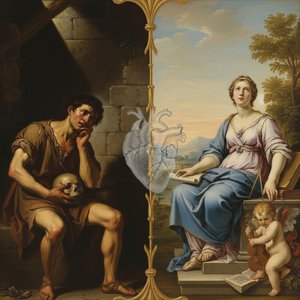
Guercino: A Baroque Master Between Caravaggism & Classicism – Exploring Innovation & Emotional Depth
Explore the captivating world of Guercino, a Baroque master bridging Caravaggism & Classicism. Discover his dramatic chiaroscuro, emotional depth, and lasting influence on art history with OriginalUniqueArt.

The Dramatic Flourish: Exploring the Baroque Movement's Enduring Legacy in Art History
Explore the dramatic world of Baroque art! Discover iconic artists like Caravaggio & Rubens, defining techniques, and its lasting impact on art history. Expert insights for collectors & enthusiasts at OriginalUniqueArt.

Drama Barroca: Llevando la Grandeza y la Emoción a los Interiores Contemporáneos
Descubre cómo el drama y la grandeza del arte barroco pueden transformar tus interiores. Guía experta, inspiración y reproducciones de alta calidad en .
