Ver en contexto
 Enviar
 Compartir
 Detalles
 Guía
Guía

 Descargar
 Similares
 Radiografía
 Presentación de diapositivas
 Preguntas y respuestas
 Estadísticas
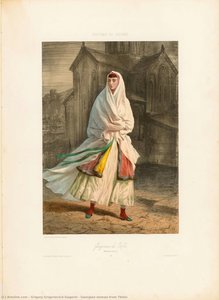
Soldado Circasso

- 59.0 x 42.0 cm


 Ver más
Giclée / Impresión de arte
Impresiones giclée o en lienzo de calidad de museo con producción rápida y opciones de acabado flexibles. ( Comprar pintura hecha a mano Cambiar a imagen digital)




P118B €10

P118H €10

P118W €10

P438Z €10

P508JH €12

P508YH €12

P805H €10

P805Z €10

P919BZ €10

P919G €10

P919XJ €10

P959ZH €10

P968JZ €12

W106C €8

W218G €10

W218JH €8

W218Y €10

W307PJ €10

W316G €10

W316PJ €8

W316Y €10

W398PJ €8

W4111J €10

W500HY €15

W500JH €15

W692G €12

W849H €8

W940BG €15

W953PJ €8




Elija entre nuestros tamaños predefinidos que respetan las proporciones originales de la obra.

Introduzca el ancho y el alto que necesite para adaptarse a su marco o pared. Una impresión solo puede recortarse, nunca hacerse más grande que la imagen original, por lo que un tamaño con una forma distinta perderá parte de la obra. Le enviaremos una maqueta digital para su aprobación antes de realizar cualquier impresión. La imagen que se muestra en esta página no refleja el recorte real; solo la maqueta lo hace.
Envío a todo el mundo () en 2 semanas en lugar de las 4/5 semanas estándar. (10 noviembre)

Envío exprés gratuito a todo el mundo

Lienzo de lino de alta calidad

Seguro de envío total

Garantía de reembolso de aranceles aduaneros

Garantía de fidelidad cromática exacta

Política de devolución de 100 días (solo por defectos)

Garantía de devolución del 100% del dinero

Descuento por cantidad
 La opción de vidrio solo está disponible en tamaños inferiores a 110 cm.

Soldado Circasso
Giclée / Impresión de arte
Dimensiones de la reproducción
-


Precio total final
€ 73
Grigory Gagarin: A Pioneer of Caucasian Portraiture
Grigory Gagarin’s “Circassian Soldier” stands as a remarkable testament to the artistic fervor of 1855, capturing not merely an image but a moment in time—a snapshot of cultural exchange and burgeoning national identity within the Russian Empire. Born in Saint Petersburg to the noble Rurikid family, Gagarin wasn't formally trained as an artist; his talent blossomed organically through observation and collaboration with literary luminaries like Pushkin and Lermontov.
- Subject Matter: The painting depicts a Circassian soldier—a figure emblematic of the Caucasus region’s diverse ethnic tapestry—standing on a simple earthen ground. His posture exudes confidence, directed towards the viewer, suggesting an intention to convey dignity and resilience.
- Style: Gagarin's approach leans heavily into Realism, prioritizing meticulous detail and accurate representation. However, it transcends mere imitation; there’s a palpable sensitivity to capturing the essence of his subject—a profound respect for the individual within the broader context of cultural heritage.
- Technique: Executed in guache on paper, Gagarin employed a technique characterized by layering translucent washes of color to build up tonal values and create depth. This method lends itself beautifully to portraying textures – particularly evident in the soldier’s uniform—resulting in an image rich with visual nuance.
The Tbilisi Sioni Cathedral: A Symbol of Artistic Revival
Gagarin's involvement extended beyond individual portraits; he undertook ambitious restoration projects aimed at revitalizing Georgian cultural landmarks. Notably, his frescoing of the Tbilisi Sioni Cathedral—a UNESCO World Heritage Site—represents more than just a decorative undertaking. The cathedral itself embodies centuries of Orthodox Christian tradition and serves as a powerful symbol of Georgian identity.
- Historical Context: Gagarin’s work coincided with a period of significant artistic renewal in Russia, fueled by Romantic ideals and a desire to celebrate national heritage. His patronage of the arts reflects this broader cultural movement.
- Symbolism: The Sioni Cathedral's frescoes depict biblical scenes—a deliberate choice intended to inspire piety and reaffirm spiritual values within the Georgian community. Gagarin’s contribution ensured that these timeless narratives would continue to resonate for generations to come.
A Dialogue Between Cultures: Duma’s Observation
Alexander Duma, a French writer who documented Gagarin's travels in the Caucasus, eloquently captured the spirit of his endeavors. He remarked on the Tbilisi Theatre building—a project spearheaded by Gagarin—comparing it to Pompey Theatre, emphasizing its grandeur and meticulous craftsmanship. This comparison underscores Gagarin’s ambition to elevate Georgian culture through artistic expression.
- Influence: Gagarin's architectural vision mirrored the broader European fascination with classical aesthetics, demonstrating a commitment to upholding standards of excellence and beauty.
- Emotional Impact: The theatre building stands as a tangible reminder of Gagarin’s dedication to fostering intellectual curiosity and enriching the lives of Georgian citizens—a legacy that continues to inspire admiration.
The Art Palace of Georgia: A Legacy Preserved
Today, “Circassian Soldier” resides within the Art Palace of Georgia—a repository of artistic treasures safeguarding the nation’s cultural heritage. Its presence serves as a poignant reminder of Gagarin's enduring contribution to Georgian art history and his unwavering belief in the transformative power of creativity.
Preguntas y respuestas
¿Se puede visualizar "Soldado Circasso" con una vista previa en realidad aumentada?
Puedes visualizar "Soldado Circasso" de Grigori Gagarin en tu propia pared con la página de Vista previa en RA de la obra, utilizando realidad aumentada en un dispositivo compatible.
¿Puedo ver una vista previa de "Soldado Circasso" de Grigori Gagarin antes de realizar el pedido?
La página de Vista previa de la obra de "Soldado Circasso" le permite previsualizar la obra antes de realizar su pedido.
¿Los colores de "Soldado Circasso" de Grigori Gagarin son intensos o tenues?
"Soldado Circasso" de Grigori Gagarin presenta una saturación de Tenue y una intensidad de Monocromático.
Biografía del artista
Early Life and Education
Grigory Grigorievich Gagarin (1810 – 1893), a Russian painter, major general, and administrator, was born in Saint Petersburg to the noble Rurikid princely Gagarin family. His father, Prince Grigory Ivanovich Gagarin (Saint Petersburg, March 29 April 1782 – Tegernsee, February 12 1837), served as a Russian diplomat in France and later as ambassador to Italy. Despite lacking formal artistic training, Gagarin received instruction from Karl Briullov, a celebrated Russian painter who resided in Italy during his formative years. This mentorship profoundly shaped his artistic sensibilities and established him on the path toward mastering the techniques of Romantic painting.Artistic Career and Notable Works
Gagarin’s artistic career flourished alongside his involvement in literary circles, notably collaborating with Alexander Pushkin and Mikhail Lermontov. He meticulously illustrated Pushkin's masterpieces— “The Queen of Spades” and “The Tale of Tsar Saltan”—capturing the essence of Romantic drama and poetic vision. Among his most enduring achievements are portraits depicting Caucasian peoples: "Caucasian Prince" (59 x 42 cm) and "Circassian Woman" (59 x 42 cm), commissioned by the Georgian Art Palace, which exemplify his dedication to documenting regional cultures with artistic precision. Furthermore, Gagarin’s depictions of Armenian priests ("A Priest from Armenia") and Kurds from Ararat (“Kurds from Ararat”) showcase his ability to convey nuanced expressions of human emotion and cultural identity. His portrait “Georgian Man” (59 x 42 cm) stands as a testament to his skill in portraying individual character with sensitivity and artistic finesse.Military Service and Diplomatic Engagement
Beyond his artistic pursuits, Gagarin distinguished himself as a military officer and diplomat. He served as ambassador to Paris, Rome, and Constantinople, demonstrating unwavering commitment to Russia’s interests on the international stage. His tenure in Munich further broadened his horizons and exposed him to diverse cultural influences. Notably, he participated in the Crimean War, producing numerous watercolors that documented the realities of conflict while simultaneously reflecting his artistic vision. Gagarin's diplomatic career underscored his intellectual curiosity and his ability to navigate complex political landscapes with grace and erudition.Legacy and Recognition
Grigory Gagarin’s contribution to Russian art and culture remains significant. His paintings—particularly those portraying Caucasian peoples—offer invaluable insights into the Romantic era’s fascination with exotic locales and ethnographic observation. He is remembered as a multifaceted figure who seamlessly blended artistic creativity with scholarly pursuits and public service, leaving an indelible mark on 19th-century Russia. His works are housed in prominent museums across Europe and Russia, ensuring that his artistic legacy continues to inspire admiration and study for generations to come.
Grigori Gagarin
1810 - 1893 , Rusia
Datos clave
- Artistic Movement Or Style: Romanticismo
- Artists Who Influenced This Artist: ['Karl Briullov']
- Date Of Birth: Mayo 29 abril 1810
- Date Of Death: Enero 30 enero 1893
- Full Name: Grigory Grigorievich Gagarin
- Nationality: Ruso
- Notable Artworks:
- El príncipe Caucaso
- La mujer Circassia
- Un sacerdote Armenia
- Kurdo Ararat
- Hombre Georgio
- Place Of Birth: San Petersburgo, Rusia
Artículos relacionados
Niko Pirosmani: A Georgian Visionary – Life, Legacy, and the Poetics of Outsider Art
Discover the captivating life & art of Niko Pirosmani, Georgia’s celebrated primitivist painter. Explore his unique oilcloth paintings, lasting influence, and enduring legacy with OriginalUniqueArt.
Sir Nathaniel Dance-Holland: Portraiture, Patronage & Georgian Identity
Explore the life & art of Sir Nathaniel Dance-Holland, a leading Georgian portraitist. Discover his masterful technique, influential patrons, and lasting impact on 18th-century British society. A guide for discerning collectors.
Francis Cotes: Elegance, Portraiture & the Rise of a Georgian Aesthetic
Explore the elegant world of Francis Cotes, pioneer of English pastel painting & celebrated Georgian portraitist. Discover his captivating portraits, artistic techniques, and lasting influence on 18th-century art.
Thomas Rowlandson: Satire, Society & the Art of Caricature in Georgian England
Explore the witty world of Thomas Rowlandson, master Georgian caricaturist! Discover his satirical prints & insightful social commentary on 18th-century England. Learn about his life, techniques, and enduring influence.
John Hoppner: Portraiture, Patronage & British Identity in the Late Georgian Era
Explore the life & work of John Hoppner, a leading Georgian portraitist. Discover his vibrant style, influential patrons, and lasting impact on British art history. Expert insights for collectors.