Vista previa
 Compartir
 Compartir
 Ver detalles
 Guía
Guía

 Descargar
 Ver artículos similares
 Radiografía
 Presentación de diapositivas
 Estadísticas
Fall Plowing


 Leer más
Reproducción al óleo hecha a mano
Óleo sobre lienzo pintado a mano en el tamaño y marco de su elección, realizado por encargo por nuestros artistas. ( Cambiar a formato impreso Ver versión en imagen digital)




P118B €10

P118H €10

P118W €10

P438Z €10

P508JH €12

P508YH €12

P805H €10

P805Z €10

P919BZ €10

P919G €10

P919XJ €10

P959ZH €10

P968JZ €12

W106C €8

W218G €10

W218JH €8

W218Y €10

W307PJ €10

W316G €10

W316PJ €8

W316Y €10

W398PJ €8

W4111J €10

W500HY €15

W500JH €15

W692G €12

W849H €8

W940BG €15

W953PJ €8




Elija entre nuestros tamaños predefinidos que respetan las proporciones originales de la obra.

Escriba el ancho y el alto que necesite para adaptarse a su marco o a su pared. Al ser una obra pintada a mano, para un tamaño con una forma distinta, el artista puede pintar un poco más alrededor de la imagen o recortar un poco; usted elige. Le enviaremos una maqueta digital para su aprobación antes de comenzar la pintura. La imagen que se muestra en esta página no refleja el resultado real; solo la maqueta lo hace.
Tras realizar el pedido, el equipo de OriginalUniqueArt.com enviará un correo electrónico al cliente para solicitar instrucciones y proporcionarle una vista previa del boceto.
Envío a todo el mundo () en 3-4 semanas en lugar de las 5 semanas estándar. (21 octubre). Sin comprometer la calidad.

Envío exprés gratuito a todo el mundo

Lienzo de lino de alta calidad

Seguro de envío completo

Garantía de reembolso de impuestos aduaneros

Garantía de fidelidad cromática exacta

Política de devolución de 100 días (solo por defectos)

Garantía de devolución del 100% del dinero

Oferta por volumen
 La opción de vidrio solo está disponible en tamaños inferiores a 110 cm.

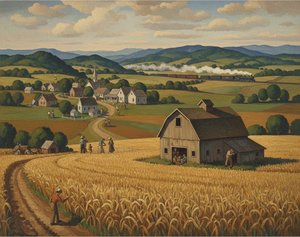
Fall Plowing
Técnica de reproducción
Tamaño de la reproducción
-


Precio total
€ 262
The Soul of the American Heartland
In the quiet, rhythmic pulse of the Midwestern landscape, Grant Wood’s Fall Plowing emerges as a profound meditation on labor, season, and the enduring spirit of the land. Painted in 1931, this masterpiece serves as a cornerstone of the Regionalism movement, an era when American artists turned their gaze away from European abstraction to find divinity in the local and the everyday. The scene unfolds with a breathtaking clarity, capturing a moment where the toil of man meets the inevitable transition of nature. As the farmer guides his horses through the earth, there is a palpable sense of duty and connection—a silent dialogue between the tiller and the soil that has defined rural existence for generations.
The composition is masterfully orchestrated to draw the viewer into the very heart of the autumnal ritual. In the foreground, the heavy presence of a plow rests upon the ground, its physical weight anchoring the scene and suggesting the immediate, tactile reality of agricultural life. As the eye wanders upward, it encounters rolling hills draped in a lush tapestry of green, punctuated by the fiery accents of trees turning yellow and red. This vibrant palette, set against a crisp, crystalline blue sky, creates a visual harmony that is both stimulating and deeply soothing. A solitary white farmhouse, nestled amongst the distant foliage, stands as a symbol of domestic stability and the quiet sanctuary found amidst the vastness of the plains.
Technique and the Flemish Legacy
While the subject matter is quintessentially American, Wood’s technical execution reveals a sophisticated debt to the Northern Renaissance. Influenced by the meticulous precision of Flemish masters like Jan van Eyck, Wood employs a luminous clarity that elevates the mundane to the monumental. Every furrow in the field and every leaf on the changing trees is rendered with an almost hyper-realistic devotion, lending the painting a sculptural quality. This disciplined approach to detail does not merely document a scene; it sanctifies it. The light seems to emanate from within the landscape itself, casting a glow that celebrates the textures of wood, metal, and earth.
For the discerning collector or interior designer, Fall Plowing offers more than just aesthetic beauty; it provides an emotional anchor for any space. The painting evokes a sense of nostalgia and tranquility, making it an ideal centerpiece for rooms designed to inspire reflection and warmth. Whether placed in a sun-drenched study or a sophisticated living area, this work brings with it the dignity of tradition and the peacefulness of the changing seasons. It is a piece that invites the viewer to slow down, to breathe in the crisp autumn air, and to appreciate the timeless beauty found in the honest labor of the American spirit.
Preguntas y respuestas
¿Qué saturación e intensidad muestra "Fall Plowing" de Grant Wood?
"Fall Plowing" de Grant Wood está registrado con una saturación de Clear Color Presence y una intensidad de Vivid.
¿Puedo pedir una reproducción al óleo de "Fall Plowing"?
Las copias pintadas a mano de "Fall Plowing" de Grant Wood se venden en este sitio web: una reproducción al óleo pintada a mano sobre lienzo de lino, las cuales pueden solicitarse desde su página de Reproducción pintada a mano.
¿De dónde vienen los visitantes de "Fall Plowing" de Grant Wood?
Las estadísticas sobre "Fall Plowing" de Grant Wood se encuentran en la página de Estadísticas de la obra: visitas mensuales de la obra, visitas a las obras del artista y desgloses por país e idioma de los visitantes recientes.
Biografía del artista
Primeros años y formación
Grant DeVolson Wood nació el 13 de febrero de 1891, en una granja cerca del pequeño pueblo de Anamosa, Iowa. Tras la muerte de su padre en 1901, su madre trasladó a la familia a la ciudad más grande de Cedar Rapids. Wood comenzó como aprendiz en un taller metalúrgico local y posteriormente se matriculó en el Handicraft Guild, una escuela de arte dirigida por mujeres en Minneapolis en 1910. Su formación inicial incluyó trabajos como artesano y diseñador, lo que influyó en su posterior enfoque artístico.Influencias artísticas y estilo
El estilo artístico de Wood estuvo fuertemente influenciado por Jan van Eyck, un artista flamenco del siglo XV conocido por su claridad técnica. Esta influencia es evidente en su obra más famosa, *American Gothic*. Wood también se vio afectado por el arte popular estadounidense y las tradiciones europeas, creando una estética única y reconocible. Su asociación con el movimiento regionalista americano, que enfatizaba escenas realistas de la vida rural y de los pequeños pueblos de Estados Unidos, consolidó su imagen como un artista clásicamente americano. Wood adoptó una técnica detallada y realista, inspirada en los maestros flamencos, abandonando su estilo impresionista anterior.Obras destacadas y contribuciones
- *American Gothic* (1930): Una obra icónica ampliamente reconocida como símbolo cultural estadounidense.
- La colonia de arte Stone City (1932): Fundada por Wood cerca de su ciudad natal para apoyar a los artistas durante la Gran Depresión.
- Enseñanza en la Escuela de Arte de la Universidad de Iowa (1934-1941): Contribuyó a la formación de nuevas generaciones de artistas.
Legado y vida posterior
Wood falleció el 12 de febrero de 1942, a los 51 años, debido al cáncer pancreático. Su patrimonio fue legado a su hermana, Nan Wood Graham, quien también posó como modelo para *American Gothic*. Hoy en día, sus pertenencias personales y diversas obras de arte forman parte de la colección del Museo Figge en Davenport, Iowa. El impacto de Grant Wood en el arte americano es innegable, consolidándose como una figura clave del regionalismo y dejando un legado duradero que continúa inspirando a artistas y entusiastas del arte. Su obra *American Gothic* se ha convertido en un símbolo perdurable de la cultura estadounidense, trascendiendo su contexto original para convertirse en un ícono globalmente reconocido.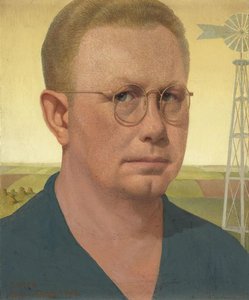
Grant Wood
1891 - 1942 , Estados Unidos de América
Datos clave
- Artistas Que Influyeron: ['Jan van Eyck']
- Fecha De Fallecimiento: 12 de febrero de 1942
- Fecha De Nacimiento: 13 de febrero de 1891
- Influenciado A Artistas: ['Ninguno conocido']
- Lugar De Nacimiento: Anamosa, EE. UU.
- Movimiento Artístico: Regionalismo americano
- Nacionalidad: Estadounidense
- Nombre Completo: Grant Wood
- Obras Notables:
- American Gothic
- The Stone City Art Colony
- Hijas de la Revolución
Artículos relacionados
Regionalismo Americano: Un Crisol de Identidad en el Arte y la Sociedad
Explora el Regionalismo Americano: su historia, artistas clave como Benton y Wood, y su profundo compromiso con la sociedad de la Gran Depresión. Un análisis exhaustivo para amantes del arte.
Ecos del Lugar: Regionalismo e Identidad Americana en el Arte Entre Guerras
Descubra el Regionalismo americano: un movimiento artístico que capturó la esencia de la identidad rural y la vida en Estados Unidos entre guerras. Análisis experto, obras clave y legado cultural.

Grant Wood & American Regionalism: Identity, Myth & the Rural Landscape
Explore the world of Grant Wood & American Regionalism with OriginalUniqueArt. Discover the symbolism behind 'American Gothic', recurring themes, and the movement's lasting impact on art history. High-quality reproductions available.

Golden Hues & Crimson Leaves: Capturing the Magic of Autumn Colors in Fine Art
Embark on a visual journey through the golden hues of autumn fine art. Discover how masters like Van Gogh capture seasonal magic through vibrant oil landscapes and explore expert tips for collecting timeless autumnal masterpieces.
American Regionalism: Capturing the Soul of the Heartland through the Lens of Art History
Explore the profound beauty of American Regionalism. Delve into the art history of Grant Wood and John Steuart Curry, uncovering how these masters captured the soul of the American Heartland through iconic landscapes and rural identity.