

 Vista previa
 Compartir
 Compartir
 Ver detalles
 Guía
Guía

 Descargar
 Ver artículos similares
 Radiografía
 Presentación de diapositivas
 Estadísticas
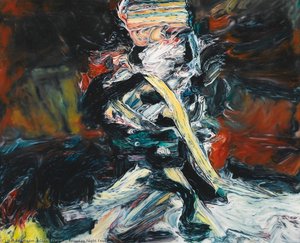
Saturday Night Fever
 79.0 x 97.0 cm
 Leer más
Reproducción al óleo hecha a mano
Óleo sobre lienzo pintado a mano en el tamaño y marco de su elección, realizado por encargo por nuestros artistas. ( Cambiar a formato impreso Ver versión en imagen digital)




































Elija entre nuestros tamaños predefinidos que respetan las proporciones originales de la obra.

Puede ingresar sus propias dimensiones para adaptarse a un marco o espacio específico. Si el tamaño seleccionado no coincide con las proporciones de la imagen original, recortaremos la obra o extenderemos la pintura con elementos adicionales pintados a mano. Se le enviará una maqueta digital para su aprobación antes de comenzar la producción.
Tenga en cuenta que la vista previa en pantalla no refleja el recorte o la extensión reales. Solo la maqueta mostrará con precisión la composición final.
Si bien existen tamaños personalizados, recomendamos seleccionar una dimensión de la lista predefinida para preservar las proporciones originales.
Tras realizar el pedido, el equipo de OriginalUniqueArt.com enviará un correo electrónico al cliente para solicitar instrucciones y proporcionarle una vista previa del boceto.
Envío a todo el mundo () en 3-4 semanas en lugar de las 5 semanas estándar. (27 septiembre). Sin comprometer la calidad.

Envío exprés gratuito a todo el mundo

Lienzo de lino de alta calidad

Seguro de envío completo

Garantía de reembolso de impuestos aduaneros

Garantía de fidelidad cromática exacta

Política de devolución de 100 días (solo por defectos)

Garantía de devolución del 100% del dinero

Oferta por volumen
 La opción de vidrio solo está disponible en tamaños inferiores a 110 cm.

Saturday Night Fever
Técnica de reproducción
Tamaño de la reproducción
-


Precio total
$ 300
Biografía del artista
Glenn Brown: A Painter of Dreams and Echoes
Glenn Brown, born in Hexham, Northumberland, in 1966, isn’t simply an artist; he's a conjurer of images, a weaver of narratives drawn from the detritus of art history and the shimmering surfaces of contemporary culture. His work, often unsettling yet undeniably beautiful, invites prolonged contemplation, demanding that we question our assumptions about originality, authorship, and the very nature of seeing. Brown’s career has been marked by a deliberate blurring of boundaries – between painting and drawing, image and reality, past and present – resulting in a body of work that is both deeply personal and profoundly universal.
Early influences shaped Brown's distinctive approach. He began his artistic journey at Norwich School of Art & Design, followed by studies at Bath College of Higher Education and Goldsmiths College, London. These formative years instilled in him a critical awareness of art’s history, but also a rebellious impulse to challenge its established conventions. Crucially, he wasn't interested in replicating the past; instead, he sought to engage with it through a process of appropriation – taking existing images, altering them beyond recognition, and re-presenting them as something entirely new.
The Language of Appropriation
At the heart of Brown’s practice lies his masterful use of appropriation. He doesn't merely copy; he transforms. His sources are remarkably diverse, ranging from Old Masters like Rembrandt and Adolph von Menzel to Surrealists such as Salvador Dalí, and even contemporary sci-fi painters like Chris Foss. These images – often found in exhibition catalogues or reproduced online – become the raw material for his paintings, drawings, and sculptures. He meticulously manipulates colour, scale, orientation, and composition, creating a sense of disorientation and unease. As J.M. Gallais aptly described it, Brown’s work is “deliquescent,” dissolving into a haze of unsettling beauty.
This process isn't without controversy. Critics have questioned whether his appropriation constitutes plagiarism, arguing that he simply re-presents existing images without adding significant artistic value. However, Brown consistently defends his approach, asserting that the act of altering and recombining pre-existing imagery is itself a form of creative expression. He sees himself as engaging in a dialogue with art history, using it not as a source of inspiration but as a springboard for exploring fundamental questions about representation and perception.
Technique and Aesthetic
Brown’s technical skill is undeniable. His paintings are characterized by their remarkable smoothness – an illusion created through the application of thin layers of oil paint, meticulously built up to create a surface that appears almost photographic in its clarity. Yet, beneath this veneer of realism lies a profound sense of unease. The colours are often jarring and discordant, the forms distorted and grotesque, and the overall effect is deeply unsettling. This tension between beauty and horror is a defining feature of his work.
He frequently employs trompe-l'oeil techniques, creating the illusion that his paintings are three-dimensional objects. His use of impasto – thick layers of paint applied to the surface – further enhances this effect, giving the impression that he’s working directly on the canvas with a palette knife. This deliberate manipulation of texture and form challenges our conventional understanding of painting, blurring the boundaries between image and reality.
Major Achievements and Legacy
Glenn Brown's career has been marked by numerous solo exhibitions at prestigious institutions around the world, including the Serpentine Gallery in London, the Kunsthistorisches Museum in Vienna, Tate Liverpool, and the Fondation Sandretto Re Rebaudengo in Turin. He was nominated for the Turner Prize in 2000, a recognition of his significant contribution to contemporary art. In 2019, he received the Commander of the Order of the British Empire (CBE) for his services to the arts.
Brown’s influence extends beyond his own work. He has inspired a generation of artists to explore the possibilities of appropriation and to challenge traditional notions of originality. His willingness to embrace ambiguity, contradiction, and unsettling imagery has paved the way for new approaches to painting and sculpture. His establishment of The Brown Collection in London further solidifies his legacy as an artist deeply invested in both creating and curating art, offering a unique perspective on the relationship between the past, present, and future of artistic expression.
glenn brown
1966 -
Datos clave
- Artistic Movement Or Style: Appropriation art
- Artists Or Movements Influenced By This Artist:
- School of London
- Mannerism
- Artists Who Influenced This Artist:
- Rembrandt
- Baselitz
- Dalí
- Date Of Birth: 13 February 1966
- Full Name: Glenn Emerson Keith Brown
- Nationality: British
- Notable Artworks:
- The Day the World Turned Auerbach
- N***** of the World
- Place Of Birth: Hexham, Northumberland