
 Vista previa
 Compartir
 Compartir
 Ver detalles

 Descargar
 Ver similares
 Radiografía
 Presentación de diapositivas
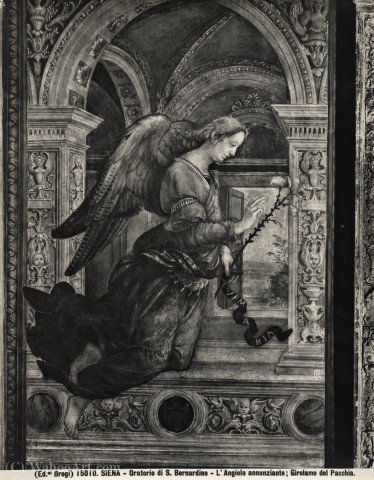
Arcangelo gabriele
 Leer más
Reproducción al óleo hecha a mano
Óleo sobre lienzo pintado a mano en el tamaño y marco de su elección, realizado por encargo por nuestros artistas. ( Pedir impresión Comprar descarga)




































Elija entre nuestros tamaños predefinidos que respetan las proporciones originales de la obra.

Puede ingresar sus propias dimensiones para adaptarse a un marco o espacio específico. Si el tamaño seleccionado no coincide con las proporciones de la imagen original, recortaremos la obra o extenderemos la pintura con elementos adicionales pintados a mano. Se le enviará una maqueta digital para su aprobación antes de comenzar la producción.
Tenga en cuenta que la vista previa en pantalla no refleja el recorte o la extensión reales. Solo la maqueta mostrará con precisión la composición final.
Si bien existen tamaños personalizados, recomendamos seleccionar una dimensión de la lista predefinida para preservar las proporciones originales.
Tras realizar el pedido, el equipo de OriginalUniqueArt.com enviará un correo electrónico al cliente para solicitar instrucciones y proporcionarle una vista previa del boceto.
Envío a todo el mundo () en 3-4 semanas en lugar de las 5 semanas estándar. (17 agosto). Sin comprometer la calidad.

Envío exprés gratuito a todo el mundo

Lienzo de lino de alta calidad

Seguro de envío completo

Garantía de reembolso de aranceles aduaneros

Garantía de fidelidad cromática exacta

Política de devolución de 60 días (solo por defectos)

Garantía de devolución del 100% del dinero

Oferta por volumen
 La opción de vidrio solo está disponible en tamaños inferiores a 110 cm.

Arcangelo gabriele
Técnica de reproducción
Tamaño de la reproducción
-


Precio total
$ 300
Biografía del artista
The Radiant Legacy of Girolamo del Pacchia
In the heart of the Italian Renaissance, amidst the winding streets and spiritual fervor of Siena, the life of Girollama del Pacchia unfolded as a testament to the era's profound artistic awakening. Born around 1477, likely to a Hungarian cannon-founder, Pacchia’s origins were rooted in the precision of metalwork, yet his destiny was etched in pigment and plaster. His early years were shaped by the tutelage of Giacomo Pacchiarotti, a master who provided him with the foundational tools to translate classical ideals into visual poetry. As he matured, Pacchia became more than just a local painter; he became a chronicler of the divine, weaving together the humanist elegance of Florence with the deep-seated piety of his Sienese home.
The evolution of his style reveals a fascinating dialogue between tradition and innovation. While much of his early training was steeped in the graceful, balanced compositions reminiscent of Perugino, scholars suggest that his true stylistic North Star may have been the more robust and forceful Franciabigio. This influence allowed Pacchia to move beyond mere imitation, developing a technique characterized by fuller forms and a certain luminous vitality. His brushwork often possessed a noticeable force, particularly in his use of color, which could transition from the soft, sweet features of his female subjects to the dramatic intensity required for religious narratives.
Mastery in Fresco and Devotional Splendor
The true zenith of Pacchia’s career is found within the sacred walls of the Oratory of San Bernardino in Siena. Here, his monumental fresco cycle serves as a breathtaking achievement of Renaissance storytelling. Tasked with depicting the life of Saint Bernardino, Pacchia utilized tempera on plaster to create scenes that are celebrated for their grace and tenderness. These works do not merely illustrate history; they invite the viewer into a contemplative state, using a palette of muted ochres, deep reds, and serene blues to mirror the saint's own devotion. His ability to capture the spiritual essence of biblical narratives through meticulous detail remains his most enduring contribution to the Sienese landscape.
Beyond the Oratory, Pacchia’s hand can be found in other significant religious landmarks, such as the church of Santa Caterina in Siena, where he depicted the saint's miraculous visit to St. Agnes of Montepulciano. His repertoire also extended into the intimate realm of oil painting, as seen in works like Virgin and Child with St. John the Baptist. In these smaller-scale devotionals, one can observe his mastery of light and the delicate, almost ethereal beauty of his figures, which helped bridge the gap between the grand public fresco and the private, quiet prayer of the faithful.
A Turbulent End and Lasting Significance
Despite the brilliance of his artistic output, the final chapters of Pacchia’s life are shrouded in the shadows of historical upheaval. He was known to have been part of a turbulent social group called the Bardotti, a club that eventually faced dispersal in Siena around 1535. Following this period of unrest, the historical record grows silent, and the master disappears from the annals of art history, leaving behind only the vibrant echoes of his completed works. This sudden departure adds a layer of mystery to his persona, much like the transient nature of the very light he sought to capture on canvas.
The historical significance of Girolamo del Pacchia lies in his role as a vital link in the Sienese Renaissance. He was an artist who could navigate the complexities of collaboration—working alongside figures such as Giovanni Battista Sant'Anna—while maintaining a distinct, recognizable voice. His work stands as a bridge between the delicate grace of the late 15th century and the more muscular, expressive energy of the high Renaissance. Today, his legacy survives in the quiet majesty of Siena’s churches, reminding us of a time when art was the ultimate vessel for the human soul's encounter with the divine.

girolamo del pacchia
1477 - 1533 , Italy
Datos clave
- Artistic Movement Or Style: Renaissance
- Artists Or Movements Influenced By This Artist: ['Florence Renaissance']
- Artists Who Influenced This Artist: ['Giacomo Pacchiarotti']
- Date Of Birth: 1477
- Full Name: Girolamo del Pacchia
- Nationality: Italian
- Notable Artworks:
- The Birth of the Virgin
- Arcangelo Gabriele
- Coronation of Mary Jerome
- Place Of Birth: Siena, Italy

