

 Vista previa
 Compartir
 Compartir
 Ver detalles
 Guide
Guide

 Descargar
 Ver artículos similares
 Radiografía
 Presentación de diapositivas
 Estadísticas
Camera obscura


 Leer más
Reproducción al óleo hecha a mano
Óleo sobre lienzo pintado a mano en el tamaño y marco de su elección, realizado por encargo por nuestros artistas. ( Cambiar a formato impreso Ver versión en imagen digital)




P118B $10

P118H $10

P118W $10

P438Z $10

P508JH $12

P508YH $12

P805H $10

P805Z $10

P919BZ $10

P919G $10

P919XJ $10

P959ZH $10

P968JZ $12

W106C $8

W218G $10

W218JH $8

W218Y $10

W307PJ $10

W316G $10

W316PJ $8

W316Y $10

W398PJ $8

W4111J $10

W500HY $15

W500JH $15

W692G $12

W849H $8

W940BG $15

W953PJ $8




Elija entre nuestros tamaños predefinidos que respetan las proporciones originales de la obra.

Puede ingresar sus propias dimensiones para adaptarse a un marco o espacio específico. Si el tamaño seleccionado no coincide con las proporciones de la imagen original, recortaremos la obra o extenderemos la pintura con elementos adicionales pintados a mano. Se le enviará una maqueta digital para su aprobación antes de comenzar la producción.
Tenga en cuenta que la vista previa en pantalla no refleja el recorte o la extensión reales. Solo la maqueta mostrará con precisión la composición final.
Si bien existen tamaños personalizados, recomendamos seleccionar una dimensión de la lista predefinida para preservar las proporciones originales.
Tras realizar el pedido, el equipo de OriginalUniqueArt.com enviará un correo electrónico al cliente para solicitar instrucciones y proporcionarle una vista previa del boceto.
Envío a todo el mundo () en 3-4 semanas en lugar de las 5 semanas estándar. (20 septiembre). Sin comprometer la calidad.

Envío exprés gratuito a todo el mundo

Lienzo de lino de alta calidad

Seguro de envío completo

Garantía de reembolso de impuestos aduaneros

Garantía de fidelidad cromática exacta

Política de devolución de 100 días (solo por defectos)

Garantía de devolución del 100% del dinero

Oferta por volumen
 La opción de vidrio solo está disponible en tamaños inferiores a 110 cm.

Camera obscura
Técnica de reproducción
Tamaño de la reproducción
-


Precio total
$ 300
A Sculptural Echo of Light and Vision
Canaletto’s “Camera Obscura,” a meticulously crafted wooden device dating back to around 1700, isn't merely a reproduction; it’s a tangible embodiment of the revolutionary vision that shaped his artistic practice. This intimate sculpture, presented against a stark black backdrop, immediately draws the eye, inviting us into a world where light and shadow dance in harmonious collaboration. The piece speaks volumes about Canaletto’s innovative approach to capturing reality – an approach deeply rooted in observation and a fascination with the mechanics of vision itself. The geometric precision of the boxy structure, constructed from carefully joined wooden panels, suggests both the artist's meticulousness and a profound understanding of spatial relationships. It’s not simply a representation of a camera obscura; it *is* the camera obscura, distilled into its essential form.
- Material & Construction: The use of wood – likely stained or varnished to preserve its beauty – speaks to Canaletto's appreciation for tactile quality and enduring craftsmanship. The intricate joinery hints at a deliberate process, reflecting the artist’s careful attention to detail.
- Form & Composition: The vertical orientation emphasizes the height and solidity of the device, creating a sense of direct engagement with the viewer. Lines dominate – sharp, clean lines defining the boxy structure, contrasting with the subtle texture of the wood grain.
- Symbolic Weight: The camera obscura itself represents a pivotal moment in art history—a precursor to photography and a testament to Canaletto’s pioneering spirit. It embodies the pursuit of accurate representation, challenging traditional methods and opening new avenues for artistic expression.
Unlocking the Secrets of Early Photography
Canaletto's fascination with the camera obscura wasn't simply an aesthetic curiosity; it was a deeply practical investigation into how light and shadow create images. The inscription on the device – “A Camera Obscura” – provides a crucial clue, revealing that this object belonged to the Venetian master himself. This discovery dramatically shifts our understanding of Canaletto’s process: he didn't just paint what he saw; he actively *observed* how light transformed his surroundings into visual forms. Research suggests that Canaletto utilized the camera obscura as a tool for sketching, meticulously documenting architectural details and urban landscapes with unprecedented accuracy. The device allowed him to capture perspective and spatial relationships with remarkable precision – a skill that profoundly influenced his later paintings.
Historical Context:The invention of the camera obscura in the 16th century marked a watershed moment in art history. Initially used as a scientific instrument for astronomical observation, it quickly gained popularity among artists seeking to improve their draftsmanship and understand perspective. Canaletto’s embrace of this technology demonstrates his commitment to innovation and his desire to push the boundaries of artistic representation.
A Window into Venice: The Artist's Process
The “Camera Obscura” offers a rare glimpse into Canaletto’s working methods. It’s believed that he used this device not just for sketching, but also as a means of studying light and shadow—analyzing how they interacted with buildings and streets to create the illusion of depth and volume. The resulting drawings were then translated into his celebrated paintings, imbuing them with an extraordinary sense of realism and atmospheric detail. The meticulousness evident in the camera obscura’s construction mirrors the painstaking care Canaletto invested in every brushstroke of his finished works. It's a testament to his dedication to capturing not just appearances, but also the very essence of Venice.
Recreating a Masterpiece: A Reproduction for Today
Reproducing Canaletto’s “Camera Obscura” is more than simply creating a copy; it’s about preserving a vital piece of art history and celebrating the ingenuity of one of Venice's greatest artists. The resulting reproduction captures not only the physical form of the device but also its symbolic significance—a reminder of the enduring power of observation, innovation, and the pursuit of accurate representation. This meticulously crafted replica serves as a tangible link to the 18th century, inviting viewers to contemplate the origins of photography and appreciate Canaletto’s pioneering legacy.
Biografía del artista
Giovanni Antonio Canal
Giovanni Antonio Canal, commonly known as canaletto, was born in Venice on October 18, 1697, to Bernardo Canal, a painter of theatrical scene settings, and Artemisia Barbieri. He was the son of a noble family steeped in artistic tradition—Bernardo Canal had himself trained as an artist—and his early life foreshadowed his extraordinary future career. Canaletto’s formative years were marked by exposure to Venetian art and culture, shaping his aesthetic sensibilities from a young age.Early Life and Training
Canaletto began his artistic journey under the tutelage of his father, Bernardo Canal, who instilled in him the foundational principles of painting—observation, composition, and meticulous technique. Recognizing his son’s talent, Bernardo ensured he received a comprehensive education encompassing both artistic practice and humanist studies. Crucially, Canaletto's training extended beyond his father's guidance; he studied with Luca Carlevaris, a celebrated Venetian vedutista (landscape painter) who championed the use of precise perspective and detailed preparatory drawings—methods that would become hallmarks of Canaletto’s distinctive style. This mentorship solidified Canaletto’s understanding of how to capture the essence of urban spaces with remarkable accuracy and artistic merit.The Making of a Master
In 1718, Canaletto embarked on a transformative journey to Rome, where he immersed himself in the vibrant artistic milieu of the era. He worked alongside his father producing scenery for two operas by Alessandro Scarlatti—a formative experience that honed his skills in theatrical design and exposed him to the influential ideas circulating within Roman intellectual circles. This period fostered Canaletto’s burgeoning creativity and cemented his commitment to mastering the art of illusionistic painting, a technique central to Venetian Baroque aesthetics. Upon returning to Venice, Canaletto swiftly established himself as a prolific painter, specializing in vedute—detailed depictions of Venetian cityscape—that captured the grandeur and dynamism of the city during his time.Notable Works and Collaborations
Canaletto’s artistic output spanned decades, producing an impressive body of work that cemented his reputation as one of Venice's foremost artists. Among his most celebrated paintings are “The Stonemason’s Yard” (c. 1725), a masterful early depiction showcasing Canaletto’s burgeoning talent and demonstrating his ability to convey atmosphere and emotion with subtle brushstrokes; “Regatta on the Grand Canal” (c. 1730), which immortalizes a pivotal Venetian public ceremony—a testament to Canaletto's keen eye for capturing social life and architectural detail; and “Eton College” (1746-1756), where he skillfully rendered the collegiate campus in England, reflecting his growing influence as an artist abroad. Canaletto’s collaboration with his nephew Bernardo Bellotto—who became a respected painter in his own right—further enriched Venetian artistic culture, resulting in complementary views of Venice and other European cities.Artistic Style and Technique
Canaletto's distinctive style was characterized by unwavering attention to detail and the masterful application of technique. He famously employed a camera obscura—a darkened room equipped with a lens—to achieve unparalleled topographical accuracy, meticulously transferring observed scenes onto canvas with remarkable precision. However, Canaletto’s artistic vision extended beyond mere replication; he prioritized compositional design, ensuring his paintings were not merely accurate recordings but also aesthetically compelling experiences for the viewer. His brushwork was deliberate and controlled, favoring smooth gradations of color and subtle tonal variations—a technique that conveyed a palpable sense of atmosphere and luminosity. Canaletto's legacy resides in his ability to transform observation into art—to distill the essence of Venice onto canvas with breathtaking beauty and enduring significance.Legacy and Collections
Canaletto’s paintings are housed in prestigious museums worldwide, including The National Gallery in London, where “The Stonemason’s Yard” stands as a cornerstone of Venetian Baroque art; and the Museo Thyssen-Bornemisza in Madrid, which proudly displays “Regatta on the Grand Canal.” His influence extended far beyond his own lifetime, inspiring generations of artists who sought to emulate his meticulous style and evocative vision. Canaletto's contribution to European art history is undeniable—he remains a symbol of Venetian artistic excellence and a testament to the transformative power of observation and artistic skill.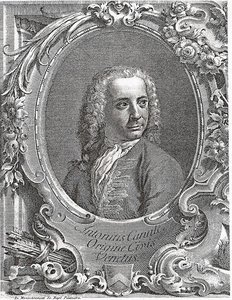
Giovanni Antonio Canal
1697 - 1768 , Italia
Datos clave
- Artistic Movement Or Style: Vedute Venice
- Artists Who Influenced This Artist:
- Luca Carlevaris
- Giovanni Paolo Pannini
- Date Of Birth: October 18, 1697
- Date Of Death: April 19, 1768
- Full Name: Giovanni Antonio Canal
- Nationality: Italian
- Notable Artworks:
- The Stonemason's Yard
- Regatta on the Grand Canal
- Eton College
- Place Of Birth: Venice, Italy
Artículos relacionados

John Constable: Las 25 Obras Maestras del Paisaje Inglés | OriginalUniqueArt
Descubre las 25 obras maestras de John Constable, el pintor romántico inglés que capturó la belleza del paisaje. Explora su técnica, historia y significado en OriginalUniqueArt.com. Reproducciones de arte de alta calidad para tu hogar.

Evocations of Place: A Historical Journey Through Landscape Art
Explore the rich history of landscape art with OriginalUniqueArt. Discover renowned artists, movements like Impressionism & Romanticism, and expert guidance for collecting timeless pieces. Find your perfect serene escape today!

Giovanni Antonio Canal (Canaletto): A Venetian Master of Light, Space & Societal Observation
Explore the life & art of Giovanni Antonio Canal (Canaletto), a Venetian master renowned for his breathtaking cityscapes. Discover his techniques, legacy, and captivating depictions of 18th-century Venice & London.

Michelangelo Morlaiter: Venetian Landscapes & the Pursuit of Atmospheric Realism
Explore the captivating landscapes of Michelangelo Morlaiter, a key figure in 18th-century Venetian painting. Discover his mastery of atmospheric perspective and lasting influence on Italian art history. Learn more at OriginalUniqueArt.

Paisajes Románticos: 10 Obras Maestras que Definieron un Movimiento Artístico
Descubre los 10 paisajes románticos más influyentes de artistas como Caspar David Friedrich y Turner. Explora la belleza, el simbolismo y las técnicas del movimiento romántico. Reproducciones de arte exclusivas en OriginalUniqueArt.com.


