

 Vista previa
 Compartir
 Compartir
 Ver detalles
 Guía
Guía

 Descargar
 Ver artículos similares
 Radiografía
 Presentación de diapositivas
 Estadísticas
The Annunciation
 Acrylic On Canvas
- WallArt
- Renaissance
 19.0 x 22.0 cm
 Kupferstichkabinett
 Leer más
Reproducción al óleo hecha a mano
Óleo sobre lienzo pintado a mano en el tamaño y marco de su elección, realizado por encargo por nuestros artistas. ( Cambiar a formato impreso Ver versión en imagen digital)




P118B €10

P118H €10

P118W €10

P438Z €10

P508JH €12

P508YH €12

P805H €10

P805Z €10

P919BZ €10

P919G €10

P919XJ €10

P959ZH €10

P968JZ €12

W106C €8

W218G €10

W218JH €8

W218Y €10

W307PJ €10

W316G €10

W316PJ €8

W316Y €10

W398PJ €8

W4111J €10

W500HY €15

W500JH €15

W692G €12

W849H €8

W940BG €15

W953PJ €8




Elija entre nuestros tamaños predefinidos que respetan las proporciones originales de la obra.

Escriba el ancho y el alto que necesite para adaptarse a su marco o a su pared. Al ser una obra pintada a mano, para un tamaño con una forma distinta, el artista puede pintar un poco más alrededor de la imagen o recortar un poco; usted elige. Le enviaremos una maqueta digital para su aprobación antes de comenzar la pintura. La imagen que se muestra en esta página no refleja el resultado real; solo la maqueta lo hace.
Tras realizar el pedido, el equipo de OriginalUniqueArt.com enviará un correo electrónico al cliente para solicitar instrucciones y proporcionarle una vista previa del boceto.
Envío a todo el mundo () en 3-4 semanas en lugar de las 5 semanas estándar. (24 octubre). Sin comprometer la calidad.

Envío exprés gratuito a todo el mundo

Lienzo de lino de alta calidad

Seguro de envío completo

Garantía de reembolso de impuestos aduaneros

Garantía de fidelidad cromática exacta

Política de devolución de 100 días (solo por defectos)

Garantía de devolución del 100% del dinero

Oferta por volumen
 La opción de vidrio solo está disponible en tamaños inferiores a 110 cm.

The Annunciation
Técnica de reproducción
Tamaño de la reproducción
-


Precio total
€ 264
A Moment of Divine Revelation: Exploring Vasari’s ‘The Annunciation’
Giorgio Vasari's “The Annunciation,” painted circa 1567, isn’t merely a depiction of a biblical scene; it’s a carefully constructed tableau brimming with symbolic weight and technical mastery. This remarkable work, often considered a pivotal study for a larger ceiling painting, offers a rare glimpse into the artist’s process – a testament to his dedication to capturing not just likeness but also the profound emotional resonance of faith. The image, rendered in the delicate hues of carta azzurra (azure paper), immediately draws the eye with its ethereal quality and remarkable sense of spatial depth.
Vasari’s choice of blue pigment is crucial to understanding the painting's impact. The specific shade, a pale, almost luminous azure, was highly prized in Renaissance Italy for its ability to create an airy, atmospheric effect. It’s not simply a color; it’s a key element in conveying the divine presence and the sense of otherworldly grace that permeates the scene. The artist skillfully employs washes of ink and delicate highlights – a technique reminiscent of tempera painting – to build up layers of texture and luminosity, avoiding the heavy impasto favored by some of his contemporaries. This restrained approach allows for an astonishing level of detail, particularly in the rendering of Mary’s face and the angel Gabriel's flowing robes.
Architectural Echoes: Composition and Spatial Dynamics
Beyond its exquisite color palette, “The Annunciation” is distinguished by its sophisticated architectural design. Vasari masterfully integrates architectural elements – a coffered ceiling, a portal in the background, and a tent-shaped baldachin – to reinforce the composition’s clarity and stability. These aren't merely decorative flourishes; they serve as visual anchors, guiding the viewer’s eye through the scene and creating a sense of depth and perspective. The low vantage point, characteristic of ceiling paintings, emphasizes the scale of the figures and the grandeur of the event. Notice how Vasari uses linear perspective to create the illusion of receding space – the distant portal subtly diminishing in size, drawing us into the narrative.
The arrangement of the figures is equally deliberate. Gabriel, positioned on the left, extends his arm towards Mary, who sits serenely in the center of the frame. The subtle gestures and expressions convey a sense of reverence and anticipation. Even the secondary figures – a man near the top-left corner and another at the bottom-right – contribute to the scene’s dynamism, suggesting a broader context and inviting contemplation. The inclusion of a simple chair and vase adds a touch of domesticity, grounding the divine event within a recognizable human setting.
A Renaissance Masterpiece: Context and Legacy
Giorgio Vasari (1511-1574) was more than just a painter; he was a polymath – an architect, sculptor, historian, and biographer. His “Lives of the Most Excellent Painters, Sculptors, and Architects,” published in 1550, established a framework for understanding Renaissance art that continues to influence scholars today. Vasari’s work profoundly shaped our perception of the period, elevating the status of artists and establishing Florence as the epicenter of artistic innovation. “The Annunciation” exemplifies his commitment to capturing both the beauty and the spiritual significance of religious subjects.
Further research reveals that this painting was originally intended for a ceiling in the Chapel of Santa Michele in the Torre Pia, Vatican Palace, alongside three other roundels depicting the Nativity, the Annunciation, Zacharias and the Angel, and the Liberation of St. Peter. The rediscovery of these related works has illuminated Vasari’s artistic process and provided valuable insights into the history of Renaissance art. The image's presence in the Louvre Museum and its detailed documentation through online resources – such as WikiArt and Google Arts & Culture – ensure that this remarkable masterpiece remains accessible to a global audience.
Reproductions and Inspiration
A high-quality reproduction of Vasari’s “The Annunciation” offers a stunning opportunity to bring the drama and beauty of this Renaissance painting into your home or office. The delicate color palette, masterful composition, and profound symbolism will undoubtedly captivate viewers and evoke a sense of serenity and contemplation. Consider commissioning a hand-painted replica – a faithful recreation that captures the essence of Vasari’s original work, allowing you to experience the artistry firsthand.
Preguntas y respuestas
¿Quién vende copias pintadas a mano de "The Annunciation" de Giorgio Vasari?
Las copias pintadas a mano de "The Annunciation" de Giorgio Vasari se venden en este sitio web: una reproducción al óleo pintada a mano sobre lienzo de lino, las cuales pueden solicitarse desde su página de Reproducción pintada a mano.
¿Puedo usar la realidad aumentada para ver "The Annunciation" de Giorgio Vasari en mi habitación?
"The Annunciation" tiene una vista previa en realidad aumentada: la página de Vista previa AR de la obra permite visualizarla en su propio espacio mediante un dispositivo compatible.
¿De qué está hecho "The Annunciation"?
Giorgio Vasari utilizó la técnica de Acrylic On Canvas para "The Annunciation". La técnica define la naturaleza material de la obra original.
Biografía del artista
Primeros años y formación
Giorgio Vasari, un renombrado pintor, arquitecto, escritor e historiador italiano, nació el 30 de julio de 1511 en Arezzo, Toscana. Comenzó su viaje artístico como discípulo de Guglielmo da Marsiglia, un hábil pintor de vidrieras. A los dieciséis años, Vasari se unió al círculo de Andrea del Sarto y sus alumnos, Rosso Fiorentino y Jacopo Pontormo, en Florencia.Carrera artística
Las propias pinturas manieristas de Vasari fueron muy admiradas durante su vida. En 1529, visitó Roma, donde estudió las obras de Rafael y otros artistas del Alto Renacimiento romano. Algunas de sus obras notables incluyen:- El taller del pintor (fresco, 1548), ubicado en Casa Vasari, Arezzo, Italia (ver en OriginalUniqueArt)
- El Juicio Final (fresco, 1572), en la cúpula de la catedral de Florencia
- La Adoración de los Magos (pintura al óleo, 1566), en la iglesia de Santa Croce, Florencia (más en OriginalUniqueArt)
Contribuciones arquitectónicas
Los logros arquitectónicos de Vasari incluyen:- La logia del Palazzo degli Uffizi, Florencia, que funciona como una plaza pública
- El Corredor de Vasari, que conecta los Uffizi con el Palazzo Pitti en Florencia (explorar en OriginalUniqueArt)
- La renovación de iglesias medievales, como Santa Maria Novella y Santa Croce
Legado
Vasari a menudo se le llama "el primer historiador del arte" debido a su libro Vidas de los más excelentes pintores, escultores y arquitectos italianos, que sigue siendo un texto fundamental en la escritura histórico-artística. Murió el 27 de junio de 1574 en Florencia, Gran Ducado de Toscana, a la edad de 62 años. Descubre más sobre la vida y obra de Giorgio Vasari en OriginalUniqueArt: Giorgio Vasari | 72 obras de arte
Giorgio Vasari
1511 - 1574 , Italia
Datos clave
- Artistas Que Influyeron:
- Rafael
- Miguel Ángel
- Estilo Artístico: Manierismo
- Fecha De Muerte: 27 de junio de 1574
- Fecha De Nacimiento: 30 de julio de 1511
- Lugar De Nacimiento: Arezzo, Italia
- Nacionalidad: Italiana
- Nombre Completo: Giorgio Vasari
- Obras Notables:
- El taller del pintor
- El Juicio Final
- La Adoración de los Magos
Artículos relacionados

Las 10 Obras Maestras del Azul Pizarra: Arte, Historia y Decoración
Descubre las 10 pinturas más famosas dominadas por el azul pizarra. Explora la historia, técnica y belleza de Monet, Van Gogh y otros maestros. Encuentra reproducciones de arte exclusivas para decorar tu hogar en .

Ephemeral Expressions: Exploring the Nuances of Ink on Paper Through History & Contemporary Art
Explore the captivating world of ink wash painting – from its ancient origins to contemporary masters. Discover techniques, symbolism & conservation insights with OriginalUniqueArt.com.

The Alchemy of Ink: Mastering the Timeless Beauty and Art History of Paper and Brush
Embark on a sophisticated exploration of ink wash painting and Sumi-e. Uncover the profound historical lineages, Zen philosophies, and technical mastery behind this timeless medium in our authoritative guide for fine art enthusiasts.

Serene Blue Backgrounds: Discover Soulful Art to Transform Your Space with Timeless Elegance
Transform your home with soulful blue art. From serene Monet impressions to modern textured sculptures, discover curated masterpieces designed to inspire calm. Explore expert art consultations and bespoke hand-painted reproductions to create your personal sanctuary.
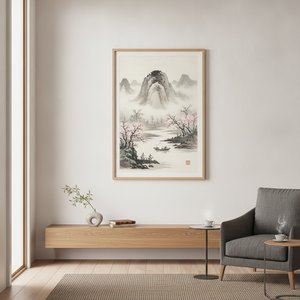
The Beauty of Ink Wash: Discover Serene & Soulful Art for Your Home
Discover the tranquil beauty of ink wash painting. Explore how Sumi-e and monochrome landscapes bring Zen-inspired serenity and soulful elegance to your home decor through expert curation and timeless East Asian aesthetics.


