

 Vista previa
 Compartir
 Compartir
 Ver detalles
 Guía
Guía

 Descargar
 Ver artículos similares
 Radiografía
 Presentación de diapositivas
 Estadísticas
Landscape
 Oil On Copper
- Baroque Landscape
 24.0 x 19.0 cm
 Museo del Prado
 Leer más
Adquiera una imagen digital de alta resolución y optimizada, muy superior a la vista previa en línea.
Cada archivo es preparado meticulosamente por nuestros especialistas internos mediante el uso de herramientas avanzadas y un experto retoque manual. Nos aseguramos de que cada imagen posea una claridad excepcional, una precisión cromática impecable y un detalle minucioso.
El archivo final se entrega por correo electrónico en un plazo de 72 horas, optimizado para su uso inmediato en entornos profesionales, editoriales y de impresión. Esta es la misma calidad en la que confían los estudios de diseño, las editoriales y las galerías de primer nivel.
Imagen Digital
Descarga un archivo de alta resolución para exhibición personal, impresión y proyectos creativos. ( Cambiar a formato impreso Encargar reproducción pintada a mano)
Incluido en cada pedido de imágenes digitales
Entrega digital experta, garantizada.
Al elegir OriginalUniqueArt.com, no solo está adquiriendo una imagen; está recibiendo una obra de arte digital mejorada profesionalmente, elaborada con precisión y respaldada por una garantía de satisfacción. Esto es todo lo que incluye su pedido, automáticamente:

Entrega inmediata por email
Recibirá su archivo de imagen digital en alta resolución por correo electrónico en un plazo de 72 horas tras realizar su pedido, listo para su uso inmediato.

Archivo digital optimizado por IA
Su obra de arte se optimiza profesionalmente mediante herramientas avanzadas de IA y edición manual, garantizando el máximo detalle, claridad y precisión cromática.

Reenvío gratuito de por vida
¿Has borrado o perdido tu archivo por error? No te preocupes: te lo volveremos a enviar en cualquier momento, sin coste adicional.

Sin gastos de importación, siempre
Disfrute de su obra de arte al instante sin aduanas, aranceles ni gastos de envío; las descargas digitales siempre están libres de impuestos.

Garantía de precisión de color
Garantizamos que su imagen digital refleje los colores originales con la mayor fidelidad posible, mediante el uso de herramientas profesionales y gestión del color.

Garantía de satisfacción de 100 días
Si no está satisfecho con su imagen digital, la revisaremos o le reembolsaremos el 100% en un plazo de 100 días, sin preguntas.

100% Garantía de devolución de dinero
¿No está satisfecho? Obtenga un reembolso completo dentro de los 100 días posteriores a la recepción de su archivo digital, sin preguntas.

Descuentos por volumen
Compra 3 imágenes, ahorra 10% - Compra 5, ahorra 15% - Compra 10+, ahorra 20%. Ideal para proyectos creativos, galerías y agencias.
A Flemish Master’s Woodland Reverie: Gillis van Coninxloo's “Landscape”
Gillis van Coninxloo’s “Landscape,” a captivating oil on copper panel, transports the viewer to a realm of serene contemplation within a meticulously rendered Flemish forest. Painted around 1598, this work stands as a pivotal example of the artist’s mastery in capturing the atmospheric depth and intricate detail characteristic of the early 16th-century Golden Age. More than just a depiction of nature, it's an invitation to lose oneself within a carefully constructed world of light, shadow, and subtle symbolism – a testament to van Coninxloo’s profound understanding of both landscape painting and the human experience.
The scene unfolds before us with remarkable realism. A dense thicket of trees dominates the foreground, their leaves rendered with an almost obsessive attention to detail; each vein, each curl of bark, is painstakingly observed and faithfully reproduced. These trees aren’t merely static elements; they create a palpable sense of depth, drawing the eye into the heart of the forest. Beyond them, a modest collection of buildings – likely farmhouses or small dwellings – nestles amongst the foliage, suggesting a quiet rural existence. The architecture is understated yet solid, reflecting a pragmatic approach to building within this natural setting. In the distance, a formidable castle rises above the horizon, its imposing silhouette anchoring the composition and hinting at notions of power, protection, and perhaps even isolation.
The Alchemy of Light and Shadow: Technique and Style
Van Coninxloo’s technical skill is immediately apparent in his masterful use of oil on copper. This medium allowed for a remarkable level of detail and luminosity – the surface retains a subtle sheen that enhances the richness of the colors and creates an almost three-dimensional effect. The artist employs a technique known as “chiaroscuro,” skillfully manipulating light and shadow to sculpt the forms and create a dramatic sense of depth. Notice how the sunlight filters through the trees, dappling the ground in pools of brightness while simultaneously casting deep shadows beneath the foliage. This interplay of light and dark isn’t merely decorative; it imbues the scene with a palpable atmosphere – a feeling of both tranquility and mystery.
Stylistically, “Landscape” aligns itself with the Flemish tradition of landscape painting, yet van Coninxloo departs from some of the more rigid conventions of the time. While influenced by the Northern Mannerist style—characterized by its emphasis on detail and symbolic imagery—he introduces a greater sense of naturalism and emotional resonance. The composition is carefully balanced, creating a harmonious whole that invites contemplation. The muted color palette – dominated by greens, browns, and grays – contributes to the overall feeling of serenity and timelessness.
A Window into 16th-Century Life and Belief
To fully appreciate “Landscape,” it’s important to consider its historical context. Painted during a period of religious upheaval and political instability in the Netherlands, this work reflects both the anxieties and the enduring values of the era. The castle, for instance, can be interpreted as a symbol of authority – whether representing secular power or divine protection. The humble dwellings nestled within the forest suggest a connection to the land and a reverence for rural life. Furthermore, the dense woodland itself has long been associated with themes of solitude, introspection, and the spiritual realm.
Interestingly, this painting was originally housed in the Museo del Prado in Madrid, Spain, a testament to its enduring appeal across national boundaries. The artist’s biography reveals a fascinating journey – from Antwerp to Germany and eventually Amsterdam—reflecting the shifting political landscape of the time. His work served as a bridge between artistic styles, incorporating elements of Mannerism while embracing the burgeoning realism of the Dutch Golden Age.
A Timeless Masterpiece: Reproduction and Inspiration
Reproductions of “Landscape” capture only a fraction of its original impact. The subtle nuances of light, texture, and atmosphere are difficult to replicate fully, but OriginalUniqueArt’s hand-painted reproductions strive to honor the artist's vision with remarkable fidelity. This piece offers an exceptional opportunity for interior designers seeking to evoke a sense of tranquility and connection to nature – imagine it adorning a study or a living room, providing a focal point that invites contemplation. Collectors will find “Landscape” to be a valuable addition to any art collection, representing a significant moment in the history of Flemish landscape painting.
For further exploration, we encourage you to visit the linked resources:
- Wikipedia Entry on Gillis van Coninxloo
- The Metropolitan Museum of Art’s “Wooded Landscape”
- OriginalUniqueArt's Gillis van Coninxloo Forest Landscape
Preguntas y respuestas
¿Cómo se describe la atmósfera de "Landscape" de Gillis Van Coninxloo?
El ambiente general de "Landscape" de Gillis Van Coninxloo es Calm. Esta atmósfera describe la esencia general de la obra.
¿En qué técnica está ejecutada "Landscape" de Gillis Van Coninxloo?
La técnica de "Landscape" de Gillis Van Coninxloo es Oil On Copper. Las reproducciones pretenden recrear la apariencia de esta técnica.
¿Cuál es la técnica y las dimensiones de "Landscape" de Gillis Van Coninxloo?
"Landscape" fue realizada en Oil On Copper y mide 24 x 19 cm en su formato original.
Biografía del artista
Un Maestro del Reino Verdante
Gillis van Coninxloo se erige como una figura fundamental en la evolución del paisaje del norte de Europa, actuando como un puente vital entre las intrincadas tradiciones manieristas y la floreciente profundidad atmosférica del Barroco temprano. Nacido en Amberes, Bélgica, su vida estuvo profundamente entrelazada con el rico linaje artístico de los Países Bajos. Hijo de pintor, se sumergiya en un mundo donde la maestría técnica y la observación natural eran primordiales. Su formación temprana bajo maestros como Pieter Coecke van Aelst el Joven y Lenaert Kroes le proporcionó una base rigurosa, pero fue su etapa trabajando en el taller de Gillis Mostaert lo que verdaderamente permitió que su talento floreciera, permitiéndole contribuir a obras profesionales mientras perfeccionaba su visión única.
Su trayectoria fue una de movimiento y expansión, reflejando las cambiantes mareas políticas y culturales de la época. Si bien su carrera echó raíces en Amberes, la última parte de su vida lo vio recorrer gran parte de Europa, trabajando en Alemania y estableciéndose finalmente en la República Holandesa. Esta existencia nómada permitió que su estilo absorbiera diversas influencias regionales, contribuyendo finalmente al desarrollo sofisticado del paisaje forestal. Se hizo célebre por su capacidad para transformar una mera representación de un bosque en una profunda experiencia sensorial, donde el espectador no solo contempla árboles, sino que es invitado a adentrarse en un ecosistema vivo y palpitante.
La Alquimia de la Luz y el Bosque
La verdadera brillantez de Coninxloo reside en su maestría inigualable del paisaje forestal. Poseía una capacidad singular para manipular la luz y la sombra —una técnica a menudo asociada con el claroscuro— para esculpir los densos matorrales y las ramas entrelazadas que definen sus composiciones. En obras como su Paisaje Forestal, se puede observar una atención casi obsesiva al detalle; cada nervadura de una hoja y cada textura de la corteza están plasmadas con un cuidado meticuloso. Utilizó el medio del óleo sobre tabla y cobre para lograr una cualidad luminosa, permitiendo que la luz se filtrara a través de un dosel de diversos tonos verdes, creando una sensación de profundidad atmosférica que se siente tanto tangible como etérea.
Más allá de la mera ejecución técnica, sus paisajes están imbuidos de un sentido narrativo y un simbolismo silencioso. Un sendero sinuoso podría guiar la mirada hacia una aldea humilde y distante o hacia un imponente castillo en el horizonte, sugiriendo temas de aislamiento, protección o la coexistencia entre la civilización y lo salvaje. Su obra captura una transición en la historia del arte donde el paisaje dejó de ser un mero telón de fondo para el drama humano y se convirtió, en cambio, en el propio protagonista. A través de su cuidadosa construcción de luz, sombra y profundidad, Coninxloo creó mundos que invitan a la contemplación serena, dejando una huella indeleble en el desarrollo de la Edad de Oro holandesa y flamenca.
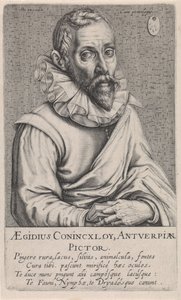
Gillis Van Coninxloo
1544 - 1606 , Bélgica
Datos clave
- Artistic Movement Or Style: Paisaje del manierismo al barroco temprano
- Artists Or Movements Influenced By This Artist: ['Esaias van de Velde']
- Artists Who Influenced This Artist:
- Pieter Coecke van Aelst the Younger
- Lenaert Kroes
- Gillis Mostaert
- Date Of Birth: 1544
- Date Of Death: 1606
- Full Name: Gillis van Coninxloo
- Nationality: Flamenco
- Notable Artworks:
- Paisaje
- Paisaje forestal
- Paisaje con Leto y los campesinos de Licia
- Place Of Birth: Amberes, Bélgica