

 Vista previa
 Compartir
 Compartir
 Ver detalles
 Guía
Guía

 Descargar
 Ver artículos similares
 Radiografía
 Presentación de diapositivas
 Estadísticas
Josef de Jaudenes y Nebot


 Leer más
Reproducción al óleo hecha a mano
Óleo sobre lienzo pintado a mano en el tamaño y marco de su elección, realizado por encargo por nuestros artistas. ( Cambiar a formato impreso Ver versión en imagen digital)




P118B €10

P118H €10

P118W €10

P438Z €10

P508JH €12

P508YH €12

P805H €10

P805Z €10

P919BZ €10

P919G €10

P919XJ €10

P959ZH €10

P968JZ €12

W106C €8

W218G €10

W218JH €8

W218Y €10

W307PJ €10

W316G €10

W316PJ €8

W316Y €10

W398PJ €8

W4111J €10

W500HY €15

W500JH €15

W692G €12

W849H €8

W940BG €15

W953PJ €8




Elija entre nuestros tamaños predefinidos que respetan las proporciones originales de la obra.

Escriba el ancho y el alto que necesite para adaptarse a su marco o a su pared. Al ser una obra pintada a mano, para un tamaño con una forma distinta, el artista puede pintar un poco más alrededor de la imagen o recortar un poco; usted elige. Le enviaremos una maqueta digital para su aprobación antes de comenzar la pintura. La imagen que se muestra en esta página no refleja el resultado real; solo la maqueta lo hace.
Tras realizar el pedido, el equipo de OriginalUniqueArt.com enviará un correo electrónico al cliente para solicitar instrucciones y proporcionarle una vista previa del boceto.
Envío a todo el mundo () en 3-4 semanas en lugar de las 5 semanas estándar. (25 octubre). Sin comprometer la calidad.

Envío exprés gratuito a todo el mundo

Lienzo de lino de alta calidad

Seguro de envío completo

Garantía de reembolso de impuestos aduaneros

Garantía de fidelidad cromática exacta

Política de devolución de 100 días (solo por defectos)

Garantía de devolución del 100% del dinero

Oferta por volumen
 La opción de vidrio solo está disponible en tamaños inferiores a 110 cm.

Josef de Jaudenes y Nebot
Técnica de reproducción
Tamaño de la reproducción
-


Precio total
€ 263
A Glimpse into Noble Splendor
In the quiet, commanding presence of Josef de Jaudenes y Nebot, we encounter more than just a portrait; we enter a window into the refined elegance of the late eighteenth century. Painted in 1794 by the master of American portraiture, Gilbert Stuart, this work serves as a profound testament to an era defined by grace, status, and the burgeoning Neoclassical movement. The subject, captured with an air of dignified importance, sits enveloped in the rich textures of his station. His formal attire, characterized by a striking red coat that commands the viewer's attention, speaks volumes of a life shaped by wealth and social authority. Through Stuart’s lens, we do not merely see a man, but rather an icon of stability and prestige, rendered with a meticulousness that honors the sitter's legacy.
The artistry behind this piece lies in its masterful command of light and shadow, a technique that breathes life into the canvas. Stuart employs a directional lighting scheme that illuminates the subject’s face and upper torso, pulling him forward from a dark, atmospheric background. This deliberate use of chiaroscroll creates a sense of three-dimensional depth, making the figure appear almost tangible within the frame. The textures are nothing short of exquisite; one can almost feel the heavy weight of the dark green drapery and the fine weave of the subject's clothing. Every brushstroke is purposeful, contributing to a surface that oscillates between smooth, porcelain-like skin tones and the tactile richness of velvet and silk, making it an ideal centerpiece for those seeking to add a layer of historical opulence to a sophisticated interior.
The Soul of Neoclassicism
Beyond its technical brilliance, the portrait is steeped in the symbolic language of the Neoclassical period. The composition, centered and balanced, reflects the era's obsession with order, symmetry, and classical ideals. The subtle architectural elements and geometric shapes within the background provide a structured stage for the subject, suggesting a world governed by reason and established hierarchy. There is a poignant emotional resonance found in the man’s expression—a subtle blend of stoicism and a hint of melancholy that invites the viewer to contemplate the fleeting nature of power and time. For the discerning collector or interior designer, this painting offers more than mere decoration; it provides an emotional anchor, bringing a sense of timelessness and intellectual depth to any curated space.
As a reproduction, this work carries the weight of history into the modern home. It serves as a conversation piece that bridges the gap between the 18th-century aristocratic tradition and contemporary aesthetic sensibilities. Whether placed in a formal study, a grand hallway, or a minimalist gallery setting, the vibrant reds and deep shadows of Stuart’s masterpiece create a focal point of unparalleled distinction. To possess such a work is to hold a fragment of the Enlightenment, a beautifully preserved moment where artistry and identity converge in eternal, painterly perfection.
Preguntas y respuestas
¿Qué armonía cromática presenta "Josef de Jaudenes y Nebot" de Gilbert Stuart?
La armonía cromática de "Josef de Jaudenes y Nebot" se describe como Softly Mixed Palette.
¿En qué estancia del hogar quedaría bien una reproducción de "Josef de Jaudenes y Nebot"?
Una reproducción de "Josef de Jaudenes y Nebot" encaja perfectamente en un Restaurant.
¿De qué trata "Josef de Jaudenes y Nebot" y qué atmósfera transmite?
"Josef de Jaudenes y Nebot" de Gilbert Stuart combina portrait, nobility, formalwear, 18th century, wealth, status, dignity, neoclassical con una atmósfera Classic.
Biografía del artista
Gilbert Stuart: Una Vida Dedicada al Retrato
- Nacido: 3 de diciembre de 1755, Saunderstown, Rhode Island
- Fallecido: 9 de julio de 1828, Boston, Massachusetts
- Nacionalidad: Estadounidense
- Movimiento: Neoclasicismo
- Conocido por: Retratista, especialmente retratos de figuras prominentes en la historia temprana estadounidense.
Primeros Años y Formación
- Gilbert Stuart nació en una familia con raíces escocesas; su padre, también llamado Gilbert, fue un inventor que estableció el primer molino de rapé en Rhode Island.
- Su talento artístico surgió a una edad temprana, demostrando habilidad incluso cuando era niño.
- A los 14 años, pintó "Dr. Hunter's Spaniels", mostrando una promesa inicial.
- Viajó a Escocia alrededor de 1771 para estudiar bajo Cosmo Alexander, pero regresó después del fallecimiento de Alexander en 1775.
- Una mayor formación se produjo en Londres con Benjamin West, un destacado pintor estadounidense residente en Inglaterra, de 1775 a 1780. Este período fue crucial para desarrollar su estilo artístico y obtener reconocimiento dentro de la Royal Academy.
Carrera Artística y Obras Principales
- La carrera de Stuart se enfrentó a desafíos durante la Revolución Americana, lo que le llevó a trasladarse a Inglaterra en 1775.
- Alcanzó un éxito temprano con "The Skater" (1782), un retrato que estableció su reputación.
- Su obra más famosa es el retrato inacabado de George Washington, conocido como el Retrato del Athenaeum (comenzado en 1796). Esta imagen se ha convertido en un símbolo perdurable de la identidad y el liderazgo estadounidenses. Stuart produjo numerosos copias de este retrato para patrones en América y Europa.
- Pintó retratos de otras figuras prominentes, incluyendo a John Adams, Thomas Jefferson, James Madison y muchos miembros de la élite federalista.
- El estilo de Stuart se caracterizaba por un enfoque neoclásico, que enfatizaba el realismo y capturaba el parecido y el carácter de sus sujetos. A menudo empleaba un uso dramático de la luz y la sombra para mejorar el impacto de los retratos.
Influencias y Desarrollo
- Cosmo Alexander proporcionó una formación temprana en técnica y composición.
- La influencia de Benjamin West fue significativa, moldeando la comprensión de Stuart sobre el retrato y los principios artísticos.
- El movimiento neoclásico, con su énfasis en las formas e ideales clásicos, influyó fuertemente en su estilo.
- Las propias observaciones y interacciones de Stuart con sus sujetos contribuyeron a la profundidad psicológica y al realismo en sus retratos. Buscaba capturar no solo un parecido sino también el carácter y la personalidad de aquellos que pintaba.
Significado Histórico y Legado
- Gilbert Stuart es considerado uno de los principales retratistas estadounidenses, desempeñando un papel vital en la documentación de los primeros años de Estados Unidos.
- El Retrato del Athenaeum de George Washington se ha convertido en un símbolo perdurable de la identidad y el liderazgo estadounidense.
- Sus retratos proporcionan valiosas perspectivas históricas sobre las vidas y apariencias de figuras prominentes de finales del siglo XVIII y principios del XIX.
- La obra de Stuart está representada en importantes museos de Estados Unidos y Europa, lo que garantiza que su legado continúe siendo apreciado por generaciones.
- Estableció un estilo distintivo de retrato estadounidense que combinaba técnicas europeas con sensibilidades estadounidenses únicas.

Gilbert Stuart
1755 - 1828 , Reino Unido
Datos clave
- Artistas Que Influyeron:
- Cosmo Alexander
- Benjamin West
- Fecha De Fallecimiento: 9 de julio de 1828
- Fecha De Nacimiento: 3 de diciembre de 1755
- Lugar De Nacimiento: Saunderstown, Reino Unido
- Movimiento Artístico: Neoclasicismo
- Nacionalidad: Estadounidense
- Nombre Completo: Gilbert Charles Stuart
- Obras Notables:
- Dr. Hunter's Spaniels
- The Skater
- Retrato del Ateneo de Washington
Artículos relacionados

The Enduring Power of Painting: A Historical & Contemporary Exploration of Form and Emotion
Explore the rich history & enduring techniques of oil painting with OriginalUniqueArt. Discover masterpieces, learn about art collecting, and find authentic handmade reproductions crafted by skilled artists.
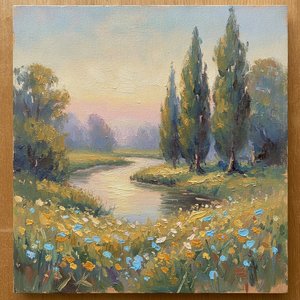
The Timeless Charm of Oil on Board: Reimagining Texture and Light through the Impressionist Lens
Discover the profound intimacy of oil on panel. Explore how Impressionist masters used rigid supports to capture light, texture, and impasto depth through exquisite, handmade oil reproductions for discerning collectors.

The Enduring Legacy of Oil on Canvas: Technique, History & Aesthetic Impact
Explore the rich history & techniques of oil painting – from Renaissance masters to Impressionism. Discover pigments, layering methods, and why this timeless medium endures. Expert insights for artists & art enthusiasts.

El Óleo sobre Lienzo: Historia, Técnica y la Persistencia de un Medio Artístico Atemporal
Descubre la historia y técnica del óleo sobre lienzo. Explora reproducciones fieles hechas a mano, personalización artística y consejos de expertos con OriginalUniqueArt. ¡Colecciona arte con confianza!

El Legado Duradero del Óleo sobre Lienzo: Técnica, Historia y Práctica Contemporánea
Descubre la historia y técnica del óleo sobre lienzo. Explora reproducciones fieles hechas a mano, personalización artística y consejos de expertos con .


