
 Vista previa
 Compartir
 Compartir
 Ver detalles

 Descargar
 Ver similares
 Radiografía
 Presentación de diapositivas
Interior decoration


 Leer más
Giclée / Impresión de arte
Impresiones giclée o en lienzo de calidad de museo con producción rápida y opciones de acabado flexibles. ( Cambiar a pintura hecha a mano Cambiar a imagen)




































Elija entre nuestros tamaños predefinidos que respetan las proporciones originales de la obra.

Puede introducir sus propias dimensiones para adaptarse a un marco o espacio específico. Si el tamaño seleccionado no coincide con las proporciones de la imagen original, recortaremos la obra de arte o extenderemos la imagen con un borde con efecto espejo o de color sólido. Se enviará una maqueta digital para su aprobación antes de que comience la producción.
Tenga en cuenta que la vista previa en pantalla no refleja el recorte o la extensión real. Solo la maqueta mostrará con precisión la composición final.
Aunque existen tamaños personalizados, recomendamos seleccionar una dimensión de la lista predefinida para preservar las proporciones originales.
Envío a todo el mundo () en 2 semanas en lugar de las 4/5 semanas estándar. (11 agosto)

Envío exprés gratuito a todo el mundo

Lienzo de lino de alta calidad

Seguro de envío completo

Garantía de reembolso de aranceles aduaneros

Garantía de fidelidad cromática exacta

Política de devolución de 60 días (solo por defectos)

Garantía de devolución del 100% del dinero

Oferta por volumen
 La opción de vidrio solo está disponible en tamaños inferiores a 110 cm.

Interior decoration
Giclée / Impresión de arte
Tamaño de la reproducción
-


Precio total
$ 80
Biografía del artista
Giacomo Serpotta: The Sicilian Meteor
Rudolf Wittkower famously described Giacomo Serpotta as a “meteor in the sicilian sky,” encapsulating his singular artistic trajectory and impact on Baroque sculpture. Born in Palermo in 1656, Serpotta emerged from a provincial artistic landscape—a stark contrast to the grandeur of Rome—yet swiftly ascended to prominence through sheer talent and an unparalleled mastery of stucco decoration. His career spanned nearly four decades, leaving behind an astonishing legacy of monumental sculptural ensembles that continue to inspire awe and admiration.Early Life & Artistic Formation
Little is known about Serpotta’s formative years. Unlike many artists of his era who benefited from formal training in Rome or Florence, Serpotta seems to have developed his exceptional skill independently, possibly influenced by the traditions of Sicilian sculpture but lacking direct exposure to the dominant stylistic currents of Baroque Italy. This self-taught approach arguably fostered a distinctive aesthetic characterized by exuberant ornamentation and an intuitive understanding of spatial illusion—traits that would define his artistic output. Scholars believe he honed his craft through observation and experimentation, absorbing inspiration from local artisans and adapting techniques suited to Sicilian materials and architectural styles.Collaborations & Notable Commissions
Serpotta’s professional life began in 1677 when he joined forces with Procopio de Ferrari to decorate the Chiesa della Madonna dell'Itria in Monreale, marking a pivotal moment in Sicilian Baroque art. This collaboration established Serpotta’s reputation as a skilled sculptor capable of executing ambitious projects alongside fellow artists—a testament to his collaborative spirit and ability to synthesize diverse artistic visions. His breakthrough came in 1682 with the commission for an equestrian statue of Charles II of Spain and Sicily—a monumental undertaking entrusted to Gaspare Romano—demonstrating his ability to tackle complex technical challenges and achieve breathtaking artistic results. The statue’s intricate drapery folds and dynamic pose exemplify Serpotta's mastery of sculptural illusion, pushing the boundaries of Baroque convention.The Serpotta Family’s Artistic Legacy
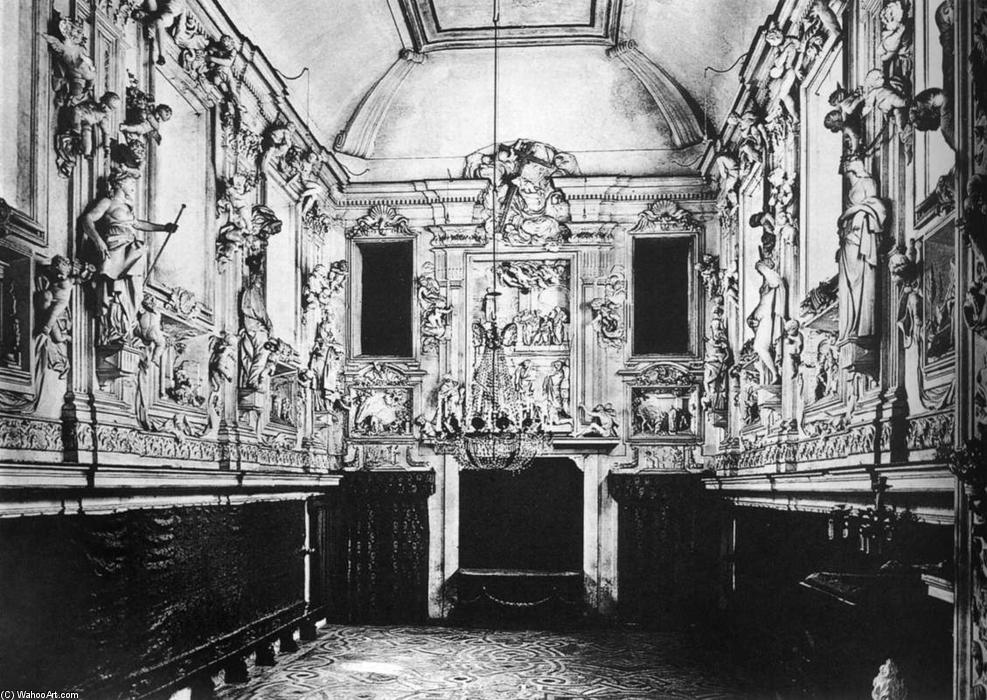
Serpotta’s influence extended far beyond individual commissions; he spearheaded a remarkable family enterprise that profoundly shaped the visual culture of Palermo. Alongside his brother Giuseppe (1653–1719) and son Procopio (1679–1755), Serpotta oversaw the creation of an astonishing array of sculptural masterpieces, transforming churches and palaces into immersive environments teeming with putti, drapery folds, and intricate details. The Oratory of San Lorenzo (1690/98–1706) stands as a testament to this prolific output—a veritable kaleidoscope of statuary that exemplifies Serpotta’s signature style. This ensemble is considered one of the finest examples of Sicilian Rococo sculpture, showcasing Serpotta's innovative use of perspective and his masterful manipulation of light to create an unforgettable sensory experience for viewers.Style & Technique: Rococo Ornamentation & Spatial Illusion
Serpotta's artistic style is undeniably rooted in the Rococo movement, albeit tempered by Sicilian regional traditions. He embraced lavish ornamentation and a playful use of color—characteristics typical of Rococo—yet infused his sculptures with an innovative approach to spatial illusion. Serpotta skillfully manipulated light and shadow to create dramatic effects, conveying depth and dynamism that surpassed conventional Baroque techniques. His meticulous attention to detail—evident in the rendering of drapery folds, facial expressions, and anatomical precision—further solidified his reputation as a virtuoso sculptor. He achieved this remarkable feat by employing techniques honed through years of experience, prioritizing textural richness and visual complexity over mere representation.Major Achievements & Historical Significance
Giacomo Serpotta’s contribution to Sicilian Baroque art is unparalleled. He elevated stucco sculpture to new heights of artistic expression, establishing himself as one of the foremost sculptors of his time. His monumental ensembles continue to captivate viewers today, offering insights into the cultural and religious sensibilities of 17th-century Sicily. Furthermore, Serpotta’s pioneering use of spatial illusion—a technique that foreshadowed developments in European sculpture—demonstrates his enduring influence on subsequent generations of artists. He remains a symbol of artistic brilliance born outside the mainstream centers of Baroque Europe, forever enshrined as “the meteor in the sicilian sky.”
Giacomo Serpotta
1656 - 1732 , Italia
Datos clave
- Artistic Movement Or Style: Barroco Rococo Stucco
- Artists Or Movements Influenced By This Artist: ['Caravaggio']
- Artists Who Influenced This Artist: ['Antonio Raggi']
- Date Of Birth: Palermo 1656 Italia
- Date Of Death: Palermo 1732
- Full Name: Giacomo Serpotta
- Nationality: Italiano
- Notable Artworks:
- Fortitudine
- Umiltà
- Carità
- Place Of Birth: Palermo Sicilia

