
 Vista previa
 Compartir
 Compartir
 Ver detalles
 Guía
Guía

 Descargar
 Ver artículos similares
 Radiografía
 Presentación de diapositivas
 Estadísticas
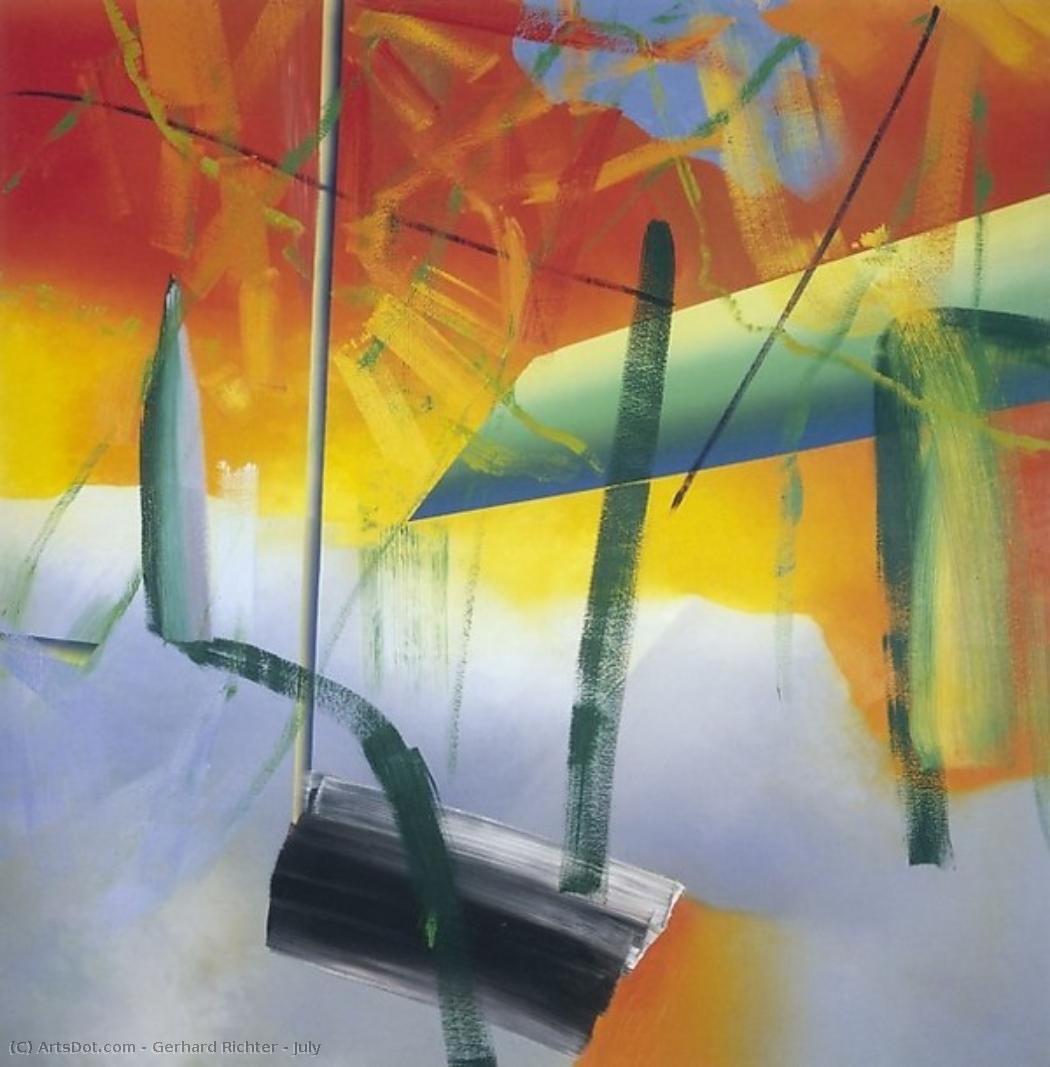
Julio
 Acrílico sobre lienzo
- Arte de pared
- Contemporary Realism
 1983
1983- Contemporáneo
 250.0 x 250.0 cm
 Leer más
La obra de arte que se muestra en esta página está protegida por las leyes de propiedad intelectual, lo que significa que no podemos crear ni vender legalmente una reproducción idéntica. Esta protección se hace cumplir en virtud de acuerdos internacionales como el Convenio de Berna y por las leyes nacionales, incluidas aquellas establecidas por el Ley de derechos de autor de los EE. UU. - Título 17.
Este método cumple plenamente con las normativas de derechos de autor, ya que no implica la copia ni la duplicación de la obra protegida. En su lugar, se trata de una reinterpretación creativa: una nueva pintura influenciada por la original, pero que no es idéntica a ella.
Giclée / Impresión de arte
Impresiones giclée o en lienzo de calidad de museo con producción rápida y opciones de acabado flexibles. ( Encargar reproducción pintada a mano Ver versión en imagen digital)




P118B €10

P118H €10

P118W €10

P438Z €10

P508JH €12

P508YH €12

P805H €10

P805Z €10

P919BZ €10

P919G €10

P919XJ €10

P959ZH €10

P968JZ €12

W106C €8

W218G €10

W218JH €8

W218Y €10

W307PJ €10

W316G €10

W316PJ €8

W316Y €10

W398PJ €8

W4111J €10

W500HY €15

W500JH €15

W692G €12

W849H €8

W940BG €15

W953PJ €8




Elija entre nuestros tamaños predefinidos que respetan las proporciones originales de la obra.

Introduzca el ancho y el alto que necesite para adaptarse a su marco o pared. Una impresión solo puede recortarse, nunca hacerse más grande que la imagen original, por lo que un tamaño con una forma distinta perderá parte de la obra. Le enviaremos una maqueta digital para su aprobación antes de realizar cualquier impresión. La imagen que se muestra en esta página no refleja el recorte real; solo la maqueta lo hace.
Envío a todo el mundo () en 2 semanas en lugar de las 4/5 semanas estándar. (19 octubre)

Envío exprés gratuito a todo el mundo

Lienzo de lino de alta calidad

Seguro de envío completo

Garantía de reembolso de impuestos aduaneros

Garantía de fidelidad cromática exacta

Política de devolución de 100 días (solo por defectos)

Garantía de devolución del 100% del dinero

Oferta por volumen
 La opción de vidrio solo está disponible en tamaños inferiores a 110 cm.

Julio
Giclée / Impresión de arte
Tamaño de la reproducción
-


Precio total
€ 70
A Symphony of Abstraction: Decoding Gerhard Richter’s “July”
Gerhard Richter's "July," created in 1983, is not merely a painting; it’s an invitation to delve into the realm of feeling. Measuring an impressive 250 x 250 cm, this monumental artwork commands attention with its sheer scale and the complex interplay of color and texture across its surface—a testament to Richter's mastery of visual language. Unlike traditional landscapes striving for photographic accuracy, "July" abandons representational constraints in favor of a distillation of sensation, capturing not what *is* seen but rather how it *feels*. The painting’s central element is a vertical pole or stick, anchoring the composition and providing a focal point amidst swirling forms—a deliberate choice that speaks to Richter's fascination with structure and dynamism. Alongside this dominant axis lies a boat, positioned on the right side of the canvas, suggesting a waterscape imbued with tranquility yet hinting at an underlying current of movement. Scattered throughout the image are fragments of foliage and subtle hints of avian life—elements that contribute to the painting’s atmospheric depth and evoke memories of summer days. Perhaps most intriguing is the inclusion of two figures, subtly integrated into the abstract expanse; their presence adds a human scale to the monumental canvas, prompting contemplation about our relationship with nature and the passage of time.The Master of Multiple Styles: Richter's Artistic Journey
Born in Dresden, Germany, in 1932, Gerhard Richter’s life story is inextricably linked to the turbulent history of post-war Germany—a formative experience that profoundly shaped his artistic vision. Initially trained as a sign painter and stage-set designer, he honed his craft before pursuing formal studies at the Dresden Academy of Fine Arts. Richter's early work demonstrated an engagement with abstraction, influenced by artists like Picasso and Arp—a stylistic exploration that established him as a pioneer of nonfigurative art. However, Richter’s subsequent foray into photorealism—painstakingly recreating photographs in paint—brought him international recognition and cemented his reputation for meticulous observation and technical prowess. Yet to define Richter solely by a single style is to overlook the breadth of his artistic ambition. He deliberately resists categorization, constantly shifting between approaches—blurring the boundaries between representation and abstraction—a characteristic that distinguishes him from many of his contemporaries. This restless experimentation is vividly exemplified in "July"; it’s part of a series of abstract paintings produced in the early 1980s where Richter employed squeegees and layered applications of paint to generate surfaces characterized by both chaos and control.Technique as Exploration: The Squeegee and the Layered Surface
The distinctive visual character of "July" is inextricably linked to Richter’s innovative technique—a method that prioritizes process over product. Rather than beginning with a preconceived image, Richter allows the painting to emerge through a deliberate act of layering and manipulation—a radical departure from traditional artistic conventions. Applying paint thickly onto the canvas, he then utilizes a squeegee to scrape away portions of pigment, creating a textured surface riddled with subtle variations in color and tone. This technique introduces an element of chance and unpredictability, challenging notions of artistic control while simultaneously mirroring the fluidity of water—a visual metaphor that resonates deeply within the artwork’s aesthetic core. The resulting surface is rich with depth and nuance—revealing glimpses of underlying hues beneath the uppermost layers—demonstrating Richter's mastery of material properties and his ability to transform ordinary tools into instruments of artistic expression. This method speaks to a broader philosophical inquiry: “July” isn’t simply *about* depicting something; it embodies a process of recollection and reconstruction—a testament to Richter’s enduring fascination with capturing the ephemeral qualities of experience.Beyond Representation: Symbolism and Emotional Resonance
Despite its lack of explicit narrative or symbolic program, "July" possesses an undeniable emotional impact—provoking contemplation about memory, perception, and the complexities of human consciousness. The ambiguous forms invite viewers to project their own interpretations onto the canvas—creating a deeply personal connection with the artwork—a hallmark of Richter’s oeuvre. The presence of figures and natural elements suggests interaction between humanity and environment—but these elements are fragmented and indistinct—underscoring a sense of alienation or detachment—themes that resonate powerfully within the painting's contemplative mood. Ultimately, "July" transcends mere visual representation; it aspires to communicate something intangible—a feeling—leaving viewers with an enduring impression of beauty and melancholy.Preguntas y respuestas
¿Qué lugar ocupa "Julio" entre los temas recurrentes de Gerhard Richter?
Los temas recurrentes de Gerhard Richter incluyen exploring perception, memory reconstruction, influence of picasso, postwar aesthetic, formal experimentation, symbolic atmosphere, central piece in series; "Julio" se centra en abstraction, color field painting, texture, pole, boat, vegetation, figures, summer landscape.
¿Para qué estancia se recomienda "Julio" de Gerhard Richter, teniendo en cuenta sus colores?
Los colores de la paleta Tonos tierra de "Julio" de Gerhard Richter armonizan con su espacio recomendado: un Salón principal.
¿Se encuentra "Julio" de Gerhard Richter entre las obras más codiciadas del Contemporary Realism?
"Julio" figura con un nivel de Icónico entre las obras del Contemporary Realism en el catálogo.
Biografía del artista
**vida temprana y educación**
Gerhard Richter, un reconocido artista visual alemán, nació el 9 de febrero de 1932, en el hospital de Dresdede-Neustadt, Dresdede, Sajonia. Creció en Reichenau, Baja Silesia (ahora Bogatynia, Polonia), y Waltersdorf (Zittauer Gebirge), en la campiña superior de Lusacia. El padre de Richter, Horst Richter, era estudiante de matemáticas y física en la Technische Hochschule de Dresdede.**Carrera artística**
Richter comenzó su viaje artístico como aprendiz de pintor de carteles y más tarde estudió en la Academia de Bellas Artes de Dresdede. Su obra temprana fue influenciada por los estilos de Picasso y Jean Arp, lo que se evidencia en sus pinturas abstractas y fotorealistas. En 1957, Richter trabajó como aprendiz maestro en la academia, realizando encargos para el entonces estado de Alemania Oriental.**Obras notables y logros**
* Abstraktes Bild (2012) fijó un récord de precio en subasta para una pintura de un artista vivo por $34 millones (£21 millones). * Domplatz, Mailand (Plaza del Catedral, Milán) (1968) se vendió por $37.1 millones (£24.4 millones) en Nueva York. * Abstraktes Bild (2015) se vendió por $44.52 millones (£30.4 millones) en la subasta de arte contemporáneo de Sotheby's.**Estilo artístico y movimiento**
La obra de Richter se caracteriza por su eclecticismo, combinando estilos abstractos y fotorealistas. Junto con Sigmar Polke, introdujo el término Kapitalistischer Realismus (Realismo Capitalista), un antiestilo de arte que se apropia del lenguaje pictórico publicitario.**Vida personal**
Richter se casó con Marianne Eufinger en 1957 y tuvo una hija. Más tarde se casó con Isa Genzken en 1982 y Sabine Moritz en 1995, con quien tuvo dos hijos y una hija. **Nota:** Este artículo se basa en la información proporcionada y puede no ser una biografía completa. Para obtener información más detallada, visite las fuentes vinculadas.
Gerhard Richter
1932 - , Alemania
Datos clave
- Artistas Que Influyeron:
- Pablo Picasso
- Jean Arp
- Fecha De Nacimiento: 9 de febrero de 1932
- Lugar De Nacimiento: Dresde, Alemania
- Movimiento Artístico:
- Expresionismo abstracto
- Fotorealismo
- Nacionalidad: Alemán
- Nombre Completo: Gerhard Richter
- Obras Notables:
- Abstraktes Bild (2012)
- Domplatz, Milán (1968)
- Nubes
- Firenze
- Imagen Abstracta
- S. con Niño
Artículos relacionados

Expresionismo Abstracto: 10 Obras Maestras que Transformaron el Arte |
Descubre las 10 obras maestras del Expresionismo Abstracto: Pollock, Rothko y más. Explora la historia, técnica y significado de estos lienzos icónicos. Reproducciones de arte exclusivas en .

Abstracción Geométrica: 10 Obras Maestras que Transformaron el Arte Moderno | OriginalUniqueArt
Descubre las 10 obras maestras de la abstracción geométrica que revolucionaron el arte moderno. Explora a Mondrian, Malevich y Kandinsky en OriginalUniqueArt.com. Reproducciones de alta calidad para tu hogar.

Gerhard Richter: A Retrospective on Abstraction, Memory & the Photographic Source
Explore the profound world of Gerhard Richter's abstract paintings. Discover his techniques, influences, and lasting impact on contemporary art – a guide for discerning collectors.
The Essence of Abstraction: A Definitive Guide to the Power and History of Color Field Painting Masterpieces
Explore the profound emotional depth of Color Field painting. Our expert guide delves into the post-war origins of Abstract Expressionism, analyzing masterpieces by Rothko and Newman. Discover museum-grade, hand-painted oil reproductions that bring art history to your walls.
Color Field Painting: The Emotional Power of Pure Abstraction and Chromatic Depth
Explore the profound emotional depth of Color Field painting. Discover the history of mid-century abstraction, from Rothko to Newman, and learn how pure color transforms the viewer's experience through our expert art history guide.


