

 Vista previa
 Compartir
 Compartir
 Ver detalles
 Guía
Guía

 Descargar
 Ver artículos similares
 Radiografía
 Presentación de diapositivas
 Estadísticas
Fuji


 Leer más
La obra de arte que se muestra en esta página está protegida por las leyes de propiedad intelectual, lo que significa que no podemos crear ni vender legalmente una reproducción idéntica. Esta protección se hace cumplir en virtud de acuerdos internacionales como el Convenio de Berna y por las leyes nacionales, incluidas aquellas establecidas por el Ley de derechos de autor de los EE. UU. - Título 17.
Este método cumple plenamente con las normativas de derechos de autor, ya que no implica la copia ni la duplicación de la obra protegida. En su lugar, se trata de una reinterpretación creativa: una nueva pintura influenciada por la original, pero que no es idéntica a ella.
Giclée / Impresión de arte
Impresiones giclée o en lienzo de calidad de museo con producción rápida y opciones de acabado flexibles. ( Encargar reproducción pintada a mano Ver versión en imagen digital)




P118B €10

P118H €10

P118W €10

P438Z €10

P508JH €12

P508YH €12

P805H €10

P805Z €10

P919BZ €10

P919G €10

P919XJ €10

P959ZH €10

P968JZ €12

W106C €8

W218G €10

W218JH €8

W218Y €10

W307PJ €10

W316G €10

W316PJ €8

W316Y €10

W398PJ €8

W4111J €10

W500HY €15

W500JH €15

W692G €12

W849H €8

W940BG €15

W953PJ €8




Elija entre nuestros tamaños predefinidos que respetan las proporciones originales de la obra.

Introduzca el ancho y el alto que necesite para adaptarse a su marco o pared. Una impresión solo puede recortarse, nunca hacerse más grande que la imagen original, por lo que un tamaño con una forma distinta perderá parte de la obra. Le enviaremos una maqueta digital para su aprobación antes de realizar cualquier impresión. La imagen que se muestra en esta página no refleja el recorte real; solo la maqueta lo hace.
Envío a todo el mundo () en 2 semanas en lugar de las 4/5 semanas estándar. (22 octubre)

Envío exprés gratuito a todo el mundo

Lienzo de lino de alta calidad

Seguro de envío completo

Garantía de reembolso de impuestos aduaneros

Garantía de fidelidad cromática exacta

Política de devolución de 100 días (solo por defectos)

Garantía de devolución del 100% del dinero

Oferta por volumen
 La opción de vidrio solo está disponible en tamaños inferiores a 110 cm.

Fuji
Giclée / Impresión de arte
Tamaño de la reproducción
-


Precio total
€ 70
The Enigmatic Landscape: An Introduction to Gerhard Richter's "Fuji"
Gerhard Richter’s “Fuji,” a work that exists primarily as meticulously rendered reproductions, isn’t merely a depiction of the iconic Japanese mountain; it’s an exploration of memory, perception, and the elusive nature of reality itself. Painted in 2013, this piece embodies a core element of Richter's oeuvre – his masterful manipulation of photographic source material. Rather than striving for immediate representation, he employs a technique that deliberately obscures, inviting viewers to contemplate the process of seeing and the inherent subjectivity involved in translating an image into paint.
The painting’s palette is deceptively simple: primarily shades of red, orange, and blue, arranged within a complex network of layered brushstrokes. These aren't vibrant, assertive colors; instead, they are muted, almost melancholic, suggesting a faded memory or a dreamlike state. The composition itself is deliberately ambiguous. While the central form undeniably evokes Mount Fuji’s recognizable silhouette – its distinctive conical shape rising above a hazy backdrop – it’s rendered with an unsettling softness, as if viewed through a veil of mist or watercolor. This deliberate blurring creates a sense of detachment, pulling us away from a literal representation and into a realm of emotional resonance.
Richter's Method: Appropriation and the Illusion of Reality
Richter’s approach to painting is famously rooted in appropriation – he frequently utilizes photographs as his starting point. “Fuji” exemplifies this practice perfectly. He doesn’t attempt to recreate a photograph directly; instead, he builds upon it, adding layers of paint, manipulating textures, and subtly altering the image's tonal values. This process isn’t about deception, but rather about revealing the inherent limitations of representation. As Richter himself has stated, his goal is not to create an accurate likeness, but to capture a feeling or mood associated with the original photograph.
The technique employed in “Fuji” is particularly noteworthy. Richter utilizes a layering method, applying thin washes of color over previous layers, creating a sense of depth and translucency. The brushstrokes are often loose and gestural, suggesting movement and spontaneity – a deliberate contrast to the seemingly static nature of the subject matter. This interplay between control and chance contributes significantly to the painting’s captivating quality.
Symbolism and the Weight of History
Mount Fuji holds profound cultural significance in Japan, representing beauty, spirituality, and resilience. It's a symbol deeply intertwined with Japanese history and mythology, frequently depicted in art and literature as a sacred mountain. Richter’s choice to focus on this iconic subject is therefore laden with meaning. Considering the artist’s own background – born in Dresden during a period of immense political upheaval in Germany – “Fuji” can be interpreted as a meditation on memory, displacement, and the enduring power of nature to transcend historical trauma.
The muted color palette and the painting's overall sense of ambiguity also evoke feelings of nostalgia and loss. It’s possible that Richter is drawing upon his own experiences of displacement and uncertainty, translating them into a visual language that speaks to the broader human condition. The mountain itself, standing as a silent witness to centuries of change, becomes a potent symbol of continuity and endurance.
Collecting “Fuji”: A Window into Richter’s World
Reproductions of Gerhard Richter's "Fuji" offer an accessible entry point into the artist’s complex and rewarding body of work. OriginalUniqueArt.com provides meticulously crafted, hand-painted reproductions that capture the essence of Richter’s unique style. These aren’t simply prints; they are faithful interpretations of his layered brushwork and subtle color shifts, allowing you to experience the painting's emotional depth and intellectual richness in your own space.
Whether displayed as a statement piece in a contemporary interior or studied for its artistic merits, “Fuji” remains a compelling testament to Richter’s mastery of abstraction and his profound engagement with the complexities of perception and memory. It is an artwork that invites contemplation, sparking dialogue about art, history, and the enduring power of visual representation.
Preguntas y respuestas
¿Cómo puedo descubrir obras de arte similares a "Fuji" de Gerhard Richter?
La página de Similares de "Fuji" de Gerhard Richter presenta obras relacionadas.
¿Qué tan saturada es la paleta de "Fuji"?
Los colores de "Fuji" de Gerhard Richter tienen una saturación Suave equilibrado. La saturación describe qué tan vivos o apagados son los colores.
¿Con qué sentimiento se asocia "Fuji"?
"Fuji" se asocia con un sentimiento Reflexivo. El tono emocional describe la impresión que transmite la obra.
Biografía del artista
**vida temprana y educación**
Gerhard Richter, un reconocido artista visual alemán, nació el 9 de febrero de 1932, en el hospital de Dresdede-Neustadt, Dresdede, Sajonia. Creció en Reichenau, Baja Silesia (ahora Bogatynia, Polonia), y Waltersdorf (Zittauer Gebirge), en la campiña superior de Lusacia. El padre de Richter, Horst Richter, era estudiante de matemáticas y física en la Technische Hochschule de Dresdede.**Carrera artística**
Richter comenzó su viaje artístico como aprendiz de pintor de carteles y más tarde estudió en la Academia de Bellas Artes de Dresdede. Su obra temprana fue influenciada por los estilos de Picasso y Jean Arp, lo que se evidencia en sus pinturas abstractas y fotorealistas. En 1957, Richter trabajó como aprendiz maestro en la academia, realizando encargos para el entonces estado de Alemania Oriental.**Obras notables y logros**
* Abstraktes Bild (2012) fijó un récord de precio en subasta para una pintura de un artista vivo por $34 millones (£21 millones). * Domplatz, Mailand (Plaza del Catedral, Milán) (1968) se vendió por $37.1 millones (£24.4 millones) en Nueva York. * Abstraktes Bild (2015) se vendió por $44.52 millones (£30.4 millones) en la subasta de arte contemporáneo de Sotheby's.**Estilo artístico y movimiento**
La obra de Richter se caracteriza por su eclecticismo, combinando estilos abstractos y fotorealistas. Junto con Sigmar Polke, introdujo el término Kapitalistischer Realismus (Realismo Capitalista), un antiestilo de arte que se apropia del lenguaje pictórico publicitario.**Vida personal**
Richter se casó con Marianne Eufinger en 1957 y tuvo una hija. Más tarde se casó con Isa Genzken en 1982 y Sabine Moritz en 1995, con quien tuvo dos hijos y una hija. **Nota:** Este artículo se basa en la información proporcionada y puede no ser una biografía completa. Para obtener información más detallada, visite las fuentes vinculadas.
Gerhard Richter
1932 - , Alemania
Datos clave
- Artistas Que Influyeron:
- Pablo Picasso
- Jean Arp
- Fecha De Nacimiento: 9 de febrero de 1932
- Lugar De Nacimiento: Dresde, Alemania
- Movimiento Artístico:
- Expresionismo abstracto
- Fotorealismo
- Nacionalidad: Alemán
- Nombre Completo: Gerhard Richter
- Obras Notables:
- Abstraktes Bild (2012)
- Domplatz, Milán (1968)
- Nubes
- Firenze
- Imagen Abstracta
- S. con Niño
Artículos relacionados

Gerhard Richter: A Retrospective on Abstraction, Memory & the Photographic Source
Explore the profound world of Gerhard Richter's abstract paintings. Discover his techniques, influences, and lasting impact on contemporary art – a guide for discerning collectors.

Expresionismo Abstracto: 10 Obras Maestras que Transformaron el Arte |
Descubre las 10 obras maestras del Expresionismo Abstracto: Pollock, Rothko y más. Explora la historia, técnica y significado de estos lienzos icónicos. Reproducciones de arte exclusivas en .

Kandinsky: Las 25 Obras Maestras del Pionero de la Abstracción | OriginalUniqueArt
Descubre las 25 obras maestras de Wassily Kandinsky, pionero del arte abstracto. Explora su expresionismo, composiciones únicas y la historia detrás de cada cuadro. Reproducciones de alta calidad para decorar tu hogar con arte moderno en OriginalUniqueArt.com.

Abstracción Geométrica: 10 Obras Maestras que Transformaron el Arte Moderno | OriginalUniqueArt
Descubre las 10 obras maestras de la abstracción geométrica que revolucionaron el arte moderno. Explora a Mondrian, Malevich y Kandinsky en OriginalUniqueArt.com. Reproducciones de alta calidad para tu hogar.
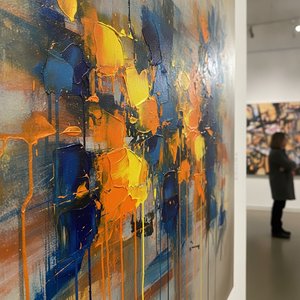
Beyond the Lines: Mastering the High-Impact World of Contemporary Abstraction
Master the high-impact world of contemporary abstraction. Discover how bold colors, textures, and modern movements like Abstract Expressionism can transform your space with premium, high-energy art curated for the design-conscious professional.


