Vista previa
 Compartir
 Compartir
 Ver detalles
 Guía
Guía

 Descargar
 Ver artículos similares
 Radiografía
 Presentación de diapositivas
 Estadísticas
The Merry Fiddler
 Oil On Canvas
- WallArt
- Baroque Dramatic Portrait
 1623
1623- Early Modern
 108.0 x 89.0 cm
 Rijksmuseum
 Leer más
Reproducción al óleo hecha a mano
Óleo sobre lienzo pintado a mano en el tamaño y marco de su elección, realizado por encargo por nuestros artistas. ( Cambiar a formato impreso Ver versión en imagen digital)




P118B €10

P118H €10

P118W €10

P438Z €10

P508JH €12

P508YH €12

P805H €10

P805Z €10

P919BZ €10

P919G €10

P919XJ €10

P959ZH €10

P968JZ €12

W106C €8

W218G €10

W218JH €8

W218Y €10

W307PJ €10

W316G €10

W316PJ €8

W316Y €10

W398PJ €8

W4111J €10

W500HY €15

W500JH €15

W692G €12

W849H €8

W940BG €15

W953PJ €8




Elija entre nuestros tamaños predefinidos que respetan las proporciones originales de la obra.

Puede ingresar sus propias dimensiones para adaptarse a un marco o espacio específico. Si el tamaño seleccionado no coincide con las proporciones de la imagen original, recortaremos la obra o extenderemos la pintura con elementos adicionales pintados a mano. Se le enviará una maqueta digital para su aprobación antes de comenzar la producción.
Tenga en cuenta que la vista previa en pantalla no refleja el recorte o la extensión reales. Solo la maqueta mostrará con precisión la composición final.
Si bien existen tamaños personalizados, recomendamos seleccionar una dimensión de la lista predefinida para preservar las proporciones originales.
Tras realizar el pedido, el equipo de OriginalUniqueArt.com enviará un correo electrónico al cliente para solicitar instrucciones y proporcionarle una vista previa del boceto.
Envío a todo el mundo () en 3-4 semanas en lugar de las 5 semanas estándar. (11 octubre). Sin comprometer la calidad.

Envío exprés gratuito a todo el mundo

Lienzo de lino de alta calidad

Seguro de envío completo

Garantía de reembolso de impuestos aduaneros

Garantía de fidelidad cromática exacta

Política de devolución de 100 días (solo por defectos)

Garantía de devolución del 100% del dinero

Oferta por volumen
 La opción de vidrio solo está disponible en tamaños inferiores a 110 cm.

The Merry Fiddler
Técnica de reproducción
Tamaño de la reproducción
-


Precio total
€ 259
A Symphony of Light and Shadow
In the heart of the Dutch Golden Age, few artists captured the ephemeral magic of a single moment as profoundly as Gerard van Honthorst. His masterpiece, The Merry Fiddler, serves as a breathtaking window into a world of nocturnal joy and theatrical intensity. Created in 1623, this work is far more than a mere portrait of a musician; it is a masterclass in the dramatic interplay of light and darkness. As the viewer approaches the canvas, they are immediately enveloped by the artist's signature use of tenebrism—a technique heavily influenced by Caravaggio that allows deep, velvety shadows to emerge from the periphery, only to be pierced by sudden, radiant pools of illumination. This deliberate manipulation of light does not simply reveal the subject; it sculptively defines him, pulling the violinist from the gloom and thrusting his exuberant energy into the viewer's space.
The composition centers on a man lost in the passion of his craft, his face alight with a genuine, infectious smile that suggests the music is as much a spiritual release as it is entertainment. Dressed in opulent attire that whispers of Italian sophistication, the musician wears a blue garment accented by shimmering gold trim, a detail that catches the light and adds a layer of tactile luxury to the scene. Flanking him are two observers, their attentive expressions acting as emotional anchors that guide our own gaze toward the center of the musical performance. This arrangement creates a sense of intimacy, making the spectator feel less like an outsider looking in and more like a silent guest seated at the very table where the melody unfolds.
The Legacy of the Utrecht Caravaggisti
To understand the depth of The Merry Fiddler, one must look to the transformative journey Honthorst undertook during his time in Rome. As a prominent member of the Utrecht Caravaggisti, Honthorst absorbed the raw, visceral energy of the Italian Baroque and brought it back to the Netherlands, where he earned the evocative nickname Gherardo delle Notti—Gerard of the Nights. This title reflects his unparalleled ability to depict scenes lit by candlelight or hidden flames, creating an atmosphere that feels both secretive and profoundly human. In this painting, the light source is unseen yet palpable, casting a warm, flickering glow that breathes life into the textures of fabric, skin, and wood.
For the discerning collector or interior designer, this artwork offers much more than historical significance; it provides a powerful emotional anchor for any curated space. The painting’s ability to command attention through contrast makes it an ideal centerpiece for rooms designed for contemplation or sophisticated entertaining. Whether placed in a library filled with classical literature or a modern lounge seeking a touch of Old World grandeur, the piece brings with it a sense of narrative tension and timeless elegance. It is a celebration of life's fleeting, joyful moments, captured forever through the masterful brushstrokes of a man who knew exactly how to make the darkness sing.
Preguntas y respuestas
¿A qué artista se le atribuye "The Merry Fiddler"?
"The Merry Fiddler" fue creada por Gerard van Honthorst. La información en esta página describe la obra original de Gerard van Honthorst.
¿Cuál es la fecha de creación de "The Merry Fiddler" de Gerard van Honthorst?
La creación de "The Merry Fiddler" de Gerard van Honthorst data de 1623.
¿Con qué sentimiento se asocia "The Merry Fiddler"?
El tono emocional registrado para "The Merry Fiddler" de Gerard van Honthorst es Dramatic. Este resume el sentimiento que expresa la obra.
¿Existe una guía para "The Merry Fiddler" de Gerard van Honthorst?
Una página de Guía está disponible para "The Merry Fiddler" de Gerard van Honthorst: una ficha imprimible sobre la obra, diseñada para estudiantes y uso en el aula.
¿Puedo usar la realidad aumentada para ver "The Merry Fiddler" de Gerard van Honthorst en mi habitación?
Puedes visualizar "The Merry Fiddler" de Gerard van Honthorst en tu propia pared con la página de Vista previa AR de la obra, utilizando realidad aumentada en un dispositivo compatible.
¿Qué edad tenía Gerard van Honthorst cuando creó "The Merry Fiddler" en 1623?
Gerard van Honthorst tenía 33 años cuando creó "The Merry Fiddler" en 1623. La edad se calcula a partir del año de nacimiento del artista, 1590.
¿Cuál es la técnica y las dimensiones de "The Merry Fiddler" de Gerard van Honthorst?
La obra original "The Merry Fiddler" de Gerard van Honthorst es una pieza de Oil On Canvas con unas dimensiones de 108 x 89 cm. La técnica y el tamaño describen la obra original.
Biografía del artista
Primeros años y formación
Gerrit van Honthorst, un destacado pintor del Siglo de Oro neerlandés, nació el 4 de noviembre de 1590 en Utrecht, Países Bajos. Era hijo de un pintor decorativo y inicialmente se formó bajo la tutela de su padre. Posteriormente, continuó su educación artística con Abraham Bloemaert.Carrera e influencias
La carrera temprana de Van Honthorst incluyó una visita a Roma, donde fue fuertemente influenciado por el estilo de Caravaggio. Esta influencia es evidente en sus obras posteriores, particularmente en su uso de escenas iluminadas artificialmente, lo que le valió el apodo de "Gherardo delle Notti" o "Gerard de las noches". Tras su regreso a los Países Bajos, Van Honthorst se convirtió en un retratista líder.Patronazgo y encargos notables
El trabajo de Van Honthorst tuvo una gran demanda, con notables patronos que incluyen a Vincenzo Giustiniani, quien lo encargó para pintar "Cristo ante el sumo sacerdote", ahora alojado en la National Gallery de Londres. También trabajó para Cosimo II de' Medici, Gran Duque de Toscana, y fue un favorito entre la República Neerlandesa y en el extranjero.Legado y vida posterior
En 1620, Van Honthorst regresó a Utrecht, donde construyó una considerable reputación. Para 1623, el año de su matrimonio, se había convertido en presidente del gremio de San Lucas en Utrecht. Su éxito llevó a recomendaciones por parte de Sir Dudley Carleton para el Conde de Arundel y Lord Dorchester.Obras clave y colaboraciones
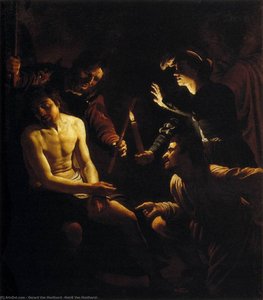
- "La toma de Cristo", una obra colaborativa inicialmente atribuida a Van Honthorst, ahora reconocida como obra de otro artista.
- "Cristo ante el sumo sacerdote", encargado por Vincenzo Giustiniani, muestra la habilidad de Van Honthorst para capturar escenas iluminadas artificialmente.
- Colaboraciones con otros artistas, como Peter Paul Rubens, demuestran su influencia en el estilo barroco flamenco.
Movimiento artístico y estilo
Van Honthorst formó parte del movimiento de los utrecht caravaggisti, caracterizado por su uso de una iluminación dramática y una profundidad emocional intensa. Su obra refleja la influencia del barroco italiano, al mismo tiempo que contribuye al desarrollo del Siglo de Oro neerlandés.
Gerard van Honthorst
1590 - 1656 , Países Bajos
Datos clave
- Artistas Influenciados:
- Rembrandt van Rijn
- Georges de la Tour
- Artistas Que Influyeron:
- Caravaggio
- Abraham Bloemaert
- Fecha De Nacimiento: 4 de noviembre de 1590
- Lugar De Nacimiento: Utrecht, Países Bajos
- Movimiento Artístico: Caravaggismo Utrechtano
- Nacionalidad: Neerlandés
- Nombre Completo: Gerard van Honthorst
- Obras Notables:
- Cristo ante el sumo sacerdote
- La toma de Cristo
- Escenas nocturnas iluminadas
Artículos relacionados

Los 10 Maestros del Siglo de Oro Holandés: Arte, Historia y Decoración Exclusiva
Descubre los 10 imprescindibles del Siglo de Oro Holandés: Rembrandt, Vermeer y más. Explora la historia, técnica y belleza de estos lienzos clásicos. Encuentra reproducciones de arte exclusivas para decorar tu hogar en .

Golden Light & Dutch Skies: The Timeless Magic of Dutch Golden Age Landscapes
Discover the breathtaking beauty of Dutch Golden Age landscapes. Explore the mastery of light, chiaroscuro, and 17th-century realism through an expert art history lens, celebrating the enduring legacy of the Dutch Masters for discerning collectors and art lovers.
Gerard van Honthorst: Illuminating the Dutch Golden Age with Caravaggism & Courtly Grace
Explore the captivating world of Gerard van Honthorst, a Dutch Golden Age master renowned for his dramatic chiaroscuro & courtly portraits. Discover his life, art, and lasting influence on Baroque painting.

Reflejos de una Época Dorada: La Pintura Barroca Holandesa y la Innovación Cultural
Descubra la riqueza y el detalle de la pintura barroca holandesa del Siglo de Oro. Explore las obras maestras de Rembrandt, Vermeer y otros artistas clave. Análisis experto e historia cultural.

Los 10 Maestros del Barroco Holandés: Obras que Definen una Época | OriginalUniqueArt
Descubre los 10 imprescindibles del Barroco holandés: Rembrandt, Vermeer y más. Explora la historia, técnica y belleza de estas obras maestras. Reproducciones de arte en OriginalUniqueArt.com para decorar tu hogar con elegancia.