Ver en contexto
 Enviar
 Compartir
 Detalles
 Guía
Guía

 Descargar
 Similares
 Radiografía
 Presentación de diapositivas
 Estadísticas
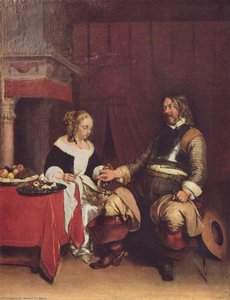
The Dancing Couple
 Oil On Canvas
- WallArt
- Baroque Dutch Painting
 1660
1660- Renaissance
 76.0 x 68.0 cm
 The National Trust
 Ver más
Reproducción al óleo hecha a mano
Óleo sobre lienzo pintado a mano en el tamaño y marco de su elección, realizado por encargo por nuestros artistas. ( Cambiar a impresiones Cambiar a imagen digital)




P118B €10

P118H €10

P118W €10

P438Z €10

P508JH €12

P508YH €12

P805H €10

P805Z €10

P919BZ €10

P919G €10

P919XJ €10

P959ZH €10

P968JZ €12

W106C €8

W218G €10

W218JH €8

W218Y €10

W307PJ €10

W316G €10

W316PJ €8

W316Y €10

W398PJ €8

W4111J €10

W500HY €15

W500JH €15

W692G €12

W849H €8

W940BG €15

W953PJ €8




Elija entre nuestros tamaños predefinidos que respetan las proporciones originales de la obra.

Indique el ancho y el alto que necesite para adaptarse a su marco o pared. Al tratarse de una obra pintada a mano, si requiere un tamaño con una proporción distinta, el artista puede pintar un poco más alrededor de la imagen o recortarla ligeramente; usted elige. Le enviaremos una maqueta digital para su aprobación antes de comenzar la pintura. La imagen que se muestra en esta página no refleja el resultado real; solo la maqueta lo hace.
Tras realizar el pedido, el equipo de OriginalUniqueArt.com enviará un correo electrónico al cliente para solicitar instrucciones y proporcionarle una vista previa del boceto.
Envío a todo el mundo () en 3-4 semanas en lugar de las 5 semanas estándar. (26 octubre). Sin comprometer la calidad.

Envío exprés gratuito a todo el mundo

Lienzo de lino de alta calidad

Seguro de envío total

Garantía de reembolso de aranceles aduaneros

Garantía de fidelidad cromática exacta

Política de devolución de 100 días (solo por defectos)

Garantía de devolución del 100% del dinero

Descuento por cantidad
 La opción de vidrio solo está disponible en tamaños inferiores a 110 cm.

The Dancing Couple
Técnica de reproducción
Dimensiones de la reproducción
-


Precio total final
€ 263
A Moment Frozen in Dutch Golden Age Grace: Gerard ter Borch’s “The Dancing Couple”
Gerard ter Borch's "The Dancing Couple," painted circa 1660, offers a rare and intimate glimpse into the social life of the Dutch Republic during its golden age. Measuring a modest 76 x 68 cm, this seemingly simple portrait belies a profound depth of observation and technical mastery that firmly establishes ter Borch as a pioneer of Dutch genre painting – a movement dedicated to depicting everyday scenes and human interactions with unprecedented realism.
The scene unfolds within the confines of a richly furnished room, dominated by a dining table and several figures engaged in what appears to be a lively gathering. The central couple, a man impeccably dressed in a dark suit and the woman radiant in a flowing white gown, are caught in a moment of poised movement, suggesting an impromptu dance or perhaps a sophisticated conversation. Their proximity speaks volumes about social status and the carefully cultivated etiquette of the era. The inclusion of other figures – one on the left, two near the center, and another to the right – adds layers of narrative complexity, hinting at relationships, conversations, and the subtle dynamics of group interaction that were central to ter Borch’s artistic concerns.
Masterful Technique: Ter Borch's Commitment to Realism
Ter Borch’s skill lies not merely in depicting a scene but in rendering it with an almost photographic precision. His technique, honed through extensive travels across Europe – including London, Germany, France, Spain, and Italy – is characterized by meticulous attention to detail and a profound understanding of light and shadow. Note the subtle variations in texture: the worn fabric of the chair, the polished surface of the table, the delicate folds of the woman’s dress. These details are not mere decorative flourishes; they contribute significantly to the painting's overall sense of realism and immediacy.
The artist employs a muted palette – predominantly browns, grays, and creams – which further enhances the scene’s atmosphere of quiet contemplation. Light plays a crucial role, illuminating key elements while casting deep shadows that add depth and volume to the figures. This masterful manipulation of light is characteristic of ter Borch's approach and elevates the painting beyond a simple portrait into a study of form and perception.
Symbolism and Social Commentary
"The Dancing Couple" transcends a mere depiction of social activity; it offers subtle commentary on the values and conventions of 17th-century Dutch society. The couple’s attire, particularly the man's formal suit, signifies wealth and status – hallmarks of the burgeoning merchant class that dominated the Dutch economy at the time. The act of dancing itself was a popular pastime among the upper classes, representing leisure, social connection, and refined taste.
Furthermore, ter Borch’s focus on capturing fleeting moments of human interaction reflects a broader trend in Dutch art during this period – a shift away from grand historical or mythological subjects towards more intimate and relatable scenes of everyday life. This emphasis on realism and psychological depth cemented ter Borch's legacy as one of the most important figures in the development of genre painting, influencing generations of artists to come.
A Timeless Piece for Your Collection
OriginalUniqueArt offers a meticulously crafted hand-painted reproduction of Gerard ter Borch’s “The Dancing Couple,” allowing you to bring this remarkable work of art into your home or office. Each reproduction is created using the highest quality materials and techniques, ensuring that it faithfully captures the original's beauty and detail. This artwork is more than just a decoration; it’s an investment in artistic heritage and a testament to the enduring power of ter Borch’s vision.
Preguntas y respuestas
¿En qué técnica está ejecutada "The Dancing Couple" de Gerard ter Borch?
"The Dancing Couple" está realizada en Oil On Canvas.
¿Quién es el autor de "The Dancing Couple" y a qué movimiento pertenece?
"The Dancing Couple" fue creada por Gerard ter Borch bajo el estilo Baroque Dutch Painting. El artista y el movimiento definen la tradición de la obra.
¿Es "The Dancing Couple" de dominio público?
Información sobre los derechos de autor de "The Dancing Couple" de Gerard ter Borch: la obra es en el dominio público: sus derechos de autor han expirado. Esto determina si las reproducciones de la imagen pueden realizarse libremente.
Biografía del artista
Vida y Primeros Años
Gerard ter Borch, también conocido como Gerard Terburg, nació en diciembre de 1617 en Zwolle, Países Bajos. Provenía de una familia con inclinaciones artísticas; su padre, Gerard ter Borch el Viejo, era un artista y poeta que fomentó el talento de su hijo desde temprana edad. Se sabe que viajó extensamente por Europa, incluyendo Inglaterra, Alemania, Francia, España e Italia, lo cual amplió sus horizontes artísticos y le expuso a diversas influencias culturales.
Desarrollo Artístico y Estilo
Ter Borch recibió su primera formación artística de su padre y posteriormente estudió con Pieter de Molijn en Haarlem. Su estilo se caracterizó por una observación meticulosa de la vida cotidiana, capturando escenas domésticas con gran realismo y atención al detalle. Se distinguió por su habilidad para representar texturas, luces y sombras, creando atmósferas íntimas y evocadoras. Su obra temprana muestra influencias de Pieter Codde y Willem Duyster, especialmente en sus representaciones de guardacaminos. Sin embargo, evolucionó hacia un estilo más refinado y elegante, con interiores serenos y figuras retratadas con una sutil psicología.
Obras Destacadas y Logros
- La Carta: Una obra maestra que ejemplifica su habilidad para capturar la textura de los tejidos y el juego de luces.
- La Conversación Galante: Grabada por Johann Georg Wille, esta pieza destaca su capacidad para transmitir emociones sutiles a través de la expresión facial y el lenguaje corporal.
- Joven Jinete (1634): Una obra temprana que demuestra su talento emergente en la representación de figuras ecuestres.
- La Llegada de Adrián Pauw a Münster (1646): Un trabajo significativo que resalta sus habilidades narrativas y su capacidad para representar eventos históricos con detalle.
Influencia e Importancia Histórica
Gerard ter Borch ejerció una influencia considerable sobre otros pintores holandeses, incluyendo a Gabriel Metsu, Gerrit Dou, Eglon van der Neer y Johannes Vermeer. Su enfoque innovador en la pintura de género sentó las bases para el desarrollo posterior del arte holandés. Su habilidad para crear atmósferas íntimas y realistas, junto con su atención al detalle y su sutil psicología, lo convirtieron en una figura clave en la historia del arte.
Legado y Reconocimiento
Ter Borch falleció el 8 de diciembre de 1681 en Deventer. Su obra se encuentra actualmente en importantes museos e instituciones alrededor del mundo, incluyendo El Hermitage (con seis obras), el Museo de Berlín (con seis piezas) y el Getty Center (con tres pinturas). Su legado perdura como uno de los pintores más importantes del Siglo de Oro holandés, reconocido por su contribución a la pintura de género y su influencia en generaciones posteriores de artistas.

Gerard ter Borch
1617 - 1681 , Países Bajos
Datos clave
- Artistas Que Influyeron: ['Pieter de Molijn']
- Estilo Artístico: Pintura de género holandesa
- Fecha De Muerte: 8 de diciembre de 1681
- Fecha De Nacimiento: Diciembre 1617
- Influenciado A Artistas:
- Gabriel Metsu
- Gerrit Dou
- Eglon van der Neer
- Johannes Vermeer
- Lugar De Nacimiento: Zwolle, Países Bajos
- Nacionalidad: Neerlandés
- Nombre Completo: Gerard ter Borch
- Obras Notables:
- La carta
- Conversación galante
- Joven a caballo (1634)
- Llegada de Adrián Pauw en Münster
Artículos relacionados

Mastering Light & Shadow: A Journey Through the Dutch Golden Age's Luminous Legacy
Embark on a cultural journey through the Dutch Golden Age. Explore the masterful interplay of light and shadow in 17th-century masterpieces, from Rembrandt to Vermeer, and discover how this era of profound realism continues to inspire fine art collectors today.

Reflejos de una Época Dorada: La Pintura Barroca Holandesa y la Innovación Cultural
Descubra la riqueza y el detalle de la pintura barroca holandesa del Siglo de Oro. Explore las obras maestras de Rembrandt, Vermeer y otros artistas clave. Análisis experto e historia cultural.

Los 10 Maestros del Siglo de Oro Holandés: Arte, Historia y Decoración Exclusiva
Descubre los 10 imprescindibles del Siglo de Oro Holandés: Rembrandt, Vermeer y más. Explora la historia, técnica y belleza de estos lienzos clásicos. Encuentra reproducciones de arte exclusivas para decorar tu hogar en .

Golden Light & Dutch Skies: The Timeless Magic of Dutch Golden Age Landscapes
Discover the breathtaking beauty of Dutch Golden Age landscapes. Explore the mastery of light, chiaroscuro, and 17th-century realism through an expert art history lens, celebrating the enduring legacy of the Dutch Masters for discerning collectors and art lovers.

Gerard ter Borch: Intimacy & Light in the Dutch Golden Age
Explore the captivating world of Gerard ter Borch, a master of Dutch Golden Age genre painting. Discover his intimate scenes, masterful light, and lasting influence on art history. Learn more at OriginalUniqueArt.