

 Ver en contexto
 Enviar
 Compartir
 Detalles

 Descargar
 Similares
 Radiografía
 Presentación de diapositivas
Boy blowing at a Lamp

 Ver más
Giclée / Impresión de arte
Impresiones giclée o en lienzo de calidad de museo con producción rápida y opciones de acabado flexibles. ( Comprar pintura hecha a mano Comprar imagen)




P118B $10

P118H $10

P118W $10

P438Z $10

P508JH $12

P508YH $12

P805H $10

P805Z $10

P919BZ $10

P919G $10

P919XJ $10

P959ZH $10

P968JZ $12

W106C $8

W218G $10

W218JH $8

W218Y $10

W307PJ $10

W316G $10

W316PJ $8

W316Y $10

W398PJ $8

W4111J $10

W500HY $15

W500JH $15

W692G $12

W849H $8

W940BG $15

W953PJ $8




Elija entre nuestros tamaños predefinidos que respetan las proporciones originales de la obra.

Puede introducir sus propias dimensiones para adaptarse a un marco o espacio específico. Si el tamaño seleccionado no coincide con las proporciones de la imagen original, recortaremos la obra de arte o extenderemos la imagen con un borde con efecto espejo o de color sólido. Se enviará una maqueta digital para su aprobación antes de que comience la producción.
Tenga en cuenta que la vista previa en pantalla no refleja el recorte o la extensión real. Solo la maqueta mostrará con precisión la composición final.
Aunque existen tamaños personalizados, recomendamos seleccionar una dimensión de la lista predefinida para preservar las proporciones originales.
Envío a todo el mundo () en 2 semanas en lugar de las 4/5 semanas estándar. (25 agosto)

Envío exprés gratuito a todo el mundo

Lienzo de lino de alta calidad

Seguro de envío total

Garantía de reembolso de impuestos aduaneros

Garantía de fidelidad cromática exacta

Política de devolución de 60 días (solo por defectos)

Garantía de devolución del 100% del dinero

Descuento por cantidad
 La opción de vidrio solo está disponible en tamaños inferiores a 110 cm.

Boy blowing at a Lamp
Giclée / Impresión de arte
Dimensiones de la reproducción
-


Precio total final
$ 80
Descripción de la pieza
A Moment Frozen in Shadow and Light: Georges de la Tour’s “Boy Blowing at a Lamp”
Georges de la Tour's "Boy Blowing at a Lamp" is not merely a depiction of childhood activity; it’s a profound meditation on the ephemeral nature of existence, rendered with an almost unsettling realism. Painted during the height of the French Baroque period – a time when religious fervor and artistic innovation collided – this work exemplifies de la Tour’s mastery of chiaroscuro, the dramatic interplay of light and dark that defines his signature style. The scene unfolds with a quiet intensity: a young boy, lost in concentration, attempts to extinguish a candle flame with a gentle puff of air. The details are meticulously observed – the furrowed brow, the focused gaze, the delicate movement of his hand – capturing a fleeting moment suspended in time.
- Subject Matter: The seemingly simple act of blowing out a candle becomes laden with symbolic weight. It represents the transient nature of life, memory, and even faith itself.
- Chiaroscuro Technique: De la Tour’s genius lies in his manipulation of light. The boy is bathed in a warm, almost ethereal glow emanating from the lamp, while the surrounding space plunges into deep shadow. This technique isn't just aesthetic; it serves to heighten the drama and draw the viewer's eye directly to the central figure.
Historical Context: A Master of Religious Devotion
Georges de la Tour (1593-1652) emerged during a period of significant religious upheaval in France, following the St. Bartholomew’s Day Massacre and the ongoing influence of the Catholic Church. His work is deeply rooted in this context, often depicting scenes from the Bible with a stark realism that emphasized human vulnerability and spiritual struggle. Unlike many of his contemporaries who embraced the flamboyant styles of Italian Mannerism, de la Tour favored a more restrained approach, prioritizing emotional depth over ostentation. He was part of a small group of artists known as the ‘Maîtres Chimeres’ (Chimera Masters) due to their use of dramatic lighting and unsettling subject matter.
Born in Vic-le-Comte, France, de la Tour's early life remains somewhat shrouded in mystery. His father was a baker, suggesting a humble upbringing, yet whispers persist of noble ancestry – a subtle influence perhaps reflected in the dignified composure of his figures. He married Diane Le Nerf in 1617 and settled in Lunévière, establishing a family and continuing to hone his distinctive artistic vision.
Symbolism and Interpretation
Beyond the immediate depiction of the boy and the lamp, "Boy Blowing at a Lamp" is rich with symbolic meaning. The extinguished flame can be interpreted as representing lost innocence, fading memories, or even the extinguishing of faith. The clock in the background, a recurring motif in de la Tour’s work, serves as a constant reminder of mortality and the relentless passage of time. The bowl, placed strategically at the bottom right, might symbolize earthly possessions – fleeting and ultimately insignificant in the face of eternity.
The painting's emotional impact is profound. It evokes a sense of melancholy, contemplation, and perhaps even a touch of unease. De la Tour’s masterful use of light and shadow creates an atmosphere that is both beautiful and unsettling, inviting viewers to confront fundamental questions about life, death, and the human condition.
Recreating the Masterpiece: A Hand-Painted Reproduction
OriginalUniqueArt offers meticulously crafted hand-painted reproductions of Georges de la Tour’s “Boy Blowing at a Lamp,” capturing the essence of this iconic work. Each reproduction is created by skilled artisans who painstakingly recreate de la Tour's technique, ensuring an authentic and enduring representation of this masterpiece. The use of archival quality materials guarantees that your reproduction will retain its beauty and vibrancy for generations to come. This artwork would be a stunning addition to any collection or a captivating focal point in interior design, bringing the drama and contemplation of de la Tour’s vision into your space.
Biografía del artista
la vida de géorges de la tour
géorges de la tour, un destacado pintor barroco francés, nació el 13 de marzo de 1593, en Vic-sur-Seille, Francia. Era el segundo de siete hijos de Jean de la Tour, panadero, y Sibylle de la Tour, nacida Molian, posiblemente de origen noble parcialmente.temprana educación y formación
Si bien los detalles de la temprana educación y formación de La Tour son algo oscuros, se especula que pudo haber viajado a Italia o los Países Bajos. Sin embargo, no hay evidencia concluyente. Es posible que haya sido discípulo de Jacques Bellange en Nancy, la capital de Lorena.estilo artístico e influencias
El estilo de La Tour, influenciado por Caravaggio, probablemente llegó a través de los caravaggistas holandeses de la escuela de Utrecht y otros contemporáneos europeos del norte, con similitudes notables al pintor holandés Hendrik ter Brugghen. Su dominio del claroscuro y el tenebrismo, utilizando contrastes dramáticos entre la luz y la oscuridad, creó escenas cautivadoras.obras notables y museos
Algunas de las obras más notables de La Tour incluyen:- El adivino (tenebrismo, óleo sobre lienzo), una obra maestra que muestra su uso dramático de la iluminación.
- La adoración de los pastores (107 x 131 cm, Museo del Louvre, París, Francia, óleo sobre lienzo), una pintura que ejemplifica su habilidad para capturar la esencia de los temas religiosos.
- Las lágrimas de San Pedro (114 x 95 cm, Museo de Arte de Cleveland, Cleveland, EE. UU., tenebrismo, óleo sobre lienzo), una obra que demuestra su capacidad para transmitir emoción a través de su arte.
legado y vida posterior
La Tour fue nombrado "pintor del rey" de Francia en 1638 y trabajó para los duques de Lorena. Falleció en 1652, dejando atrás un legado como figura significativa en la historia del arte europeo. explore more of georges de la tour's works on OriginalUniqueArt.com: * géorges de la tour | 94 obras de arte * descubra el musée des beaux-arts (Tourcoing, Francia) y sus obras maestras learn more about georges de la tour's life and art on wikipedia: * géorges de la tour - Wikipedia
Georges de la Tour
1593 - 1652 , Francia
Datos clave
- Artistas Que Influyeron:
- Caravaggio
- Hendrick Terbrugghen
- Fecha De Muerte: 1652
- Fecha De Nacimiento: 13 de marzo de 1593
- Lugar De Nacimiento: Vic-le-Comte, Francia
- Movimiento Artístico: Barroco
- Nacionalidad: Francés
- Nombre Completo: Georges de la Tour
- Obras Notables:
- El Adivino
- Adoración de pastores
- Las lágrimas de San Pedro
- La Niña con un Brasero
Artículos relacionados

Goya: Las 25 Obras Maestras del Genio Español | Reproducciones de Arte en OriginalUniqueArt
Descubre las 25 obras maestras de Goya, el genio español. Explora retratos icónicos, 'Los Caprichos' y 'Las Pinturas Negras'. Reproducciones de arte en lienzo de alta calidad para decorar tu hogar con estilo. ¡Encuentra tu obra favorita en OriginalUniqueArt.com!
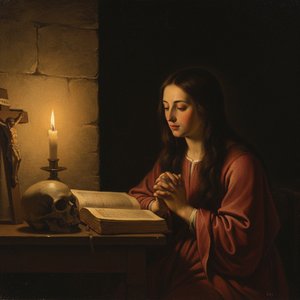
Georges de La Tour: Luminosity, Spirituality & Realism in Baroque Painting
Discover the captivating world of Georges de La Tour, a Baroque master renowned for his dramatic chiaroscuro & spiritual realism. Explore key works, influences, and his remarkable rediscovery. Learn more at OriginalUniqueArt.

Maurice Quentin de La Tour: Light, Shadow & the Rococo Portrait
Explore the captivating world of Maurice Quentin de La Tour, a master of Rococo portraiture. Discover his innovative pastel techniques, intimate depictions of French aristocracy, and lasting artistic legacy. Learn more at OriginalUniqueArt.

Barroco Sublime: 10 Obras Maestras que Definieron una Época |
Descubre las 10 obras maestras del Barroco que marcaron una época. Caravaggio, Bernini y Velázquez cobran vida en . Reproducciones de arte de calidad museo para decorar tu hogar con elegancia. ¡Explora la colección online!
La Biennale de Venecia: 25 Obras Maestras para Inspirar tu Hogar | OriginalUniqueArt
Descubre las 25 obras maestras de la Bienal de Venecia. Explora la historia, artistas y técnicas detrás de iconos del arte renacentista, moderno y contemporáneo. Encuentra reproducciones de alta calidad e inspira tu hogar con OriginalUniqueArt.com.



