- Inicio

- Reproducción al óleo
- Georges Braque
- untitled (4262)

 Preview
 Comprar impresión Comprar imagen en alta resolución
 Enviar
 Compartir
 Detalles
 Añadir a favoritos

 Descargar
 Similares
 Radiografía
 Presentación de diapositivas
untitled (4262)

 Ver más
Reproducción al óleo hecha a mano
Óleo sobre lienzo pintado a mano en el tamaño y marco de su elección, realizado por encargo por nuestros artistas.




P118B $10

P118H $10

P118W $10

P438Z $10

P508JH $12

P508YH $12

P805H $10

P805Z $10

P919BZ $10

P919G $10

P919XJ $10

P959ZH $10

P968JZ $12

W106C $8

W218G $10

W218JH $8

W218Y $10

W307PJ $10

W316G $10

W316PJ $8

W316Y $10

W398PJ $8

W4111J $10

W500HY $15

W500JH $15

W692G $12

W849H $8

W940BG $15

W953PJ $8




Elija entre nuestros tamaños predefinidos que respetan las proporciones originales de la obra.

Puede ingresar sus propias dimensiones para adaptarse a un marco o espacio específico. Si el tamaño seleccionado no coincide con las proporciones de la imagen original, recortaremos la obra o extenderemos la pintura con elementos adicionales pintados a mano. Se le enviará una maqueta digital para su aprobación antes de comenzar la producción.
Tenga en cuenta que la vista previa en pantalla no refleja el recorte o la extensión reales. Solo la maqueta mostrará con precisión la composición final.
Si bien existen tamaños personalizados, recomendamos seleccionar una dimensión de la lista predefinida para preservar las proporciones originales.
Tras realizar el pedido, el equipo de OriginalUniqueArt.com enviará un correo electrónico al cliente para solicitar instrucciones y proporcionarle una vista previa del boceto.
Entrega mundial () en 3-4 semanas en lugar de las 5 semanas estándar. (26 julio). Sin compromisos con la calidad.

Envío exprés gratuito a todo el mundo

Lienzo de lino de alta calidad

Seguro de envío total

Garantía de reembolso de impuestos aduaneros

Garantía de fidelidad de color

Política de devolución de 60 días (solo por defectos)

Garantía de devolución del 100% del dinero

Descuento por pedido múltiple
 La opción de vidrio solo está disponible en tamaños inferiores a 110 cm.

untitled (4262)
Técnica de reproducción
Tamaño de la reproducción
-


Precio total final
-
Descripción de la obra
The Genesis of Fragmentation: An Exploration of Cubism
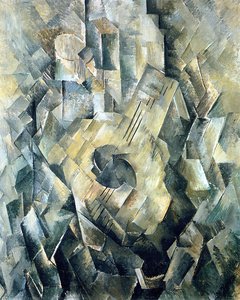
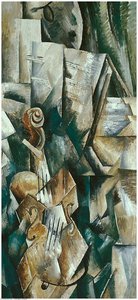
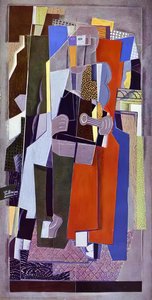
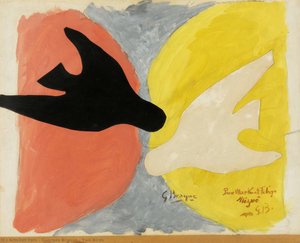
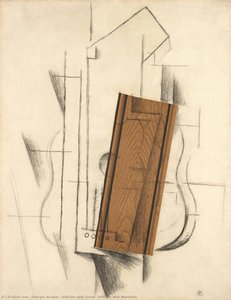
Georges Braque's "Untitled (4262)," a monochrome study rendered in the heart of the early 20th century, isn’t merely a depiction of still life; it’s a profound meditation on perception and representation. Born in Argenteuil in 1882, Braque’s artistic journey was inextricably linked to the burgeoning currents of modernism, particularly the revolutionary ideas taking shape alongside his close collaborator, Pablo Picasso. This particular work, created around 1962 (though its exact dating remains elusive), embodies the culmination of their shared exploration into Cubism – a movement that dared to dismantle traditional notions of space and form, inviting viewers to actively participate in reconstructing the image within their own minds.
The painting’s genesis lies within the broader context of early Cubism. Following the influence of Paul Cézanne's emphasis on geometric forms and multiple viewpoints, Braque and Picasso began to dissect objects into their constituent parts, reassembling them in a fractured, multi-faceted manner. “Untitled (4262)” exemplifies this approach with remarkable clarity. The central subject – a shark rendered in angular planes – isn’t presented as a singular, unified entity but rather as a collection of fragmented geometric shapes, each imbued with tonal variations that suggest depth and volume. This deliberate distortion challenges our conventional understanding of the fish, transforming it into an abstract emblem of power and mystery.
A Symphony of Grays: Color, Line, and Texture
The painting’s remarkable strength resides in its masterful manipulation of a restricted palette – primarily grayscale tones ranging from stark black to subtle shades of gray. This monochromatic approach isn't a limitation but rather a strategic tool, allowing Braque to focus entirely on the interplay of line, shape, and texture. Sharp, angular lines define the edges of each fragmented form, creating a sense of dynamic tension and visual complexity. The absence of vibrant color forces the viewer’s eye to navigate the intricate network of shapes and planes, fostering an intimate engagement with the artwork.
Furthermore, Braque skillfully employs subtle tonal shifts to suggest depth and volume. Areas of darker gray recede into the background, while lighter shades advance towards the viewer, creating a convincing illusion of spatial recession despite the abandonment of traditional perspective. The texture is deliberately understated – a smooth surface punctuated by carefully rendered shading—evoking a sense of quiet contemplation rather than overt visual drama. The overall effect is one of controlled elegance and intellectual rigor.
Symbolism and Emotional Resonance
The choice of the shark as the central motif is laden with symbolic weight. Often associated with danger, primal instinct, and the unknown depths of the ocean, the shark embodies a potent blend of power and vulnerability. Within the context of Braque’s Cubist exploration, it becomes an emblem of fragmented identity – a creature simultaneously recognizable and utterly transformed through the artist's deconstructive process.
The painting’s somber mood—a result of the monochromatic palette and the fractured composition—evokes a sense of quiet contemplation. It invites viewers to consider not just what they are seeing, but also *how* it is being seen. “Untitled (4262)” isn't simply a representation of objects; it’s an invitation to engage in a dialogue with the artwork itself, questioning our assumptions about reality and perception.
A Legacy of Innovation
“Untitled (4262)” stands as a testament to Georges Braque’s pivotal role in shaping the course of modern art. His collaboration with Picasso fundamentally altered the landscape of painting, paving the way for subsequent movements such as Futurism and Constructivism. This work exemplifies his commitment to exploring new ways of representing reality, challenging established conventions, and pushing the boundaries of artistic expression. Reproductions of this piece offer a captivating glimpse into the mind of a true innovator – a master of fragmentation who ultimately revealed the beauty within its chaos.
Biografía del artista
**vida temprana y formación**
georges braque, un destacado pintor francés, collageador, dibujante, grabador y escultor, nació el 13 de mayo de 1882 en Argelo, Val-d'Oise. Creció en Le Havre y inicialmente se formó para ser pintor de casas y decorador, como su padre y abuelo. Sin embargo, las inclinaciones artísticas de Braque lo llevaron a estudiar pintura en la École des Beaux-Arts en Le Havre de 1897 a 1899.**evolución artística y fauvismo**
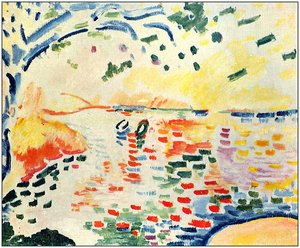
En 1902, después de completar su aprendizaje con un decorador en París, Braque asistió a la Academia Humbert hasta 1904. Este período marcó su introducción al fauvismo, un estilo caracterizado por colores vibrantes y respuestas emocionales. Influenciado por las obras de henri matisse y andré derain, Braque adoptó un enfoque fauvista, como se ve en su pintura the patience (fauvismo, óleo sobre lienzo).**contribución al cubismo**
La colaboración de Braque con pablo picasso desde 1908 hasta 1912 llevó al desarrollo del cubismo. Sus obras cubistas analíticas, como georges braque: the patience y pablo picasso: clarinet(cubismo analítico, óleo sobre lienzo), se consideran hitos en la historia del arte.**legado y obras notables**
* Houses at l'Estaque: un testimonio del uso innovador de la geometría y la perspectiva simultánea de Braque. * The Patience(fauvismo, óleo sobre lienzo): demuestra el estilo fauvista de Braque. * Clarinet(cubismo analítico, óleo sobre lienzo): una obra cubista colaborativa con Picasso.**museos y colecciones**
* Musée d'Orsay: presenta una extensa colección de arte impresionista y postimpresionista, incluyendo obras de Braque. * Musée de l'Orangerie: exhibe una amplia gama de obras de arte, incluyendo las de Braque y otros artistas notables.- Descubra más sobre la vida y obra de Georges Braque en OriginalUniqueArt.com
- Explore la colección del Musée d'Orsay, que presenta obras de Braque y otros artistas, en Musée d'Orsay - Wikipedia
- Aprenda más sobre el fauvismo y su influencia en el desarrollo del cubismo con el movimiento artístico fauvista en OriginalUniqueArt.com
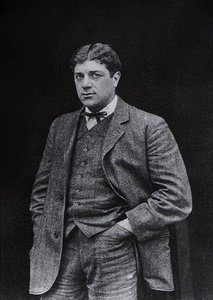
Georges Braque
1882 - 1963 , Francia
Datos clave
- Artistas Influenciados Por Este Artista: ['Pablo Picasso']
- Artistas Que Influyeron:
- Henri Matisse
- André Derain
- Paul Cézanne
- Fecha De Muerte: 31 de agosto de 1963
- Fecha De Nacimiento: 13 de mayo de 1882
- Lugar De Nacimiento: Argenteuil, Francia
- Movimiento Artístico: Cubismo, Fauvismo
- Nacionalidad: Francés
- Nombre Completo: Georges Braque
- Obras Notables:
- Casas en L'Estaque
- La paciencia (Fauvismo)
- Violin y Paleta
- Mandola
Artículos relacionados
Deconstructing Reality: A Comprehensive Exploration of Cubist Still Life
Explore the revolutionary world of Cubist Still Life with OriginalUniqueArt. Discover Picasso & Braque's groundbreaking techniques, its philosophical roots, and lasting impact on modern art. Expert insights for collectors.
Bernard Cathelin: A Poetic Realist's Exploration of Still Life and the French Landscape
Explore the captivating world of Bernard Cathelin, a master of French Poetic Realism. Discover his stunning still lifes & landscapes, and learn about his legacy with OriginalUniqueArt.

The Bountiful Still Life: Symbolism & Artistic Representation of Fruit Across Art History
Explore the rich history of still life painting & the symbolism of fruit across art movements. Discover masterpieces from Caravaggio to Cézanne with OriginalUniqueArt – expert guidance & museum-quality reproductions.
Deconstruyendo la Realidad: Los Años Formativos y la Influencia Duradera del Cubismo Analítico
Explora la génesis y el impacto del Cubismo Analítico. Un análisis profundo de Picasso, Braque y su revolucionario lenguaje visual. Descubre cómo este movimiento transformó el arte moderno y sentó las bases para las vanguardias.
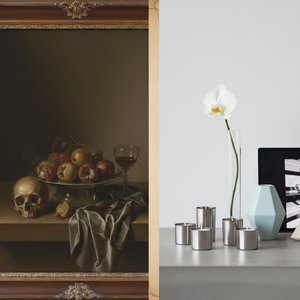
The Enduring Appeal of Still Life: A Historical & Contemporary Exploration
Explore the rich history & symbolism of still life painting with OriginalUniqueArt. Discover masterpieces from the Dutch Golden Age, learn about vanitas art, and find expert guidance for collecting timeless artworks.