- Inicio

- Impresión en lienzo
- Georges Braque
- Pedestal table, Kunstmuseum Basel
 Vista previa
 Compartir
 Compartir
 Ver detalles

 Descargar
 Ver similares
 Radiografía
 Presentación de diapositivas
Pedestal table, Kunstmuseum Basel


 Leer más
Giclée / Impresión de arte
Impresiones giclée o en lienzo de calidad de museo con producción rápida y opciones de acabado flexibles. ( Cambiar a pintura hecha a mano Cambiar a imagen)




P118B $10

P118H $10

P118W $10

P438Z $10

P508JH $12

P508YH $12

P805H $10

P805Z $10

P919BZ $10

P919G $10

P919XJ $10

P959ZH $10

P968JZ $12

W106C $8

W218G $10

W218JH $8

W218Y $10

W307PJ $10

W316G $10

W316PJ $8

W316Y $10

W398PJ $8

W4111J $10

W500HY $15

W500JH $15

W692G $12

W849H $8

W940BG $15

W953PJ $8




Elija entre nuestros tamaños predefinidos que respetan las proporciones originales de la obra.

Puede introducir sus propias dimensiones para adaptarse a un marco o espacio específico. Si el tamaño seleccionado no coincide con las proporciones de la imagen original, recortaremos la obra de arte o extenderemos la imagen con un borde con efecto espejo o de color sólido. Se enviará una maqueta digital para su aprobación antes de que comience la producción.
Tenga en cuenta que la vista previa en pantalla no refleja el recorte o la extensión real. Solo la maqueta mostrará con precisión la composición final.
Aunque existen tamaños personalizados, recomendamos seleccionar una dimensión de la lista predefinida para preservar las proporciones originales.
Envío a todo el mundo () en 2 semanas en lugar de las 4/5 semanas estándar. (1 agosto)

Envío exprés gratuito a todo el mundo

Lienzo de lino de alta calidad

Seguro de envío completo

Garantía de reembolso de aranceles aduaneros

Garantía de fidelidad cromática exacta

Política de devolución de 60 días (solo por defectos)

Garantía de devolución del 100% del dinero

Oferta por volumen
 La opción de vidrio solo está disponible en tamaños inferiores a 110 cm.

Pedestal table, Kunstmuseum Basel
Giclée / Impresión de arte
Tamaño de la reproducción
-


Precio total
$ 80
Descripción de la pieza
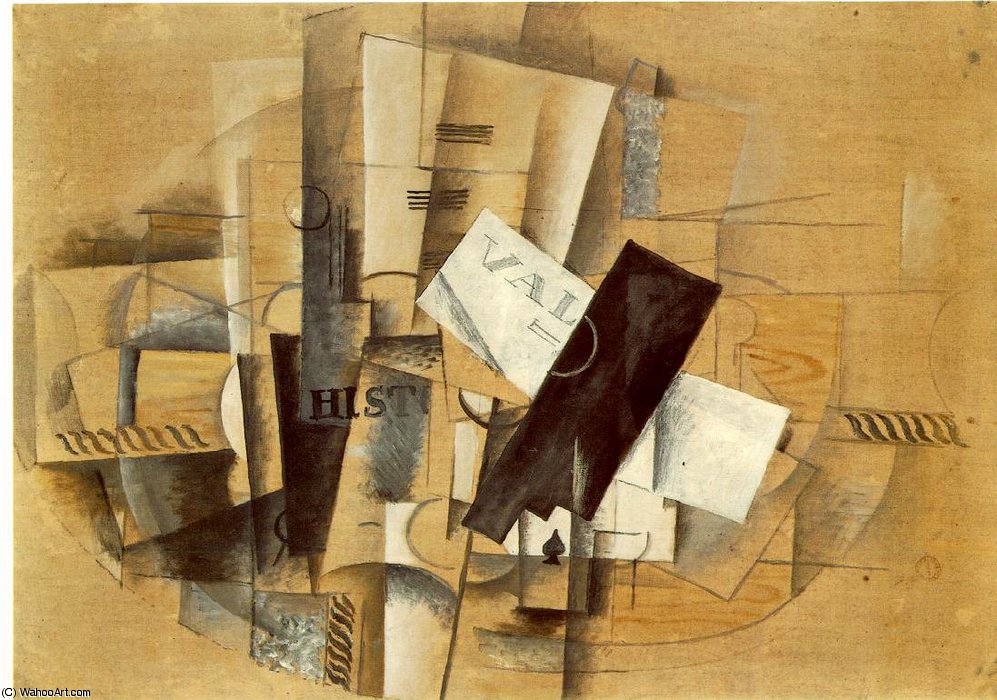
A Fragmented World: Georges Braque’s “Pedestal Table”
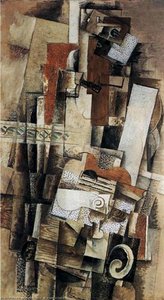
Georges Braque's "Pedestal Table," painted in 1913 during the pivotal years of Synthetic Cubism, isn’t merely a still life; it’s an architectural puzzle rendered in oil on canvas. This work, currently residing within the Kunstmuseum Basel, offers a glimpse into the artist’s radical experimentation with space and perception – a deliberate dismantling of traditional representation to reveal the underlying structure of form itself. The painting immediately captivates with its seemingly chaotic arrangement: a round pedestal table dominates the composition, supporting an assortment of objects—brushes, palettes, tubes of paint, cylinders, and even fragments of text—all presented in a flattened, almost two-dimensional space. Yet, this apparent disorder is meticulously orchestrated; Braque employs geometric abstraction to build a complex, self-contained world, inviting the viewer to engage in a process of deciphering its visual language.
The stylistic hallmarks of Synthetic Cubism are powerfully evident. Unlike Analytic Cubism’s dissection into smaller, interlocking facets, this painting embraces brighter colors and introduces collage elements – a technique that would become increasingly prominent in Braque's later work. The muted palette—primarily browns, whites, and blacks—creates a sense of solidity and materiality, while the strategic use of color adds subtle dynamism. Notice how the ochre tones subtly shift across the surfaces, suggesting texture and depth despite the flattened perspective. The inclusion of letters and numbers scattered throughout the composition isn’t arbitrary; they disrupt the purely visual experience, forcing us to consider the painting as a hybrid of image and text – a deliberate blurring of boundaries between art and everyday life.
Deconstructing Reality: The Principles of Synthetic Cubism
Braque's exploration within Synthetic Cubism stemmed directly from his collaboration with Pablo Picasso. They were driven by a desire to move beyond the analytical deconstruction of form, pioneered in Analytic Cubism, towards a more integrated and evocative representation. This new approach sought to capture not just the appearance of objects but their essence – their underlying structure and spatial relationships. Braque’s “Pedestal Table” exemplifies this shift. The table itself isn't depicted as a realistic object; instead, it becomes a structural element within a larger, invented space. The overlapping planes and fragmented forms create an illusion of depth, suggesting that the painting is not merely a representation of objects but a construction of spatial relationships.
Crucially, Braque’s use of collage—incorporating elements like newspaper clippings or fabric – further challenged traditional notions of artistic authorship. This technique blurred the lines between painting and other media, reflecting a broader cultural shift towards experimentation and interdisciplinary approaches during this period. The inclusion of these seemingly unrelated fragments contributes to the painting's overall sense of dynamism and complexity, mirroring the fragmented nature of modern experience.
Symbolism and the Everyday: A Reflection of Modern Life
While ostensibly a still life, “Pedestal Table” is rich in symbolic potential. The objects arranged on the table—brushes, palettes, paint tubes—are directly related to the act of painting itself, suggesting that the work is both a representation of the artist’s studio and a meditation on the creative process. The presence of musical instruments – hinted at by fragments resembling sheet music – adds another layer of meaning, evoking notions of leisure, inspiration, and perhaps even the pursuit of harmony. The table itself, a ubiquitous object in domestic life, becomes a stage for this carefully constructed tableau.
Furthermore, the inclusion of text—letters and numbers—introduces an element of abstraction and invites interpretation. These fragments disrupt the purely visual experience, prompting us to consider the painting as a dialogue between image and language. Braque’s deliberate ambiguity encourages viewers to actively engage with the work, projecting their own meanings onto its fragmented surface. “Pedestal Table” isn't simply a depiction of objects; it’s an invitation to contemplate the relationship between art, reality, and the human experience.
A Reproduction for Your Space: Bringing Braque Home
OriginalUniqueArt offers meticulously crafted hand-painted reproductions of Georges Braque’s “Pedestal Table,” allowing you to bring this iconic work into your own home or office. Our skilled artists replicate Braque's distinctive style and nuanced color palette with exceptional precision, ensuring that the reproduction captures the painting’s original depth and complexity. Available in a range of sizes and canvas materials, our reproductions provide an authentic representation of this groundbreaking artwork, making it accessible to art lovers and collectors alike.
Whether you appreciate Braque's pioneering contributions to Cubism or simply admire his masterful use of form and color, a OriginalUniqueArt reproduction of “Pedestal Table” is a beautiful addition to any collection. It’s more than just a print; it’s a tangible connection to one of the 20th century’s most influential artists.
Biografía del artista
**vida temprana y formación**
georges braque, un destacado pintor francés, collageador, dibujante, grabador y escultor, nació el 13 de mayo de 1882 en Argelo, Val-d'Oise. Creció en Le Havre y inicialmente se formó para ser pintor de casas y decorador, como su padre y abuelo. Sin embargo, las inclinaciones artísticas de Braque lo llevaron a estudiar pintura en la École des Beaux-Arts en Le Havre de 1897 a 1899.**evolución artística y fauvismo**
En 1902, después de completar su aprendizaje con un decorador en París, Braque asistió a la Academia Humbert hasta 1904. Este período marcó su introducción al fauvismo, un estilo caracterizado por colores vibrantes y respuestas emocionales. Influenciado por las obras de henri matisse y andré derain, Braque adoptó un enfoque fauvista, como se ve en su pintura the patience (fauvismo, óleo sobre lienzo).**contribución al cubismo**
La colaboración de Braque con pablo picasso desde 1908 hasta 1912 llevó al desarrollo del cubismo. Sus obras cubistas analíticas, como georges braque: the patience y pablo picasso: clarinet(cubismo analítico, óleo sobre lienzo), se consideran hitos en la historia del arte.**legado y obras notables**
* Houses at l'Estaque: un testimonio del uso innovador de la geometría y la perspectiva simultánea de Braque. * The Patience(fauvismo, óleo sobre lienzo): demuestra el estilo fauvista de Braque. * Clarinet(cubismo analítico, óleo sobre lienzo): una obra cubista colaborativa con Picasso.**museos y colecciones**
* Musée d'Orsay: presenta una extensa colección de arte impresionista y postimpresionista, incluyendo obras de Braque. * Musée de l'Orangerie: exhibe una amplia gama de obras de arte, incluyendo las de Braque y otros artistas notables.- Descubra más sobre la vida y obra de Georges Braque en OriginalUniqueArt.com
- Explore la colección del Musée d'Orsay, que presenta obras de Braque y otros artistas, en Musée d'Orsay - Wikipedia
- Aprenda más sobre el fauvismo y su influencia en el desarrollo del cubismo con el movimiento artístico fauvista en OriginalUniqueArt.com
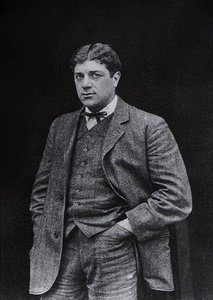
Georges Braque
1882 - 1963 , Francia
Datos clave
- Artistas Influenciados Por Este Artista: ['Pablo Picasso']
- Artistas Que Influyeron:
- Henri Matisse
- André Derain
- Paul Cézanne
- Fecha De Muerte: 31 de agosto de 1963
- Fecha De Nacimiento: 13 de mayo de 1882
- Lugar De Nacimiento: Argenteuil, Francia
- Movimiento Artístico: Cubismo, Fauvismo
- Nacionalidad: Francés
- Nombre Completo: Georges Braque
- Obras Notables:
- Casas en L'Estaque
- La paciencia (Fauvismo)
- Violin y Paleta
- Mandola
Artículos relacionados
Deconstructing Reality: A Comprehensive Exploration of Cubist Still Life
Explore the revolutionary world of Cubist Still Life with OriginalUniqueArt. Discover Picasso & Braque's groundbreaking techniques, its philosophical roots, and lasting impact on modern art. Expert insights for collectors.

Jean Dominique Antony Metzinger: Pioneering Cubism & the Evolution of Abstract Form
Explore the life & work of Jean Metzinger, a pivotal Cubist painter and theorist. Discover his innovations in proto-Cubism, 'Du Cubisme,' and Crystal Cubism – a journey through modern art's evolution.
De la Naturaleza Muerta Clásica a la Abstracción Contemporánea: Elevando los Espacios de Entretenimiento en Villas a Través de Reproducciones Artísticas
Descubre la evolución del bodegón y cómo integrar reproducciones artísticas de alta calidad en tu villa. Expertos en arte, selección exclusiva y asesoramiento personalizado.
Georges Braque: Pioneering Cubism & the Evolution of Modern Form
Explore the revolutionary art of Georges Braque, a pioneer of Cubism alongside Picasso. Discover his artistic evolution, key works, and lasting impact on modern art. A guide for discerning collectors.

The Dawn of Modernity: Exploring Artistic Transformations in the Pivotal Year of 1907
Explore the pivotal artistic shifts of 1907 – from Fauvism to Proto-Cubism. Discover key artists like Picasso & Braque, and gain insights for discerning art collectors. Expert analysis at OriginalUniqueArt.