- Inicio

- Reproducción al óleo
- Georges Braque
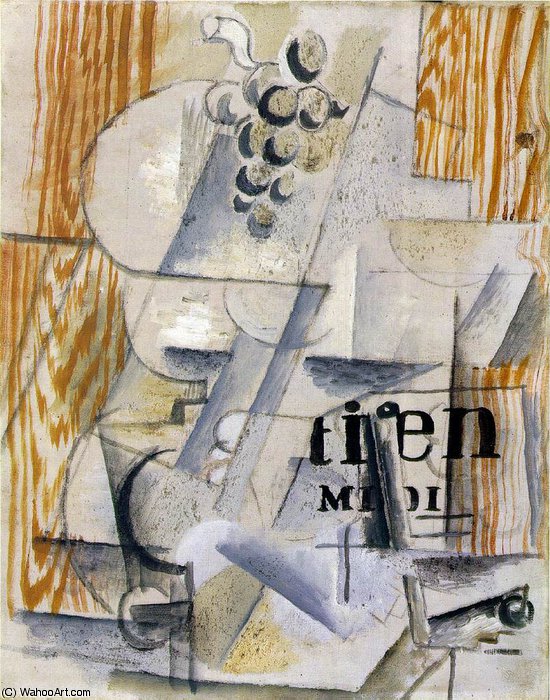
- El frutero privado
 Preview
 Comprar impresión Comprar imagen en alta resolución
 Enviar
 Compartir
 Detalles
 Añadir a favoritos

 Descargar
 Similares
 Radiografía
 Presentación de diapositivas
El frutero privado


 Ver más
Reproducción al óleo hecha a mano
Óleo sobre lienzo pintado a mano en el tamaño y marco de su elección, realizado por encargo por nuestros artistas.




P118B $10

P118H $10

P118W $10

P438Z $10

P508JH $12

P508YH $12

P805H $10

P805Z $10

P919BZ $10

P919G $10

P919XJ $10

P959ZH $10

P968JZ $12

W106C $8

W218G $10

W218JH $8

W218Y $10

W307PJ $10

W316G $10

W316PJ $8

W316Y $10

W398PJ $8

W4111J $10

W500HY $15

W500JH $15

W692G $12

W849H $8

W940BG $15

W953PJ $8




Elija entre nuestros tamaños predefinidos que respetan las proporciones originales de la obra.

Puede ingresar sus propias dimensiones para adaptarse a un marco o espacio específico. Si el tamaño seleccionado no coincide con las proporciones de la imagen original, recortaremos la obra o extenderemos la pintura con elementos adicionales pintados a mano. Se le enviará una maqueta digital para su aprobación antes de comenzar la producción.
Tenga en cuenta que la vista previa en pantalla no refleja el recorte o la extensión reales. Solo la maqueta mostrará con precisión la composición final.
Si bien existen tamaños personalizados, recomendamos seleccionar una dimensión de la lista predefinida para preservar las proporciones originales.
Tras realizar el pedido, el equipo de OriginalUniqueArt.com enviará un correo electrónico al cliente para solicitar instrucciones y proporcionarle una vista previa del boceto.
Entrega mundial () en 3-4 semanas en lugar de las 5 semanas estándar. (25 julio). Sin compromisos con la calidad.

Envío exprés gratuito a todo el mundo

Lienzo de lino de alta calidad

Seguro de envío total

Garantía de reembolso de impuestos aduaneros

Garantía de fidelidad de color

Política de devolución de 60 días (solo por defectos)

Garantía de devolución del 100% del dinero

Descuento por pedido múltiple
 La opción de vidrio solo está disponible en tamaños inferiores a 110 cm.

El frutero privado
Técnica de reproducción
Tamaño de la reproducción
-


Precio total final
-
Descripción de la obra
Georges Braque: Pioneering Cubism & The Fruitdish’s Quiet Revolution
Georges Braque (1882-1963) stands as one of the titans of modern art, inextricably linked to Pablo Picasso in the genesis of Cubism—a movement that irrevocably altered the trajectory of Western painting. Born in Argenteuil, France, his formative years instilled within him a profound appreciation for craftsmanship alongside an innate artistic sensibility honed by formal training at the École des Beaux-Arts in Le Havre. This dual foundation proved crucial as he dismantled traditional representational conventions, embracing geometric abstraction and challenging viewers to reconsider their perception of reality. Moving to Paris in 1902, Braque immersed himself in the vibrant artistic milieu of the city, fostering collaborations that would propel him to international acclaim.- Early Life & Artistic Foundations: Braque’s upbringing within a family of house painters nurtured not only technical mastery but also an early understanding of form and structure—skills he would later translate into groundbreaking visual explorations.
- The École des Beaux-Arts & Marie Laurencin: His studies at Le Havre provided him with the academic grounding necessary to confront established artistic dogma, while his association with Marie Laurencin fostered a shared commitment to innovative aesthetic experimentation.
- Parisian Influences & Francis Picabia: Braque’s Parisian life exposed him to influential contemporaries like Francis Picabia, whose explorations of Surrealism would complement Braque's Cubist endeavors.
The Birth of Cubism – A Dialogue with Picasso
Braque’s artistic journey intersected decisively with Picasso’s in 1907, sparking a collaborative effort that birthed the revolutionary aesthetic known as Cubism. Influenced by Cézanne's radical simplification of form and perspective—particularly his masterful depiction of Mont Sainte-Victoire—Braque embarked on a quest to capture multiple viewpoints simultaneously within a single image. This ambition manifested in works like “Houses at L’Estaque,” where Braque fragmented architectural structures into interlocking planes, mirroring Cézanne’s approach to representing space. The resulting paintings defied conventional illusionism, prioritizing geometric abstraction and challenging viewers to engage with the artwork on an intellectual level.- Cézanne's Influence: Braque recognized Cézanne’s profound impact on his artistic vision, adopting techniques that mirrored Cézanne’s simplification of form and perspective.
- Collaborative Exploration: The partnership with Picasso fueled a dynamic exchange of ideas, resulting in paintings that were indistinguishable for years—a testament to their shared commitment to pushing the boundaries of artistic expression.
- Analyzing Space & Form: Braque meticulously scrutinized Cézanne’s methods for representing space and form, incorporating these insights into his own Cubist compositions.
“The Fruitdish” – A Study in Texture & Illusion
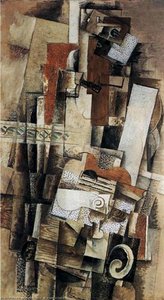
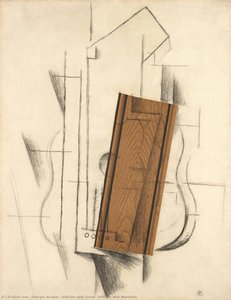
“The FruitDish,” created in 1912, exemplifies Braque's masterful manipulation of texture and illusionistic representation—a hallmark of Synthetic Cubism. This still life oil painting on canvas is more than just a depiction of fruit; it’s an intellectual exercise in challenging viewers’ perceptions of reality. Inspired by the discovery of mass-produced faux bois wallpaper purchased in Avignon, Braque employed *papier collé* – a technique pioneered by Picasso—to integrate fragments of printed paper into his charcoal drawings. The wallpaper's geometric patterns and wood grain texture served as a deliberate counterpoint to the fragmented forms of Cubism, prompting contemplation about how artists represent space and materiality.- The Role of Papier Collé: Braque’s use of papier collé—a technique championed by Picasso—represents a pivotal moment in Cubist art history.
- Texture & Illusionistic Representation: The interplay between charcoal lines and the textured surface of faux bois wallpaper underscores Braque's commitment to exploring both visual elements simultaneously.
- Symbolic Significance: The inclusion of geometric forms alongside naturalistic depictions—such as the grapes—suggests a broader exploration of artistic conventions and their ability to convey meaning beyond mere appearance.
Legacy & Impact – Beyond Fragmentation
Georges Braque’s contribution to Cubism transcends mere stylistic innovation; it represents a fundamental rethinking of how artists engage with the visual world. By prioritizing geometric abstraction alongside illusionistic representation—a strategy mirrored in “The FruitDish”—Braque ushered in an era of artistic experimentation that continues to inspire contemporary artists. His work stands as a beacon of modernist thought, demonstrating the transformative potential of challenging established norms and embracing new perspectives on form, space, and perception. Reproductions of "The Fruitdish" offer viewers a chance to experience Braque’s groundbreaking vision firsthand—a testament to his enduring influence on the history of art.Biografía del artista
**vida temprana y formación**
georges braque, un destacado pintor francés, collageador, dibujante, grabador y escultor, nació el 13 de mayo de 1882 en Argelo, Val-d'Oise. Creció en Le Havre y inicialmente se formó para ser pintor de casas y decorador, como su padre y abuelo. Sin embargo, las inclinaciones artísticas de Braque lo llevaron a estudiar pintura en la École des Beaux-Arts en Le Havre de 1897 a 1899.**evolución artística y fauvismo**
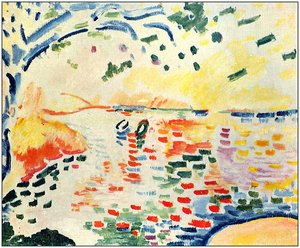
En 1902, después de completar su aprendizaje con un decorador en París, Braque asistió a la Academia Humbert hasta 1904. Este período marcó su introducción al fauvismo, un estilo caracterizado por colores vibrantes y respuestas emocionales. Influenciado por las obras de henri matisse y andré derain, Braque adoptó un enfoque fauvista, como se ve en su pintura the patience (fauvismo, óleo sobre lienzo).**contribución al cubismo**
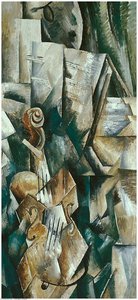
La colaboración de Braque con pablo picasso desde 1908 hasta 1912 llevó al desarrollo del cubismo. Sus obras cubistas analíticas, como georges braque: the patience y pablo picasso: clarinet(cubismo analítico, óleo sobre lienzo), se consideran hitos en la historia del arte.**legado y obras notables**
* Houses at l'Estaque: un testimonio del uso innovador de la geometría y la perspectiva simultánea de Braque. * The Patience(fauvismo, óleo sobre lienzo): demuestra el estilo fauvista de Braque. * Clarinet(cubismo analítico, óleo sobre lienzo): una obra cubista colaborativa con Picasso.**museos y colecciones**
* Musée d'Orsay: presenta una extensa colección de arte impresionista y postimpresionista, incluyendo obras de Braque. * Musée de l'Orangerie: exhibe una amplia gama de obras de arte, incluyendo las de Braque y otros artistas notables.- Descubra más sobre la vida y obra de Georges Braque en OriginalUniqueArt.com
- Explore la colección del Musée d'Orsay, que presenta obras de Braque y otros artistas, en Musée d'Orsay - Wikipedia
- Aprenda más sobre el fauvismo y su influencia en el desarrollo del cubismo con el movimiento artístico fauvista en OriginalUniqueArt.com
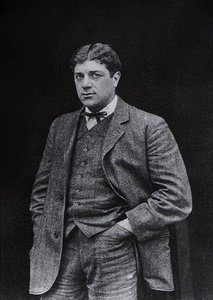
Georges Braque
1882 - 1963 , Francia
Datos clave
- Artistas Influenciados Por Este Artista: ['Pablo Picasso']
- Artistas Que Influyeron:
- Henri Matisse
- André Derain
- Paul Cézanne
- Fecha De Muerte: 31 de agosto de 1963
- Fecha De Nacimiento: 13 de mayo de 1882
- Lugar De Nacimiento: Argenteuil, Francia
- Movimiento Artístico: Cubismo, Fauvismo
- Nacionalidad: Francés
- Nombre Completo: Georges Braque
- Obras Notables:
- Casas en L'Estaque
- La paciencia (Fauvismo)
- Violin y Paleta
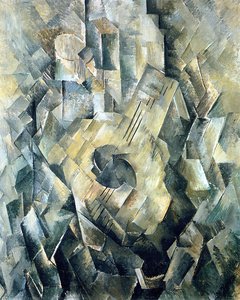
- Mandola
Artículos relacionados
Los 10 Maestros del Cubismo: Obras que Revolucionaron el Arte | OriginalUniqueArt
Descubre los 10 lienzos cubistas que revolucionaron el arte moderno. Explora las obras maestras de Picasso, Braque y Gris en OriginalUniqueArt.com. Reproducciones de alta calidad para tu hogar.
Severin Roesen: Evoking National Identity Through American Still Life Painting
Explore the captivating world of Severin Roesen, a major American still life painter influenced by Dutch masters. Discover his lush compositions and the symbolism within his art – a window into 19th-century America.

Silent Narratives: Exploring the Enduring Appeal of Still Life Painting Across Centuries
Explore the rich history of still life painting with OriginalUniqueArt. Discover Dutch Masters, decode vanitas symbolism & learn about collecting timeless art. Expert insights and museum-quality reproductions.
Georges Braque: Pioneering Cubism & the Evolution of Modern Form
Explore the revolutionary art of Georges Braque, a pioneer of Cubism alongside Picasso. Discover his artistic evolution, key works, and lasting impact on modern art. A guide for discerning collectors.
Henri Fantin-Latour: A Poetic Realism Between Still Life and the Parisian Avant-Garde
Explore the captivating world of Henri Fantin-Latour, a master of still life and portraiture. Discover his unique blend of Realism & Symbolism, Parisian connections, and enduring legacy with OriginalUniqueArt.