

 Vista previa
 Compartir
 Compartir
 Ver detalles
 Guía
Guía

 Descargar
 Ver artículos similares
 Radiografía
 Presentación de diapositivas
 Estadísticas
Bottle and Fishes
 Oil On Canvas
- WallArt
- Analytical Cubism
 1910
1910- Modern
 61.0 x 75.0 cm
 Leer más
Giclée / Impresión de arte
Impresiones giclée o en lienzo de calidad de museo con producción rápida y opciones de acabado flexibles. ( Encargar reproducción pintada a mano Ver versión en imagen digital)




P118B $10

P118H $10

P118W $10

P438Z $10

P508JH $12

P508YH $12

P805H $10

P805Z $10

P919BZ $10

P919G $10

P919XJ $10

P959ZH $10

P968JZ $12

W106C $8

W218G $10

W218JH $8

W218Y $10

W307PJ $10

W316G $10

W316PJ $8

W316Y $10

W398PJ $8

W4111J $10

W500HY $15

W500JH $15

W692G $12

W849H $8

W940BG $15

W953PJ $8




Elija entre nuestros tamaños predefinidos que respetan las proporciones originales de la obra.

Puede introducir sus propias dimensiones para adaptarse a un marco o espacio específico. Si el tamaño seleccionado no coincide con las proporciones de la imagen original, recortaremos la obra de arte o extenderemos la imagen con un borde con efecto espejo o de color sólido. Se enviará una maqueta digital para su aprobación antes de que comience la producción.
Tenga en cuenta que la vista previa en pantalla no refleja el recorte o la extensión real. Solo la maqueta mostrará con precisión la composición final.
Aunque existen tamaños personalizados, recomendamos seleccionar una dimensión de la lista predefinida para preservar las proporciones originales.
Envío a todo el mundo () en 2 semanas en lugar de las 4/5 semanas estándar. (26 septiembre)

Envío exprés gratuito a todo el mundo

Lienzo de lino de alta calidad

Seguro de envío completo

Garantía de reembolso de impuestos aduaneros

Garantía de fidelidad cromática exacta

Política de devolución de 100 días (solo por defectos)

Garantía de devolución del 100% del dinero

Oferta por volumen
 La opción de vidrio solo está disponible en tamaños inferiores a 110 cm.

Bottle and Fishes
Giclée / Impresión de arte
Tamaño de la reproducción
-


Precio total
$ 80
A Fragmented Vision of Coastal Life
In the quiet revolution of early twentieth-century modernism, few works capture the intellectual tension between reality and perception as poignantly as Georges Braque’s “Bottle and Fishes.” Executed around 1910, this masterpiece serves as a profound window into the dawn of Analytical Cubism. At first glance, the composition presents a deceptively simple maritime scene: a fisherman’s boat laden with bottles, drifting through a sea of geometric abstraction. Yet, beneath this surface lies an ambitious attempt to dismantle the traditional single-point perspective that had dominated Western art since the Renaissance. Braque does not merely seek to show us a boat; he seeks to show us the very essence of how we experience objects in space—not as static images, but as multifaceted, shifting truths.
The painting’s power lies in its deconstruction. Rather than rendering the vessel and its cargo with smooth, illusionistic curves, Braque utilizes interlocking planes and fractured surfaces to reveal multiple viewpoints simultaneously. This technique allows the viewer to perceive the weight of the bottles and the structure of the boat from several angles at once, creating a rhythmic, almost musical movement across the canvas. The artist’s background in his father's house-painting trade is subtly present here; there is a tactile, grounded quality to the work, where thick impasto brushstrokes emphasize the materiality of the paint itself. This physical texture prevents the abstraction from feeling purely cerebral, anchoring the fragmented forms in a palpable, earthy reality.
The Alchemy of Color and Form
Braque’s palette in “Bottle and Fishes” is a masterclass in restraint and atmospheric depth. Eschewing the vibrant, fleeting light of the Impressionists who preceded him, Braque embraces a more contemplative and somber spectrum of browns, ochres, and muted blues. These tones do not merely decorate the scene; they unify the composition, allowing the eye to wander through the complex lattice of shapes without being distracted by chromatic intensity. This subdued color scheme fosters a sense of profound stillness, inviting the collector or observer into a meditative state where one can focus on the interplay of light and shadow within the geometric facets.
For the interior designer or art enthusiast, this piece offers an unparalleled sense of sophisticated depth. The way the bottles are scattered—some appearing in the immediate foreground while others recede into the background—creates a layered complexity that breathes life into any space. It is a work that demands attention through its subtlety rather than through loudness. There is a haunting beauty in how Braque uses these everyday objects—a book, a bottle, a fishing boat—to explore the boundaries of the known world. To possess a reproduction of this work is to bring a piece of art history’s most significant intellectual breakthrough into one's personal environment, offering a constant source of structural inspiration and aesthetic intrigue.
Ultimately, “Bottle and Fishes” remains an emotional journey through the process of seeing. It captures the moment when the mirror of art was shattered and reassembled to reflect a more complex, modern truth. It is a testament to Braque’s ability to find the extraordinary within the ordinary, turning a simple coastal scene into an eternal exploration of form, space, and the human gaze.
Biografía del artista
**vida temprana y formación**
georges braque, un destacado pintor francés, collageador, dibujante, grabador y escultor, nació el 13 de mayo de 1882 en Argelo, Val-d'Oise. Creció en Le Havre y inicialmente se formó para ser pintor de casas y decorador, como su padre y abuelo. Sin embargo, las inclinaciones artísticas de Braque lo llevaron a estudiar pintura en la École des Beaux-Arts en Le Havre de 1897 a 1899.**evolución artística y fauvismo**
En 1902, después de completar su aprendizaje con un decorador en París, Braque asistió a la Academia Humbert hasta 1904. Este período marcó su introducción al fauvismo, un estilo caracterizado por colores vibrantes y respuestas emocionales. Influenciado por las obras de henri matisse y andré derain, Braque adoptó un enfoque fauvista, como se ve en su pintura the patience (fauvismo, óleo sobre lienzo).**contribución al cubismo**
La colaboración de Braque con pablo picasso desde 1908 hasta 1912 llevó al desarrollo del cubismo. Sus obras cubistas analíticas, como georges braque: the patience y pablo picasso: clarinet(cubismo analítico, óleo sobre lienzo), se consideran hitos en la historia del arte.**legado y obras notables**
* Houses at l'Estaque: un testimonio del uso innovador de la geometría y la perspectiva simultánea de Braque. * The Patience(fauvismo, óleo sobre lienzo): demuestra el estilo fauvista de Braque. * Clarinet(cubismo analítico, óleo sobre lienzo): una obra cubista colaborativa con Picasso.**museos y colecciones**
* Musée d'Orsay: presenta una extensa colección de arte impresionista y postimpresionista, incluyendo obras de Braque. * Musée de l'Orangerie: exhibe una amplia gama de obras de arte, incluyendo las de Braque y otros artistas notables.- Descubra más sobre la vida y obra de Georges Braque en OriginalUniqueArt.com
- Explore la colección del Musée d'Orsay, que presenta obras de Braque y otros artistas, en Musée d'Orsay - Wikipedia
- Aprenda más sobre el fauvismo y su influencia en el desarrollo del cubismo con el movimiento artístico fauvista en OriginalUniqueArt.com
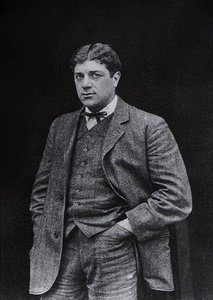
Georges Braque
1882 - 1963 , Francia
Datos clave
- Artistas Influenciados Por Este Artista: ['Pablo Picasso']
- Artistas Que Influyeron:
- Henri Matisse
- André Derain
- Paul Cézanne
- Fecha De Muerte: 31 de agosto de 1963
- Fecha De Nacimiento: 13 de mayo de 1882
- Lugar De Nacimiento: Argenteuil, Francia
- Movimiento Artístico: Cubismo, Fauvismo
- Nacionalidad: Francés
- Nombre Completo: Georges Braque
- Obras Notables:
- Casas en L'Estaque
- La paciencia (Fauvismo)
- Violin y Paleta
- Mandola
Artículos relacionados

Georges Braque: Las 25 Obras Maestras del Cubismo y su Legado en el Arte Moderno
Descubre las 25 obras maestras de Georges Braque, pionero del cubismo. Explora su innovadora técnica, colores y el legado del arte moderno francés. Reproducciones de alta calidad en OriginalUniqueArt.com. ¡Encuentra tu inspiración!

Barcos en el Arte: 10 Obras Maestras para Inspirar tu Decoración
Descubre 10 obras maestras que capturan la belleza y el simbolismo de los barcos. Desde Monet hasta Van Gogh, explora la historia del arte marítimo e inspira tu decoración con reproducciones de museo en OriginalUniqueArt.com.
Georges Braque: Pioneering Cubism & the Evolution of Modern Form
Explore the revolutionary art of Georges Braque, a pioneer of Cubism alongside Picasso. Discover his artistic evolution, key works, and lasting impact on modern art. A guide for discerning collectors.
Deconstruyendo la Realidad: El Impacto Revolucionario del Cubismo en el Arte del Siglo XX
Descubra el revolucionario impacto del Cubismo en el arte del siglo XX. Análisis profundo de Picasso, Braque y su legado. Guía para coleccionistas apasionados e inversores.
Mastering Cubism: A Collector's Guide to the Revolutionary Vision of Georges Braque
Discover the profound legacy of Georges Braque. Our expert guide explores the evolution of Cubism, from Analytic deconstruction to Synthetic innovation, offering deep insights for discerning art collectors and connoisseurs of modern masterpieces.


