

 Vista previa
 Compartir
 Compartir
 Ver detalles

 Descargar
 Ver similares
 Radiografía
 Presentación de diapositivas
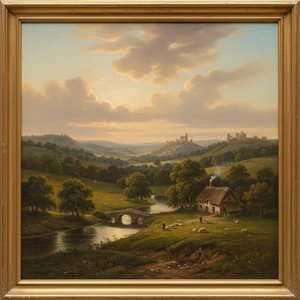
Landscape with a Ruined Tower
 Oil On Canvas
- WallArt
- Romantic Pastoral
 100.0 x 125.0 cm
 National Trust
 Leer más
Giclée / Impresión de arte
Impresiones giclée o en lienzo de calidad de museo con producción rápida y opciones de acabado flexibles. ( Encargar reproducción pintada a mano Comprar descarga)




P118B $10

P118H $10

P118W $10

P438Z $10

P508JH $12

P508YH $12

P805H $10

P805Z $10

P919BZ $10

P919G $10

P919XJ $10

P959ZH $10

P968JZ $12

W106C $8

W218G $10

W218JH $8

W218Y $10

W307PJ $10

W316G $10

W316PJ $8

W316Y $10

W398PJ $8

W4111J $10

W500HY $15

W500JH $15

W692G $12

W849H $8

W940BG $15

W953PJ $8




Elija entre nuestros tamaños predefinidos que respetan las proporciones originales de la obra.

Puede introducir sus propias dimensiones para adaptarse a un marco o espacio específico. Si el tamaño seleccionado no coincide con las proporciones de la imagen original, recortaremos la obra de arte o extenderemos la imagen con un borde con efecto espejo o de color sólido. Se enviará una maqueta digital para su aprobación antes de que comience la producción.
Tenga en cuenta que la vista previa en pantalla no refleja el recorte o la extensión real. Solo la maqueta mostrará con precisión la composición final.
Aunque existen tamaños personalizados, recomendamos seleccionar una dimensión de la lista predefinida para preservar las proporciones originales.
Envío a todo el mundo () en 2 semanas en lugar de las 4/5 semanas estándar. (21 agosto)

Envío exprés gratuito a todo el mundo

Lienzo de lino de alta calidad

Seguro de envío completo

Garantía de reembolso de aranceles aduaneros

Garantía de fidelidad cromática exacta

Política de devolución de 60 días (solo por defectos)

Garantía de devolución del 100% del dinero

Oferta por volumen
 La opción de vidrio solo está disponible en tamaños inferiores a 110 cm.

Landscape with a Ruined Tower
Giclée / Impresión de arte
Tamaño de la reproducción
-


Precio total
$ 80
Descripción de la pieza
George Barret the Elder’s “Landscape with a Ruined Tower”: A Vision of English Pastoral
“Landscape with a Ruined Tower,” painted circa 1762-1784 by George Barret the Elder, is more than just a depiction of a rural scene; it's a carefully constructed meditation on time, memory, and the fading grandeur of the English countryside. Barret, an Irish artist who established himself as a leading figure in London’s art world, masterfully captures a moment suspended between decay and enduring beauty, reflecting the philosophical currents of his era – particularly the influence of Edmund Burke's exploration of the sublime.
The painting immediately draws the eye to the imposing ruin itself: a weathered tower rising from a gently sloping hillside, partially obscured by a dense copse of trees. Its stones, rendered in muted ochres and browns, speak of centuries spent exposed to the elements, hinting at forgotten histories and lost power. The tower isn’t merely a structural element; it's a potent symbol – a visual representation of decline, yet simultaneously imbued with an undeniable sense of solemn dignity. This deliberate juxtaposition is central to Barret’s artistic vision.
A Painterly Echo of Burke’s Sublime
Barret’s approach to landscape painting was profoundly shaped by Edmund Burke's philosophical treatise, *A Philosophical Enquiry into the Origin of Our Ideas of the Sublime and Beautiful*. Burke argued that experiences of awe and terror – what he termed the “sublime” – could be found not just in dramatic events but also in the contemplation of vastness, decay, and solitude. Barret translates this philosophical concept onto canvas with remarkable skill.
Notice how the artist employs atmospheric perspective—the subtle blurring of distant elements to create a sense of depth and recession. The hazy blue sky, punctuated by wisps of cloud, contributes to the painting’s overall mood of melancholy and contemplation. The careful use of light and shadow further emphasizes the tower's weathered state, highlighting its vulnerability against the backdrop of the seemingly eternal landscape. This isn’t a vibrant celebration of nature; it’s an exploration of its quieter, more profound aspects.
Details of Technique and Composition
Barret was initially influenced by engravings of classical Italianate scenes, reworking them with his own distinctive style. The composition is carefully balanced, drawing the eye towards the tower while simultaneously establishing a sense of spaciousness. The placement of the trees, the gentle curve of the hillside, and the distant body of water all contribute to this harmonious arrangement.
The artist’s brushwork is remarkably controlled, particularly in rendering the textures of stone and foliage. He employs a delicate layering technique—thin glazes of paint applied over dry underlayers—to achieve a luminous quality that captures the subtle nuances of light and shadow. The details are meticulously observed, from the individual stones of the tower to the leaves rustling in the breeze. This attention to detail elevates the painting beyond mere representation, transforming it into a carefully considered work of art.
Symbolism and Emotional Resonance
Beyond its technical merits, “Landscape with a Ruined Tower” resonates deeply on an emotional level. The ruined tower evokes a sense of loss—the passing of time, the decline of empires, and the inevitable decay of all things. Yet, it also possesses a certain beauty in its weathered state, suggesting that even in ruin, there is still value to be found.
The painting invites us to contemplate our own mortality and the fleeting nature of existence. It’s a poignant reminder that beauty can be discovered not only in moments of triumph but also in the quiet contemplation of decay. It's a timeless image, speaking to universal themes of memory, loss, and the enduring power of the natural world – making it a compelling subject for collectors and interior designers seeking pieces with depth and emotional resonance.
Biografía del artista
George Barret Sr.: Vida y Legado
- Nacido: Entre 1728 y 1732 en Libertyville, Irlanda, hijo de un comerciante de telas.
- Inicialmente aprendiz de sastre antes de descubrir su talento artístico.
- Comenzó la formación formal en dibujo en la Academia de Robert West en Dublín alrededor de 1747, patrocinado por la Royal Dublin Society.
- Posteriormente enseñó dibujo en la misma academia, demostrando una temprana promesa y habilidad.
- Una amistad formativa con Edmund Burke, forjada durante el tiempo de Burke en Trinity College, Dublín, sería crucial más adelante en su vida.
Desarrollo Artístico Temprano e Influencias
- Las primeras pinturas de Barret a menudo presentaban paisajes clásicos y figuras mitológicas.
- Influenciado por: Los escritos filosóficos de Edmund Burke, particularmente *A Philosophical Enquiry into the Origin of Our Ideas of the Sublime and Beautiful*, que informaron su enfoque artístico del paisaje.
- Inicialmente trabajó re-elaborando grabados de escenas italianas clásicas por artistas como Claude Lorrain, demostrando una sólida base en estilos establecidos.
- A pesar de representar paisajes italianos, no hay evidencia de que él mismo haya viajado a Italia.
Traslado a Londres y Ascenso a la Prominencia
- En 1762, Barret se mudó a Londres en busca de mayores oportunidades artísticas.
- Rápidamente ganó reconocimiento como un destacado artista paisajista del período.
- Exhibió en la Sociedad de Artistas de Gran Bretaña y atrajo el patrocinio de destacados coleccionistas de arte.
- Logro Clave: En 1768, Barret fue uno de los miembros fundadores que abandonaron la Sociedad de Artistas para establecer la Royal Academy – un momento crucial en la historia del arte británico.
Estilo y Temas Artísticos
- El estilo de Barret evolucionó desde paisajes italianos idealizados hasta representaciones más naturalistas de paisajes ingleses e irlandeses.
- Viajó extensamente por Inglaterra, Gales, Escocia e Irlanda, realizando encargos y capturando la belleza de diversos paisajes.
- Temas comunes incluían vistas idílicas, campiña pintoresca, cascadas (como su famosa *The Powerscourt Waterfall*), y representaciones topográficas de propiedades y fincas.
- Sus pinturas a menudo presentaban figuras dentro del paisaje, agregando una sensación de escala y narrativa.
Vida Posterior y Patronazgo
- Sufrió de asma, lo que lo llevó a trasladarse a Westbourne Green en 1772 por razones de salud.
- A pesar de obtener ingresos sustanciales, fue descrito como “derrochador” con el dinero y ocasionalmente enfrentó dificultades financieras.
- Continuo Apoyo: Edmund Burke permaneció un amigo leal y asistió a Barret financieramente y profesionalmente.
- En 1782, Burke recomendó a Barret para el puesto de Pintor Maestro del Hospital de Chelsea, cargo que ocupó hasta su muerte en 1784.
Legado y Significado Histórico
- Aunque su viuda e hijos quedaron sin recursos tras su muerte, la Royal Academy proporcionó una pequeña pensión.
- El trabajo de Barret representa una transición significativa en la pintura paisajística británica, pasando de la imitación clásica a un estilo más distintivamente nacional.
- Sus pinturas brindan información valiosa sobre los paisajes y la vida aristocrática del siglo XVIII.
- Muchas de sus obras ahora se encuentran en colecciones destacadas, incluyendo la Galería Nacional de Irlanda y el Centro Yale para el Arte Británico.

George Barrett el Viejo
1732 - 1784 , Irlanda
Datos clave
- Artistas Que Influyeron En Este Artista: ['Claude Lorrain']
- Fecha De Muerte: 1784
- Fecha De Nacimiento: 1732
- Lugar De Nacimiento: Libertyville, Irlanda
- Movimiento Artístico O Estilo: Romanticismo
- Nacionalidad: Irlandés
- Nombre Completo: George Barret el Mayor
- Obras Notables:
- La Cascada de Powerscourt
- Vista del Parque Southwick
- Llyn Nantlle
- North Side of Danson
Artículos relacionados

Georges Braque: Las 25 Obras Maestras del Cubismo y su Legado en el Arte Moderno
Descubre las 25 obras maestras de Georges Braque, pionero del cubismo. Explora su innovadora técnica, colores y el legado del arte moderno francés. Reproducciones de alta calidad en OriginalUniqueArt.com. ¡Encuentra tu inspiración!
George Barret the Elder: Pioneering British Pastoral Painting & Landscape's Rise
Explore the life & art of George Barret Sr., a pioneer of British pastoral painting. Discover his influence on Romantic landscape art, patronage, and collecting tips from OriginalUniqueArt.

Georges Seurat: Las 25 Obras Maestras del Pionero Puntillista | OriginalUniqueArt
Descubre las 25 obras maestras de Georges Seurat, el innovador del puntillismo. Explora su técnica única, colores vibrantes y legado artístico en OriginalUniqueArt.com. Reproducciones de arte de museo para tu hogar.
Los 10 Paisajes Más Icónicos de la Historia del Arte | OriginalUniqueArt
Descubre los 10 paisajes más emblemáticos de la historia del arte, desde Monet a Van Gogh. Explora su significado, técnica y belleza atemporal. Encuentra reproducciones de alta calidad e inspira tu hogar con OriginalUniqueArt.com.

Idyllic Visions: Exploring the Pastoral Scene in Art History – From Arcadia to Modern Interpretations
Explore the captivating history of pastoral art from classical Arcadia to modern masterpieces. Discover key artists like Millet & Cole at OriginalUniqueArt. Find serene landscape paintings for your home.



