

 Enviar
 Compartir
 Detalles

 Descargar
 Similares
 Presentación de diapositivas
 Estadísticas
Boschi Di Stefano Home: Studio


 Ver más
Reproducción al óleo hecha a mano
Óleo sobre lienzo pintado a mano en el tamaño y marco de su elección, realizado por encargo por nuestros artistas. ( Cambiar a Impresión Cambiar a imagen digital)




































Elija entre nuestros tamaños predefinidos que respetan las proporciones originales de la obra.

Puede ingresar sus propias dimensiones para adaptarse a un marco o espacio específico. Si el tamaño seleccionado no coincide con las proporciones de la imagen original, recortaremos la obra o extenderemos la pintura con elementos adicionales pintados a mano. Se le enviará una maqueta digital para su aprobación antes de comenzar la producción.
Tenga en cuenta que la vista previa en pantalla no refleja el recorte o la extensión reales. Solo la maqueta mostrará con precisión la composición final.
Si bien existen tamaños personalizados, recomendamos seleccionar una dimensión de la lista predefinida para preservar las proporciones originales.
Tras realizar el pedido, el equipo de OriginalUniqueArt.com enviará un correo electrónico al cliente para solicitar instrucciones y proporcionarle una vista previa del boceto.
Envío a todo el mundo () en 3-4 semanas en lugar de las 5 semanas estándar. (13 septiembre). Sin comprometer la calidad.

Envío exprés gratuito a todo el mundo

Lienzo de lino de alta calidad

Seguro de envío total

Garantía de reembolso de impuestos aduaneros

Garantía de fidelidad cromática exacta

Política de devolución de 100 días (solo por defectos)

Garantía de devolución del 100% del dinero

Descuento por cantidad
 La opción de vidrio solo está disponible en tamaños inferiores a 110 cm.

Boschi Di Stefano Home: Studio
Técnica de reproducción
Dimensiones de la reproducción
-


Precio total final
$ 300
Subject and Setting
The photograph captures a quiet, intimate studio in the Boschi di Stefano home, where Gabriele Carelli’s hand‑painted reproductions find their place. A modest table sits at the center, surrounded by three chairs that hint at a gathering of artists or patrons. The walls are adorned with Carelli’s own landscape canvases, each one echoing the rolling hills and luminous skies he once painted in Sicily and Greece. A vase, a book, a bowl, and a clock punctuate the scene, suggesting both everyday life and the disciplined rhythm of creative work.Artistic Style and Technique
Carelli’s technique marries meticulous realism with an almost lyrical softness that invites the eye to linger. In this studio setting, his landscapes are rendered in delicate washes of ochre and sea‑foam green, their edges softened by a subtle glazing that gives depth without harsh contrast. The black‑and‑white photograph emphasizes texture: the grain of canvas, the worn wood of the table, the faint shadows cast by the clock’s hands. This interplay between light and shadow mirrors Carelli’s own practice of layering translucent pigments to achieve atmospheric effects.Historical Context and Symbolism
Created in 1982, the image reflects a period when Italian art was revisiting its Romantic past while embracing contemporary sensibilities. Carelli, born in Naples in 1821, had spent his career traveling with the Duke of Devonshire, absorbing Mediterranean vistas that later informed his palette. The studio itself becomes a symbol of continuity: a space where tradition meets modernity, where the artist’s legacy is preserved through reproductions that echo the original landscapes he loved. The clock above the table serves as a quiet reminder of time’s passage—both in Carelli’s life and in the enduring appeal of his work.Emotional Resonance and Interior Design Appeal
For collectors, this photograph offers more than visual beauty; it conveys an atmosphere of contemplative artistry. The gentle arrangement of objects invites viewers to imagine themselves within the scene, perhaps sketching beside a window or sipping tea while admiring a landscape that feels both familiar and distant. For interior designers, the composition provides a versatile reference: the muted tones and balanced layout can inspire wall treatments, furniture placement, or curated art displays that evoke warmth, creativity, and timeless elegance. Whether displayed in a modern loft or a classic study, Carelli’s studio becomes a focal point that enriches any space with its quiet, enduring charm.Biografía del artista
Early Life and Artistic Foundations
Gabriele Carelli, a name synonymous with the evocative beauty of Italian landscapes, was born in Naples in 1821. His lineage carried within it a rich artistic heritage; his father, Raffaele Carelli, was himself a respected painter associated with the prestigious “Scuola di Posillipo,” a loose collective of artists dedicated to capturing the sublime essence of the Neapolitan countryside. Gabriele’s formative years were deeply intertwined with this familial legacy, absorbing not only technical skills but also a profound appreciation for the region's light, color, and atmospheric qualities. His early training was primarily under his father, providing him with a solid foundation in traditional painting techniques – watercolor being particularly central to his developing style. This initial immersion instilled within him a sensitivity to detail and an understanding of how to translate the fleeting beauty of nature onto canvas.The Influence of the School of Posillipo and Early Travels
Gabriele’s artistic journey was inextricably linked to the “Scuola di Posillipo.” This influential group, centered in Naples, championed a distinct approach to landscape painting – one that prioritized capturing the *feeling* of a place rather than merely replicating its visual appearance. They sought to portray the light and atmosphere with an immediacy and emotional resonance, often employing loose brushstrokes and vibrant color palettes. Raffaele Carelli’s connections within this circle proved invaluable, exposing Gabriele to innovative techniques and artistic philosophies. Crucially, in 1847, Gabriele embarked on a significant chapter of his career: he accompanied the 6th Duke of Devonshire on a grand tour encompassing Sicily, Greece, Asia Minor, and Constantinople. This immersive experience dramatically broadened his artistic horizons, introducing him to diverse landscapes – from the sun-drenched shores of the Mediterranean to the rugged mountains of Anatolia. The meticulous watercolors he produced during this period are testaments to his ability to quickly capture the essence of a scene and convey its unique character.Notable Works and Royal Patronage
Gabriele Carelli’s artistic output spanned several decades, characterized by a consistent focus on landscape painting. He was particularly celebrated for his watercolor works, which possessed a remarkable luminosity and immediacy. Among his most recognized pieces are the watercolors of “Ruins of Paestum,” currently housed in the Palace of Capodimonte in Naples, and "Inside the Sacristy of the Church of S. Maria del Parto with a Monument to Jacopo Sannazzaro," also held within the palace’s collection. His work gained considerable recognition during his time in London, where he exhibited frequently from 1866 until 1892. It was during this period that he caught the eye of Queen Victoria herself, who became a devoted patron. This royal endorsement significantly elevated his profile and ensured that his paintings would be included in the prestigious Royal Collection at Osborne House and Windsor Castle – a testament to their enduring beauty and artistic merit.Legacy and Artistic Significance
Gabriele Carelli’s contribution to Italian landscape painting is significant, not only for his individual talent but also for his association with the “Scuola di Posillipo.” He helped to solidify this group's distinctive style, characterized by its emphasis on capturing atmosphere and emotion. His work stands as a beautiful example of 19th-century plein air painting, reflecting both the influence of Italian artistic traditions and the broader European trends of the time. He skillfully blended observation with imagination, creating landscapes that are not merely representations but rather evocative glimpses into the soul of Italy. Gabriele Carelli passed away in 1900, leaving behind a rich legacy of watercolor paintings that continue to captivate viewers with their beauty and sensitivity. His work remains an important part of the artistic heritage of Naples and beyond.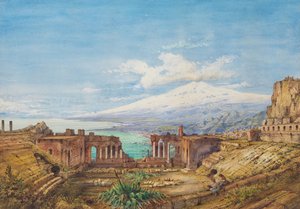
Gabriele Carelli
1821 - 1900 , Italia
Datos clave
- Artistic Movement Or Style: Escuela de Posillipo
- Artists Or Movements Influenced By This Artist: ['Escuela de Posillipo']
- Artists Who Influenced This Artist: ['Raffaele Carelli']
- Date Of Birth: 1821 Nápoles, Italia
- Date Of Death: 1900
- Full Name: Gabriele Carelli
- Nationality: Italiano
- Notable Artworks:
- Interior sacristía
- Ruinas Paestum
- Place Of Birth: Nápoles, Italia
Artículos relacionados

Evoking Nature's Sublime: A Comprehensive Exploration of 19th-Century Landscape Painting
Explore the captivating world of 19th-century landscape painting! Discover renowned artists like Friedrich & Monet, key movements, and find the perfect artwork to bring nature's serenity into your home. Expert insights at OriginalUniqueArt.

Evocations of Place: A Historical Journey Through Landscape Art
Explore the rich history of landscape art with OriginalUniqueArt. Discover renowned artists, movements like Impressionism & Romanticism, and expert guidance for collecting timeless pieces. Find your perfect serene escape today!

John Constable: Las 25 Obras Maestras del Paisaje Inglés | OriginalUniqueArt
Descubre las 25 obras maestras de John Constable, el pintor romántico inglés que capturó la belleza del paisaje. Explora su técnica, historia y significado en OriginalUniqueArt.com. Reproducciones de arte de alta calidad para tu hogar.

Paisajes Románticos: 10 Obras Maestras que Definieron un Movimiento Artístico
Descubre los 10 paisajes románticos más influyentes de artistas como Caspar David Friedrich y Turner. Explora la belleza, el simbolismo y las técnicas del movimiento romántico. Reproducciones de arte exclusivas en OriginalUniqueArt.com.

Dante Gabriel Rossetti: Las 25 Obras Maestras del Prerrafaelismo | OriginalUniqueArt
Descubre las 25 obras maestras de Dante Gabriel Rossetti, el máximo exponente del Prerrafaelismo. Explora su simbolismo, retratos victorianos y la belleza femenina en lienzos inolvidables. Reproducciones de arte exclusivas en OriginalUniqueArt.com.