

 Vista previa
 Compartir
 Compartir
 Ver detalles
 Guía
Guía

 Descargar
 Ver artículos similares
 Radiografía
 Presentación de diapositivas
 Estadísticas
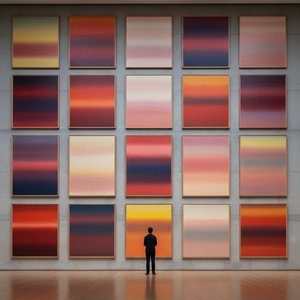
Warm Chromatics
 Acrylic On Canvas
- WallArt
- Orphism
 1912
1912- Modern
 105.0 x 105.0 cm
 Leer más
La obra de arte que se muestra en esta página está protegida por las leyes de propiedad intelectual, lo que significa que no podemos crear ni vender legalmente una reproducción idéntica. Esta protección se hace cumplir en virtud de acuerdos internacionales como el Convenio de Berna y por las leyes nacionales, incluidas aquellas establecidas por el Ley de derechos de autor de los EE. UU. - Título 17.
Este método cumple plenamente con las normativas de derechos de autor, ya que no implica la copia ni la duplicación de la obra protegida. En su lugar, se trata de una reinterpretación creativa: una nueva pintura influenciada por la original, pero que no es idéntica a ella.
Giclée / Impresión de arte
Impresiones giclée o en lienzo de calidad de museo con producción rápida y opciones de acabado flexibles. ( Encargar reproducción pintada a mano Ver versión en imagen digital)




P118B €10

P118H €10

P118W €10

P438Z €10

P508JH €12

P508YH €12

P805H €10

P805Z €10

P919BZ €10

P919G €10

P919XJ €10

P959ZH €10

P968JZ €12

W106C €8

W218G €10

W218JH €8

W218Y €10

W307PJ €10

W316G €10

W316PJ €8

W316Y €10

W398PJ €8

W4111J €10

W500HY €15

W500JH €15

W692G €12

W849H €8

W940BG €15

W953PJ €8




Elija entre nuestros tamaños predefinidos que respetan las proporciones originales de la obra.

Introduzca el ancho y el alto que necesite para adaptarse a su marco o pared. Una impresión solo puede recortarse, nunca hacerse más grande que la imagen original, por lo que un tamaño con una forma distinta perderá parte de la obra. Le enviaremos una maqueta digital para su aprobación antes de realizar cualquier impresión. La imagen que se muestra en esta página no refleja el recorte real; solo la maqueta lo hace.
Envío a todo el mundo () en 2 semanas en lugar de las 4/5 semanas estándar. (23 octubre)

Envío exprés gratuito a todo el mundo

Lienzo de lino de alta calidad

Seguro de envío completo

Garantía de reembolso de impuestos aduaneros

Garantía de fidelidad cromática exacta

Política de devolución de 100 días (solo por defectos)

Garantía de devolución del 100% del dinero

Oferta por volumen
 La opción de vidrio solo está disponible en tamaños inferiores a 110 cm.

Warm Chromatics
Giclée / Impresión de arte
Tamaño de la reproducción
-


Precio total
€ 70
František Kupka’s ‘Warm Chromatics’: A Pioneering Exploration of Orphism
“Warm Chromatics,” painted in 1912 by František Kupka, stands as a pivotal work in the nascent movement of Orphism. This vibrant canvas, measuring 105 x 105 cm, immediately captivates with its audacious use of color and form – a radical departure from the representational traditions that dominated European art at the turn of the century. Kupka, a key figure in the development of abstract art, was driven by a profound desire to capture not just what he *saw*, but rather the very essence of color itself, anticipating movements like Cubism and Fauvism decades before their formal emergence.
- Orphism’s Genesis: The painting exemplifies Orphism, a style developed by Kupka and his contemporaries that prioritized the visual impact of pure color and geometric forms. Rejecting traditional perspective and illusionistic techniques, these artists sought to create purely aesthetic compositions based on the emotional resonance of color combinations.
- Technique & Materials: Executed in oil on canvas, “Warm Chromatics” showcases Kupka’s meticulous layering of pigment. The artist employed a technique of ‘alla prima,’ applying paint directly onto the canvas with broad brushstrokes and rapid gestures, building up complex color relationships through successive glazes. This approach maximized luminosity and saturation, characteristic of Orphism's emphasis on vibrant hues.
A Symphony of Color: Deconstructing Form
The composition itself is a carefully orchestrated dance of chromatic elements. The central focus is a flower rendered in bold reds and purples, immediately drawing the eye with its intensity. Surrounding it are three additional flowers – one pink, one orange, and one green – each contributing to the overall harmonic tension. Kupka deliberately deconstructed traditional floral representation, reducing forms to their essential color components. The overlapping planes and ambiguous spatial relationships contribute to a sense of dynamism and movement, reflecting the artist’s interest in capturing fleeting visual sensations.
- Color Theory: Kupka was deeply influenced by contemporary theories of color, particularly those of Michel Eugène Chevreul, who explored the principles of simultaneous contrast. The juxtaposition of complementary colors – red and green, orange and blue – creates a visually stimulating effect, enhancing the vibrancy and depth of the painting.
- Abstraction as Emotion: The deliberate abstraction serves not merely as an aesthetic exercise but as a vehicle for expressing emotional states. The intense color palette evokes feelings of passion, energy, and perhaps even spiritual yearning—reflecting Kupka’s own philosophical explorations.
Historical Context & Symbolism
Created in 1912, “Warm Chromatics” emerged during a period of immense artistic and intellectual ferment. The rise of modernism challenged established norms, and artists like Kupka were at the forefront of this revolution. While the painting lacks overt symbolic meaning – a hallmark of Orphism – it can be interpreted as an exploration of the fundamental building blocks of visual experience: color. The flower itself, a recurring motif in Kupka’s work, may represent the ephemeral beauty of nature or the blossoming of artistic creativity.
Artist Biography Snippet: František Kupka (1871-1957) was a pioneer of abstraction, his early works demonstrating a gradual shift from historical themes to increasingly non-representational forms. His time in Paris proved crucial, exposing him to the radical ideas circulating within the artistic community.A Timeless Masterpiece: Reproduction & Collection
"Warm Chromatics" by František Kupka is more than just a painting; it’s a testament to the power of color and form. A hand-painted reproduction offers an unparalleled opportunity to experience the full impact of this seminal work in your own space. OriginalUniqueArt's meticulous reproductions capture every nuance of Kupka’s technique, ensuring that you possess a faithful representation of this important piece of art history.
Preguntas y respuestas
¿Cuál es la técnica y la fecha de creación de "Warm Chromatics" de František Kupka?
La técnica de "Warm Chromatics" de František Kupka es Acrylic On Canvas, y la obra data de 1912.
¿Cuál es el color dominante de "Warm Chromatics" de František Kupka?
El color dominante de "Warm Chromatics" de František Kupka es Phthalo Green (#2d291d).
¿De qué está hecho "Warm Chromatics"?
"Warm Chromatics" está ejecutada en Acrylic On Canvas.
Biografía del artista
**Primeros años y formación**
František Kupka, un renombrado pintor y artista gráfico checo, nació el 23 de septiembre de 1871 en Opočno, Bohemia oriental, Austria-Hungría. De 1889 a 1892, estudió en la Academia de Bellas Artes de Praga, centrándose en temas históricos y patrióticos. Posteriormente, se matriculó en la Academia de Bellas Artes de Viena, concentrándose en temas simbólicos y alegóricos.**Evolución artística e influencias**
El estilo artístico de Kupka evolucionó del realismo al arte abstracto puro, influenciado por su participación con el teosofía y la filosofía oriental. En 1894, se estableció en París, asistiendo brevemente a la Académie Julian y estudiando con Jean-Pierre Laurens en la École des Beaux-Arts.**Obras destacadas y contribuciones**
- El coloreado (65 x 54 cm, Museo Solomon R. Guggenheim, Nueva York, Estados Unidos), una representación abstracta de un desnudo femenino, que muestra el modo audaz de representación figurativa de Kupka.
- Alrededor de un punto (el Museo de Arte Moderno de París), una obra que se desvía de la habitual difuminación de fronteras de Kupka, con bordes definidos y explorando las teorías de la luz y el color.
**Exposiciones y legado**
Kupka fue miembro fundador de Abstraction-Création en 1931. Su obra se incluyó en la exposición "Cubismo y arte abstracto" en el Museo de Arte Moderno de Nueva York en 1936. Se llevó a cabo una retrospectiva de su obra en la Galerie Mánes en Praga en 1946.- ver las obras de frantisek kupka en OriginalUniqueArt
- explore ms. kupka entre vertical (expresionismo abstracto)
- Descubra más sobre la vida y obra de františek kupka en wikipedia: wikipedia
**Museos con obras de frantisek kupka**
- Museo Solomon R. Guggenheim (Nueva York, Estados Unidos)
- El Museo de Arte Moderno de París (París, Francia)
- Galerie Mánes (Praga, República Checa)

František Kupka
1871 - 1957 , República Checa
Datos clave
- Artistas Influyentes: ['Karl Wilhelm Diefenbach']
- Fecha De Fallecimiento: 24 de junio de 1957
- Fecha De Nacimiento: 23 de septiembre de 1871
- Lugar De Nacimiento: Opava, República Checa
- Movimiento Artístico: Cubismo Orfico, Abstracción
- Nacionalidad: Checo
- Nombre Completo: František Kupka
- Obras Notables:
- El coloreado
- Alrededor de un punto
Artículos relacionados
Mark Rothko: Las 25 Obras Maestras que Definen la Expresión Abstracta | OriginalUniqueArt
Descubre las 25 obras maestras de Mark Rothko, pionero del expresionismo abstracto. Explora la historia, el significado y los colores vibrantes que definen su arte emocional. Reproducciones de alta calidad en OriginalUniqueArt.com.

Abstracción Geométrica: 10 Obras Maestras que Transformaron el Arte Moderno | OriginalUniqueArt
Descubre las 10 obras maestras de la abstracción geométrica que revolucionaron el arte moderno. Explora a Mondrian, Malevich y Kandinsky en OriginalUniqueArt.com. Reproducciones de alta calidad para tu hogar.

Beyond Form & Color: Geometric Abstraction's Evolution in 20th/21st Century Art
Explore the evolution of geometric abstraction from Cubism to contemporary art. Discover key artists like Malevich & Mondrian, investment insights, and expert collecting advice at OriginalUniqueArt.

Kandinsky: Las 25 Obras Maestras del Pionero de la Abstracción | OriginalUniqueArt
Descubre las 25 obras maestras de Wassily Kandinsky, pionero del arte abstracto. Explora su expresionismo, composiciones únicas y la historia detrás de cada cuadro. Reproducciones de alta calidad para decorar tu hogar con arte moderno en OriginalUniqueArt.com.

Expresionismo Abstracto: 10 Obras Maestras que Transformaron el Arte |
Descubre las 10 obras maestras del Expresionismo Abstracto: Pollock, Rothko y más. Explora la historia, técnica y significado de estos lienzos icónicos. Reproducciones de arte exclusivas en .


