

 Vista previa
 Compartir
 Compartir
 Ver detalles
 Guía
Guía

 Descargar
 Ver artículos similares
 Radiografía
 Presentación de diapositivas
 Estadísticas
The Cathedral
 Tempera
- WallArt
- Orphic Cubism
 1913
1913- Modern
 150.0 x 180.0 cm
 Museo Kampa
 Leer más
Reproducción al óleo hecha a mano
Óleo sobre lienzo pintado a mano en el tamaño y marco de su elección, realizado por encargo por nuestros artistas. ( Cambiar a formato impreso Ver versión en imagen digital)




P118B $10

P118H $10

P118W $10

P438Z $10

P508JH $12

P508YH $12

P805H $10

P805Z $10

P919BZ $10

P919G $10

P919XJ $10

P959ZH $10

P968JZ $12

W106C $8

W218G $10

W218JH $8

W218Y $10

W307PJ $10

W316G $10

W316PJ $8

W316Y $10

W398PJ $8

W4111J $10

W500HY $15

W500JH $15

W692G $12

W849H $8

W940BG $15

W953PJ $8




Elija entre nuestros tamaños predefinidos que respetan las proporciones originales de la obra.

Puede ingresar sus propias dimensiones para adaptarse a un marco o espacio específico. Si el tamaño seleccionado no coincide con las proporciones de la imagen original, recortaremos la obra o extenderemos la pintura con elementos adicionales pintados a mano. Se le enviará una maqueta digital para su aprobación antes de comenzar la producción.
Tenga en cuenta que la vista previa en pantalla no refleja el recorte o la extensión reales. Solo la maqueta mostrará con precisión la composición final.
Si bien existen tamaños personalizados, recomendamos seleccionar una dimensión de la lista predefinida para preservar las proporciones originales.
Tras realizar el pedido, el equipo de OriginalUniqueArt.com enviará un correo electrónico al cliente para solicitar instrucciones y proporcionarle una vista previa del boceto.
Envío a todo el mundo () en 3-4 semanas en lugar de las 5 semanas estándar. (26 septiembre). Sin comprometer la calidad.

Envío exprés gratuito a todo el mundo

Lienzo de lino de alta calidad

Seguro de envío completo

Garantía de reembolso de impuestos aduaneros

Garantía de fidelidad cromática exacta

Política de devolución de 100 días (solo por defectos)

Garantía de devolución del 100% del dinero

Oferta por volumen
 La opción de vidrio solo está disponible en tamaños inferiores a 110 cm.

The Cathedral
Técnica de reproducción
Tamaño de la reproducción
-


Precio total
$ 300
A Vision of Spiritual Ascent
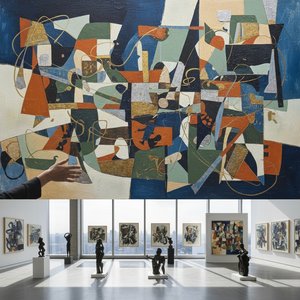
In the quiet transition between day and night, František Kupka’s 1913 masterpiece, “The Cathedral,” emerges as a profound meditation on the intersection of the earthly and the divine. This work is far more than a mere architectural study; it is a window into a soul seeking transcendence. The composition presents a deceptively simple depiction of a cathedral set against an expansive twilight sky, where the soaring spire and sturdy roof act as anchors for the viewer’s wandering gaze. As one contemplates the scene, scattered figures appear like pilgrims within the landscape, their presence suggesting a shared journey of introspection and spiritual longing. The painting captures a moment of stillness, inviting anyone who views it—whether an art enthusiast or a collector looking for a centerpiece—to pause and enter a state of quiet reverence.
The technical brilliance of Kupka’s approach lies in his mastery of Neo-Cubism and the luminous properties of tempera on canvas. Moving away from the fleeting light-play of the Impressionists, Kupka utilized fractured planes and geometric abstraction to reveal the underlying structure of reality. The use of tempera allows for a remarkable depth of color, where rich, saturated hues interact with subtle tonal variations to create an atmospheric weight. This technique gives the cathedral a physical presence that feels both monumental and ethereal, making it an ideal choice for interior spaces that require a sense of architectural grandeur and intellectual depth.
Symbolism and the Language of Color
Every brushstroke in “The Cathedral” serves a higher purpose, acting as a vessel for Kupka’s deep-seated philosophical inquiries. The artist’s palette is a deliberate study in contrasts, designed to evoke specific emotional responses. The dark blue of the sky does not merely represent nightfall; it embodies the depths of introspection and the vastness of the unknown. This coolness is sharply interrupted by the fiery red of the cathedral's roof, a hue that pulses with passion, vitality, and the heat of human existence. This tension between the contemplative blue and the energetic red creates a visual rhythm that keeps the eye moving, mirroring the very struggle between the mortal self and the eternal spirit.
For the interior designer or art lover, this painting offers a sophisticated way to introduce drama and balance into a room. The verticality of the cathedral spire provides a sense of height and aspiration, while the grounded, heavy tones of the architecture offer stability. It is a piece that speaks of transcendence—a reminder that even amidst the turbulent anxieties of the modern world, there remains a yearning for something greater. To possess a reproduction of this work is to bring a fragment of this historical and spiritual searching into one's own sanctuary, providing a constant source of inspiration and a profound focal point for any curated collection.
Biografía del artista
**Primeros años y formación**
František Kupka, un renombrado pintor y artista gráfico checo, nació el 23 de septiembre de 1871 en Opočno, Bohemia oriental, Austria-Hungría. De 1889 a 1892, estudió en la Academia de Bellas Artes de Praga, centrándose en temas históricos y patrióticos. Posteriormente, se matriculó en la Academia de Bellas Artes de Viena, concentrándose en temas simbólicos y alegóricos.**Evolución artística e influencias**
El estilo artístico de Kupka evolucionó del realismo al arte abstracto puro, influenciado por su participación con el teosofía y la filosofía oriental. En 1894, se estableció en París, asistiendo brevemente a la Académie Julian y estudiando con Jean-Pierre Laurens en la École des Beaux-Arts.**Obras destacadas y contribuciones**
- El coloreado (65 x 54 cm, Museo Solomon R. Guggenheim, Nueva York, Estados Unidos), una representación abstracta de un desnudo femenino, que muestra el modo audaz de representación figurativa de Kupka.
- Alrededor de un punto (el Museo de Arte Moderno de París), una obra que se desvía de la habitual difuminación de fronteras de Kupka, con bordes definidos y explorando las teorías de la luz y el color.
**Exposiciones y legado**
Kupka fue miembro fundador de Abstraction-Création en 1931. Su obra se incluyó en la exposición "Cubismo y arte abstracto" en el Museo de Arte Moderno de Nueva York en 1936. Se llevó a cabo una retrospectiva de su obra en la Galerie Mánes en Praga en 1946.- ver las obras de frantisek kupka en OriginalUniqueArt
- explore ms. kupka entre vertical (expresionismo abstracto)
- Descubra más sobre la vida y obra de františek kupka en wikipedia: wikipedia
**Museos con obras de frantisek kupka**
- Museo Solomon R. Guggenheim (Nueva York, Estados Unidos)
- El Museo de Arte Moderno de París (París, Francia)
- Galerie Mánes (Praga, República Checa)

František Kupka
1871 - 1957 , República Checa
Datos clave
- Artistas Influyentes: ['Karl Wilhelm Diefenbach']
- Fecha De Fallecimiento: 24 de junio de 1957
- Fecha De Nacimiento: 23 de septiembre de 1871
- Lugar De Nacimiento: Opava, República Checa
- Movimiento Artístico: Cubismo Orfico, Abstracción
- Nacionalidad: Checo
- Nombre Completo: František Kupka
- Obras Notables:
- El coloreado
- Alrededor de un punto
Artículos relacionados

Expresionismo Abstracto: 10 Obras Maestras que Transformaron el Arte |
Descubre las 10 obras maestras del Expresionismo Abstracto: Pollock, Rothko y más. Explora la historia, técnica y significado de estos lienzos icónicos. Reproducciones de arte exclusivas en .
Deconstruyendo la Forma y el Sentimiento: Una Guía para Coleccionistas de Arte Abstracto Contemporáneo
Guía experta para coleccionistas de arte abstracto contemporáneo. Descubra las tendencias actuales, valore obras clave y aprenda a construir una colección significativa con OriginalUniqueArt.

Jean Dominique Antony Metzinger: Pioneering Cubism & the Evolution of Abstract Form
Explore the life & work of Jean Metzinger, a pivotal Cubist painter and theorist. Discover his innovations in proto-Cubism, 'Du Cubisme,' and Crystal Cubism – a journey through modern art's evolution.

Abstracción Geométrica: 10 Obras Maestras que Transformaron el Arte Moderno | OriginalUniqueArt
Descubre las 10 obras maestras de la abstracción geométrica que revolucionaron el arte moderno. Explora a Mondrian, Malevich y Kandinsky en OriginalUniqueArt.com. Reproducciones de alta calidad para tu hogar.

Kandinsky: Las 25 Obras Maestras del Pionero de la Abstracción | OriginalUniqueArt
Descubre las 25 obras maestras de Wassily Kandinsky, pionero del arte abstracto. Explora su expresionismo, composiciones únicas y la historia detrás de cada cuadro. Reproducciones de alta calidad para decorar tu hogar con arte moderno en OriginalUniqueArt.com.


