Ver en contexto
 Enviar
 Compartir
 Detalles
 Guía
Guía

 Descargar
 Similares
 Radiografía
 Presentación de diapositivas
 Estadísticas
Michiel de Wael
 Óleo sobre lienzo
- Arte de pared
- Edad de Oro Holandesa
 1628
1628 118.0 x 95.0 cm
 Taft Museum of Art
 Ver más
Reproducción al óleo hecha a mano
Óleo sobre lienzo pintado a mano en el tamaño y marco de su elección, realizado por encargo por nuestros artistas. ( Cambiar a impresiones Cambiar a imagen digital)




P118B €10

P118H €10

P118W €10

P438Z €10

P508JH €12

P508YH €12

P805H €10

P805Z €10

P919BZ €10

P919G €10

P919XJ €10

P959ZH €10

P968JZ €12

W106C €8

W218G €10

W218JH €8

W218Y €10

W307PJ €10

W316G €10

W316PJ €8

W316Y €10

W398PJ €8

W4111J €10

W500HY €15

W500JH €15

W692G €12

W849H €8

W940BG €15

W953PJ €8




Elija entre nuestros tamaños predefinidos que respetan las proporciones originales de la obra.

Indique el ancho y el alto que necesite para adaptarse a su marco o pared. Al tratarse de una obra pintada a mano, si requiere un tamaño con una proporción distinta, el artista puede pintar un poco más alrededor de la imagen o recortarla ligeramente; usted elige. Le enviaremos una maqueta digital para su aprobación antes de comenzar la pintura. La imagen que se muestra en esta página no refleja el resultado real; solo la maqueta lo hace.
Tras realizar el pedido, el equipo de OriginalUniqueArt.com enviará un correo electrónico al cliente para solicitar instrucciones y proporcionarle una vista previa del boceto.
Envío a todo el mundo () en 3-4 semanas en lugar de las 5 semanas estándar. (26 octubre). Sin comprometer la calidad.

Envío exprés gratuito a todo el mundo

Lienzo de lino de alta calidad

Seguro de envío total

Garantía de reembolso de aranceles aduaneros

Garantía de fidelidad cromática exacta

Política de devolución de 100 días (solo por defectos)

Garantía de devolución del 100% del dinero

Descuento por cantidad
 La opción de vidrio solo está disponible en tamaños inferiores a 110 cm.

Michiel de Wael
Técnica de reproducción
Dimensiones de la reproducción
-


Precio total final
€ 263
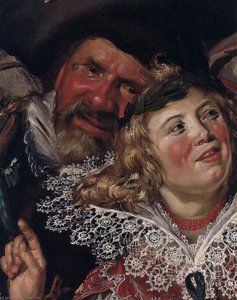
A Portrait of Dignified Resolve: Michiel de Wael by Frans Hals
Frans Hals’s portrait of Michiel de Wael, completed in 1628, isn't merely a likeness; it’s a carefully constructed tableau of status, wealth, and the quiet contemplation characteristic of the Dutch Golden Age. The painting immediately commands attention with its formal composition – De Wael occupies nearly the entire frame, an assertion of his importance within the social landscape of Haarlem. Yet, this formality isn't cold or austere; rather, it’s imbued with a palpable sense of humanity, achieved through Hals’s masterful manipulation of light and shadow, and most notably, his signature loose brushwork.
The subject himself is presented as a man of considerable standing – a brewer and civic guard captain. His dark velvet coat, rich in detail thanks to Hals' meticulous rendering of the fabric’s texture, speaks volumes about his prosperity. The voluminous white ruff collar, a fashionable extravagance of the period, further emphasizes his elevated position. He holds a small pouch or bag in his left hand – a subtle emblem of trade and wealth, hinting at the tangible rewards of his endeavors. But it's De Wael’s expression that truly captivates; a serious, almost melancholic gaze suggests an inner life, a thoughtful observer of the world around him. This isn’t a boisterous celebration of success, but rather a moment of quiet reflection – a rare and compelling quality in portraiture of this era.
The Language of Dutch Portraiture: Style and Technique
Hals's approach to portraiture was revolutionary for his time. He deliberately eschewed the meticulous detail favored by many of his contemporaries, opting instead for a vibrant, expressive style characterized by loose brushstrokes and an emphasis on capturing fleeting moments. This technique isn’t haphazard; it’s carefully controlled, creating a sense of immediacy and dynamism within the painting. Notice how Hals uses light to sculpt De Wael's face – strong directional lighting casts dramatic shadows that define the contours of his features, adding depth and volume. The subtle gradations in tone create an illusion of three-dimensionality, pulling the viewer into the scene.
The composition itself is a testament to Hals’s skill. The shallow perspective focuses primarily on De Wael's face and upper body, creating an intimate yet imposing presence. Linear elements – the precise lines of his clothing and the architectural background – are balanced by softer, more organic shapes within the folds of the fabric. This interplay between structure and fluidity is a hallmark of Hals’s style, lending a sense of both order and vitality to the painting.
Historical Context: A Glimpse into 17th-Century Haarlem
To fully appreciate this portrait, it's essential to understand the social and economic context in which it was created. The Dutch Golden Age (roughly 1600-1700) witnessed an unprecedented flourishing of art, commerce, and intellectual life. Haarlem, a thriving port city, became a center for brewing, trade, and civic engagement – industries that fueled the rise of prosperous merchants like De Wael. Portraits during this period weren’t simply representations of individuals; they were statements of social status, economic success, and civic responsibility.
The inclusion of symbolic elements—the pouch representing trade, the elaborate clothing signifying wealth—reinforces this message. Hals subtly communicates De Wael's position within the hierarchical structure of 17th-century society, while simultaneously capturing his individual character and personality. Further research reveals that Michiel de Wael was a prominent figure in Haarlem’s civic life, serving as captain of the St. George Civic Guard – a role that would have further elevated his status and contributed to the painting's significance.
Beyond the Canvas: Reproduction and Legacy
The original portrait, now housed at the Taft Museum of Art in Cincinnati, is a remarkable example of Hals’s genius. High-quality reproductions offer an opportunity to experience this masterpiece firsthand, bringing its rich colors, dramatic lighting, and profound emotional depth into any space. Consider how the painting's muted palette—dominated by dark browns and greys—creates a sense of gravitas and introspection, while subtle highlights on De Wael’s face draw attention to his thoughtful expression.
Frans Hals’s portrait of Michiel de Wael stands as a testament to the enduring power of art to capture not just likenesses but also the essence of human experience. It's a painting that invites contemplation, prompting us to consider the complexities of wealth, status, and the quiet dignity of a man navigating the challenges and triumphs of his time.
Preguntas y respuestas
¿Qué representa "Michiel de Wael" de Frans Hals I y qué atmósfera transmite?
"Michiel de Wael" de Frans Hals I representa retratística, arte holandés, siglo xvii, casaca de terciopelo, lechuguillas, hombre digno, retrato formal, edad de oro, con un ambiente Elegante. El tema y la atmósfera describen juntos la obra.
¿Dónde debería colgarse una reproducción de "Michiel de Wael" de Frans Hals I?
El formato Formato vertical de "Michiel de Wael" de Frans Hals I es ideal para un Salón principal. El formato y el espacio orientan conjuntamente la ubicación de una reproducción.
¿De dónde provienen los visitantes de "Michiel de Wael" de Frans Hals I?
La página Estadísticas de "Michiel de Wael" de Frans Hals I presenta las estadísticas de visitas públicas: visitas mensuales de esta obra, una comparación con las obras más vistas del artista y el origen de sus visitantes.
Biografía del artista
Frans Hals I: Una Vida en Pinceladas
Frans Hals I fue un pintor holandés nacido en Amberes, Bélgica, alrededor de 1580. Aunque su vida temprana permanece algo envuelta en el misterio, llegó a convertirse en una de las figuras más importantes de la Edad de Oro Holandesa, celebrado por su innovadora pintura de retratos y escenas de género.
Vida Temprana y Formación
Los detalles que rodean los primeros años de Hals son escasos. Se cree que recibió formación artística inicial en Amberes, un centro prominente para la pintura en ese momento. Sin embargo, debido a las tensiones religiosas y políticas, su familia se trasladó a Haarlem, en los Países Bajos. Se convirtió en miembro de la Gremio de San Lucas de Haarlem en 1610, marcando el comienzo formal de su carrera profesional.
Estilo Artístico y Desarrollo
Hals se distinguió por un estilo fresco y espontáneo. A diferencia de muchos de sus contemporáneos que favorecían el detalle meticuloso, Hals empleaba un pincelada suelta y expresiva. Esta técnica impregnaba sus pinturas con una sensación de inmediatez y vitalidad, capturando la personalidad y carácter de sus sujetos de una manera revolucionaria para su época.
- Sus retratos no eran simplemente representaciones; eran estudios psicológicos.
- Destacó en la representación de momentos fugaces: risas, conversaciones o contemplación.
- El uso de luz y sombra por parte de Hals añadía profundidad y dramatismo a sus composiciones.
Obras Notables
Si bien Hals produjo una amplia gama de obras, es mejor conocido por sus retratos. Algunas de sus pinturas más celebradas incluyen:
- El Caballero Risueño (1624) – Un ejemplo quintessential de su capacidad para capturar el carácter y el movimiento.
- Malle Babbe (c. 1633-1635) – Una representación impactante de una anciana, que muestra la habilidad de Hals para representar la edad y la personalidad.
- Retratos de los Regentes del Hogar de Ancianos en Haarlem (1664) - Demostrando su maestría en la pintura de grupo.
También creó escenas de género convincentes – representaciones de la vida cotidiana – que ofrecían vislumbres de la sociedad holandesa.
Influencias y Legado
Determinar las influencias directas de Hals es un desafío, ya que desarrolló un estilo altamente individual. Sin embargo, es probable que estuviera al tanto del trabajo de pintores flamencos anteriores como Pieter Bruegel el Viejo. Su enfoque innovador en la pintura de retratos tuvo un profundo impacto en las generaciones posteriores de artistas.
- Influyó a artistas como Adriaen Brouwer y Johannes Vermeer.
- Su énfasis en capturar la personalidad allanó el camino para retratos más íntimos y psicológicos.
- Artistas posteriores, incluidos los impresionistas, admiraron su pincelada suelta y su enfoque en la luz.
Significado Histórico
Frans Hals I desempeñó un papel crucial en la configuración de la pintura holandesa durante la Edad de Oro. Su obra refleja la prosperidad creciente y el individualismo de los Países Bajos en ese momento. Se alejó de la formalidad rígida hacia un estilo más naturalista y expresivo, dejando un legado perdurable en el mundo del arte.
Hoy en día, sus pinturas son muy buscadas y se pueden encontrar en importantes museos de todo el mundo, incluido el Museo Frans Hals en Haarlem, que alberga la colección más grande de su obra. Sus contribuciones continúan inspirando a los artistas y cautivando al público siglos después.

Frans Hals I
1580 - 1585 , Bélgica
Datos clave
- Artistic Movement Or Style: Edad Dorada Holandesa
- Artists Or Movements Influenced By This Artist:
- Adriaen Brouwer
- Johannes Vermeer
- Artists Who Influenced This Artist: ['Pieter Bruegel el Viejo']
- Date Of Birth: 1580
- Full Name: Frans Hals I
- Nationality: Holandés
- Notable Artworks:
- El Caballero Risueño
- Malle Babbe
- Retratos de los Regentes del Hogar de Ancianos
- Place Of Birth: Amberes, Bélgica
Artículos relacionados

Golden Light & Dutch Skies: The Timeless Magic of Dutch Golden Age Landscapes
Discover the breathtaking beauty of Dutch Golden Age landscapes. Explore the mastery of light, chiaroscuro, and 17th-century realism through an expert art history lens, celebrating the enduring legacy of the Dutch Masters for discerning collectors and art lovers.

Los 10 Maestros del Siglo de Oro Holandés: Arte, Historia y Decoración Exclusiva
Descubre los 10 imprescindibles del Siglo de Oro Holandés: Rembrandt, Vermeer y más. Explora la historia, técnica y belleza de estos lienzos clásicos. Encuentra reproducciones de arte exclusivas para decorar tu hogar en .

La Luz y la República: Innovación Artística en el Siglo de Oro Neerlandés
Descubra la innovación artística del Siglo de Oro Neerlandés. Explore las obras maestras de Rembrandt y Vermeer, técnicas revolucionarias y el legado perdurable de este florecimiento cultural. ¡Sumérjase en la luz y la belleza!

Reflejos de una Época Dorada: La Pintura Barroca Holandesa y la Innovación Cultural
Descubra la riqueza y el detalle de la pintura barroca holandesa del Siglo de Oro. Explore las obras maestras de Rembrandt, Vermeer y otros artistas clave. Análisis experto e historia cultural.

Frans Hals I: Innovation, Intimacy & the Dutch Golden Age Portrait
Explore the revolutionary portraiture of Frans Hals I, a master of the Dutch Golden Age. Discover his innovative techniques, captivating character studies & lasting impact on art history. Learn more at OriginalUniqueArt.