
 Vista previa
 Compartir
 Compartir
 Ver detalles

 Descargar
 Ver similares
 Radiografía
 Presentación de diapositivas
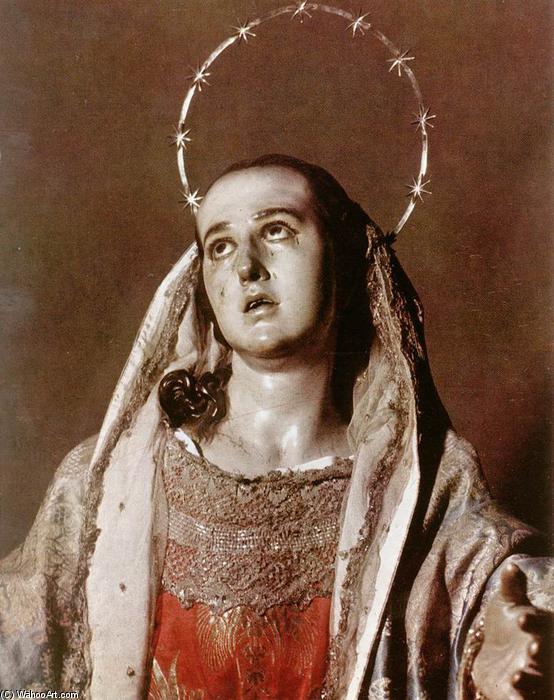
Dolorosa


 Leer más
Giclée / Impresión de arte
Impresiones giclée o en lienzo de calidad de museo con producción rápida y opciones de acabado flexibles. ( Encargar reproducción pintada a mano Comprar descarga)




































Elija entre nuestros tamaños predefinidos que respetan las proporciones originales de la obra.

Puede introducir sus propias dimensiones para adaptarse a un marco o espacio específico. Si el tamaño seleccionado no coincide con las proporciones de la imagen original, recortaremos la obra de arte o extenderemos la imagen con un borde con efecto espejo o de color sólido. Se enviará una maqueta digital para su aprobación antes de que comience la producción.
Tenga en cuenta que la vista previa en pantalla no refleja el recorte o la extensión real. Solo la maqueta mostrará con precisión la composición final.
Aunque existen tamaños personalizados, recomendamos seleccionar una dimensión de la lista predefinida para preservar las proporciones originales.
Envío a todo el mundo () en 2 semanas en lugar de las 4/5 semanas estándar. (13 agosto)

Envío exprés gratuito a todo el mundo

Lienzo de lino de alta calidad

Seguro de envío completo

Garantía de reembolso de aranceles aduaneros

Garantía de fidelidad cromática exacta

Política de devolución de 60 días (solo por defectos)

Garantía de devolución del 100% del dinero

Oferta por volumen
 La opción de vidrio solo está disponible en tamaños inferiores a 110 cm.

Dolorosa
Giclée / Impresión de arte
Tamaño de la reproducción
-


Precio total
$ 80
Biografía del artista
Francisco Salzillo: The Soul of Baroque Murcia
Francisco Salzillo y Alcaraz (12 May 1707 – 2 March 1783) was a Spanish sculptor, arguably the most representative image-maker of the 18th century and one of Spain’s greatest masters of the Baroque. He dedicated his entire artistic life to religious themes, primarily polychromed wood sculptures intended for processions commemorating Christ's Passion—particularly Semana Santa Murcia—creating hundreds of pieces that are dispersed throughout the Region of Murcia and some neighboring provinces. His legacy extends beyond mere craftsmanship; Salzillo embodies a profound connection between art and faith, reflecting the spiritual fervor of his time and cementing his place as an icon of Murcian artistic heritage. The devastation wrought by the Spanish Civil War (1936–1939) tragically erased many of Salzillo’s masterpieces, leaving only fragments of his extraordinary oeuvre to inspire awe and admiration.Early Life and Training
Born in Murcia to Nicolás Salzillo, a Neapolitan sculptor who had established a studio producing religious statues, Francisco Salzillo received his formative artistic education from his father's influence. This exposure to classical sculpture—particularly the works of Bernini—would profoundly shape Salzillo’s stylistic sensibilities. At the age of twenty he completed the statue of Saint Ignatius Loyola for Montepulciano Dominican Monastery, marking his debut as a sculptor and demonstrating an early aptitude for capturing emotion and conveying spiritual depth. The influence of Bernini's dramatic use of light and form served as a cornerstone of Salzillo’s artistic vision—a conviction that would permeate his subsequent creations throughout his life. Following his father’s death in 1727, Francisco assumed responsibility for managing the Salzillo family workshop alongside his brothers and sisters, fostering a tradition of artistic excellence that would endure throughout his life.The Founding of Academia Salzillo
Recognizing the importance of nurturing talent and disseminating knowledge, Salzillo established a small academy in Murcia in 1765. Though plagued by internal divisions among its memb- Initially focused on training artisans in traditional techniques
- Later expanded to include students interested in experimenting with new artistic approaches
- The Academy’s legacy continues to inspire Murcian artists today
Salzillo's Artistic Style: Baroque Humanism
Francisco Salzillo distinguished himself from many of his contemporaries through his unwavering devotion to Baroque aesthetics—characterized by dramatic lighting, opulent ornamentation, and an emphasis on emotional expression. Unlike sculptors focused solely on idealized forms, Salzillo imbued his figures with palpable humanity, capturing the nuances of human emotion and conveying profound spiritual contemplation. His sculptures are renowned for their realism, achieved through meticulous observation and skillful manipulation of materials—primarily polychromed wood—resulting in works that resonate powerfully with viewers. The technique of *estofado*, whereby surfaces were gilded and painted with vibrant colors using a complex layering process, exemplifies Salzillo’s mastery of artistic craftsmanship and elevates his sculptures to levels of sublime beauty. He sought to portray not merely physical likeness but also the inner spirit—a characteristic that distinguishes him from many other Baroque artists of his time.Major Achievements and Legacy
Salzillo's magnum opus remains the monumental *Dolorosa*—a polychromed wooden sculpture depicting Mary Magdalene weeping over Christ’s corpse—commissioned for the Iglesia de Jesús in Murcia. This ambitious undertaking showcases Salzillo’s unparalleled technical skill and artistic vision, capturing the pathos of grief with breathtaking precision. Similarly impressive is his Nativity Scene (*Belén*) housed in the Museo Salzillo, which comprises 556 figurines meticulously crafted from wood, clay, and card—a testament to Salzillo's dedication to portraying biblical narratives with profound emotional resonance. Furthermore, Salzillo’s sculptures adorn churches throughout Murcia and Albacete, including St Peter’s Cathedral and the Capuchin Monastery, establishing him as a dominant force in Murcian Baroque art. His influence extends beyond his own lifetime, inspiring subsequent generations of sculptors and shaping the artistic identity of Murcia—a region forever associated with Salzillo's enduring legacy. Despite the tragic loss of numerous masterpieces during the Spanish Civil War, Salzillo’s sculptures continue to inspire awe and admiration, ensuring that his contribution to art history remains vibrant and unforgettable.
Francisco Salzillo
1707 - 1783 , España
Datos clave
- Artistic Movement Or Style: Barroco
- Artists Who Influenced This Artist:
- Juan Martínez Montañés
- Gregorio Fernández
- Date Of Birth: 1707
- Date Of Death: 1783
- Full Name: Francisco Salzillo y Alcaraz
- Nationality: Español
- Notable Artworks:
- El Belén
- Dolorosa
- Place Of Birth: Murcia, España
Artículos relacionados

Goya: Las 25 Obras Maestras del Genio Español | Reproducciones de Arte en OriginalUniqueArt
Descubre las 25 obras maestras de Goya, el genio español. Explora retratos icónicos, 'Los Caprichos' y 'Las Pinturas Negras'. Reproducciones de arte en lienzo de alta calidad para decorar tu hogar con estilo. ¡Encuentra tu obra favorita en OriginalUniqueArt.com!

The Golden Age Reforged: Dramatic Realism & Religious Zeal in Spanish Baroque Art
Explore the dramatic world of Spanish Baroque art! Discover masters like Zurbarán & the powerful influence of religious zeal on painting techniques – a guide for collectors and enthusiasts.

Capturing Light and Soul: A Journey Through the Dramatic Mastery of Spanish Baroque Art
Explore the profound beauty of the Spanish Golden Age. From Velázquez's light to Zurbarán's devotion, discover the dramatic mastery and spiritual depth of Spanish Baroque masterpieces through our expert art history journey.

The Dramatic Flourish: Exploring the Baroque Movement's Enduring Legacy in Art History
Explore the dramatic world of Baroque art! Discover iconic artists like Caravaggio & Rubens, defining techniques, and its lasting impact on art history. Expert insights for collectors & enthusiasts at OriginalUniqueArt.

Francisco de Zurbarán: Mysticism, Realism & the Golden Age of Spanish Painting
Explore the captivating world of Francisco de Zurbarán, a master of Spanish Baroque painting. Discover his dramatic tenebrism, religious masterpieces like 'La Porciúncula,' and lasting influence on art history.

