Vista previa
 Compartir
 Compartir
 Ver detalles
 Guía
Guía

 Descargar
 Ver artículos similares
 Radiografía
 Presentación de diapositivas
 Estadísticas
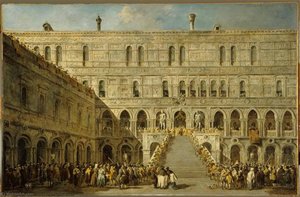
Landscape – Capriccio
 Acrylic On Canvas
- WallArt
- Venetian Twilight
 1780
1780 46.0 x 34.0 cm
 Galería Courtauld
 Leer más
Giclée / Impresión de arte
Impresiones giclée o en lienzo de calidad de museo con producción rápida y opciones de acabado flexibles. ( Encargar reproducción pintada a mano Ver versión en imagen digital)




P118B $10

P118H $10

P118W $10

P438Z $10

P508JH $12

P508YH $12

P805H $10

P805Z $10

P919BZ $10

P919G $10

P919XJ $10

P959ZH $10

P968JZ $12

W106C $8

W218G $10

W218JH $8

W218Y $10

W307PJ $10

W316G $10

W316PJ $8

W316Y $10

W398PJ $8

W4111J $10

W500HY $15

W500JH $15

W692G $12

W849H $8

W940BG $15

W953PJ $8




Elija entre nuestros tamaños predefinidos que respetan las proporciones originales de la obra.

Puede introducir sus propias dimensiones para adaptarse a un marco o espacio específico. Si el tamaño seleccionado no coincide con las proporciones de la imagen original, recortaremos la obra de arte o extenderemos la imagen con un borde con efecto espejo o de color sólido. Se enviará una maqueta digital para su aprobación antes de que comience la producción.
Tenga en cuenta que la vista previa en pantalla no refleja el recorte o la extensión real. Solo la maqueta mostrará con precisión la composición final.
Aunque existen tamaños personalizados, recomendamos seleccionar una dimensión de la lista predefinida para preservar las proporciones originales.
Envío a todo el mundo () en 2 semanas en lugar de las 4/5 semanas estándar. (21 septiembre)

Envío exprés gratuito a todo el mundo

Lienzo de lino de alta calidad

Seguro de envío completo

Garantía de reembolso de impuestos aduaneros

Garantía de fidelidad cromática exacta

Política de devolución de 100 días (solo por defectos)

Garantía de devolución del 100% del dinero

Oferta por volumen
 La opción de vidrio solo está disponible en tamaños inferiores a 110 cm.

Landscape – Capriccio
Giclée / Impresión de arte
Tamaño de la reproducción
-


Precio total
$ 80
A Twilight Vision: Francesco Guardi’s “Landscape – Capriccio”
Francesco Lazzaro Guardi's "Landscape – Capriccio" isn’t merely a depiction of a vista; it’s a distilled moment, a fleeting memory captured with the melancholic grace characteristic of the Venetian master. Painted in 1780, this work stands as a poignant testament to the fading grandeur of Venice—a city grappling with economic decline and political uncertainty—and reflects Guardi's unique ability to imbue even the most commonplace scenes with an atmosphere of profound beauty and subtle sorrow. The painting unfolds like a dream, inviting the viewer into a world where reality subtly blends with imagination, mirroring the very essence of Venetian life at that time.
The Scene Unfolds: Composition and Detail
At first glance, “Landscape – Capriccio” presents a seemingly simple scene: a man on horseback traversing a gently sloping hillside. However, closer observation reveals a meticulously constructed illusion, a carefully orchestrated tableau of architectural fragments, distant buildings, and atmospheric haze. The composition is deliberately asymmetrical, drawing the eye through a series of receding planes and suggestive details. A crumbling tower hints at forgotten palaces, while a small church nestles amongst the foliage, its steeple barely visible through the swirling mist. The figure on horseback isn’t a heroic warrior but rather an anonymous traveler, lost in contemplation—a symbol perhaps of Venice itself, adrift in the currents of change.
- Architectural Fragments: The painting is replete with architectural elements – arches, columns, and fragments of walls – that appear to be remnants of a vanished city. These aren’t realistic representations but rather evocative suggestions, imbued with a sense of history and decay.
- Atmospheric Perspective: Guardi masterfully employs atmospheric perspective—the technique of diminishing detail and color in the distance—to create a convincing illusion of depth. The hazy background recedes into an ethereal mist, blurring the boundaries between foreground and background.
- The Horseman’s Pose: The rider's posture is deliberately ambiguous, conveying a sense of solitude and introspection rather than action or purpose.
A Venetian Twilight: Style and Technique
Guardi’s style defies easy categorization. He was deeply influenced by Canaletto’s meticulous depictions of Venice, but he moved beyond mere topographical accuracy to create a distinctly personal vision. His brushwork is loose and expressive, characterized by short, broken strokes that capture the fleeting effects of light and shadow. This “pittura di tocco” (painting of touch) technique—a hallmark of Venetian painting—gives the scene a vibrant, almost tactile quality. The colors are muted and atmospheric, dominated by shades of gray, blue, and ochre, creating a sense of melancholy and timelessness. He was considered part of the Venetian School, but his work moved beyond its traditional constraints.
Key Characteristics:- Loose Brushwork: Short, broken strokes create a dynamic and expressive surface.
- Muted Palette: Dominated by cool grays, blues, and ochres.
- Atmospheric Perspective: Creates a convincing illusion of depth and distance.
Symbolism and Emotional Resonance
“Landscape – Capriccio” is more than just a picturesque view; it’s a meditation on memory, loss, and the passage of time. The crumbling architecture symbolizes Venice's declining fortunes, while the solitary horseman embodies the city’s isolation. The painting evokes a sense of nostalgia for a bygone era—a world that is slipping away into the mists of history. Guardi’s work resonates with an underlying melancholy, reflecting the artist’s own experience of witnessing the decline of his beloved Venice. It's a quiet lament for beauty lost and a poignant reminder of the ephemeral nature of existence.
Today, this artwork continues to captivate viewers with its evocative atmosphere and subtle emotional depth. A high-quality reproduction allows us to appreciate Guardi’s masterful technique and his profound understanding of the Venetian spirit—a timeless vision of a city on the brink.
Biografía del artista
Una vida de arte y declive en Venecia
Francesco Lazzaro Guardi, pintor italiano de veduta, noble y miembro de la escuela veneciana, vivió desde el 5 de octubre de 1712 hasta el 1 de enero de 1793. Su vida marcó el fin de una era en el arte veneciano, caracterizada por su mezcla única de realismo e imaginación.Primeros años y colaboraciones
En sus primeros años, Guardi colaboró con su hermano mayor Gian Antonio en la producción de pinturas religiosas. Esta asociación duró hasta la muerte de Gian Antonio en 1760, momento en el que Francesco se centró en la veduta, un estilo de pintura de paisajes que enfatiza el paisaje urbano.- Los primeros trabajos de Francesco Guardi muestran la influencia de Canaletto, pero gradualmente desarrolló un estilo más suelto caracterizado por pinceladas enérgicas y una arquitectura libremente imaginada.
- Su familia, incluyendo a su padre Domenico (nacido en 1678) y sus hermanos Niccolò y Gian Antonio, también fueron pintores, contribuyendo al taller familiar después de la muerte de su padre en 1716.
- Maria Cecilia, hermana de Guardi, se casó con Giovanni Battista Tiepolo, un prominente pintor veneto-europeo de su época.
Obras notables y estilo
Entre sus obras posteriores más importantes se encuentran los Festivales del Doge, una serie de doce lienzos que celebran las ceremonias realizadas en 1763 para la elección del Doge Alvise IV Mocenigo. Su estilo, conocido como pittura di tocco (de toque), se caracteriza por pequeñas pinceladas y pinceladas enérgicas.- Las pinturas de Francesco Guardi evocan el inicio del declive en Venecia, con un enfoque en cielos nublados sobre una ciudad al anochecer.
- Su obra difiere del estilo más lineal y arquitectónicamente preciso de la pintura de Canaletto, a menudo representando Venecia bajo la luz diurna soleada.
- El estilo de Guardi influyó posteriormente a los impresionistas franceses, quienes valoraron sus obras por su mezcla única de realismo e imaginación.
Legado y vida posterior
Francesco Lazzaro Guardi murió en el campo de la madona en Cannaregio (Venecia) en 1793. Su legado como uno de los últimos practicantes de la escuela veneciana clásica perdura, con sus obras que siguen siendo un testimonio de la mezcla única de realismo e imaginación que definió esta era del arte.- Vea más obras de Francesco Lazzaro Guardi en https://OriginalUniqueArt.com/@/francesco-lazzaro-guardi
- Explore la escuela veneciana y su influencia en el arte en /es/art/list/
- Descubra más sobre la vida y las obras de Francesco Lazzaro Guardi en https://es.wikipedia.org/wiki/Francesco_Guardia
- 5 de octubre de 1712: Nacimiento de Francesco Lazzaro Guardi
- 1 de enero de 1793: Muerte de Francesco Lazzaro Guardi

Francesco Lazzaro Guardi
1712 - 1793 , Italia
Datos clave
- Artistas Que Influyeron:
- Canaletto
- Gian Antonio Guardi
- Fecha De Fallecimiento: 1 de enero de 1793
- Fecha De Nacimiento: 5 de octubre de 1712
- Influencia En Artistas: ['Impresionismo Francés']
- Lugar De Nacimiento: Venecia, Italia
- Movimiento Artístico: Veduta, Escuela Veneciana
- Nacionalidad: Italiana
- Nombre Completo: Francesco Lazzaro Guardi
- Obras Notables:
- Festas del Doge
- Vistas de Venecia
Artículos relacionados

Francesco Guardi: Venetian Light, Atmospheric Perspective & the Rococo to Neoclassical Transition
Explore the captivating world of Francesco Guardi, master of Venetian light and atmosphere. Discover his transition from Rococo to Neoclassicism, influence on Impressionism & investment potential with OriginalUniqueArt.

Michelangelo Morlaiter: Venetian Landscapes & the Pursuit of Atmospheric Realism
Explore the captivating landscapes of Michelangelo Morlaiter, a key figure in 18th-century Venetian painting. Discover his mastery of atmospheric perspective and lasting influence on Italian art history. Learn more at OriginalUniqueArt.

Paisajes Románticos: 10 Obras Maestras que Definieron un Movimiento Artístico
Descubre los 10 paisajes románticos más influyentes de artistas como Caspar David Friedrich y Turner. Explora la belleza, el simbolismo y las técnicas del movimiento romántico. Reproducciones de arte exclusivas en OriginalUniqueArt.com.

John Constable: Las 25 Obras Maestras del Paisaje Inglés | OriginalUniqueArt
Descubre las 25 obras maestras de John Constable, el pintor romántico inglés que capturó la belleza del paisaje. Explora su técnica, historia y significado en OriginalUniqueArt.com. Reproducciones de arte de alta calidad para tu hogar.

Evocations of Place: A Historical Journey Through Landscape Art
Explore the rich history of landscape art with OriginalUniqueArt. Discover renowned artists, movements like Impressionism & Romanticism, and expert guidance for collecting timeless pieces. Find your perfect serene escape today!