Cambiar a impresiones
 Ver más







































 Para obras de arte o reproducciones que midan más de 105 cm (aproximadamente 41 pulgadas) en cualquiera de sus lados, el marco se enviará como un kit desmontado. Este método garantiza una entrega segura y evita daños durante el transporte.


Perugia Altarpiece (in modern frame)
The Perugia Altarpiece, created by the renowned Italian artist Fra Angelico in 1447, stands as a cornerstone of Early Renaissance art—a testament to both artistic brilliance and profound spiritual contemplation. Housed within the Galleria Nazionale dell'Umbria in Perugia, Italy, this monumental panel transcends mere decoration; it embodies the ideals of humanist piety and geometric precision that defined the era. Its enduring appeal lies not only in its visual beauty but also in the intricate layers of symbolism woven into every detail.Composition and Symbolism
The altarpiece’s dominant feature is undoubtedly the central panel depicting Madonna Enthroned with Child and Angels—a masterful execution of *maestà* iconography. Fra Angelico’s genius shines through in his deliberate use of geometric perspective, meticulously constructing a throne adorned with marble tarsia that draws the eye upwards towards heaven. Beneath the Madonna’s gaze lies a pavement patterned with intricate designs—a conscious effort to convey order and harmony reflecting Christian theological principles. The side panels showcase St. Dominic and St. John the Baptist—attributed to Fra Angelico’s workshop—each figure radiating serenity and embodying virtues associated with monastic life. The predella scenes narrate the story of St. Nicholas, skillfully depicting key moments from his saintly life—a poignant reminder of compassion and generosity.Artistic Significance
The Perugia Altarpiece exemplifies Fra Angelico’s distinctive artistic style—characterized by humanist ideals blended seamlessly with geometric forms and a profound understanding of linear perspective. Unlike the Gothic tradition that preceded it, this painting prioritizes clarity and balance, reflecting the Renaissance fascination with rational order. The artist's meticulous attention to detail—evident in the drapery folds, facial expressions, and architectural ornamentation—demonstrates his mastery of technique and elevates the artwork beyond mere representation. Notably, Fra Angelico’s influence extended far beyond Perugia; he served as a teacher and mentor to artists like Benozzo Gozzoli—who was himself influenced by Angelico’s stylistic innovations—particularly in his murals for the Magi Chapel of the Palazzo Medici-Riccardi.Conservation and Display
Originally commissioned for the St. Nicholas Chapel in the Basilica of San Domenico, Perugia, the altarpiece suffered considerable damage during World War II when it was dismembered and partially dispersed. Fortunately, fragments of the predella panels were recovered and painstakingly reconstructed—a testament to the dedication of conservators and scholars. Today, a faithful reproduction of the altarpiece graces the neo-Gothic frame of the Galleria Nazionale dell'Umbria, allowing visitors to experience the sublime beauty and spiritual depth of Fra Angelico’s masterpiece firsthand. For deeper insights into Fra Angelico’s life and artistic legacy, consult: /art/list/?Filter=8XZ94P-Fra-Angelico-Perugia-Altarpiece-(in-modern-frame) https://en.wikipedia.org/wiki/Fra_Angelico- Artist: Fra Angelico (c. 1395–1455)
- Birth Year: Approximately 1395
- Death Year: 1455
- Birth City: Rupesana
- Birth Country: Italy
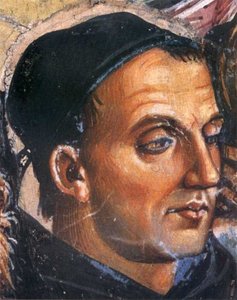
Fra Angelico’s artistic journey began within the walls of the Dominican Monastery of San Marco in Florence, where he honed his skills as an illuminator and manuscript decorator—a formative experience that instilled in him a lifelong devotion to craftsmanship and spiritual contemplation. His early works showcased influences from Lorenzo Monaco—a prominent Florentine painter—particularly in the use of elegant lines and decorative patterns.
Preguntas y respuestas
¿En qué etapa de la trayectoria de Fra Angelico se sitúa "El Retablo de Perugia", dada su fecha?
Dada su fecha de 1447, "El Retablo de Perugia" se sitúa en el Mature Period de Fra Angelico.
¿Qué atmósfera transmite "El Retablo de Perugia"?
"El Retablo de Perugia" de Fra Angelico se describe con un ambiente Serenidad. Esta clasificación puede ayudar a combinar la obra con un entorno.
¿Qué nivel de luminancia tiene "El Retablo de Perugia" de Fra Angelico?
"El Retablo de Perugia" de Fra Angelico tiene una luminancia de Sombra suave. La luminancia describe cuánta luz parecen reflejar los colores.
 Ver en contexto
 Enviar
 Compartir
 Detalles
 Guía
Guía

 Descargar
 Similares
 Radiografía
 Presentación de diapositivas
 Q&A
Q&A Estadísticas