- Inicio

- Reproducción al óleo
- Museo Del Buda De Fo Guang Shan
- Liberating Nidhi
 Comprar impresión Comprar imagen en alta resolución
 Enviar
 Compartir
 Detalles
 Añadir a favoritos

 Descargar
 Similares
 Radiografía
 Presentación de diapositivas
Liberating Nidhi


 Ver más
Reproducción al óleo hecha a mano
Óleo sobre lienzo pintado a mano en el tamaño y marco de su elección, realizado por encargo por nuestros artistas.




P118B $10

P118H $10

P118W $10

P438Z $10

P508JH $12

P508YH $12

P805H $10

P805Z $10

P919BZ $10

P919G $10

P919XJ $10

P959ZH $10

P968JZ $12

W106C $8

W218G $10

W218JH $8

W218Y $10

W307PJ $10

W316G $10

W316PJ $8

W316Y $10

W398PJ $8

W4111J $10

W500HY $15

W500JH $15

W692G $12

W849H $8

W940BG $15

W953PJ $8




Elija entre nuestros tamaños predefinidos que respetan las proporciones originales de la obra.

Puede ingresar sus propias dimensiones para adaptarse a un marco o espacio específico. Si el tamaño seleccionado no coincide con las proporciones de la imagen original, recortaremos la obra o extenderemos la pintura con elementos adicionales pintados a mano. Se le enviará una maqueta digital para su aprobación antes de comenzar la producción.
Tenga en cuenta que la vista previa en pantalla no refleja el recorte o la extensión reales. Solo la maqueta mostrará con precisión la composición final.
Si bien existen tamaños personalizados, recomendamos seleccionar una dimensión de la lista predefinida para preservar las proporciones originales.
Tras realizar el pedido, el equipo de OriginalUniqueArt.com enviará un correo electrónico al cliente para solicitar instrucciones y proporcionarle una vista previa del boceto.
Entrega mundial () en 3-4 semanas en lugar de las 5 semanas estándar. (16 julio). Sin compromisos con la calidad.

Envío exprés gratuito a todo el mundo

Lienzo de lino de alta calidad

Seguro de envío total

Garantía de reembolso de impuestos aduaneros

Garantía de fidelidad de color

Política de devolución de 60 días (solo por defectos)

Garantía de devolución del 100% del dinero

Descuento por pedido múltiple
 La opción de vidrio solo está disponible en tamaños inferiores a 110 cm.

Liberating Nidhi
Técnica de reproducción
Tamaño de la reproducción
-


Precio total final
-
Descripción de la obra
Liberating Nidhi: A Symphony of Spirituality
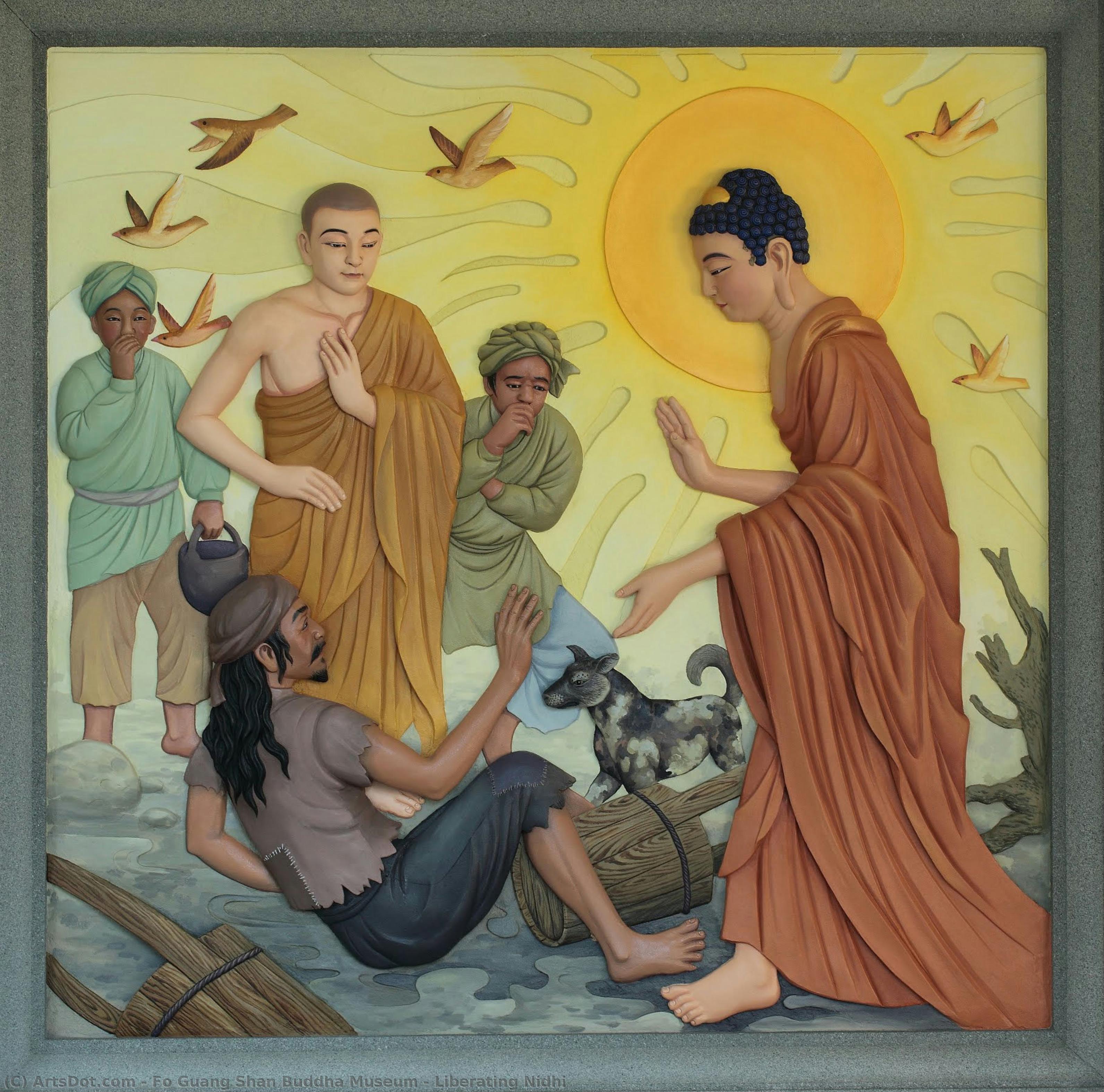
“Liberating Nidhi,” created by the Fo Guang Shan Buddha Museum in 2011, is more than just a painting; it’s an invitation to contemplate profound spiritual concepts within a meticulously crafted visual narrative. The artwork depicts a gathering of individuals – some seated, others standing – united around a central figure who embodies serenity and guidance. This individual, likely representing a monk or religious leader, raises his hands in a gesture of blessing and invocation, immediately drawing the viewer into a scene brimming with reverence. Scattered throughout the composition are numerous birds, not merely decorative elements but potent symbols of freedom, enlightenment, and the aspiration for transcendence. Their flight above and their perching on various surfaces contribute to the overall sense of harmony and upward movement, suggesting a release from earthly constraints.
Artistic Style and Technique
- Style: The artwork leans heavily into the traditions of Mahayana Buddhist iconography, particularly evident in the posture of the central figure and the symbolic inclusion of birds. It’s characterized by a serene stillness, prioritizing contemplative observation over dramatic action.
- Technique: While specific details regarding the painting's technique are unavailable, it is likely executed with oil paints on canvas, a common practice within Buddhist art circles, particularly in Taiwan during this period. The brushwork appears deliberate and controlled, contributing to the overall sense of calm and focus. The use of color is muted, predominantly featuring earth tones – browns, ochres, and grays – reflecting the grounded nature of Buddhist teachings and the reverence for natural elements.
- Composition: The composition itself is carefully balanced, utilizing a pyramidal structure with the central figure at its apex to draw the eye upwards and reinforce the theme of aspiration.
Historical Context and Symbolism
Created in 2011 by the Fo Guang Shan Buddha Museum, “Liberating Nidhi” emerged from a period of significant growth within Taiwanese Buddhism, spearheaded by Venerable Master Hsing Yun. The museum’s establishment was itself rooted in a remarkable event: the acquisition of a sacred tooth relic of Sakyamuni Buddha, entrusted to Master Hsing Yun in 1998. This artifact immediately imbued the museum – and subsequently this artwork – with immense spiritual significance. The birds themselves carry multiple layers of symbolism within Buddhist thought. They represent messengers from the heavens, guides on the path to enlightenment, and emblems of liberation from suffering. Their presence elevates the scene beyond a simple depiction of a gathering; it transforms it into a visual representation of the pursuit of spiritual freedom.
Emotional Impact and Artistic Value
"Liberating Nidhi" possesses a quiet power that resonates deeply with viewers seeking solace, inspiration, or simply an appreciation for beauty rooted in profound meaning. The artwork’s serene atmosphere invites contemplation and encourages a connection to universal values such as compassion, harmony, and the pursuit of enlightenment. Its creation by the Fo Guang Shan Buddha Museum, a globally recognized center for Buddhist scholarship and artistic expression, further elevates its value, making it a compelling piece for collectors and interior designers alike. A hand-painted reproduction offers an opportunity to bring this evocative artwork into your space, fostering a sense of tranquility and spiritual awareness.
Biografía del artista
Fo Guang Shan Buddha Museum
The Fo Guang Shan Buddha Museum, nestled in the Dashu District of Kaohsiung, Taiwan, is more than a repository of sacred objects and artistic creations; it’s a vibrant testament to the enduring power of Buddhist philosophy and its profound influence on East Asian culture. Emerging from the vision of Venerable Master Hsing Yun, founder of Fo Guang Shan—Taiwan's largest Buddhist organization—the museum officially opened its doors in December 2011 after years of dedicated construction beginning in 2008. It stands as a beacon of Mahāyāna Buddhism, meticulously designed to present the Dharma through an immersive experience encompassing art, culture, film, humanistic inquiry, and international exchange. The very genesis of the museum is rooted in a remarkable story: in 1998, Master Hsing Yun was entrusted with a tooth relic of Sakyamuni Buddha by Kunga Dorje Rinpoche, a Tibetan lama who had safeguarded it for three decades. This sacred gift became the catalyst for creating a space worthy of its reverence and capable of sharing Buddhist wisdom with the world.Origins and Founding Vision
The creation of Fo Guang Shan Buddha Museum stemmed from a profound desire to honor the Buddha’s Dharma body and to foster understanding between Buddhist traditions across continents. Venerable Master Hsing Yun, recognizing the importance of preserving Buddhist heritage and disseminating its teachings globally, envisioned a museum that would serve as both a sanctuary for contemplation and a conduit for cultural dialogue. Inspired by Kunga Dorje Rinpoche's generosity in gifting him the Buddha’s tooth relic—a symbol of compassion and enlightenment—Master Hsing Yun embarked on an ambitious undertaking to establish Fo Guang Shan Monastery and subsequently, its associated museum. The monastery itself embodies the core principles of Buddhist practice: mindfulness, ethical conduct, and selfless service – values that permeate every aspect of the museum's mission.Architectural Symbolism and Design Philosophy
The architectural design of Fo Guang Shan Buddha Museum is deeply symbolic, reflecting fundamental concepts within Mahāyāna Buddhism. From the moment visitors step through the Gate of Perfect Ease and the Gate of Liberation—each adorned with majestic lion and elephant statues representing strength and wisdom—they embark on a journey guided by visual cues that reinforce Buddhist cosmology. The central element of this architectural narrative is undoubtedly the Fo Guang Big Buddha, an imposing statue crafted from bronze and symbolizing enlightenment itself. Surrounding it are eight pagodas meticulously designed to represent the Eight Auspicious Symbols of Buddhism – lotus blossoms, dharma wheels, vajras, parasols, banners, bells, stupas, and treasures—each embodying specific virtues and aspirations. The careful arrangement of these structures underscores the interconnectedness of Buddhist thought and practice, creating a harmonious environment conducive to spiritual reflection.A Collection Reflecting Buddhist Art Heritage
The museum’s collection showcases an impressive array of artworks spanning centuries of Buddhist artistic tradition, primarily originating from China and Taiwan. Paintings depict scenes from Buddhist scriptures and embody stylistic influences ranging from Tang Dynasty landscapes to Ming Dynasty portraits—demonstrating the breadth of Buddhist aesthetic expression across time periods. Sculptures crafted in stone and bronze portray figures revered within Buddhism – bodhisattvas, Buddhas, and enlightened beings – reflecting meticulous craftsmanship and conveying profound spiritual symbolism. Installations incorporate multimedia elements such as films and interactive displays that illuminate Buddhist concepts and engage visitors intellectually. The curators have prioritized artworks that exemplify the museum’s commitment to preserving cultural heritage while fostering appreciation for Buddhist art forms.Global Recognition and Continuing Mission
Fo Guang Shan Buddha Museum achieved international acclaim in 2014 when it was accepted as the youngest member of the International Council of Museums (ICOM), signifying its adherence to rigorous standards of museum management and ethical conduct. This distinction underscores the museum’s dedication to promoting cultural understanding and fostering dialogue between diverse communities worldwide. Furthermore, Fo Guang Shan Buddha Museum continues to champion educational initiatives aimed at disseminating Buddhist wisdom and cultivating compassion—a mission that aligns seamlessly with Venerable Master Hsing Yun's lifelong commitment to serving humanity through spiritual practice. The museum stands as a testament to the transformative power of art and faith, inviting visitors to contemplate the enduring relevance of Buddhist principles in addressing contemporary challenges and fostering a more harmonious world.
Datos clave
- Artistic Movement Or Style: Buddhist Art
- Full Name: Fo Guang Shan Buddha Museum
- Nationality: Taiwanese
- Notable Artworks:
- The Buddha Entering Parinirvana
- Teaching Sujata
- Daoist Ritual
- Sewing Three Robes…
- Place Of Birth: Dashun District, Taiwan
Artículos relacionados
Las 25 Obras Maestras del MET: Arte, Historia y Decoración para tu Hogar
Descubre las 25 obras maestras del MET de Nueva York: Van Gogh, Monet, Rembrandt y más. Explora la historia, el arte y los colores que inspiran tu hogar. Reproducciones de museo en OriginalUniqueArt.com.
Los 25 Tesoros del Kunsthistorisches Museum de Viena: Arte, Historia y Decoración Exclusiva
Descubre los 25 tesoros del Kunsthistorisches Museum de Viena. Explora obras maestras de Rafael, Rembrandt y Vermeer, su historia y técnica. Encuentra reproducciones de arte exclusivas para decorar tu hogar con elegancia. ¡Explora la colección completa en OriginalUniqueArt.com!
Elevando la Experiencia Hotelera de Lujo: El Impacto Cultural y Estético de las Reproducciones de Obra Maestra
Descubra cómo integrar el arte en su hotel de lujo para crear experiencias inolvidables. Expertos en reproducciones, personalización y consultoría artística. Eleve la estética y el valor de su espacio.

Los 10 Cuadros Más Famosos Dominados por el Turquesa Pálido | Arte y Decoración
Descubre los 10 cuadros más famosos dominados por el turquesa pálido. Explora la historia de Monet, Renoir y otros artistas impresionistas, su técnica y cómo el color turquesa evoca serenidad. Reproducciones de arte en OriginalUniqueArt.com.
¿Técnicas de Pintura en ? Reproducciones Fieles y Materiales Tradicionales - Preguntas Frecuentes
Descubra la excelencia en reproducciones de arte al óleo hechas a mano por artistas expertos en . Calidad museo, personalización y garantía de autenticidad para coleccionistas exigentes.