

 Ver en contexto
 Enviar
 Compartir
 Detalles
 Guía
Guía

 Descargar
 Similares
 Radiografía
 Presentación de diapositivas
 Estadísticas
Duino-Nueve (Orrantia/92)


 Ver más
La obra de arte que se muestra en esta página está protegida por las leyes de propiedad intelectual, lo que significa que no podemos crear ni vender legalmente una reproducción idéntica. Esta protección se hace cumplir en virtud de acuerdos internacionales como el Convenio de Berna y por las leyes nacionales, incluidas aquellas establecidas por el Ley de derechos de autor de los EE. UU. - Título 17.
Este método cumple plenamente con las normativas de derechos de autor, ya que no implica la copia ni la duplicación de la obra protegida. En su lugar, se trata de una reinterpretación creativa: una nueva pintura influenciada por la original, pero que no es idéntica a ella.
Giclée / Impresión de arte
Impresiones giclée o en lienzo de calidad de museo con producción rápida y opciones de acabado flexibles. ( Comprar pintura hecha a mano Cambiar a imagen digital)




P118B €10

P118H €10

P118W €10

P438Z €10

P508JH €12

P508YH €12

P805H €10

P805Z €10

P919BZ €10

P919G €10

P919XJ €10

P959ZH €10

P968JZ €12

W106C €8

W218G €10

W218JH €8

W218Y €10

W307PJ €10

W316G €10

W316PJ €8

W316Y €10

W398PJ €8

W4111J €10

W500HY €15

W500JH €15

W692G €12

W849H €8

W940BG €15

W953PJ €8




Elija entre nuestros tamaños predefinidos que respetan las proporciones originales de la obra.

Introduzca el ancho y el alto que necesite para adaptarse a su marco o pared. Una impresión solo puede recortarse, nunca hacerse más grande que la imagen original, por lo que un tamaño con una forma distinta perderá parte de la obra. Le enviaremos una maqueta digital para su aprobación antes de realizar cualquier impresión. La imagen que se muestra en esta página no refleja el recorte real; solo la maqueta lo hace.
Envío a todo el mundo () en 2 semanas en lugar de las 4/5 semanas estándar. (28 octubre)

Envío exprés gratuito a todo el mundo

Lienzo de lino de alta calidad

Seguro de envío total

Garantía de reembolso de aranceles aduaneros

Garantía de fidelidad cromática exacta

Política de devolución de 100 días (solo por defectos)

Garantía de devolución del 100% del dinero

Descuento por cantidad
 La opción de vidrio solo está disponible en tamaños inferiores a 110 cm.

Duino-Nueve (Orrantia/92)
Giclée / Impresión de arte
Dimensiones de la reproducción
-


Precio total final
€ 70
Fernando de Szyszlo: Bridging Ancient Echoes and Modern Expression
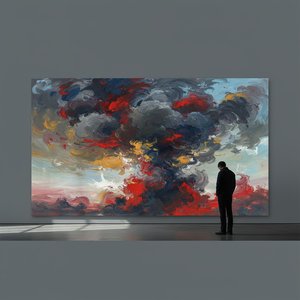
Fernando de Szyszlo (1925-2017) stands as a monumental figure in Peruvian art history, recognized for his pioneering role in establishing abstract expressionism within Latin America while simultaneously honoring the profound legacy of Andean culture. Born in Lima to a Peruvian mother of Spanish-Indian descent and a Polish father, Szyszlo’s formative years instilled in him an appreciation for both European intellectual traditions and indigenous heritage—a duality that would profoundly shape his artistic vision. This confluence of influences is palpable throughout his oeuvre, resulting in canvases brimming with vibrant color palettes and dynamic compositions that defy conventional representation. Szyszlo's formal training at the National University of Engineering initially steered him toward architecture, yet he swiftly abandoned this path for the transformative allure of the School of Plastic Arts of Pontifical Catholic University of Peru. It was there that he encountered the burgeoning movement of abstract expressionism—a European trend spearheaded by artists like Jackson Pollock and Willem de Kooning—and embraced it wholeheartedly. This decision marked a decisive break from academic realism, propelling him toward an exploration of emotion and intuition as primary drivers of artistic creation. His extensive travels across Europe exposed him to the masterpieces of masters such as Rembrandt and Titian, whose masterful use of light and shadow instilled in Szyszlo a deep understanding of tonal harmony—a skill he skillfully incorporated into his paintings. Similarly, Tintoretto’s dramatic theatricality influenced his compositions, emphasizing dynamism and grandeur. These artistic encounters fueled his desire to synthesize European modernist principles with the symbolic richness of Andean iconography, resulting in artworks that resonate with both intellectual sophistication and spiritual depth. Szyszlo's signature style is characterized by bold brushstrokes and a masterful manipulation of color—often employing contrasting hues to generate visual tension and convey profound emotional states. He frequently utilized textured surfaces, achieved through layering paint and incorporating collage elements, mirroring the rugged landscapes of Peru and reflecting the spirit of Andean cosmology. Recurring motifs include stylized representations of mountains, llamas, and geometric patterns reminiscent of Inca textiles—symbols that evoke notions of resilience, harmony, and connection to ancestral traditions. “Duino-Nueve (Orrantia/92)” exemplifies Szyszlo’s artistic prowess. The painting depicts a solitary figure wielding a knife, positioned atop a wall or ledge, conveying an aura of formidable presence and hinting at underlying conflict. The dark background amplifies the dramatic impact of the image, focusing attention on the figure's face and hands—elements rendered with meticulous detail. Szyszlo’s deliberate use of color contributes to the artwork’s emotive power, creating a palpable sense of danger and conveying a complex psychological narrative. This piece stands as a testament to Szyszlo’s ability to distill profound philosophical ideas into visually arresting compositions—a feat that cements his place among Peru's most celebrated artists.- Title: Duino-Nueve (Orrantia/92)
- Artist: Fernando de Szyszlo
- Year: 1992
Preguntas y respuestas
¿Qué artista y qué estilo definen a "Duino-Nueve (Orrantia/92)"?
"Duino-Nueve (Orrantia/92)" es una obra de Fernando De Szyszlo perteneciente al movimiento Abstract Expressionism.
¿Qué tan conocida es la obra "Duino-Nueve (Orrantia/92)" de Fernando De Szyszlo?
El nivel de popularidad registrado para "Duino-Nueve (Orrantia/92)" de Fernando De Szyszlo es Reconocido regionalmente.
¿Qué sentimiento y emoción transmite "Duino-Nueve (Orrantia/92)" de Fernando De Szyszlo?
El estado de ánimo que transmite "Duino-Nueve (Orrantia/92)" de Fernando De Szyszlo es Dramático, y su tono emocional es Dramático.
Biografía del artista
El Alquimista de la Abstracción Andina
Fernando de Szyszlo (1925-2017) se erige como una figura monumental en la historia del arte peruano, reconocido por su papel pionero en el establecimiento del expresionismo abstracto dentro de América Latina, mientras honraba simultáneamente el profundo legado de la cultura andina. Nacido en Lima, de madre peruana de ascendencia española-india y padre polaco, los años formativos de Szyszlo le inculcaron un aprecio tanto por las tradiciones intelectuales europeas como por la herencia indígena, una dualidad que moldearía profundamente su visión artística. Su educación temprana en la Universidad Nacional de Ingeniería se vio brevemente interrumpida por una pasión por la arquitectura antes de que abrazara decididamente la Escuela de Artes Plásticas de la Pontificia Universidad Católica del Perú, donde perfeccionó sus habilidades y emprendió un viaje hacia una profunda exploración artística.
La trayectoria de la carrera de Szyszlo se vio irrevocablemente alterada por sus viajes por Europa a finales de la década de 1940. Al sumergirse en las obras de los Grandes Maestros como Rembrandt, Tiziano y Tintoretto, absorbió un dominio de la iluminación dramática y la intensidad emocional que más tarde informaría su enfoque único de la sombra y la profundidad. Su estancia en París y Florencia entre 1948 y 1955 lo situó en el corazón de la vibrante escena de la vanguardia latinoamericana centrada en torno al Café Flore. Al entablar diálogos apasionados con luminarias como el poeta surrealista Octavio Paz y André Breton, Szyszlo lidió con una tensión central y definitoria: cómo reconciliar los ideales modernistas internacionales con la preservación de una identidad cultural latinoamericana distintiva.
Una Síntesis de Modernidad y Mito
Al regresar al Perú, Szyszlo se convirtió en un catalizador para la renovación artística, desafiando los límites al expresar temas peruanos a través de formas no representacionales. Esto supuso una audaz ruptura con las convenciones estilísticas predominantes del indigenismo que dominaban la época. Su obra buscaba reinventar los temas surrealistas dentro de un contexto latinoamericano, centrándose menos en el mero artificio artístico y más en los sentimientos profundos conectados con el misticismo indígena. Al tejer la imaginería precolombina y los motivos incas en el tejido de la abstracción, creó un lenguaje visual que se sentía tanto ancestral como vanguardista.
Su técnica se caracterizó por una manipulación magistral de la textura y la luz. Mediante el uso de empastes gruesos, capas de color y una paleta frecuentemente tenue, Szyszlo evocaba las superficies desgastadas de las reliquias arqueológicas y el peso atmosférico de los paisajes andinos. Sus pinturas a menudo presentan:
- Paletas de colores líricos que equilibran los tonos tierra con matices repentinos y sorprendentes.
- Formas geométricas que sugieren la permanencia estructural de la arquitectura antigua.
- Riqueza textural creada a través de un pesado estratificado para evocar una sensación de tiempo geológico.
- Formas ambiguas que invitan al espectador a un estado de contemplación y asombro surrealista.
Legado y Significado Histórico
La importancia histórica de Fernando de Szyszlo es incalculable; él fue el puente entre el pasado ancestral y el futuro moderno. Su capacidad para articular la modernidad a través del simbolismo precolombino generó una profunda ruptura con la tradición, mientras que simultáneamente entablaba un diálogo profundo y respetuoso con ella. No pintaba simplemente de forma abstracta; buscaba encontrar el "alma" del Perú dentro del lenguaje de la abstracción internacional, asegurando que el espíritu indígena no se perdiera en la transición hacia el modernismo.
Más allá de su lienzo, Szyszlo fue un humanista y un educador, desempeñándose como profesor de arte en la Universidad de Cornell y contribuyendo significativamente a la vida intelectual de su país. Hoy en día, su legado se preserva en algunas de las instituciones más prestigiosas del mundo, incluyendo el Museum of Modern Art (MoMA) en Nueva York, el Museum of Fine Arts en Houston y el Museo de Arte Contemporáneo de Arequipa. Al acercarnos al centenario de su nacimiento, Szyszlo permanece como un objeto de estudio vital, recordándonos que la verdadera innovación reside a menudo en el acto valiente de recordar.

Fernando De Szyszlo
1925 - 2017 , Perú
Datos clave
- Artistic Movement Or Style: Abstract Expressionism
- Artists Or Movements Influenced By This Artist:
- Cubism
- Surrealism
- Informalism
- Artists Who Influenced This Artist:
- Rembrandt
- Titian
- Tintoretto
- Date Of Birth: Lima, Peru (1925)
- Date Of Death: October 9, 2017
- Full Name: Fernando de Szyszlo Valdelomar
- Nationality: Peruvian
- Notable Artworks:
- Trashumantes
- Untitled, SZY #1
- Camino a Mendieta V
- Place Of Birth: Lima
Artículos relacionados

Goya: Las 25 Obras Maestras del Genio Español | Reproducciones de Arte en OriginalUniqueArt
Descubre las 25 obras maestras de Goya, el genio español. Explora retratos icónicos, 'Los Caprichos' y 'Las Pinturas Negras'. Reproducciones de arte en lienzo de alta calidad para decorar tu hogar con estilo. ¡Encuentra tu obra favorita en OriginalUniqueArt.com!
Más Allá de la Representación: Explorando el Paisaje Emocional del Expresionismo Abstracto
Descubra el Expresionismo Abstracto en profundidad. Análisis de artistas clave como Rothko y Richter, su contexto histórico e inversión en arte. Guía experta para coleccionistas.

Expresionismo Abstracto: 10 Obras Maestras que Transformaron el Arte |
Descubre las 10 obras maestras del Expresionismo Abstracto: Pollock, Rothko y más. Explora la historia, técnica y significado de estos lienzos icónicos. Reproducciones de arte exclusivas en .

Willem de Kooning: Abstraction, Gesture & the Evolution of Post-War American Painting
Explore the evolution of Willem de Kooning's iconic Abstract Expressionist paintings. Discover his signature style, key themes & investment potential with expert insights for discerning art collectors.

Kandinsky: Las 25 Obras Maestras del Pionero de la Abstracción | OriginalUniqueArt
Descubre las 25 obras maestras de Wassily Kandinsky, pionero del arte abstracto. Explora su expresionismo, composiciones únicas y la historia detrás de cada cuadro. Reproducciones de alta calidad para decorar tu hogar con arte moderno en OriginalUniqueArt.com.
