

 Ver en contexto
 Enviar
 Compartir
 Detalles

 Descargar
 Similares
 Radiografía
 Presentación de diapositivas
 Estadísticas
untitled (8568)


 Ver más
Reproducción al óleo hecha a mano
Óleo sobre lienzo pintado a mano en el tamaño y marco de su elección, realizado por encargo por nuestros artistas. ( Cambiar a Impresión Cambiar a imagen digital)




P118B $10

P118H $10

P118W $10

P438Z $10

P508JH $12

P508YH $12

P805H $10

P805Z $10

P919BZ $10

P919G $10

P919XJ $10

P959ZH $10

P968JZ $12

W106C $8

W218G $10

W218JH $8

W218Y $10

W307PJ $10

W316G $10

W316PJ $8

W316Y $10

W398PJ $8

W4111J $10

W500HY $15

W500JH $15

W692G $12

W849H $8

W940BG $15

W953PJ $8




Elija entre nuestros tamaños predefinidos que respetan las proporciones originales de la obra.

Puede ingresar sus propias dimensiones para adaptarse a un marco o espacio específico. Si el tamaño seleccionado no coincide con las proporciones de la imagen original, recortaremos la obra o extenderemos la pintura con elementos adicionales pintados a mano. Se le enviará una maqueta digital para su aprobación antes de comenzar la producción.
Tenga en cuenta que la vista previa en pantalla no refleja el recorte o la extensión reales. Solo la maqueta mostrará con precisión la composición final.
Si bien existen tamaños personalizados, recomendamos seleccionar una dimensión de la lista predefinida para preservar las proporciones originales.
Tras realizar el pedido, el equipo de OriginalUniqueArt.com enviará un correo electrónico al cliente para solicitar instrucciones y proporcionarle una vista previa del boceto.
Envío a todo el mundo () en 3-4 semanas en lugar de las 5 semanas estándar. (13 septiembre). Sin comprometer la calidad.

Envío exprés gratuito a todo el mundo

Lienzo de lino de alta calidad

Seguro de envío total

Garantía de reembolso de impuestos aduaneros

Garantía de fidelidad cromática exacta

Política de devolución de 100 días (solo por defectos)

Garantía de devolución del 100% del dinero

Descuento por cantidad
 La opción de vidrio solo está disponible en tamaños inferiores a 110 cm.

untitled (8568)
Técnica de reproducción
Dimensiones de la reproducción
-


Precio total final
$ 300
A Fragmented Portrait of Modernity: Unveiling Léger’s “Untitled (8568)”
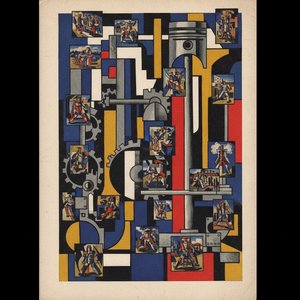
This compelling black and white artwork, designated “Untitled (8568),” offers a profound glimpse into the artistic vision of Fernand Léger, a pivotal figure in the transition from early 20th-century representation to the radical abstraction that would define modern art. Executed with Léger’s signature Cubist technique – a style he termed ‘Tubism’ – the image presents a formally arresting scene: a man in a suit, holding a dog, amidst a carefully orchestrated chaos of clocks and geometric forms. The composition immediately draws the viewer into a world where the familiar conventions of portraiture are deliberately disrupted, reflecting Léger's fascination with the burgeoning industrial age and its impact on human experience. The stark monochrome palette amplifies the piece’s inherent tension, emphasizing the sharp angles and fractured planes that characterize his work.Cubist Deconstruction and the Machine Aesthetic
Léger’s approach to Cubism was uniquely driven by a desire to translate the dynamism of machines – locomotives, factories, and urban landscapes – into a visual language. “Untitled (8568)” exemplifies this perfectly. The man's figure is broken down into geometric shapes, mirroring the fragmented forms of industrial objects. The dog, similarly rendered, contributes to this sense of deconstruction, its form echoing the mechanical precision of the surrounding elements. Notably, the inclusion of numerous clocks – strategically placed throughout the composition – isn’t merely decorative; it's a deliberate symbol of time and the relentless march of progress, a key theme in Léger’s oeuvre. The repetition of these objects reinforces the idea of mechanized rhythm and the dominance of industrial logic within the scene. This artwork is a testament to his exploration of form and space, pushing beyond traditional perspective to create a multi-faceted representation of reality.Symbolism Within the Fragmented Form
Beyond its purely formal qualities, “Untitled (8568)” resonates with deeper symbolic meanings. The man in the suit, a classic symbol of authority and social order, is presented in a state of disarray, suggesting a disruption of traditional values in the face of industrialization. The dog, often associated with loyalty and companionship, becomes another fragmented element within this unsettling tableau. The arrangement of the clocks – some large, some small, some grouped together, others isolated – speaks to the anxieties surrounding time, efficiency, and the potential dehumanizing effects of a rapidly changing world. Léger’s use of these symbols invites contemplation on the relationship between humanity and technology, a theme that remains remarkably relevant today.Technique and Reproduction
This hand-painted reproduction meticulously recreates the original artwork's intricate details and powerful impact. Utilizing archival quality materials and employing skilled artisans, OriginalUniqueArt ensures that every nuance of Léger’s technique – from the precise rendering of geometric forms to the subtle interplay of light and shadow – is faithfully reproduced. The high level of detail achieved in this reproduction allows collectors and interior designers alike to appreciate the full complexity and artistic merit of Léger's masterpiece, bringing a touch of modern art history into any space. Considering its connection to “untitled (2056)”, this piece offers a compelling addition to any collection focused on Cubism or Tubism.Biografía del artista
vida temprana y formación
fernand léger, un pintor, escultor y cineasta francés, nació el 4 de febrero de 1881 en Argentán, Orne, Baja Normandía. Su padre criaba ganado, y Léger inicialmente se formó como arquitecto de 1897 a 1899. Luego se mudó a París en 1900, ganándose la vida como dibujante arquitectónico.desarrollo artístico
El trabajo temprano de Léger estuvo influenciado por el impresionismo, como se ve en le jardin de ma mère (mi madre's garden) (1905). Después de asistir a la escuela de artes decorativas y la academia Julian, comenzó a trabajar seriamente como pintor a los 25 años. Su estilo evolucionó hacia una forma personal del cubismo, que los críticos denominaron "tubismo" por su énfasis en las formas cilíndricas.cubismo y el grupo puteaux
En 1910, Léger expuso en el salón de otoño junto a jean metzinger y henri le fauconnier. Se unió al grupo puteaux, también conocido como la sección dorada (la sección de oro), junto con otros artistas como francis picabia y marcel duchamp.guerra y su influencia en el trabajo de léger
Las experiencias de Léger en la Primera Guerra Mundial impactaron significativamente su obra. Durante su tiempo en el frente, produjo dibujos de piezas de artillería, aviones y soldados compañeros. Su pintura soldier with a pipe (1916) refleja este período.obra posterior y legado
La obra posterior de Léger, caracterizada por formas mecánicas y elegantes, lo vinculó a la tradición de la pintura figurativa francesa. Sus paisajes animados de 1921 mostraron figuras y animales en formas armoniosas y aerodinámicas.- ver obras de fernand léger en OriginalUniqueArt
- más sobre fernand léger en wikipedia
- descubra el musée national fernand léger (francia) con OriginalUniqueArt
- la mujer sentada (100 x 81 cm, tubismo)
- elemento de máquina (cubismo)

Fernand Léger
1881 - 1955 , Francia
Datos clave
- Artistas Influenciados Por: ['Pop Art']
- Artistas Que Influyeron:
- Cézanne
- Impresionismo
- Fecha De Nacimiento: 4 de febrero de 1881
- Lugar De Nacimiento: Argentan, Francia
- Movimiento Artístico:
- Cubismo
- Tubismo
- Nacionalidad: Francés
- Nombre Completo: Fernand Léger
- Obras Notables:
- La Mujer Sentada
- Elemento de Máquina
- El Gran Desfile
- Paisajes Animados
Artículos relacionados

Las 10 Pinturas Más Famosas Dominadas por el Negro | Arte y Decoración
Descubre las 10 pinturas más impactantes dominadas por el negro. Explora obras maestras de Rembrandt, Goya y Rothko, su historia y significado. Encuentra reproducciones de arte exclusivas para transformar tu hogar en .
Fernand Léger: Las 25 Obras Maestras del Tubismo y la Vanguardia Francesa | OriginalUniqueArt
Descubre las 25 obras maestras de Fernand Léger, pionero del tubismo y la vanguardia francesa. Explora su estética industrial, composiciones geométricas y vibrantes colores. Reproducciones de arte exclusivas en OriginalUniqueArt.com.
Timeless & Chic: Elevating Your New Home with the Sophistication of Black and White Photography
Transform your new home with the timeless allure of black and white photography. OriginalUniqueArt.com specializes in elegant monochrome decor and custom hand-painted wedding portraits that turn cherished milestones into lasting, soulful masterpieces. Elevate your space with ease.

Blanco Sublime: Los 10 Cuadros Más Famosos Dominados por la Luz y el Color
Descubre los 10 cuadros blancos más emblemáticos de la historia del arte. Explora Monet, Van Gogh y Klimt, y su magistral uso de la luz y el color. Encuentra reproducciones de alta calidad e inspírate para tu decoración en .

Giclée Prints: Archival Quality & Aesthetic Nuances for the Discerning Collector
Explore the world of giclée prints with OriginalUniqueArt. Learn about archival quality, aesthetic nuances & investment potential. Expert guidance for discerning art collectors seeking museum-quality reproductions and lasting value.


