Vista previa
 Compartir
 Compartir
 Ver detalles

 Descargar
 Ver similares
 Radiografía
 Presentación de diapositivas
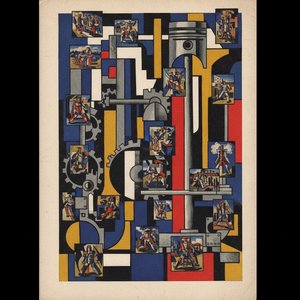
The three musicians

 Leer más
Giclée / Impresión de arte
Impresiones giclée o en lienzo de calidad de museo con producción rápida y opciones de acabado flexibles. ( Encargar reproducción pintada a mano Comprar descarga)




P118B $10

P118H $10

P118W $10

P438Z $10

P508JH $12

P508YH $12

P805H $10

P805Z $10

P919BZ $10

P919G $10

P919XJ $10

P959ZH $10

P968JZ $12

W106C $8

W218G $10

W218JH $8

W218Y $10

W307PJ $10

W316G $10

W316PJ $8

W316Y $10

W398PJ $8

W4111J $10

W500HY $15

W500JH $15

W692G $12

W849H $8

W940BG $15

W953PJ $8




Elija entre nuestros tamaños predefinidos que respetan las proporciones originales de la obra.

Puede introducir sus propias dimensiones para adaptarse a un marco o espacio específico. Si el tamaño seleccionado no coincide con las proporciones de la imagen original, recortaremos la obra de arte o extenderemos la imagen con un borde con efecto espejo o de color sólido. Se enviará una maqueta digital para su aprobación antes de que comience la producción.
Tenga en cuenta que la vista previa en pantalla no refleja el recorte o la extensión real. Solo la maqueta mostrará con precisión la composición final.
Aunque existen tamaños personalizados, recomendamos seleccionar una dimensión de la lista predefinida para preservar las proporciones originales.
Envío a todo el mundo () en 2 semanas en lugar de las 4/5 semanas estándar. (15 agosto)

Envío exprés gratuito a todo el mundo

Lienzo de lino de alta calidad

Seguro de envío completo

Garantía de reembolso de aranceles aduaneros

Garantía de fidelidad cromática exacta

Política de devolución de 60 días (solo por defectos)

Garantía de devolución del 100% del dinero

Oferta por volumen
 La opción de vidrio solo está disponible en tamaños inferiores a 110 cm.

The three musicians
Giclée / Impresión de arte
Tamaño de la reproducción
-


Precio total
$ 80
Descripción de la pieza
A Symphony of Form: Exploring Fernand Léger’s “The Three Musicians”
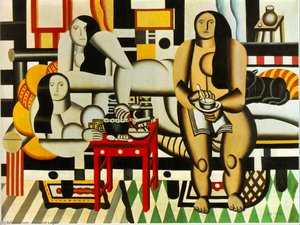
Fernand Léger's "The Three Musicians" isn’t merely a depiction of musicians; it’s an embodiment of the burgeoning modernist movement, capturing its fascination with industrial progress and distilling it into a strikingly simplified visual language. Painted sometime between 1916 and 1920 during the height of Léger’s artistic fervor—a period marked by experimentation and collaboration with fellow avant-garde artists like Marcel Duchamp and Pablo Picasso—this artwork stands as a cornerstone of geometric abstraction while simultaneously retaining an undeniable connection to the tangible realities of everyday life.The Geometric Vision: Style and Technique
Léger's distinctive style is instantly recognizable through its bold use of geometric shapes – cubes, cylinders, and planes – arranged in a deliberately flattened perspective. Unlike Impressionists who sought to capture fleeting moments of light and color, Léger prioritized structural clarity, mirroring the aesthetic principles championed by architects like Le Corbusier and Bauhaus designers. The painting’s technique is characterized by thick impasto—a textured surface created by applying paint thickly onto the canvas—which lends a palpable physicality to the forms depicted. This deliberate materiality isn't simply decorative; it underscores Léger’s belief that art should engage with the physical world, responding to its rhythms and energies. The muted palette of ochres, reds, and blues contributes to the artwork’s contemplative mood, emphasizing form over coloristic nuance.Echoes of Industry: Historical Context
“The Three Musicians” emerged during a transformative era in European art history—the aftermath of World War I and the dawn of the machine age. Léger was deeply influenced by developments in industrial design and engineering, reflecting a broader cultural preoccupation with technological advancement. The artwork’s simplified figures can be interpreted as representations of humanity itself – reduced to essential geometric forms – confronting the challenges and opportunities presented by modernity. It aligns perfectly with the Zeitgeist of the time, mirroring the desire for artists to engage with the new realities shaping society. Léger's artistic explorations were fueled by a fascination with the dynamism of urban life and the transformative power of machinery.Symbolism Beyond Representation
While eschewing traditional figurative representation, Léger’s painting is laden with symbolic significance. The musicians themselves aren’t portrayed in detail; instead, they are stylized into geometric shapes that convey movement and energy. The instruments – guitar, violin, trombone – serve as visual anchors, grounding the abstract forms within a recognizable context. Even the chair provides a subtle counterpoint to the dynamism of the figures, representing stability amidst change. Léger’s intention wasn't to depict a specific scene but rather to express an underlying emotional state—one of quiet contemplation and harmonious coexistence with the forces shaping the modern world.A Legacy of Bold Vision
Fernand Léger’s “The Three Musicians” remains a powerful testament to the transformative potential of abstraction. It exemplifies Léger's unwavering commitment to exploring new visual languages while simultaneously honoring the materiality of art. Today, reproductions of this artwork offer collectors and interior designers alike an opportunity to experience the enduring beauty and intellectual depth of modernist painting—a celebration of form, a reflection of its time, and a continuing source of inspiration.Biografía del artista
vida temprana y formación
fernand léger, un pintor, escultor y cineasta francés, nació el 4 de febrero de 1881 en Argentán, Orne, Baja Normandía. Su padre criaba ganado, y Léger inicialmente se formó como arquitecto de 1897 a 1899. Luego se mudó a París en 1900, ganándose la vida como dibujante arquitectónico.desarrollo artístico
El trabajo temprano de Léger estuvo influenciado por el impresionismo, como se ve en le jardin de ma mère (mi madre's garden) (1905). Después de asistir a la escuela de artes decorativas y la academia Julian, comenzó a trabajar seriamente como pintor a los 25 años. Su estilo evolucionó hacia una forma personal del cubismo, que los críticos denominaron "tubismo" por su énfasis en las formas cilíndricas.cubismo y el grupo puteaux
En 1910, Léger expuso en el salón de otoño junto a jean metzinger y henri le fauconnier. Se unió al grupo puteaux, también conocido como la sección dorada (la sección de oro), junto con otros artistas como francis picabia y marcel duchamp.guerra y su influencia en el trabajo de léger
Las experiencias de Léger en la Primera Guerra Mundial impactaron significativamente su obra. Durante su tiempo en el frente, produjo dibujos de piezas de artillería, aviones y soldados compañeros. Su pintura soldier with a pipe (1916) refleja este período.obra posterior y legado
La obra posterior de Léger, caracterizada por formas mecánicas y elegantes, lo vinculó a la tradición de la pintura figurativa francesa. Sus paisajes animados de 1921 mostraron figuras y animales en formas armoniosas y aerodinámicas.- ver obras de fernand léger en OriginalUniqueArt
- más sobre fernand léger en wikipedia
- descubra el musée national fernand léger (francia) con OriginalUniqueArt
- la mujer sentada (100 x 81 cm, tubismo)
- elemento de máquina (cubismo)

Fernand Léger
1881 - 1955 , Francia
Datos clave
- Artistas Influenciados Por: ['Pop Art']
- Artistas Que Influyeron:
- Cézanne
- Impresionismo
- Fecha De Nacimiento: 4 de febrero de 1881
- Lugar De Nacimiento: Argentan, Francia
- Movimiento Artístico:
- Cubismo
- Tubismo
- Nacionalidad: Francés
- Nombre Completo: Fernand Léger
- Obras Notables:
- La Mujer Sentada
- Elemento de Máquina
- El Gran Desfile
- Paisajes Animados
Artículos relacionados

Abstracción Geométrica: 10 Obras Maestras que Transformaron el Arte Moderno | OriginalUniqueArt
Descubre las 10 obras maestras de la abstracción geométrica que revolucionaron el arte moderno. Explora a Mondrian, Malevich y Kandinsky en OriginalUniqueArt.com. Reproducciones de alta calidad para tu hogar.

Neo-Abstract Art: The High-Impact Evolution of Modern Visual Energy and Geometric Sophistication
Discover the power of Neo-Abstract art. Explore how bold geometric forms and high-impact visual energy are redefining modern design. Learn to curate sophisticated, high-energy spaces with the latest trends in contemporary abstraction and structural color.
Fernand Léger: Las 25 Obras Maestras del Tubismo y la Vanguardia Francesa | OriginalUniqueArt
Descubre las 25 obras maestras de Fernand Léger, pionero del tubismo y la vanguardia francesa. Explora su estética industrial, composiciones geométricas y vibrantes colores. Reproducciones de arte exclusivas en OriginalUniqueArt.com.

Beyond Form & Color: Geometric Abstraction's Evolution in 20th/21st Century Art
Explore the evolution of geometric abstraction from Cubism to contemporary art. Discover key artists like Malevich & Mondrian, investment insights, and expert collecting advice at OriginalUniqueArt.
Beyond Form & Color: Geometric Abstraction's Enduring Legacy in Art History
Explore the captivating world of geometric abstraction! Discover its origins, key artists like Malevich & Mondrian, and why this movement remains highly valued by art collectors today. Expert insights at OriginalUniqueArt.