- Inicio

- Impresión en lienzo
- Fernand Léger
- The Lunch

 Encargar reproducción Comprar imagen en alta resolución
 Enviar
 Compartir
 Detalles
 Añadir a favoritos

 Descargar
 Similares
 Radiografía
 Presentación de diapositivas
The Lunch

 Ver más
Giclée / Impresión de arte
Impresión giclée o en lienzo de calidad de museo con producción rápida y opciones de acabado flexibles.




P118B $10

P118H $10

P118W $10

P438Z $10

P508JH $12

P508YH $12

P805H $10

P805Z $10

P919BZ $10

P919G $10

P919XJ $10

P959ZH $10

P968JZ $12

W106C $8

W218G $10

W218JH $8

W218Y $10

W307PJ $10

W316G $10

W316PJ $8

W316Y $10

W398PJ $8

W4111J $10

W500HY $15

W500JH $15

W692G $12

W849H $8

W940BG $15

W953PJ $8




Elija entre nuestros tamaños predefinidos que respetan las proporciones originales de la obra.

Puede introducir sus propias dimensiones para adaptarse a un marco o espacio específico. Si el tamaño seleccionado no coincide con las proporciones de la imagen original, recortaremos la obra de arte o extenderemos la imagen con un borde con efecto espejo o de color sólido. Se enviará una maqueta digital para su aprobación antes de que comience la producción.
Tenga en cuenta que la vista previa en pantalla no refleja el recorte o la extensión real. Solo la maqueta mostrará con precisión la composición final.
Aunque existen tamaños personalizados, recomendamos seleccionar una dimensión de la lista predefinida para preservar las proporciones originales.
Entrega mundial () en 2 semanas en lugar de las 4/5 semanas estándar. (20 julio)

Envío exprés gratuito a todo el mundo

Lienzo de lino de alta calidad

Seguro de envío total

Garantía de reembolso de impuestos aduaneros

Garantía de fidelidad de color

Política de devolución de 60 días (solo por defectos)

Garantía de devolución del 100% del dinero

Descuento por pedido múltiple
 La opción de vidrio solo está disponible en tamaños inferiores a 110 cm.

The Lunch
Giclée / Impresión de arte
Tamaño de la reproducción
-


Precio total final
-
Descripción de la obra
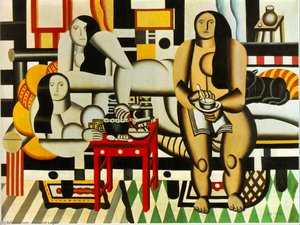
A Symphony of Form and Feeling: Exploring Fernand Léger’s “The Lunch”
Fernand Léger's "The Lunch" isn't merely a depiction of a midday meal; it’s a bold declaration of artistic intent—a masterful synthesis of abstraction and observation that encapsulates the anxieties and aspirations of the early 20th century. Painted in 1916, during the tumultuous years of World War I, this artwork transcends its immediate subject matter to become a profound meditation on humanity's relationship with technology and the shifting contours of modern life. Léger, deeply influenced by Cubism’s fragmentation of perspective and Picasso’s exploration of geometric shapes, sought to liberate painting from representational constraints—to convey not what *is* seen but what *feels* like seeing it.The Style and Technique: Geometric Precision Meets Organic Rhythm
At first glance, “The Lunch” appears strikingly austere – dominated by a palette of muted reds, yellows, and blues punctuated by stark white accents. However, beneath this deceptively simple surface lies an intricate network of geometric forms—circles, squares, triangles—that relentlessly dissect the scene into its constituent parts. Léger meticulously renders these shapes with precise lines and planes, mirroring the mechanized precision of the industrial landscape that surrounded him. Yet, despite this rigid formalism, the painting pulsates with a subtle organic rhythm. The woman’s posture, the positioning of the baby, and even the scattered objects on the table contribute to an illusion of movement—a suggestion that these forms are not merely static representations but active participants in the unfolding drama of existence. Léger achieved this effect through layering techniques—applying thin washes of color over thicker undercoats—creating a textured surface that enhances the visual impact without sacrificing geometric clarity.Historical Context: War, Progress, and the Search for Meaning
The painting’s creation coincided with the height of the First World War, a period marked by unprecedented devastation and disillusionment. Léger's artistic response to this crisis wasn’t one of despair but rather of defiant optimism—a conviction that art could offer solace and inspiration amidst the horrors of conflict. He viewed technology not as an instrument of destruction but as a catalyst for transformation—a force capable of reshaping human consciousness and liberating us from the limitations of traditional thought. “The Lunch” embodies this worldview by presenting a simplified, idealized vision of domestic life—a refuge from the chaos of war—while simultaneously confronting viewers with the unsettling implications of industrialization. Léger’s intention was to provoke contemplation about humanity's place in the evolving cosmos.Symbolism: Representing Humanity Amidst Mechanical Forms
The woman and child at the center of “The Lunch” serve as potent symbols of femininity, nurturing, and continuity—representing the enduring values of family and tradition amidst the encroaching dominance of machinery. Léger deliberately contrasts these organic forms with the geometric shapes that surround them—creating a visual dialogue between nature and technology. The scattered objects on the table—the bowl, vase, apple, banana—further amplify this symbolic tension, suggesting that even seemingly mundane elements can hold profound significance. They represent the fragments of everyday life—the building blocks of human experience—that Léger sought to capture in his abstract style.Emotional Impact: A Quiet Assertion of Artistic Vision
Despite its formal rigor, “The Lunch” possesses a remarkable emotional resonance. The painting’s muted colors convey a sense of melancholy and introspection—reflecting the anxieties of wartime but also hinting at an underlying yearning for beauty and harmony. Léger's masterful use of perspective and layering creates a captivating visual experience that draws viewers into the scene—inviting them to contemplate its complexities and appreciate its artistic achievement. Ultimately, “The Lunch” stands as a testament to Léger’s unwavering belief in the transformative power of art—a quiet assertion of vision amidst the clamor of history.Biografía del artista
vida temprana y formación
fernand léger, un pintor, escultor y cineasta francés, nació el 4 de febrero de 1881 en Argentán, Orne, Baja Normandía. Su padre criaba ganado, y Léger inicialmente se formó como arquitecto de 1897 a 1899. Luego se mudó a París en 1900, ganándose la vida como dibujante arquitectónico.desarrollo artístico
El trabajo temprano de Léger estuvo influenciado por el impresionismo, como se ve en le jardin de ma mère (mi madre's garden) (1905). Después de asistir a la escuela de artes decorativas y la academia Julian, comenzó a trabajar seriamente como pintor a los 25 años. Su estilo evolucionó hacia una forma personal del cubismo, que los críticos denominaron "tubismo" por su énfasis en las formas cilíndricas.cubismo y el grupo puteaux
En 1910, Léger expuso en el salón de otoño junto a jean metzinger y henri le fauconnier. Se unió al grupo puteaux, también conocido como la sección dorada (la sección de oro), junto con otros artistas como francis picabia y marcel duchamp.guerra y su influencia en el trabajo de léger
Las experiencias de Léger en la Primera Guerra Mundial impactaron significativamente su obra. Durante su tiempo en el frente, produjo dibujos de piezas de artillería, aviones y soldados compañeros. Su pintura soldier with a pipe (1916) refleja este período.obra posterior y legado
La obra posterior de Léger, caracterizada por formas mecánicas y elegantes, lo vinculó a la tradición de la pintura figurativa francesa. Sus paisajes animados de 1921 mostraron figuras y animales en formas armoniosas y aerodinámicas.- ver obras de fernand léger en OriginalUniqueArt
- más sobre fernand léger en wikipedia
- descubra el musée national fernand léger (francia) con OriginalUniqueArt
- la mujer sentada (100 x 81 cm, tubismo)
- elemento de máquina (cubismo)

Fernand Léger
1881 - 1955 , Francia
Datos clave
- Artistas Influenciados Por: ['Pop Art']
- Artistas Que Influyeron:
- Cézanne
- Impresionismo
- Fecha De Nacimiento: 4 de febrero de 1881
- Lugar De Nacimiento: Argentan, Francia
- Movimiento Artístico:
- Cubismo
- Tubismo
- Nacionalidad: Francés
- Nombre Completo: Fernand Léger
- Obras Notables:
- La Mujer Sentada
- Elemento de Máquina
- El Gran Desfile
- Paisajes Animados
Artículos relacionados

Willem de Kooning: Abstraction, Gesture & the Evolution of Post-War American Painting
Explore the evolution of Willem de Kooning's iconic Abstract Expressionist paintings. Discover his signature style, key themes & investment potential with expert insights for discerning art collectors.
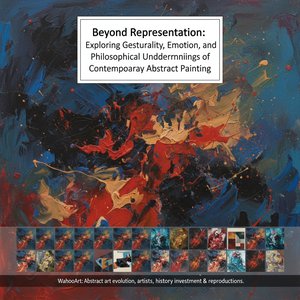
Más Allá de la Representación: Explorando la Gestualidad, la Emoción y los Fundamentos Filosóficos de la Pintura Abstracta Contemporánea
Explora la profunda filosofía y gestualidad de la pintura abstracta contemporánea. Análisis experto de Rothko, Richter y más. Guía esencial para coleccionistas.
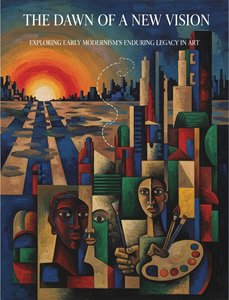
El Amanecer de una Nueva Visión: Explorando el Legado Duradero del Modernismo Temprano en el Arte
Descubre el legado del Modernismo en el arte: desde sus raíces románticas hasta su influencia en las vanguardias. Análisis de artistas, temas y técnicas clave. ¡Explora la belleza atemporal con OriginalUniqueArt!
Los 10 Maestros del Cubismo: Obras que Revolucionaron el Arte |
Descubre los 10 lienzos cubistas que revolucionaron el arte moderno. Explora la historia de Picasso, Braque y otros maestros del cubismo en . Reproducciones de alta calidad para tu hogar.
Las 10 Obras Maestras en Acrílico que Revolucionaron el Arte |
Descubre las 10 obras maestras en acrílico que revolucionaron el arte moderno. Explora la historia de Pollock, Rothko y Warhol, sus técnicas y paletas vibrantes. Encuentra reproducciones de alta calidad e inspírate para decorar tu hogar con .