

 Vista previa
 Compartir
 Compartir
 Ver detalles
 Guía
Guía

 Descargar
 Ver artículos similares
 Radiografía
 Presentación de diapositivas
 Estadísticas
The accordion


 Leer más
Reproducción al óleo hecha a mano
Óleo sobre lienzo pintado a mano en el tamaño y marco de su elección, realizado por encargo por nuestros artistas. ( Cambiar a formato impreso Ver versión en imagen digital)




P118B €10

P118H €10

P118W €10

P438Z €10

P508JH €12

P508YH €12

P805H €10

P805Z €10

P919BZ €10

P919G €10

P919XJ €10

P959ZH €10

P968JZ €12

W106C €8

W218G €10

W218JH €8

W218Y €10

W307PJ €10

W316G €10

W316PJ €8

W316Y €10

W398PJ €8

W4111J €10

W500HY €15

W500JH €15

W692G €12

W849H €8

W940BG €15

W953PJ €8




Elija entre nuestros tamaños predefinidos que respetan las proporciones originales de la obra.

Puede ingresar sus propias dimensiones para adaptarse a un marco o espacio específico. Si el tamaño seleccionado no coincide con las proporciones de la imagen original, recortaremos la obra o extenderemos la pintura con elementos adicionales pintados a mano. Se le enviará una maqueta digital para su aprobación antes de comenzar la producción.
Tenga en cuenta que la vista previa en pantalla no refleja el recorte o la extensión reales. Solo la maqueta mostrará con precisión la composición final.
Si bien existen tamaños personalizados, recomendamos seleccionar una dimensión de la lista predefinida para preservar las proporciones originales.
Tras realizar el pedido, el equipo de OriginalUniqueArt.com enviará un correo electrónico al cliente para solicitar instrucciones y proporcionarle una vista previa del boceto.
Envío a todo el mundo () en 3-4 semanas en lugar de las 5 semanas estándar. (7 octubre). Sin comprometer la calidad.

Envío exprés gratuito a todo el mundo

Lienzo de lino de alta calidad

Seguro de envío completo

Garantía de reembolso de impuestos aduaneros

Garantía de fidelidad cromática exacta

Política de devolución de 100 días (solo por defectos)

Garantía de devolución del 100% del dinero

Oferta por volumen
 La opción de vidrio solo está disponible en tamaños inferiores a 110 cm.

The accordion
Técnica de reproducción
Tamaño de la reproducción
-


Precio total
€ 258
A Symphony of Industrial Rhythm
In the vibrant landscape of early twentieth-century modernism, few works capture the pulse of the machine age as electrifyingly as Fernand Léger’s 1926 masterpiece, The Accordion. This is not merely a painting of a musical instrument; it is a bold, chromatic manifesto that translates the mechanical heartbeat of urban life onto a static canvas. Upon first encounter, the viewer is swept up in a sea of luminous reds and sun-drenched yellows, anchored by assertive black accents that slice through the composition with architectural precision. Léger rejects the hazy, ephemeral softness of Impressionism, opting instead for a visual language defined by structural integrity and a profound clarity that demands attention.
The centerpiece of this rhythmic dance is the accordion itself—a symbol that bridges the gap between soulful human expression and the burgeoning mechanical power of the era. Through his unique lens, Léger presents the instrument not as a static object of nostalgia, but as an active participant in a larger, geometric choreography. The composition is a masterful display of Constructivism, where the world is reimagined through simplified forms such as cylinders, cubes, and intersecting planes. As the eye wanders across the canvas, one discovers smaller, fragmented echoes of the accordion scattered throughout the periphery, creating a sense of infinite movement that mirrors the relentless energy of a modernizing Europe.
The Art of the Machine Age
To understand The Accordion is to understand the soul of the post-World War I era, a period defined by unprecedented urbanization and the rapid expansion of industrial technology. Léger, whose early life was rooted in the physical labor of rural Normandy, found a profound connection between the rhythmic movements of manual work and the precision of the machine. His technique utilizes tachisme—a method of applying paint with loose, gestural strokes—to infuse his rigid geometric shapes with a sense of organic vitality. This tension between the structured, mechanical forms and the energetic, painterly texture creates a captivating visual friction that keeps the viewer perpetually engaged.
For the discerning collector or interior designer, this artwork offers more than just aesthetic beauty; it provides a sophisticated focal point that embodies strength and dynamism. The painting’s ability to command a room lies in its balanced use of primary colors and bold outlines, making it an ideal centerpiece for contemporary spaces that celebrate modernism and structural elegance. Owning a high-quality reproduction of this work allows one to invite the spirit of the avant-garde into their home, serving as a constant reminder of a time when art dared to embrace the beautiful, clanging complexity of the modern world.
Preguntas y respuestas
¿Cómo encaja "The accordion" con los temas y el estilo de Fernand Léger?
Dentro de la obra de Fernand Léger, "The accordion" se inscribe en el estilo Geometric Abstraction, junto a los temas de cubist inspiration, industrial progress, mechanical rhythm, leger’s vision, formal experimentation.
¿Qué edad tenía Fernand Léger cuando creó "The accordion" en 1926?
Fernand Léger realizó "The accordion" a la edad de 45. El artista nació en 1881 y la obra data de 1926.
¿Dónde puedo descargar "The accordion" de Fernand Léger?
Hay una descarga disponible para "The accordion": la página de Descargar de la obra ofrece descarga de una imagen digital en alta resolución.
¿Puedo ver una vista previa de "The accordion" de Fernand Léger antes de realizar el pedido?
Puedes ver una vista previa de "The accordion" de Fernand Léger en la página de Vista previa de la obra.
¿Para qué uso se sugiere "The accordion" de Fernand Léger?
El uso sugerido para "The accordion" de Fernand Léger es Focal. También puede servir para otros fines.
¿En qué año se creó "The accordion"?
"The accordion" data de 1926. La fecha sitúa la obra dentro de la trayectoria de Fernand Léger y de su época.
¿A qué artista se le atribuye "The accordion"?
"The accordion" se atribuye a Fernand Léger.
Biografía del artista
vida temprana y formación
fernand léger, un pintor, escultor y cineasta francés, nació el 4 de febrero de 1881 en Argentán, Orne, Baja Normandía. Su padre criaba ganado, y Léger inicialmente se formó como arquitecto de 1897 a 1899. Luego se mudó a París en 1900, ganándose la vida como dibujante arquitectónico.desarrollo artístico
El trabajo temprano de Léger estuvo influenciado por el impresionismo, como se ve en le jardin de ma mère (mi madre's garden) (1905). Después de asistir a la escuela de artes decorativas y la academia Julian, comenzó a trabajar seriamente como pintor a los 25 años. Su estilo evolucionó hacia una forma personal del cubismo, que los críticos denominaron "tubismo" por su énfasis en las formas cilíndricas.cubismo y el grupo puteaux
En 1910, Léger expuso en el salón de otoño junto a jean metzinger y henri le fauconnier. Se unió al grupo puteaux, también conocido como la sección dorada (la sección de oro), junto con otros artistas como francis picabia y marcel duchamp.guerra y su influencia en el trabajo de léger
Las experiencias de Léger en la Primera Guerra Mundial impactaron significativamente su obra. Durante su tiempo en el frente, produjo dibujos de piezas de artillería, aviones y soldados compañeros. Su pintura soldier with a pipe (1916) refleja este período.obra posterior y legado
La obra posterior de Léger, caracterizada por formas mecánicas y elegantes, lo vinculó a la tradición de la pintura figurativa francesa. Sus paisajes animados de 1921 mostraron figuras y animales en formas armoniosas y aerodinámicas.- ver obras de fernand léger en OriginalUniqueArt
- más sobre fernand léger en wikipedia
- descubra el musée national fernand léger (francia) con OriginalUniqueArt
- la mujer sentada (100 x 81 cm, tubismo)
- elemento de máquina (cubismo)

Fernand Léger
1881 - 1955 , Francia
Datos clave
- Artistas Influenciados Por: ['Pop Art']
- Artistas Que Influyeron:
- Cézanne
- Impresionismo
- Fecha De Nacimiento: 4 de febrero de 1881
- Lugar De Nacimiento: Argentan, Francia
- Movimiento Artístico:
- Cubismo
- Tubismo
- Nacionalidad: Francés
- Nombre Completo: Fernand Léger
- Obras Notables:
- La Mujer Sentada
- Elemento de Máquina
- El Gran Desfile
- Paisajes Animados
Artículos relacionados

Beyond Form & Color: Geometric Abstraction's Evolution in 20th/21st Century Art
Explore the evolution of geometric abstraction from Cubism to contemporary art. Discover key artists like Malevich & Mondrian, investment insights, and expert collecting advice at OriginalUniqueArt.
Arte Industrial: 10 Obras Maestras para un Hogar con Carácter | OriginalUniqueArt.com
Descubre 10 obras maestras que capturan la esencia del arte industrial. Explora la historia de Van Gogh, Hopper y Klimt, sus técnicas y paletas. Encuentra lienzos perfectos para un hogar con carácter en OriginalUniqueArt.com.

Neo-Abstract Art: The High-Impact Evolution of Modern Visual Energy and Geometric Sophistication
Discover the power of Neo-Abstract art. Explore how bold geometric forms and high-impact visual energy are redefining modern design. Learn to curate sophisticated, high-energy spaces with the latest trends in contemporary abstraction and structural color.
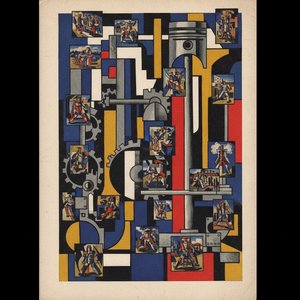
Fernand Léger: Las 25 Obras Maestras del Tubismo y la Vanguardia Francesa | OriginalUniqueArt
Descubre las 25 obras maestras de Fernand Léger, pionero del tubismo y la vanguardia francesa. Explora su estética industrial, composiciones geométricas y vibrantes colores. Reproducciones de arte exclusivas en OriginalUniqueArt.com.

Abstracción Geométrica: 10 Obras Maestras que Transformaron el Arte Moderno | OriginalUniqueArt
Descubre las 10 obras maestras de la abstracción geométrica que revolucionaron el arte moderno. Explora a Mondrian, Malevich y Kandinsky en OriginalUniqueArt.com. Reproducciones de alta calidad para tu hogar.


