

 Ver en contexto
 Enviar
 Compartir
 Detalles

 Descargar
 Similares
 Radiografía
 Presentación de diapositivas
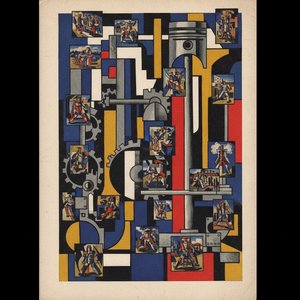
Los Bañistas
 Acrílico sobre papel
- Arte de pared
- Cubist Modernism
 Plena Edad Media
 25.0 x 32.0 cm
 Ver más
Giclée / Impresión de arte
Impresiones giclée o en lienzo de calidad de museo con producción rápida y opciones de acabado flexibles. ( Comprar pintura hecha a mano Comprar imagen)




P118B $10

P118H $10

P118W $10

P438Z $10

P508JH $12

P508YH $12

P805H $10

P805Z $10

P919BZ $10

P919G $10

P919XJ $10

P959ZH $10

P968JZ $12

W106C $8

W218G $10

W218JH $8

W218Y $10

W307PJ $10

W316G $10

W316PJ $8

W316Y $10

W398PJ $8

W4111J $10

W500HY $15

W500JH $15

W692G $12

W849H $8

W940BG $15

W953PJ $8




Elija entre nuestros tamaños predefinidos que respetan las proporciones originales de la obra.

Puede introducir sus propias dimensiones para adaptarse a un marco o espacio específico. Si el tamaño seleccionado no coincide con las proporciones de la imagen original, recortaremos la obra de arte o extenderemos la imagen con un borde con efecto espejo o de color sólido. Se enviará una maqueta digital para su aprobación antes de que comience la producción.
Tenga en cuenta que la vista previa en pantalla no refleja el recorte o la extensión real. Solo la maqueta mostrará con precisión la composición final.
Aunque existen tamaños personalizados, recomendamos seleccionar una dimensión de la lista predefinida para preservar las proporciones originales.
Envío a todo el mundo () en 2 semanas en lugar de las 4/5 semanas estándar. (3 septiembre)

Envío exprés gratuito a todo el mundo

Lienzo de lino de alta calidad

Seguro de envío total

Garantía de reembolso de impuestos aduaneros

Garantía de fidelidad cromática exacta

Política de devolución de 60 días (solo por defectos)

Garantía de devolución del 100% del dinero

Descuento por cantidad
 La opción de vidrio solo está disponible en tamaños inferiores a 110 cm.

Los Bañistas
Giclée / Impresión de arte
Dimensiones de la reproducción
-


Precio total final
$ 80
El Baile de la Modernidad: Un Reflejo Cubista del Cuerpo y el Tiempo
Fernand Léger’s “The Bathers” – a work often overlooked amidst the towering figures of early 20th-century modernism – offers a surprisingly intimate and profoundly evocative glimpse into the artist's vision. Painted around 1932, this piece transcends mere representation; it’s an exploration of form, movement, and the evolving relationship between humanity and the burgeoning machine age. Léger, deeply influenced by the dynamism of industrialization and the geometric precision of Cubism, doesn’t simply depict a group of nude figures relaxing in water – he constructs them as fragments of a new visual language.
The scene unfolds with remarkable restraint, dominated by a muted palette of greys, whites, and beiges. This deliberate limitation amplifies the impact of Léger's bold black outlines, which carve out each figure and landscape element with an almost architectural precision. These lines aren’t meant to mimic reality; instead, they define shapes into simplified planes and volumes, creating a flattened perspective that echoes the principles of Cubism. The figures themselves are reduced to essential geometric forms – cylinders, cones, and rectangles – suggesting a detachment from individual identity and a focus on the underlying structure of existence. It's as if Léger is distilling the human form down to its most fundamental components, presenting it not as an organic entity but as a collection of interlocking shapes.
La Influencia de la Máquina y el Cuerpo
Léger’s fascination with the machine age permeates every aspect of “The Bathers.” The figures themselves bear a striking resemblance to the streamlined forms of early automobiles and industrial machinery. Their elongated limbs, smooth surfaces, and almost mechanical precision evoke a sense of both power and vulnerability. This isn't a celebration of technological progress in a purely optimistic vein; rather, it’s an interrogation of how technology is reshaping our perception of the human body and our relationship to the world around us. The landscape, too, subtly reflects this influence – simplified hills and trees are rendered with broad strokes, suggesting a distant, almost abstracted view of nature.
Interestingly, Léger's background in architecture—he initially pursued studies in building design—provides a crucial context for understanding his artistic choices. He sought to integrate the principles of modernism into his work, rejecting the purely decorative or representational approaches that were prevalent at the time. Instead, he aimed to capture the essence of modernity – its dynamism, its geometric forms, and its inherent tension between nature and technology.
Un Diálogo entre Simplicidad y Misterio
Despite the simplified forms and muted palette, “The Bathers” is far from sterile or impersonal. There’s a palpable sense of movement and energy conveyed through the figures' poses and gestures. They are not static subjects; they seem to be caught in a moment of playful interaction, suggesting a shared experience of leisure and relaxation. However, beneath this surface tranquility lies an underlying current of mystery. The ambiguous lighting, the flattened perspective, and the almost unsettling geometric forms create a sense of unease, inviting the viewer to question what they are seeing and how it relates to their own understanding of reality.
The painting’s enduring appeal lies in its ability to evoke both familiarity and strangeness. It's a work that rewards repeated viewing, revealing new layers of meaning with each encounter. “The Bathers” is not simply a depiction of nude figures; it’s a meditation on the nature of form, movement, and the human condition in an age of rapid change – a timeless testament to Fernand Léger’s unique artistic vision.
Biografía del artista
vida temprana y formación
fernand léger, un pintor, escultor y cineasta francés, nació el 4 de febrero de 1881 en Argentán, Orne, Baja Normandía. Su padre criaba ganado, y Léger inicialmente se formó como arquitecto de 1897 a 1899. Luego se mudó a París en 1900, ganándose la vida como dibujante arquitectónico.desarrollo artístico
El trabajo temprano de Léger estuvo influenciado por el impresionismo, como se ve en le jardin de ma mère (mi madre's garden) (1905). Después de asistir a la escuela de artes decorativas y la academia Julian, comenzó a trabajar seriamente como pintor a los 25 años. Su estilo evolucionó hacia una forma personal del cubismo, que los críticos denominaron "tubismo" por su énfasis en las formas cilíndricas.cubismo y el grupo puteaux
En 1910, Léger expuso en el salón de otoño junto a jean metzinger y henri le fauconnier. Se unió al grupo puteaux, también conocido como la sección dorada (la sección de oro), junto con otros artistas como francis picabia y marcel duchamp.guerra y su influencia en el trabajo de léger
Las experiencias de Léger en la Primera Guerra Mundial impactaron significativamente su obra. Durante su tiempo en el frente, produjo dibujos de piezas de artillería, aviones y soldados compañeros. Su pintura soldier with a pipe (1916) refleja este período.obra posterior y legado
La obra posterior de Léger, caracterizada por formas mecánicas y elegantes, lo vinculó a la tradición de la pintura figurativa francesa. Sus paisajes animados de 1921 mostraron figuras y animales en formas armoniosas y aerodinámicas.- ver obras de fernand léger en OriginalUniqueArt
- más sobre fernand léger en wikipedia
- descubra el musée national fernand léger (francia) con OriginalUniqueArt
- la mujer sentada (100 x 81 cm, tubismo)
- elemento de máquina (cubismo)

Fernand Léger
1881 - 1955 , Francia
Datos clave
- Artistas Influenciados Por: ['Pop Art']
- Artistas Que Influyeron:
- Cézanne
- Impresionismo
- Fecha De Nacimiento: 4 de febrero de 1881
- Lugar De Nacimiento: Argentan, Francia
- Movimiento Artístico:
- Cubismo
- Tubismo
- Nacionalidad: Francés
- Nombre Completo: Fernand Léger
- Obras Notables:
- La Mujer Sentada
- Elemento de Máquina
- El Gran Desfile
- Paisajes Animados
Artículos relacionados
Fernand Léger: Las 25 Obras Maestras del Tubismo y la Vanguardia Francesa | OriginalUniqueArt
Descubre las 25 obras maestras de Fernand Léger, pionero del tubismo y la vanguardia francesa. Explora su estética industrial, composiciones geométricas y vibrantes colores. Reproducciones de arte exclusivas en OriginalUniqueArt.com.

Modern Geometry & Machine Age Beauty: A Collector's Guide to the Cubist Vision of Fernand Léger
Explore the profound geometric mastery of Fernand Léger. Discover how his 'Tubism' and Machine Age aesthetics redefined modern art, offering timeless inspiration for discerning collectors seeking to integrate Cubist dynamism into sophisticated contemporary interiors.
Arte Industrial: 10 Obras Maestras para un Hogar con Carácter | OriginalUniqueArt.com
Descubre 10 obras maestras que capturan la esencia del arte industrial. Explora la historia de Van Gogh, Hopper y Klimt, sus técnicas y paletas. Encuentra lienzos perfectos para un hogar con carácter en OriginalUniqueArt.com.

Paul Cézanne: Las 25 Obras Maestras que Definieron el Arte Moderno | OriginalUniqueArt
Descubre las 25 obras maestras de Paul Cézanne que revolucionaron el arte moderno. Explora su técnica, inspiración y significado en paisajes, bodegones y retratos. Reproducciones de alta calidad para decorar tu hogar con arte inolvidable. ¡Explora la colección completa en OriginalUniqueArt.com!

Modern Geometry & Machine Age Beauty: A Collector's Guide to the Cubist Vision of Fernand Léger
Explore the vibrant world of Fernand Léger. Discover how his 'Tubism' and Machine Age aesthetics redefined modern art, offering profound inspiration for discerning collectors seeking geometric beauty and industrial dynamism.



