

 Vista previa
 Compartir
 Compartir
 Ver detalles
 Guía
Guía

 Descargar
 Ver artículos similares
 Radiografía
 Presentación de diapositivas
 Estadísticas
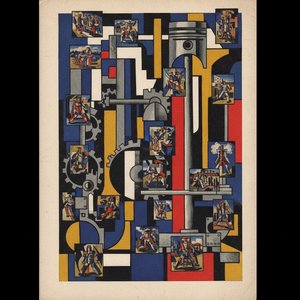
El Disco en la Ciudad
 Acrílico sobre lienzo
- Arte de pared
- Cubist Style
 1919
1919- Arte moderno
 65.0 x 54.0 cm
 Leer más
Giclée / Impresión de arte
Impresiones giclée o en lienzo de calidad de museo con producción rápida y opciones de acabado flexibles. ( Encargar reproducción pintada a mano Ver versión en imagen digital)




P118B €10

P118H €10

P118W €10

P438Z €10

P508JH €12

P508YH €12

P805H €10

P805Z €10

P919BZ €10

P919G €10

P919XJ €10

P959ZH €10

P968JZ €12

W106C €8

W218G €10

W218JH €8

W218Y €10

W307PJ €10

W316G €10

W316PJ €8

W316Y €10

W398PJ €8

W4111J €10

W500HY €15

W500JH €15

W692G €12

W849H €8

W940BG €15

W953PJ €8




Elija entre nuestros tamaños predefinidos que respetan las proporciones originales de la obra.

Puede introducir sus propias dimensiones para adaptarse a un marco o espacio específico. Si el tamaño seleccionado no coincide con las proporciones de la imagen original, recortaremos la obra de arte o extenderemos la imagen con un borde con efecto espejo o de color sólido. Se enviará una maqueta digital para su aprobación antes de que comience la producción.
Tenga en cuenta que la vista previa en pantalla no refleja el recorte o la extensión real. Solo la maqueta mostrará con precisión la composición final.
Aunque existen tamaños personalizados, recomendamos seleccionar una dimensión de la lista predefinida para preservar las proporciones originales.
Envío a todo el mundo () en 2 semanas en lugar de las 4/5 semanas estándar. (11 octubre)

Envío exprés gratuito a todo el mundo

Lienzo de lino de alta calidad

Seguro de envío completo

Garantía de reembolso de impuestos aduaneros

Garantía de fidelidad cromática exacta

Política de devolución de 100 días (solo por defectos)

Garantía de devolución del 100% del dinero

Oferta por volumen
 La opción de vidrio solo está disponible en tamaños inferiores a 110 cm.

El Disco en la Ciudad
Giclée / Impresión de arte
Tamaño de la reproducción
-


Precio total
€ 69
A Symphony of Cylinders: Exploring Fernand Léger’s “A Disc in the City”
Fernand Léger's "A Disc in the City," painted in 1919, stands as a cornerstone of Cubism and Tubism—a movement that irrevocably altered the trajectory of modern art. More than just an image of urban life; it’s a deliberate manifesto of Léger’s belief that abstraction could simultaneously convey both intellectual rigor and visceral emotion. This artwork isn't merely observed; it demands engagement, inviting viewers to decipher its geometric language and contemplate its profound symbolism.The Tubist Vision: Embracing Cylindrical Forms
Léger’s affiliation with Tubism—a term coined by Louis Vauxcelles—was pivotal in shaping his artistic approach. Rejecting the fragmentation of Picasso's Cubism, Léger championed cylindrical shapes as a primary visual element, mirroring the industrial landscape and conveying a sense of relentless movement. “A Disc in the City” exemplifies this obsession; the dominant form is undeniably cylindrical, representing not just physical solidity but also the pervasive influence of machinery on human experience. This deliberate simplification wasn’t an abandonment of realism but rather a conscious decision to distill visual information into its most fundamental components—a bold assertion that form could communicate meaning as powerfully as color or texture.Composition and Narrative Depth: Beyond Geometric Precision
The painting's composition is deceptively complex, layering perspectives and angles to create a dynamic tableau. At the center stands a boat – likely a lifeboat – symbolizing resilience and survival amidst the chaos of urban existence. Surrounding it are scattered other boats, reinforcing this theme of precariousness yet hinting at hope. A clock positioned on the right side serves as a poignant reminder of time’s passage, juxtaposed against the static geometry of the cylinder, highlighting the tension between past experience and future aspiration. Notably, a figure in the lower left corner observes the scene—a subtle inclusion that underscores the human element within Léger's stylized depiction. This careful arrangement isn’t simply decorative; it directs the viewer’s gaze and invites contemplation about the role of humanity within the burgeoning industrial age.Influences and Context: Picasso’s Legacy
Léger’s artistic vision was undeniably shaped by his contemporaries, particularly Pablo Picasso. While Picasso explored Cubism with a focus on fracturing perspective and dissecting form, Léger sought to synthesize these techniques into a more unified aesthetic. Consider Picasso's “Mother and Child” (/art/list/?Filter=8XYP6B-Pablo-Picasso-Mother-and-child/), where Picasso’s masterful use of Cubist fragmentation contrasts with Léger’s embrace of cylindrical forms—a testament to the diverse paths taken by artists grappling with the challenges of representing reality in a new era. The painting emerged during the aftermath of World War I, reflecting anxieties about societal upheaval and embracing optimism for the future through technological advancement.Emotional Resonance: A Bold Statement of Modernity
Ultimately, “A Disc in the City” transcends mere visual representation; it communicates an emotional response to its subject matter. Léger’s vibrant color palette—primarily reds and yellows—injects energy into the scene, conveying a sense of dynamism and vitality. The bold geometric forms aren't merely aesthetically pleasing; they embody Léger’s conviction that abstraction could capture the essence of industrial civilization without resorting to sentimentalism. Viewing this artwork is akin to confronting the transformative power of progress – a challenge to conventional artistic conventions and an enduring celebration of human ingenuity.Preguntas y respuestas
¿Dónde puedo comprar una lámina de "El Disco en la Ciudad" de Fernand Léger?
Para obtener una impresión de "El Disco en la Ciudad" de Fernand Léger, simplemente pídala en esta página: una impresión de bellas artes sobre lienzo de algodón o papel de lienzo de archivo.
¿En qué año se creó "El Disco en la Ciudad"?
"El Disco en la Ciudad" data de 1919. La fecha sitúa la obra dentro de la trayectoria de Fernand Léger y de su época.
¿Cuál es la atmósfera general de "El Disco en la Ciudad" de Fernand Léger?
"El Disco en la Ciudad" tiene una atmósfera Industrial.
¿A qué edad creó Fernand Léger "El Disco en la Ciudad"?
Cuando se creó "El Disco en la Ciudad" en 1919, Fernand Léger —nacido/a en 1881— tenía 38 años.
¿Qué tono predominante recorre "El Disco en la Ciudad" de Fernand Léger?
"El Disco en la Ciudad" se inclina hacia un tono Del ocre al sepia.
¿En qué etapa de la carrera de Fernand Léger se sitúa "El Disco en la Ciudad", dada su fecha?
La fecha de 1919 sitúa a "El Disco en la Ciudad" en el Mature Style del desarrollo de Fernand Léger.
¿Quién es el artista detrás de "El Disco en la Ciudad"?
"El Disco en la Ciudad" fue creada por Fernand Léger. La información en esta página describe la obra original de Fernand Léger.
Biografía del artista
vida temprana y formación
fernand léger, un pintor, escultor y cineasta francés, nació el 4 de febrero de 1881 en Argentán, Orne, Baja Normandía. Su padre criaba ganado, y Léger inicialmente se formó como arquitecto de 1897 a 1899. Luego se mudó a París en 1900, ganándose la vida como dibujante arquitectónico.desarrollo artístico
El trabajo temprano de Léger estuvo influenciado por el impresionismo, como se ve en le jardin de ma mère (mi madre's garden) (1905). Después de asistir a la escuela de artes decorativas y la academia Julian, comenzó a trabajar seriamente como pintor a los 25 años. Su estilo evolucionó hacia una forma personal del cubismo, que los críticos denominaron "tubismo" por su énfasis en las formas cilíndricas.cubismo y el grupo puteaux
En 1910, Léger expuso en el salón de otoño junto a jean metzinger y henri le fauconnier. Se unió al grupo puteaux, también conocido como la sección dorada (la sección de oro), junto con otros artistas como francis picabia y marcel duchamp.guerra y su influencia en el trabajo de léger
Las experiencias de Léger en la Primera Guerra Mundial impactaron significativamente su obra. Durante su tiempo en el frente, produjo dibujos de piezas de artillería, aviones y soldados compañeros. Su pintura soldier with a pipe (1916) refleja este período.obra posterior y legado
La obra posterior de Léger, caracterizada por formas mecánicas y elegantes, lo vinculó a la tradición de la pintura figurativa francesa. Sus paisajes animados de 1921 mostraron figuras y animales en formas armoniosas y aerodinámicas.- ver obras de fernand léger en OriginalUniqueArt
- más sobre fernand léger en wikipedia
- descubra el musée national fernand léger (francia) con OriginalUniqueArt
- la mujer sentada (100 x 81 cm, tubismo)
- elemento de máquina (cubismo)

Fernand Léger
1881 - 1955 , Francia
Datos clave
- Artistas Influenciados Por: ['Pop Art']
- Artistas Que Influyeron:
- Cézanne
- Impresionismo
- Fecha De Nacimiento: 4 de febrero de 1881
- Lugar De Nacimiento: Argentan, Francia
- Movimiento Artístico:
- Cubismo
- Tubismo
- Nacionalidad: Francés
- Nombre Completo: Fernand Léger
- Obras Notables:
- La Mujer Sentada
- Elemento de Máquina
- El Gran Desfile
- Paisajes Animados
Artículos relacionados
Fernand Léger: Las 25 Obras Maestras del Tubismo y la Vanguardia Francesa | OriginalUniqueArt
Descubre las 25 obras maestras de Fernand Léger, pionero del tubismo y la vanguardia francesa. Explora su estética industrial, composiciones geométricas y vibrantes colores. Reproducciones de arte exclusivas en OriginalUniqueArt.com.

Modern Geometry & Machine Age Beauty: A Collector's Guide to the Cubist Vision of Fernand Léger
Explore the vibrant world of Fernand Léger. Discover how his 'Tubism' and Machine Age aesthetics redefined modern art, offering profound inspiration for discerning collectors seeking geometric beauty and industrial dynamism.

Abstracción Geométrica: 10 Obras Maestras que Transformaron el Arte Moderno | OriginalUniqueArt
Descubre las 10 obras maestras de la abstracción geométrica que revolucionaron el arte moderno. Explora a Mondrian, Malevich y Kandinsky en OriginalUniqueArt.com. Reproducciones de alta calidad para tu hogar.

Arte Industrial: 10 Obras Maestras para un Hogar con Carácter | OriginalUniqueArt.com
Descubre 10 obras maestras que capturan la esencia del arte industrial. Explora la historia de Van Gogh, Hopper y Klimt, sus técnicas y paletas. Encuentra lienzos perfectos para un hogar con carácter en OriginalUniqueArt.com.

Modern Geometry & Machine Age Beauty: A Collector's Guide to the Cubist Vision of Fernand Léger
Explore the profound geometric mastery of Fernand Léger. Discover how his 'Tubism' and Machine Age aesthetics redefined modern art, offering timeless inspiration for discerning collectors seeking to integrate Cubist dynamism into sophisticated contemporary interiors.


