 Ver en contexto
 Enviar
 Compartir
 Detalles
 Guía
Guía

 Descargar
 Similares
 Radiografía
 Presentación de diapositivas
 Preguntas y respuestas
 Estadísticas
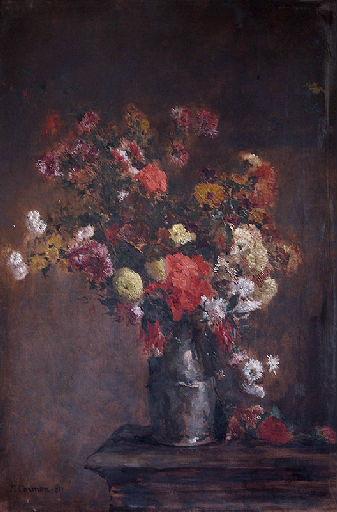
Fleurs

 Ver más
Giclée / Impresión de arte
Impresiones giclée o en lienzo de calidad de museo con producción rápida y opciones de acabado flexibles. ( Comprar pintura hecha a mano Cambiar a imagen digital)




































Elija entre nuestros tamaños predefinidos que respetan las proporciones originales de la obra.

Introduzca el ancho y el alto que necesite para adaptarse a su marco o pared. Una impresión solo puede recortarse, nunca hacerse más grande que la imagen original, por lo que un tamaño con una forma distinta perderá parte de la obra. Le enviaremos una maqueta digital para su aprobación antes de realizar cualquier impresión. La imagen que se muestra en esta página no refleja el recorte real; solo la maqueta lo hace.
Envío a todo el mundo () en 2 semanas en lugar de las 4/5 semanas estándar. (15 noviembre)

Envío exprés gratuito a todo el mundo

Lienzo de lino de alta calidad

Seguro de envío total

Garantía de reembolso de aranceles aduaneros

Garantía de fidelidad cromática exacta

Política de devolución de 100 días (solo por defectos)

Garantía de devolución del 100% del dinero

Descuento por cantidad
 La opción de vidrio solo está disponible en tamaños inferiores a 110 cm.

Fleurs
Giclée / Impresión de arte
Dimensiones de la reproducción
-


Precio total final
€ 72
Biografía del artista
Fernand Cormon: Un pintor del mito, la historia y el espíritu humano
Fernand Cormon (1845-1924) no fue simplemente un pintor; fue un cronista de la travesía de la humanidad a través del tiempo, un maestro de la narrativa dramática plasmada en colores intensos y detalles evocadores. Nacido en un entorno profundamente artístico —su padre, Eugène Cormón, era un célebre dramaturgo, y su madre, Charlotte Furais, una reconocida actriz—, Fernand heredó un profundo aprecio por la puesta en escena y el relato. Esta sensibilidad teatral moldeó profundamente su enfoque del arte, dotando a sus escenas históricas de un sentido palpable de drama e inmediatez. Su formación temprana en los estudios de Alexandre Cabanel, Eugène Fromentin y Jean-François Portaels le proporcionó una base sólida en la técnica académica, pero fue la visión distintiva del propio Cormon lo que finalmente definió su legado.
La trayectoria artística de Cormon comenzó con una fascinación por lo sensacional. Sus primeras obras, como “Asesinato en el Serrallo” (1868) y “La muerte de Ravana” (1875), que representaban escenas de violencia y derramamiento de sangre, captaron la atención del público; obtuvieron cierto reconocimiento crítico, pero también provocaron controversia por su realismo gráfico. Estas piezas establecieron su reputación como un artista sin miedo a confrontar temas difíciles, una característica que continuaría informando su obra a lo largo de su carrera. Sin embargo, los intereses artísticos de Cormon pronto se expandieron más allá del mero espectáculo. Demostró un profundo interés en la mitología y las grandes narrativas de la historia, buscando capturar no solo los acontecimientos, sino también las emociones y los dramas humanos inherentes a ellos.
Los años del Salón y el desarrollo artístico
El ascenso de Cormon a la prominencia estuvo inextricablemente ligado al prestigioso Salón de París, la exposición de arte dominante de su época. Expuso de manera constante en el Salón desde 1863 en adelante, ganando reconocimiento por sus poderosas composiciones y su magistral pincelada. El énfasis del Salón en la pintura histórica proporcionó a Cormon una plataforma vital para demostrar sus habilidades y consolidarse como uno de los principales artistas históricos de Francia. Sus primeros éxitos —medallas en 1070 y 1873— afianzaron su posición dentro del establecimiento artístico.
Un momento crucial en la carrera de Cormon llegó con el encargo de “Caín huyendo ante la maldición de Jehová” (1880), una obra monumental que cimentó su reputación por su intensidad dramática. Esta pintura, que representa la historia bíblica de Caín y Abel, demostró la capacidad de Cormon para transmitir una emoción profunda a través del gesto, el color y la composición. La magnitud y el poder emocional de “Caín” lo establecieron como una fuerza importante en el arte francés. Continuó explorando temas de mitología e historia, produciendo obras icónicas como “Una forja” (1894) y “Anticipación”, cada una imbuida de su característico toque dramático.
Más allá del Salón: Retratos y encargos institucionales
Si bien Cormon se mantuvo como un participante comprometido con el sistema del Salón, también expandió su práctica artística más allá de la pintura histórica tradicional. Se volvió cada vez más solicitado como retratista, capturando la apariencia de figuras prominentes de la sociedad parisina. Sus retratos destacaban por su profundidad psicológica y su capacidad para revelar la vida interior de sus sujetos; era particularmente conocido por sus evocadoras representaciones de las mujeres.
Un encargo significativo durante este período provino del Musée de l'Homme (ahora parte del Museo de Historia Natural), donde creó una serie de paneles que ilustraban etapas clave del desarrollo humano: nacimiento, muerte, matrimonio, guerra y paz. Estos murales en grisalla, ejecutados con una habilidad y un detalle notables, ofrecieron una narrativa visual del viaje de la humanidad a través del tiempo y demostraron la versatilidad de Cormon como artista. Su trabajo en las colecciones prehistóricas del museo, particularmente sus representaciones de la vida en la Edad de Piedra, puso de manifiesto su compromiso con la exploración de los temas del origen y la evolución humana.
Legado e influencia
La carrera de Fernand Cormon abarcó varias décadas, siendo testigo de cambios significativos en el mundo del arte. A pesar de experimentar un período de relativo anonimato tras la Primera Guerra Mundial, siguió siendo una figura respetada dentro de la comunidad artística. Su influencia puede verse en la obra de numerosos artistas que estudiaron en su taller, incluyendo a Henri de Toulouse-Lautrec, Louis Anquetin y Vincent van Gogh (quien visitó el estudio de Cormon en 1888). El énfasis de Cormon en la narrativa dramática, la pincelada expresiva y un profundo compromiso con los temas históricos y mitológicos dejó una huella perdurable en la pintura francesa.
Su prematura muerte en 1924 —víctima de un atropello por un taxi frente a su estudio— truncó una carrera extraordinaria. Hoy en día, las pinturas de Cormon se encuentran en los principales museos de Francia y del mundo, testimonio del poder duradero de su visión artística. Permanece como una figura fascinante en la historia del arte francés, celebrado por su capacidad para capturar el drama, la emoción y el espíritu imperecedero de la humanidad.

Fernand Cormon
1845 - 1924 , Francia
Datos clave
- Artistic Movement Or Style: Pintura histórica
- Artists Or Movements Influenced By This Artist:
- Van Gogh
- Lautrec
- Artists Who Influenced This Artist:
- Cabanel
- Fromentin
- Portaels
- Date Of Birth: 1845
- Date Of Death: 1924
- Full Name: Fernand-Anne Piestre dit Cormon
- Nationality: Francés
- Notable Artworks:
- Asesinato en el Seraglio
- La muerte de Ravana
- Caín huyendo de Jehová
- Place Of Birth: París, Francia
Artículos relacionados
Los 10 Maestros del Realismo Académico: Obras que Marcaron la Historia del Arte
Descubre los 10 lienzos más emblemáticos del Realismo Académico. Explora la historia, técnica y belleza de obras maestras de Bouguereau, Gérôme y Cabanel. Encuentra reproducciones de arte clásico en OriginalUniqueArt.com.

The Botanical Chronicle: A History of Scientific Precision and Floral Artistry
Explore the evolution of botanical art from scientific herbals to Impressionism. Discover the history behind nature's finest masterpieces.

The Botanical Canvas: Precision and Poetics in Floral Still Life Art
Explore the technical mastery of floral still life from Dutch masters to Impressionism. Discover the art of botanical precision today.

Dominando la Luz: Las 25 Obras Maestras de Jean-Baptiste-Camille Corot
Explora los paisajes de Corot y su luz eterna. Descubre estas 25 obras maestras en OriginalUniqueArt.com.
Los 10 Maestros Impresionistas que Revolucionaron el Arte | OriginalUniqueArt
Descubre los 10 cuadros impresionistas más influyentes de Monet, Renoir y Degas. Explora la historia, técnica y colores vibrantes del impresionismo. Encuentra reproducciones de arte exclusivas en OriginalUniqueArt.com.
