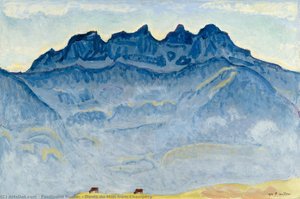
Vista previa
 Compartir
 Compartir
 Ver detalles
 Guía
Guía

 Descargar
 Ver artículos similares
 Radiografía
 Presentación de diapositivas
 Estadísticas
Truth II
 Acrílico sobre lienzo
- Arte de pared
- Symbolist Painting
 1901
1901 207.0 x 293.0 cm
 Kunsthaus Zürich
 Leer más
Reproducción al óleo hecha a mano
Óleo sobre lienzo pintado a mano en el tamaño y marco de su elección, realizado por encargo por nuestros artistas. ( Cambiar a formato impreso Ver versión en imagen digital)




































Elija entre nuestros tamaños predefinidos que respetan las proporciones originales de la obra.

Puede ingresar sus propias dimensiones para adaptarse a un marco o espacio específico. Si el tamaño seleccionado no coincide con las proporciones de la imagen original, recortaremos la obra o extenderemos la pintura con elementos adicionales pintados a mano. Se le enviará una maqueta digital para su aprobación antes de comenzar la producción.
Tenga en cuenta que la vista previa en pantalla no refleja el recorte o la extensión reales. Solo la maqueta mostrará con precisión la composición final.
Si bien existen tamaños personalizados, recomendamos seleccionar una dimensión de la lista predefinida para preservar las proporciones originales.
Tras realizar el pedido, el equipo de OriginalUniqueArt.com enviará un correo electrónico al cliente para solicitar instrucciones y proporcionarle una vista previa del boceto.
Envío a todo el mundo () en 3-4 semanas en lugar de las 5 semanas estándar. (8 octubre). Sin comprometer la calidad.

Envío exprés gratuito a todo el mundo

Lienzo de lino de alta calidad

Seguro de envío completo

Garantía de reembolso de impuestos aduaneros

Garantía de fidelidad cromática exacta

Política de devolución de 100 días (solo por defectos)

Garantía de devolución del 100% del dinero

Oferta por volumen
 La opción de vidrio solo está disponible en tamaños inferiores a 110 cm.

Truth II
Técnica de reproducción
Tamaño de la reproducción
-


Precio total
€ 258
Truth II: A Symphony of Symbolism by Ferdinand Hodler
The painting “Truth II,” created in 1901 by Swiss artist Ferdinand Hodler, stands as an arresting testament to the burgeoning Symbolist movement and Hodler’s singular artistic vision. More than just a depiction of figures—a woman and eight nude men—it's an exploration of profound psychological themes conveyed through meticulously crafted technique and imbued with layers of symbolic resonance that continue to captivate viewers today. Located at the Kunsthaus Zürich, Switzerland, this monumental canvas (207 x 293 cm) transcends mere representation, inviting contemplation on concepts of femininity, spirituality, and the human condition.Composition and Technique: Hodler’s Parallelism
Hodler's distinctive style, termed “parallelism,” is immediately apparent in “Truth II.” He eschewed Impressionistic brushstrokes for a deliberate flatness of surface, prioritizing geometric forms and precise lines to create an illusion of depth without resorting to traditional perspective. The figures are arranged in a pyramidal structure, emphasizing the central woman’s dominance while simultaneously conveying a sense of interconnectedness between all participants. Hodler achieved this remarkable effect through painstaking layering of oil paint—a technique demanding considerable patience and precision—resulting in surfaces that shimmer with subtle tonal variations and capturing an ethereal quality characteristic of Symbolist art. The muted palette – predominantly earthy tones punctuated by delicate washes of color – contributes to the painting’s contemplative mood, mirroring the artist's preoccupation with inner experience.Historical Context: Embracing Mysticism Amidst Modernity
The Symbolist movement arose in France during the late 1880s and early 1900s as a reaction against the materialism and scientific rationalism of the era. Artists like Hodler sought refuge in realms beyond empirical observation, delving into dreams, myths, and folklore to express emotions and ideas inaccessible to logical discourse. Influenced by Nietzsche’s philosophy and Wagnerian opera—particularly its exploration of mythology and spirituality—Hodler aimed to evoke a sense of sublime beauty and profound psychological insight. “Truth II” reflects this broader cultural preoccupation with the subconscious and the spiritual dimension, aligning itself squarely within the Symbolist aesthetic's desire to confront existential anxieties and celebrate transcendent experience.Symbolism Unveiled: The Woman as Vessel of Divine Presence
The central woman in “Truth II” embodies a complex symbolism rooted in Christian iconography. Her outstretched arms suggest an offering—a gesture of humility and receptivity—while her gaze directs upwards, symbolizing aspiration towards the divine realm. Surrounding her are eight nude men who kneel before her, representing humanity submitting to feminine grace and embodying the archetype of devotion. The woman’s posture is interpreted as holding up a veil or curtain, concealing yet simultaneously revealing the sacred mysteries of existence. Hodler's masterful use of color—particularly the pale hues dominating the woman’s figure—further reinforces this symbolic interpretation, conveying purity, serenity, and spiritual illumination.Emotional Impact: A Meditation on Beauty and Mortality
“Truth II” transcends its formal elements to elicit a powerful emotional response from the viewer. The painting's stillness and solemn grandeur invite contemplation on themes of beauty, mortality, and faith—questions that preoccupied artists and thinkers alike during Hodler’s lifetime. There is an undeniable melancholy woven into the fabric of the image, reflecting Hodler’s own personal struggles with loss and his profound sensitivity to the fragility of human life. Yet, amidst this sorrowful undertone lies a radiant luminescence—a testament to the enduring power of art to inspire awe and elevate consciousness. Ultimately, “Truth II” remains an unforgettable masterpiece, demonstrating Hodler's unparalleled ability to translate psychological complexity into visual splendor.Preguntas y respuestas
¿Cuál es la fecha de creación de "Truth II" de Ferdinand Hodler?
"Truth II" de Ferdinand Hodler fue creada en 1901.
¿Es "Truth II" de Ferdinand Hodler una composición en formato retrato, paisaje o cuadrado?
El formato de "Truth II" es Formato horizontal. Esto resulta útil al planificar dónde se colocará una reproducción.
¿Permite los derechos de autor de "Truth II" de Ferdinand Hodler realizar reproducciones?
"Truth II" de Ferdinand Hodler, conservada en Kunsthaus Zürich, es en el dominio público: sus derechos de autor han expirado. Este estado determina si se pueden realizar reproducciones de la imagen.
¿Qué técnica y estilo caracterizan a "Truth II" de Ferdinand Hodler?
"Truth II" está realizada en Acrílico sobre lienzo, con el estilo Symbolist Painting.
¿Es "Truth II" una de las obras más populares de Ferdinand Hodler?
El nivel de popularidad registrado para "Truth II" de Ferdinand Hodler es Reconocido regionalmente.
¿Quién es el artista detrás de "Truth II"?
"Truth II" fue creada por Ferdinand Hodler. La información en esta página describe la obra original de Ferdinand Hodler.
¿A qué edad creó Ferdinand Hodler "Truth II"?
Ferdinand Hodler realizó "Truth II" a la edad de 48. El artista nació en 1853 y la obra data de 1901.
Biografía del artista
Primeros años y formación artística
Ferdinand Hodler, pintor suizo, nació el 14 de marzo de 1853 en Berna, Suiza. Sus primeras obras se caracterizaron por retratos, paisajes y pinturas de género en un estilo realista. Sin embargo, posteriormente adoptó una forma personal de simbolismo, que él denominó "paralelismo".Evolución del estilo de Hodler
A medida que avanzaba la carrera de Hodler, su obra evolucionó para combinar influencias de varios géneros, incluyendo el simbolismo y el art nouveau. En 1890, completó Noche, una pintura que marcó su transición hacia la imaginería simbolista. Esta pieza, que presenta varias figuras reclinadas, fue inicialmente recibida con controversia pero finalmente obtuvo atención favorable en París.Obras destacadas y colecciones
- El Día (1893), una pintura histórica a gran escala, es un ejemplo notable del trabajo de Hodler. Esta pieza, expuesta en el Kunsthaus Zúrich, demuestra su mezcla única de simbolismo y realismo.
- El Museo Kunsthaus Zúrich, Suiza, cuenta con una impresionante colección de obras de Hodler, incluyendo Verdad II (1897), que puede ser vista en /es/art/show/art-d3b4gt-es/
Legado e influencia
La adopción del simbolismo por parte de Hodler y el desarrollo del "paralelismo" han tenido un impacto duradero en el mundo del arte. Su trabajo puede verse como un precursor del expresionismo, con su énfasis en figuras fuertemente coloreadas y geométricas.- La biografía de Ferdinand Hodler está disponible en OriginalUniqueArt, proporcionando una visión profunda de su vida y evolución artística.
- La historia del desnudo en el arte, que ha sido un tema de interés a lo largo de la carrera de Hodler, puede explorarse más a fondo en [https://en.wikipedia.org/wiki/history_of_the_nude_in_art](https://en.wikipedia.org/wiki/history_of_the_nude_in_art).
Fechas clave
- 1853: Nació en Berna, Suiza
- 1890: Completó Noche, marcando su transición hacia la imaginería simbolista
- 1918: Falleció el 19 de mayo
- https://OriginalUniqueArt.com/@@/d3xnx9-ferdinand-hodler-the-day para ver El Día (1893)
- https://en.wikipedia.org/wiki/ferdinand_hodler para una biografía completa de Ferdinand Hodler
- https://OriginalUniqueArt.com/@/ferdinand-hodler para una extensa colección de sus obras y una biografía detallada.
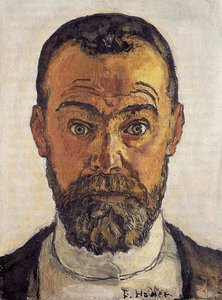
Ferdinand Hodler
1853 - 1918 , Suiza
Datos clave
- Artistas Que Influyeron:
- Alexandre Calame
- Gustave Courbet
- Hans Holbein
- Fecha De Muerte: 19 de mayo de 1918
- Fecha De Nacimiento: 14 de marzo de 1853
- Influencia En Artistas: ['Expresionismo']
- Lugar De Nacimiento: Bern, Suiza
- Movimiento Artístico: Simbolismo, Art Nouveau
- Nacionalidad: Suizo
- Nombre Completo: Ferdinand Hodler
- Obras Notables:
- La noche
- El día
- Verdad II
Artículos relacionados
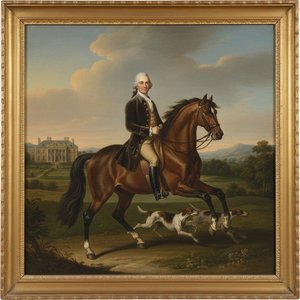
John Francis Sartorius II: Equestrian Elegance & the Rise of British Portraiture
Explore the captivating world of Francis Sartorius II (1734-1804), a leading British painter renowned for his exquisite equestrian portraits and hunting scenes. Discover his life, techniques & enduring legacy.

Ferdinand Bol (1616-1680): A Dutch Master of Portraiture & Dramatic Light
Explore the captivating world of Ferdinand Bol (1616-1680), a master Dutch portraitist deeply influenced by Rembrandt. Discover his life, style, and enduring legacy with OriginalUniqueArt.
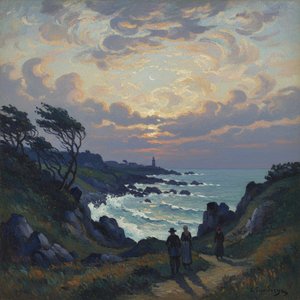
Ferdinand du Puigaudeau: Bridging Impressionism & Symbolism in Breton Landscapes
Discover Ferdinand du Puigaudeau's captivating Breton landscapes – a bridge between Impressionism & Symbolism. Explore his life, unique style, and enduring legacy with OriginalUniqueArt.

Ferdinand Hodler: Symbolism, Parallelism & the Quest for Universal Harmony
Explore the captivating world of Ferdinand Hodler, Swiss Symbolist painter renowned for his evocative landscapes & pioneering 'parallelism'. Discover his life, key works, and lasting influence on art history. Own a hand-painted reproduction today!
Beyond Reality: A Sophisticated Guide to the Enigmatic World of Symbolist Painting
Embark on a journey through the dreamlike realm of Symbolist painting. Discover the visionary works of Redon and Moreau, exploring themes of myth, psyche, and mystery in this expert guide for fine art enthusiasts and collectors.