Vista previa
 Compartir
 Compartir
 Ver detalles
 Guía
Guía

 Descargar
 Ver artículos similares
 Radiografía
 Presentación de diapositivas
 Estadísticas
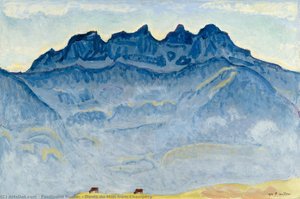
Estudio de Figura
 Acrílico sobre lienzo
- Arte de pared
- Swiss Symbolism
 1910
1910 44.0 x 59.0 cm
 Galería Nacional de Bosnia y Herzegovina
 Leer más
Giclée / Impresión de arte
Impresiones giclée o en lienzo de calidad de museo con producción rápida y opciones de acabado flexibles. ( Encargar reproducción pintada a mano Ver versión en imagen digital)




P118B €10

P118H €10

P118W €10

P438Z €10

P508JH €12

P508YH €12

P805H €10

P805Z €10

P919BZ €10

P919G €10

P919XJ €10

P959ZH €10

P968JZ €12

W106C €8

W218G €10

W218JH €8

W218Y €10

W307PJ €10

W316G €10

W316PJ €8

W316Y €10

W398PJ €8

W4111J €10

W500HY €15

W500JH €15

W692G €12

W849H €8

W940BG €15

W953PJ €8




Elija entre nuestros tamaños predefinidos que respetan las proporciones originales de la obra.

Introduzca el ancho y el alto que necesite para adaptarse a su marco o pared. Una impresión solo puede recortarse, nunca hacerse más grande que la imagen original, por lo que un tamaño con una forma distinta perderá parte de la obra. Le enviaremos una maqueta digital para su aprobación antes de realizar cualquier impresión. La imagen que se muestra en esta página no refleja el recorte real; solo la maqueta lo hace.
Envío a todo el mundo () en 2 semanas en lugar de las 4/5 semanas estándar. (22 octubre)

Envío exprés gratuito a todo el mundo

Lienzo de lino de alta calidad

Seguro de envío completo

Garantía de reembolso de impuestos aduaneros

Garantía de fidelidad cromática exacta

Política de devolución de 100 días (solo por defectos)

Garantía de devolución del 100% del dinero

Oferta por volumen
 La opción de vidrio solo está disponible en tamaños inferiores a 110 cm.

Estudio de Figura
Giclée / Impresión de arte
Tamaño de la reproducción
-


Precio total
€ 70
A Study in Quiet Strength: Hodler’s Figure Amidst the Grain
Ferdinand Hodler's “Figure Study,” executed in 1901, transcends mere representation; it embodies the core tenets of Symbolist art—a deliberate eschewal of literal depiction in favor of conveying emotion and psychological depth. This pencil sketch, destined for inclusion in ‘Reaper’ for 50 Francs Banknote, offers a glimpse into Hodler's meticulous creative process and his profound engagement with the visual language of his time. The drawing itself is dominated by a solitary male figure positioned prominently on grassy terrain—a composition that immediately draws attention to the interplay between stillness and movement.The Language of Symbolism: Hodler’s Approach
Hodler, deeply influenced by Nietzschean philosophy and the burgeoning interest in Jungian psychology, rejected Impressionistic techniques prioritizing optical perception. Instead, he championed ‘parallelism,’ a method wherein lines converge towards a central point, creating an illusion of depth and fostering a contemplative atmosphere. This stylistic choice is evident in the delicate hatching marks that define the figure’s contours—lines not merely delineating form but subtly suggesting underlying tension and vulnerability. The muted tonal palette – predominantly browns and greys – reinforces this sense of introspection, mirroring the artist's preoccupation with themes of mortality and inner experience.Historical Context: Pont-Aven School & Artistic Dialogue
Hodler’s work emerged during a period of significant artistic ferment in Switzerland—specifically within the Pont-Aven School, alongside artists like Alberto Magnelli and Giovanni Segantini. This collective sought to recapture the spiritual fervor of Byzantine art, rejecting academic conventions and embracing expressive brushwork and bold color combinations. However, Hodler's approach differed markedly from his peers; he favored a restrained aesthetic, prioritizing psychological nuance over flamboyant visual spectacle. His artistic dialogue with Cézanne—particularly Cézanne’s exploration of geometric forms—can be discerned in the subtle structuring of the composition, hinting at an underlying intellectual rigor.Symbolic Resonance: The Scythe and Contemplation
The inclusion of a scythe – a tool associated with death and harvest – adds another layer of symbolic significance to the drawing. It serves as a visual anchor, grounding the figure in the natural world while simultaneously prompting contemplation on themes of cyclical time and inevitable decay. Hodler’s masterful rendering captures not just the physical presence of the instrument but also its psychological impact—a reminder of human fragility against the backdrop of eternity. The downward gaze of the man suggests an absorption in thought, a quiet confrontation with existential questions that resonate powerfully within the Symbolist tradition.Emotional Impact: A Portrait of Inner Reflection
Ultimately, “Figure Study” succeeds in conveying a profound sense of melancholy and serenity—a testament to Hodler’s ability to distill complex emotions into deceptively simple visual forms. The drawing invites viewers to engage in an imaginative dialogue with the subject, prompting consideration of themes such as solitude, contemplation, and acceptance. Its understated beauty lies precisely in its refusal to offer easy answers or comforting illusions; instead, it presents a portrait of inner reflection—a timeless image that continues to captivate audiences today.Preguntas y respuestas
¿Quién creó "Estudio de Figura" y en qué año?
Ferdinand Hodler realizó "Estudio de Figura" en 1910.
¿Dónde puedo ver el original de "Estudio de Figura" de Ferdinand Hodler?
"Estudio de Figura" de Ferdinand Hodler se encuentra en exhibición en Galería Nacional de Bosnia y Herzegovina, Sarajevo, Bosnia y Herzegovina. La información del museo se refiere a la obra original, no a reproducciones.
¿En qué tamaño se recomienda imprimir "Estudio de Figura"?
Se recomienda imprimir "Estudio de Figura" en un tamaño de Grande. Otros tamaños están disponibles con las mismas proporciones.
Biografía del artista
Primeros años y formación artística
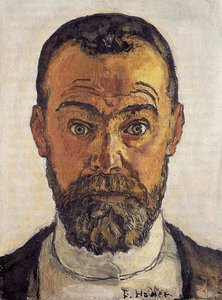
Ferdinand Hodler, pintor suizo, nació el 14 de marzo de 1853 en Berna, Suiza. Sus primeras obras se caracterizaron por retratos, paisajes y pinturas de género en un estilo realista. Sin embargo, posteriormente adoptó una forma personal de simbolismo, que él denominó "paralelismo".Evolución del estilo de Hodler
A medida que avanzaba la carrera de Hodler, su obra evolucionó para combinar influencias de varios géneros, incluyendo el simbolismo y el art nouveau. En 1890, completó Noche, una pintura que marcó su transición hacia la imaginería simbolista. Esta pieza, que presenta varias figuras reclinadas, fue inicialmente recibida con controversia pero finalmente obtuvo atención favorable en París.Obras destacadas y colecciones
- El Día (1893), una pintura histórica a gran escala, es un ejemplo notable del trabajo de Hodler. Esta pieza, expuesta en el Kunsthaus Zúrich, demuestra su mezcla única de simbolismo y realismo.
- El Museo Kunsthaus Zúrich, Suiza, cuenta con una impresionante colección de obras de Hodler, incluyendo Verdad II (1897), que puede ser vista en /es/art/show/art-d3b4gt-es/
Legado e influencia
La adopción del simbolismo por parte de Hodler y el desarrollo del "paralelismo" han tenido un impacto duradero en el mundo del arte. Su trabajo puede verse como un precursor del expresionismo, con su énfasis en figuras fuertemente coloreadas y geométricas.- La biografía de Ferdinand Hodler está disponible en OriginalUniqueArt, proporcionando una visión profunda de su vida y evolución artística.
- La historia del desnudo en el arte, que ha sido un tema de interés a lo largo de la carrera de Hodler, puede explorarse más a fondo en [https://en.wikipedia.org/wiki/history_of_the_nude_in_art](https://en.wikipedia.org/wiki/history_of_the_nude_in_art).
Fechas clave
- 1853: Nació en Berna, Suiza
- 1890: Completó Noche, marcando su transición hacia la imaginería simbolista
- 1918: Falleció el 19 de mayo
- https://OriginalUniqueArt.com/@@/d3xnx9-ferdinand-hodler-the-day para ver El Día (1893)
- https://en.wikipedia.org/wiki/ferdinand_hodler para una biografía completa de Ferdinand Hodler
- https://OriginalUniqueArt.com/@/ferdinand-hodler para una extensa colección de sus obras y una biografía detallada.
Ferdinand Hodler
1853 - 1918 , Suiza
Datos clave
- Artistas Que Influyeron:
- Alexandre Calame
- Gustave Courbet
- Hans Holbein
- Fecha De Muerte: 19 de mayo de 1918
- Fecha De Nacimiento: 14 de marzo de 1853
- Influencia En Artistas: ['Expresionismo']
- Lugar De Nacimiento: Bern, Suiza
- Movimiento Artístico: Simbolismo, Art Nouveau
- Nacionalidad: Suizo
- Nombre Completo: Ferdinand Hodler
- Obras Notables:
- La noche
- El día
- Verdad II
Artículos relacionados
The Power of Graphite: Mastering Depth, Texture, and Detail in the Art of Pencil Drawing
Explore the profound artistry of graphite drawing. Discover professional techniques for mastering depth, texture, and detail through a lens of art history, from classical sketches to modern masterpieces. Elevate your understanding of the pencil medium with our expert guide.
The Alchemy of Graphite: An Expert Guide to Mastering Detail and Depth in Pencil Sketching
Unlock the secrets of graphite sketching with our expert guide for art students. Learn to master pencil grades, create realistic depth, and capture intricate textures through professional techniques designed to elevate your observational drawing skills.
The Nuances of Graphite: Exploring Emotional Depth & Technical Mastery in Pencil Drawing
Explore the captivating world of graphite drawing! Discover its rich history, master essential techniques like chiaroscuro, and learn how artists evoke emotion through this timeless medium. Expert insights for art enthusiasts.
The Eloquent Line: Exploring the Artistic Significance of Sketches Across Movements and Media
Explore the profound artistic significance of sketches throughout history. From Renaissance masters to modern innovators like Van Gogh & Guston, discover how these foundational works reveal technique, emotion, and vision. Learn more at OriginalUniqueArt.

Paisajes Románticos: 10 Obras Maestras que Definieron un Movimiento Artístico
Descubre los 10 paisajes románticos más influyentes de artistas como Caspar David Friedrich y Turner. Explora la belleza, el simbolismo y las técnicas del movimiento romántico. Reproducciones de arte exclusivas en OriginalUniqueArt.com.