

 Vista previa
 Compartir
 Compartir
 Ver detalles
 Guía
Guía

 Descargar
 Ver artículos similares
 Radiografía
 Presentación de diapositivas
 Estadísticas
Still Life


 Leer más
Giclée / Impresión de arte
Impresiones giclée o en lienzo de calidad de museo con producción rápida y opciones de acabado flexibles. ( Encargar reproducción pintada a mano Ver versión en imagen digital)




P118B €10

P118H €10

P118W €10

P438Z €10

P508JH €12

P508YH €12

P805H €10

P805Z €10

P919BZ €10

P919G €10

P919XJ €10

P959ZH €10

P968JZ €12

W106C €8

W218G €10

W218JH €8

W218Y €10

W307PJ €10

W316G €10

W316PJ €8

W316Y €10

W398PJ €8

W4111J €10

W500HY €15

W500JH €15

W692G €12

W849H €8

W940BG €15

W953PJ €8




Elija entre nuestros tamaños predefinidos que respetan las proporciones originales de la obra.

Introduzca el ancho y el alto que necesite para adaptarse a su marco o pared. Una impresión solo puede recortarse, nunca hacerse más grande que la imagen original, por lo que un tamaño con una forma distinta perderá parte de la obra. Le enviaremos una maqueta digital para su aprobación antes de realizar cualquier impresión. La imagen que se muestra en esta página no refleja el recorte real; solo la maqueta lo hace.
Envío a todo el mundo () en 2 semanas en lugar de las 4/5 semanas estándar. (22 octubre)

Envío exprés gratuito a todo el mundo

Lienzo de lino de alta calidad

Seguro de envío completo

Garantía de reembolso de impuestos aduaneros

Garantía de fidelidad cromática exacta

Política de devolución de 100 días (solo por defectos)

Garantía de devolución del 100% del dinero

Oferta por volumen
 La opción de vidrio solo está disponible en tamaños inferiores a 110 cm.

Still Life
Giclée / Impresión de arte
Tamaño de la reproducción
-


Precio total
€ 70
A Moment Frozen in Time: Ferdinand Guillaimin’s “Still Life”
Ferdinand Guillaimin's "Still Life," painted in 1872, isn’t merely a depiction of objects arranged on a table; it’s a carefully constructed tableau brimming with quiet observation and subtle symbolism. This work, rendered in the heart of the Impressionist movement, captures a fleeting moment of domestic tranquility – a scene both familiar and imbued with an understated elegance. The painting immediately draws the eye to the central arrangement: a vase overflowing with vibrant red and yellow flowers, their petals seemingly caught mid-bloom, radiating warmth against the cooler tones that dominate the rest of the composition. Beside them rests a worn book, its pages hinting at untold stories and intellectual pursuits, while a simple bowl holds what appears to be fruit – perhaps apples or pears – adding another layer of earthly abundance.
Guillaimin’s technique is distinctly Impressionistic, prioritizing capturing the *impression* of light and color rather than precise detail. Loose brushstrokes dance across the canvas, creating an atmospheric haze that softens the edges of each object. He masterfully employs broken color – applying small dabs of paint side-by-side to build up hues and create a shimmering effect, particularly noticeable in the reflections on the table’s surface. The dark background serves not as mere backdrop but as a crucial element, intensifying the luminosity of the floral arrangement and lending the scene a sense of intimacy and depth. The artist's focus is less on photographic realism and more on conveying the *feeling* of being present within this quiet space.
The Context of Parisian Impressionism
To fully appreciate “Still Life,” it’s essential to understand the artistic climate in which Guillaimin was working. The 1870s were a period of profound change and experimentation for French art, marked by the rise of Impressionism. Artists like Monet, Renoir, and Pissarro sought to break free from the rigid conventions of academic painting, embracing plein air (outdoor) painting and capturing the ephemeral qualities of light and atmosphere. Guillaimin’s work reflects this spirit of innovation, moving away from traditional subject matter and exploring new ways of representing the world around him.
Guillaimin's connection to Pissarro is particularly noteworthy. The artist spent a significant period painting alongside Pissarro in Pontoise, a suburb of Paris, where he found inspiration in the everyday life of the region. This proximity fostered a collaborative environment, allowing Guillaimin to refine his style and develop his unique approach to capturing light and color. The Impressionists were not simply interested in depicting what they *saw*; they were driven by a desire to express their subjective experience of the world.
Symbolism and the Language of Objects
Beyond its aesthetic qualities, “Still Life” is rich with symbolic meaning. The flowers themselves represent beauty, fragility, and the fleeting nature of life – themes frequently explored in Impressionist art. The book suggests knowledge, contemplation, and a connection to the past. The bowl of fruit symbolizes abundance, nourishment, and the pleasures of earthly existence. Even the dark background can be interpreted as representing mortality or the unknown.
Guillaimin’s use of these objects is deliberate and carefully considered, inviting the viewer to engage in a process of interpretation. He doesn't offer explicit explanations; instead, he presents a series of interconnected symbols that resonate with universal themes of beauty, life, and death. The arrangement feels deliberately balanced, creating a harmonious composition that evokes a sense of peace and serenity.
A Legacy of Delicate Beauty
Ferdinand Guillaimin’s “Still Life” stands as a testament to the power of observation and the enduring appeal of simple subjects rendered with exquisite sensitivity. It's a painting that rewards close attention, revealing layers of meaning and emotional depth with each viewing. Reproductions capture much of the original atmosphere, but nothing quite replicates the subtle nuances of light and color that define Guillaimin’s masterful technique.
Today, this work is celebrated for its evocative beauty and its contribution to the development of Impressionism. It remains a poignant reminder of the quiet moments of everyday life – a timeless meditation on beauty, mortality, and the enduring power of art.
Preguntas y respuestas
¿Qué tipo de colores utiliza "Still Life"?
"Still Life" de Ferdinand Guillaumin utiliza una paleta de colores Earthy. La paleta resume el carácter cromático general de la obra.
¿Hay obras similares a "Still Life"?
La página de Similares de "Still Life" de Ferdinand Guillaumin presenta obras relacionadas.
¿Quién creó "Still Life" y en qué año?
El autor de "Still Life" es Ferdinand Guillaumin, y la obra data de 1872.
Biografía del artista
Early Life and Career
Jean Baptiste Armand Guillaumin (Moulins, Picardía, Francia 16 de febrero de 1841 – Orly, Isla de Francia, Francia 26 de junio de 1927), fue un pintor y grabador francés de estilo impresionista. Mientras otros maestros de su círculo (como Renoir y Cézanne) abandonaron pronto el impresionismo puro y conformaron estilos más personales, Guillaumin se mantuvo fiel a los rasgos más reconocibles de dicha corriente y es considerado «el impresionista más fiel y longevo». Su nacimiento en Moulins marcó el inicio de una vida marcada por la sensibilidad artística desde temprana edad. Desde niño vivió en París, incluso algunas fuentes citan erróneamente la capital gala como su lugar de origen. Trabajó en la mercería de su tío al tiempo que recibía clases de dibujo. Este interés por el arte lo impulsaría a estudiar en la Académie Suisse en 1861 donde conocería a Paul Cézanne y Camille Pissarro, con quienes mantuvo una larga amistad. Estos tres artistas compartirían un viejo estudio que había ocupado Charles-François Daubigny y contaban con el apoyo del doctor Paul Gachet, quien luego sería amigo de Van Gogh. Guillaumin mostró varios de sus pinturas en el Salon des Refusés en 1863. El joven Guillaumin fue reconocido como un pintor prometedor por los críticos de la época que juzgaron su estilo seguro y su uso expresivo del color. También desarrolló conexiones con Emile Zola y su círculo de amigos, quienes fueron influenciados por el arte de Manet y Courbet.Notable Works and Associations
Una figura destacada en el movimiento impresionista fue la amistad entre Guillaumin y Cézanne cuyo hermano, Theo vendió algunas de sus obras. Este vínculo creativo fue fundamental para el desarrollo artístico de ambos artistas. Además, Guillaumin colaboró estrechamente con otros miembros del grupo impresionista como Gauguin y Signac, quienes compartieron intereses comunes y estilos similares. Su obra fue exhibida en importantes galerías parisinas y adquirió reconocimiento internacional gracias a la promoción de figuras destacadas como Theo van Gogh y Emile Bernard. Entre sus obras más significativas se encuentran "Madame Guillaumin Sentada en un Jardín", una composición llena de luz y color que captura la belleza del paisaje francés, así como "Cottages en un Paisaje", donde Guillaumin demuestra su maestría técnica al representar escenas rurales con precisión y sensibilidad artística. También fue reconocido por sus dibujos y grabados, especialmente aquellos realizados durante su viaje a Italia en 1879 donde estudió las obras de artistas italianos clásicos y modernos.Style and Technique
Guillaumin desarrolló un estilo propio caracterizado por la aplicación libre del color y el uso de pinceladas largas y onduladas que buscaban transmitir la atmósfera y los efectos luminosos del entorno natural. Influenciado por Cézanne y Courbet, Guillaumin adoptó una perspectiva realista pero también expresiva que reflejaba sus emociones y sentimientos personales. Su obra se distingue por una combinación armoniosa entre observación detallada y libertad creativa, lo que le permitió crear imágenes originales y conmovedoras que siguen siendo admiradas hasta nuestros días. Además, Guillaumin experimentó con diferentes materiales y técnicas como el óleo sobre lienzo, el grabado en agua fuerte y el dibujo a lápiz negro, demostrando una amplia gama de habilidades artísticas.Legacy and Remembrance
Armand Guillaumin falleció en Orly, Isla de Francia, Francia 26 de junio de 1927, dejando un legado artístico importante que sigue siendo estudiado y apreciado por artistas y críticos contemporáneos. Su obra fue incluida en importantes museos internacionales como el Musée d’Orsay en París donde se encuentra una extensa colección de sus pinturas y dibujos. Además, Guillaumin fue reconocido como uno de los representantes más fieles del impresionismo puro, manteniendo la esencia de este movimiento artístico hasta el final de su vida. Su estilo único y expresivo continúa inspirando artistas nuevos y contribuyendo a enriquecer la historia del arte francés y mundial.
Ferdinand Guillaumin
1841 - 1927 , Francia
Datos clave
- Artistic Movement Or Style: Impressionismo
- Artists Or Movements Influenced By This Artist: ['Fauvismo']
- Artists Who Influenced This Artist:
- Claude Monet
- Vincent van Gogh
- Paul Cézanne
- Date Of Birth: 16 febrero 1841
- Date Of Death: 26 junio 1927
- Full Name: Jean Baptiste Armand Guillaumin
- Nationality: Francés
- Notable Artworks:
- Paisaje en verano
- El jardín de invierno
- La iglesia
- Place Of Birth: París, Francia
Artículos relacionados

Blossoms of Time: A Historical Journey Through Flower Painting
Explore the captivating history of flower painting! Discover Dutch masters, symbolic meanings, & botanical art. Expert insights & high-quality reproductions at OriginalUniqueArt.
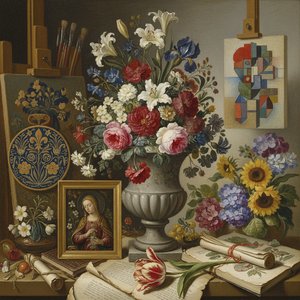
Blossoming Symbolism: A Historical Journey Through Flowers in Western Painting
Explore the rich history of flower symbolism in Western painting! Discover how artists from the Renaissance to Modernism used blossoms to convey meaning, emotion & beauty. Learn about iconic artworks and movements.

Impresionismo: 10 Obras Maestras que Capturan la Luz y el Momento
Descubre 10 obras maestras del impresionismo de Monet, Renoir y Degas. Explora la luz, el color y las historias detrás de estos icónicos cuadros. Reproducciones de arte en OriginalUniqueArt.com para decorar tu hogar con estilo.

Silent Narratives: Exploring the Enduring Appeal of Still Life Painting Across Centuries
Explore the rich history of still life painting with OriginalUniqueArt. Discover Dutch Masters, decode vanitas symbolism & learn about collecting timeless art. Expert insights and museum-quality reproductions.

Paul Cézanne: Las 25 Obras Maestras que Definieron el Arte Moderno | OriginalUniqueArt
Descubre las 25 obras maestras de Paul Cézanne que revolucionaron el arte moderno. Explora su técnica, inspiración y significado en paisajes, bodegones y retratos. Reproducciones de alta calidad para decorar tu hogar con arte inolvidable. ¡Explora la colección completa en OriginalUniqueArt.com!


